“leaf” search results (2036)
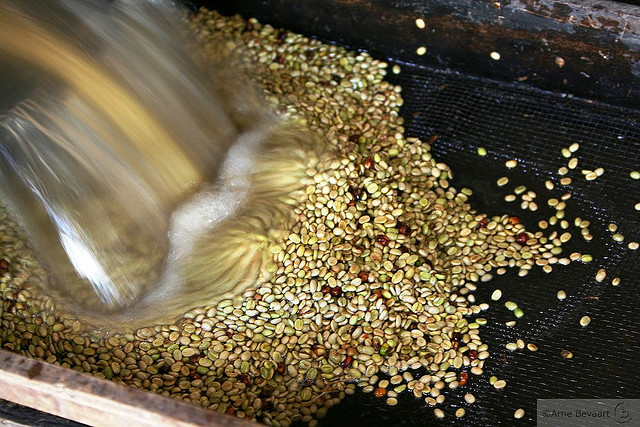
Colombian coffee bean Arabica seed Dikapunkadullah Mondo Dono Wokadu Amarago
Arabica coffee is generally considered to be originated from the Ethiopian plateau, widely distributed in the tropics, after repeated mutation and breeding, derived a lot of varieties. Tibica: this is the closest Arabica species to the native species. Almost all Arabica varieties are derived from this. It is long in bean shape, has excellent aroma and sour taste, but is not resistant to leaf rust.
2016-03-29 Colombia coffee beans rabbi card species Tibby Cabo Panca Dula Dono
Species morphology of Colombian coffee
The main varieties of Colombian coffee are small grains of coffee. Plants are small trees or large shrubs, 5-8 m tall, usually much branched at base; old branches gray-white, nodes dilated, young branches glabrous, compressed. Leaves thinly leathery, ovate-lanceolate or lanceolate, 6-14 cm long and 3.5-5 cm wide, tip long acuminate, acuminate part 10-15 mm long, base cuneate or slightly obtuse, rarely rounded, entire or
2016-05-24 Columbia Coffee species Morphology Variety Major small Grain
Species morphology of Colombian coffee
The main varieties of Colombian coffee are small grains of coffee. Plants are small trees or large shrubs, 5-8 m tall, usually much branched at base; old branches gray-white, nodes dilated, young branches glabrous, compressed. Leaves thinly leathery, ovate-lanceolate or lanceolate, 6-14 cm long and 3.5-5 cm wide, tip long acuminate, acuminate part 10-15 mm long, base cuneate or slightly obtuse, rarely rounded, entire or
2016-05-25 Columbia Coffee species Morphology Variety Major small Grain
Species morphology of Colombian coffee
The varieties of Lambian coffee are mainly small-grain coffee. Plants are small trees or large shrubs, 5-8 m tall, usually much branched at base; old branches gray-white, nodes dilated, young branches glabrous, compressed. Leaves thinly leathery, ovate-lanceolate or lanceolate, 6-14 cm long and 3.5-5 cm wide, tip long acuminate, acuminate part 10-15 mm long, base cuneate or slightly obtuse, rarely rounded, entire or present
2016-06-01 Columbia Coffee species Morphology Biya varieties Major small grains plants
Fine coffee Colombian coffee species morphology
The main varieties of Colombian coffee are small grains of coffee. Plants are small trees or large shrubs, 5-8 m tall, usually much branched at base; old branches gray-white, nodes dilated, young branches glabrous, compressed. Leaves thinly leathery, ovate-lanceolate or lanceolate, 6-14 cm long and 3.5-5 cm wide, tip long acuminate, acuminate part 10-15 mm long, base cuneate or slightly obtuse, rarely rounded, entire or
2016-05-29 Boutique Coffee Columbia species Morphology varieties Major
Species morphology of Colombian coffee bean
The main varieties of Colombian coffee are small grains of coffee. Plants are small trees or large shrubs, 5-8 m tall, usually much branched at base; old branches gray-white, nodes dilated, young branches glabrous, compressed. Leaves thinly leathery, ovate-lanceolate or lanceolate, 6-14 cm long and 3.5-5 cm wide, tip long acuminate, acuminate part 10-15 mm long, base cuneate or slightly obtuse, rarely rounded, entire or
2016-06-03 Columbia Coffee beans species Morphology Coffee varieties Major small
Arabica coffee
Coffee belongs to the evergreen shrub of the genus Coffea of Rubiaceae. There are about forty kinds of plants under the branch of Coffea, among which only three kinds of coffee with commercial value--Coffea arabica, Coffea robusta and Coffea Liberica, which are called "three original species of coffee". Arabica species account for world production
2014-08-13 Coffee knowledge Arabica coffee Coffee encyclopedia
Introduction of Coffee planting methods what conditions are needed for Coffee Tree planting
The most common way to control coffee bean disease is gray leaf spot, which is caused by a half-known fungus in fungi, which mainly harms the leaves. At the beginning, a light brown spot appeared in the middle of the leaf, and then a gray mildew was produced on the spot. Before or at the initial stage of the disease, 65% Dysen zinc solution 500 times or 800 times 1000 times was sprayed to remove and treat. Insect pests mostly occur in late spring and early summer, especially aphids.
2016-08-03 Coffee planting methods introduction needs what conditions types diseases and insect pests control
Morphological characteristics and planting environment of small-grain coffee
Morphological characteristics edit small trees or large shrubs, 5-8 m tall, base usually much branched; old branches gray, small-grained coffee (6) nodes inflated, young branches glabrous, compressed. Leaves thinly leathery, ovate-lanceolate or lanceolate, 6-14 cm long and 3.5-5 cm wide, tip long acuminate, acuminate part 10-15 mm long, base cuneate or slightly obtuse, rarely rounded, entire or present
2016-06-13 Small grains coffee morphological characteristics planting environment editors trees or large
Arabica coffee bean planting species morphology Colombian coffee bean
The main varieties of Colombian coffee are small grains of coffee. Plants are small trees or large shrubs, 5-8 m tall, usually much branched at base; old branches gray-white, nodes dilated, young branches glabrous, compressed. Leaves thinly leathery, ovate-lanceolate or lanceolate, 6-14 cm long and 3.5-5 cm wide, tip long acuminate, acuminate part 10-15 mm long, base cuneate or slightly obtuse, rarely rounded, entire or
2016-04-22 Rabbi Coffee beans planting species Morphology Columbia Coffee products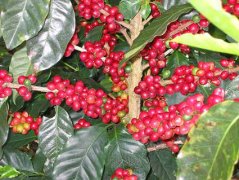
Colombian coffee bean species morphology Central and South American flavor
Species Morphology Colombian Coffee Plant Morphology Colombian coffee is mainly small grain coffee. Plants are small trees or large shrubs, 5-8 m tall, usually much branched at base; old branches gray-white, nodes dilated, young branches glabrous, compressed. Leaves thinly leathery, ovate-lanceolate or lanceolate, 6-14 cm long and 3.5-5 cm wide, tip long acuminate, acuminate 10-15 mm long, basal
2016-04-20 Columbia coffee beans species morphology Central and South America flavor brother
Strongly supported Wiki Valley, a coffee-producing country in Papua New Guinea
The government of Papua New Guinea has made strong support and encouragement to the development of coffee cultivation. When the beans began to ripen, the government announced that if the price of coffee in the market fell too much, it would take a minimum price guarantee and pay the growers of the coffee to compensate for their losses because much of Papua New Guinea is high-altitude mountains. Therefore, planting
2016-06-17 Strong support Papua New Guinea Coffee producing countries Wikipedia Valley producing areas
The relationship between Kenyan coffee and Arabica coffee beans
Arabica coffee accounts for about 65% and 80% of the world's coffee beans, and its excellent flavor and aroma make it the only coffee among these native species that can be drunk directly and alone. However, its resistance to drying, frost, diseases and insect pests is low, especially to the biggest natural enemy of coffee, leaf rust, so all producing countries are committed to improving varieties. For example, the well-known Sri
2016-06-05 Kenya coffee rabbi coffee beans relationships the world grow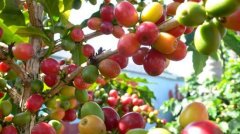
Colombian coffee species morphology coffee varieties boutique coffee beans China Coffee Network
The main varieties of Colombian coffee are small grains of coffee. Plants are small trees or large shrubs, 5-8 m tall, usually much branched at base; old branches gray-white, nodes dilated, young branches glabrous, compressed. Leaves thinly leathery, ovate-lanceolate or lanceolate, 6-14 cm long and 3.5-5 cm wide, tip long acuminate, acuminate part 10-15 mm long, base cuneate or slightly obtuse, rarely rounded, entire or
2016-04-15 Columbia Coffee species Morphology Variety Fine goods Coffee beans China
Colombian coffee bean Colombian species morphology Central and South American coffee beans
Species morphology the main varieties of Colombian coffee are small grain coffee. Plants are small trees or large shrubs, 5-8 m tall, usually much branched at base; old branches gray-white, nodes dilated, young branches glabrous, compressed. Leaves thinly leathery, ovate-lanceolate or lanceolate, 6-14 cm long and 3.5-5 cm wide, tip long acuminate, acuminate part 10-15 mm long, base cuneate or slightly obtuse, rarely round
2016-04-28 Colombia coffee beans species morphology Central and South America
Flavor and taste of coffee manor in Indonesia Kahayang Gan Manor
The classification will be more complicated. Some Arabica coffee beans are quite close to the native species, while others are quite similar to the Robusta species. Even if the coffee has the same name (named from the place of origin), as long as the cultivated varieties are different, the flavor is different from the leaf rust-resistant varieties found in the African Congo, teaching the Arabica species to be more resistant to the disease. People like to plant Robusta
2016-07-22 Indonesia Coffee Manor producing area Flavor Taste introduction Kaha Yanggan
Introduction to high-quality coffee
Introduction of coffee [scientific name] small seed species is Coffea arabica L., medium grain species is Coffea canephora, large seed species is Coffea liberica [alias] small seed species, also known as Arabian species, medium seed species is also known as Ganfla species, large grain species are also known as Liberian species, there are two common species: Arabica and Robusta. Coffea, Rubiaceae (Rubia)
2014-11-06 Coffee knowledge boutique coffee science coffee introduction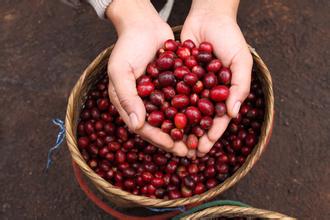
Coffee rookie entry-level learning coffee lesson 1 basic knowledge of coffee introduction to coffee varieties
Coffee belongs to the evergreen shrub of the genus Rubiaceae, which is centered in the tropics. There are about 6000 species of Rubiaceae belonging to 500 genera. Coffee has always been thought to have certain effects, such as strengthening the stomach, waking up the brain, stopping bleeding, dissipating heat, strengthening the body, and so on. The more famous Rubiaceae plant is Gardenia jasminoides, whose fruit was dried and used as medicinal material a long time ago. The three native species of coffee
2016-02-17 Coffee rookie introduction learning one lesson fundamentals knowledge learning variety coffee
Introduction of coffee beans introduction to the taste of boutique coffee
、. The Robusta species (scientific name Coffea robusta Linden) is a leaf rust-resistant variety found in the African Congo, which teaches the Arabica species to be more resistant to the disease. People like to compare robusta with Arabica coffee. In fact, robusta is a mutant of Congo (scientific name Cofffea canephora), so it should be compared with Arabica.
2016-06-06 Coffee beans type introduction boutique coffee taste Robes Booth scientific name C.
Washed and sun-dried Salvadoran plus coffee introduces the IzaIco area of Sonsonate province
The current situation of coffee production is a natural and man-made disaster, which is a perfect description of the challenges facing the coffee industry in El Salvador. Despite getting rid of the haze of war, El Salvador's coffee production still faces challenges from time to time, including: 1998, hurricanes; 2001, earthquake; 2002, volcanic eruption; 2012, leaf rust, storm; despite the challenges, El Salvador
2016-06-22 Washing processing tanning drying Salva Doga Coffee introduction Sonso