“high degree” search results (10000)

High quality and low price is the real magic weapon. 85 degrees C success story marketing.
The name of the 85C store comes from the fact that it is said that the currently brewed coffee tastes best when it is brewed to 85 degrees. However, 85C is not just about selling coffee. Cakes and bread are the other two pillars of 85C. These are the three most competitive commodities in the market. 85C can achieve a market capitalization of tens of billions of dollars, and the scale is still growing. The secret of success at 85C is quality and low price, which is the most insipid.
2016-07-29 High quality and low price is real magic weapon 85 degrees success story marketing
Espresso production: degree of grinding (2)
We have already understood the effect of the degree of grinding on the taste of Espresso and that the degree of grinding can be adjusted, but the range of this adjustment is very large.
2014-09-28 Coffee knowledge Espresso Coffee Encyclopedia Coffee Grinding
Baking of high-quality coffee beans explanation on the roasting degree of coffee
First, when studying the roasting degree of coffee beans, the degree of roasting can be judged by sound, color and aroma. Its color ranges from light gray to dark brown, and its aroma is gradually rich from light and elegant; the sound is made two times of bursting sound. Taking the heat-resistant raw bean as an example, the first explosion begins at about 7 minutes and lasts for about 2 minutes, and its voice is low. It indicates the beginning of pyrolysis, the conversion of starch to caramel and water steaming.
2015-02-13 Boutique coffee beans roasting about coffee degree explanation research baking
The Grinding degree of the skills of making Espresso (2)
We have already understood the effect of the degree of grinding on the taste of Espresso and that the degree of grinding can be adjusted, but the range of this adjustment is very large.
2015-10-12 Production Espresso skill grinding
The importance of grinding degree of coffee beans and coffee powder
Previously we have understood the effect of the degree of grinding on the taste of Espresso and the degree of grinding can be adjusted, but the range of adjustment is very small. So what factors affect the adjustment of the degree of grinding?
2014-07-01 Coffee knowledge coffee grinding coffee encyclopedia
94 degrees hot water hand-brewed Brazilian coffee-breaking coffee water temperature record
It has always been believed that the best temperature for hand-brewing coffee is about 90 degrees, and the highest is generally controlled at 93 degrees. This is not only a theoretical study, but also seems to have been done at a high temperature of 95 degrees in memory. As a result, a cup of bitter black high concentration bitter water came out. Once you eat bitterness, you will die to remember that the temperature is too high to make the coffee extract too bitter, so it is good to practice at 93 degrees.
2014-09-11 Coffee knowledge Brazilian coffee hand coffee coffee water temperature
Introduction to Italian Coffee making course: Espresso production: degree of Grinding (2) detailed introduction
We have already understood the effect of the degree of grinding on the taste of Espresso and that the degree of grinding can be adjusted, but the range of this adjustment is very large.
2015-12-18 Italian style Coffee production tutorial introduction Espresso production Grinding detail
How does the sour and bitter in coffee come from?
Many thermal and chemical reactions take place during baking: decarbonation, dehydration of quinic acid, subdivision, isomerization, polymerization, and complex sugar reactions (caramelization).
2014-08-25 Coffee knowledge sour coffee bitter coffee why coffee is bitter
Knowledge of grindability of espresso Espresso production 2
We have already understood the effect of the degree of grinding on the taste of Espresso and that the degree of grinding can be adjusted, but the range of this adjustment is very large.
2014-12-26 Italian espresso coffee Espresso production grinding knowledge in front
The basic chemical reaction that occurs during coffee roasting. The ingredients produced by the degree of coffee roasting.
Basic chemical reactions that occur during coffee roasting author: Carl Staub originates from the SCAA baking color classification system, developed by Agtron SCAA 1995 original text from: http://www.sweetmarias.com/roast.carlstaub.html translation: Grant, http://www.baristacn.com/forum/thread-1583-1-1.html in the roasting process
2016-01-23 Coffee roasting process medium hair raw basic chemical reaction degree produced made
Basic knowledge of Espresso production about the grindability of coffee beans 2
We have already understood the effect of the degree of grinding on the taste of Espresso and that the degree of grinding can be adjusted, but the range of this adjustment is very large.
2014-11-19 Coffee knowledge Espresso coffee encyclopedia coffee bean grinding degree
Coffee roasting knowledge coffee roaster utensils high-quality coffee raw beans join the roaster
A series of chemical changes occur during the baking process. After about 5-25 minutes of baking (depending on the temperature selected), the green coffee beans lose some humidity and turn yellow. In this process, the coffee beans will swell, changing from a strong, high-density raw bean to a low-density fluffy state. After this process, the size of the coffee beans will about double, starting
2016-07-26 Coffee roasting knowledge roaster utensils boutique raw beans join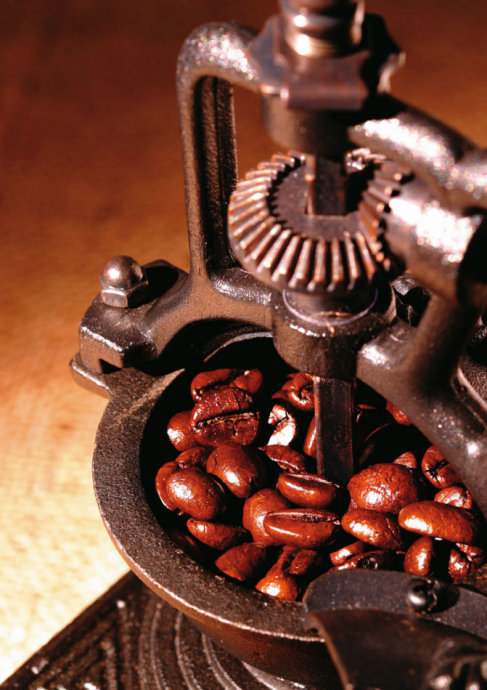
Discussion on suitable Grinding degree High Precision Coffee Grinder hand-made Coffee Bean Grinding medium Grinding
In the process of grinding and extraction, there is an unchanging basic rule, that is, the finer the grinding degree, the heavier the bitterness, and the coarser the grinding degree, the weaker the bitterness. This is based on the fact that the surface area of coffee powder is covered by hot water. From this, we can know the relationship between the extraction apparatus and the grinding degree of coffee powder. Espresso coffee, for example, grinds deeply roasted beans into fineness to make
2016-01-16 Chatting fit Grinding High Precision Coffee Grinder hand Pulp Coffee beans medium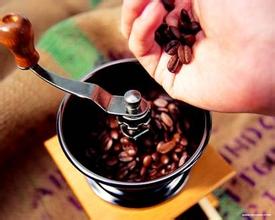
Espresso production: the grinding degree correctly adjusts the grinding scale of the coffee grinder to grasp the thickness and fineness.
First of all, the strength of powder pressing is not a condition for adjusting the degree of grinding. The strength of powder pressing should be relatively stable. After adjusting the degree of grinding, the strength of the pressing powder can be adjusted appropriately, either large (when the degree of grinding is slightly thickened) or smaller (when the degree of grinding is slightly adjusted). In order to make the coffee flavor performance more stable. That is to say, the degree of grinding is to a certain extent
2016-01-22 Espresso make grind correct adjust coffee bean grinder scale
The basic chemical reaction that takes place during coffee roasting.
Basic chemical reactions that occur during coffee roasting author: Carl Staub originates from the SCAA baking color classification system, developed by Agtron SCAA 1995 original text from: http://www.sweetmarias.com/roast.carlstaub.html translation: Grant, http://www.baristacn.com/forum/thread-1583-1-1.html in the roasting process
2015-04-16 Coffee roasting process medium hair raw basic chemical reaction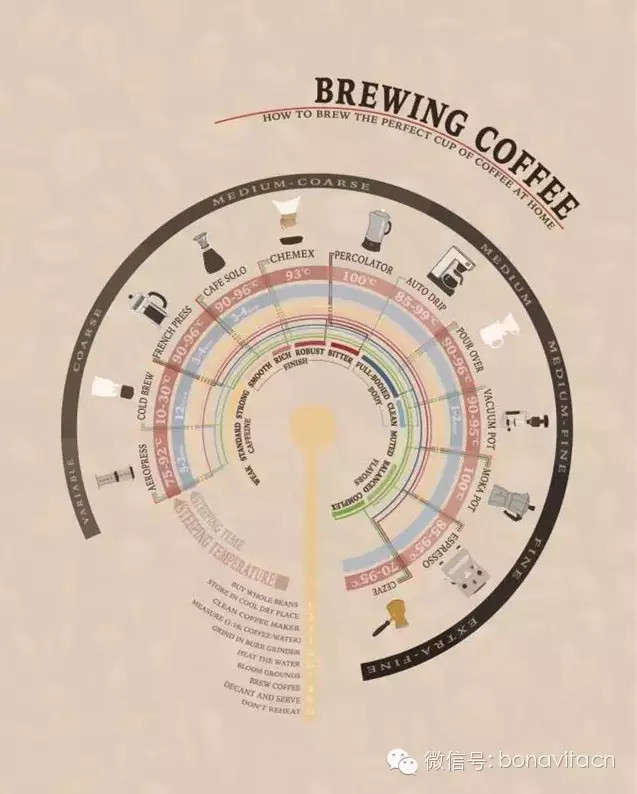
High-quality coffee learning coffee utensils great literacy
Use the right coffee utensils to reflect the characteristics of different coffee beans incisively and vividly. How to choose a suitable coffee utensil? What is the appropriate temperature and time to make coffee? A picture tells you the answer! Philharmonic pressure time: 0.5-2 minutes temperature: 75-92 degrees Celsius caffeine, sugar, alcohol, flavor: medium, rich, pure, balanced cold extraction kettle time: 12
2015-06-26 Boutique coffee utensils literacy yes can be different coffee beans
Factors affecting the baking degree of coffee beans during roasting process
The process of fried beans is the main process of heating raw beans and developing the aroma and taste of coffee. The aroma and taste emitted are determined by the original characteristics of each kind of raw bean. The depth of fried beans depends on the type of raw beans, market demand or the way they are cooked. What kind of baking machine controls the depth of fried beans. Even though the chemical and physical components of various raw beans are different, these ingredients
2015-10-24 Roasting process coffee beans attributes influence degree depth factors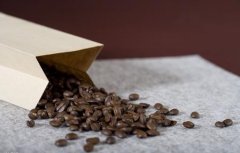
Boutique coffee technology roasting degree of coffee beans
Different degrees of heating of raw beans will make coffee beans appear brown to black and other appearance color changes. The index of heating degree is called baking degree. The baking degree is generally distinguished according to the color of the baked beans. The roasting degree of coffee in Japan is generally in the following order: light roasting, cinnamon roasting, medium roasting, high roasting, urban roasting, deep urban roasting, French roasting.
2015-01-09 Boutique coffee technology coffee beans roasting degree raw beans heating different degrees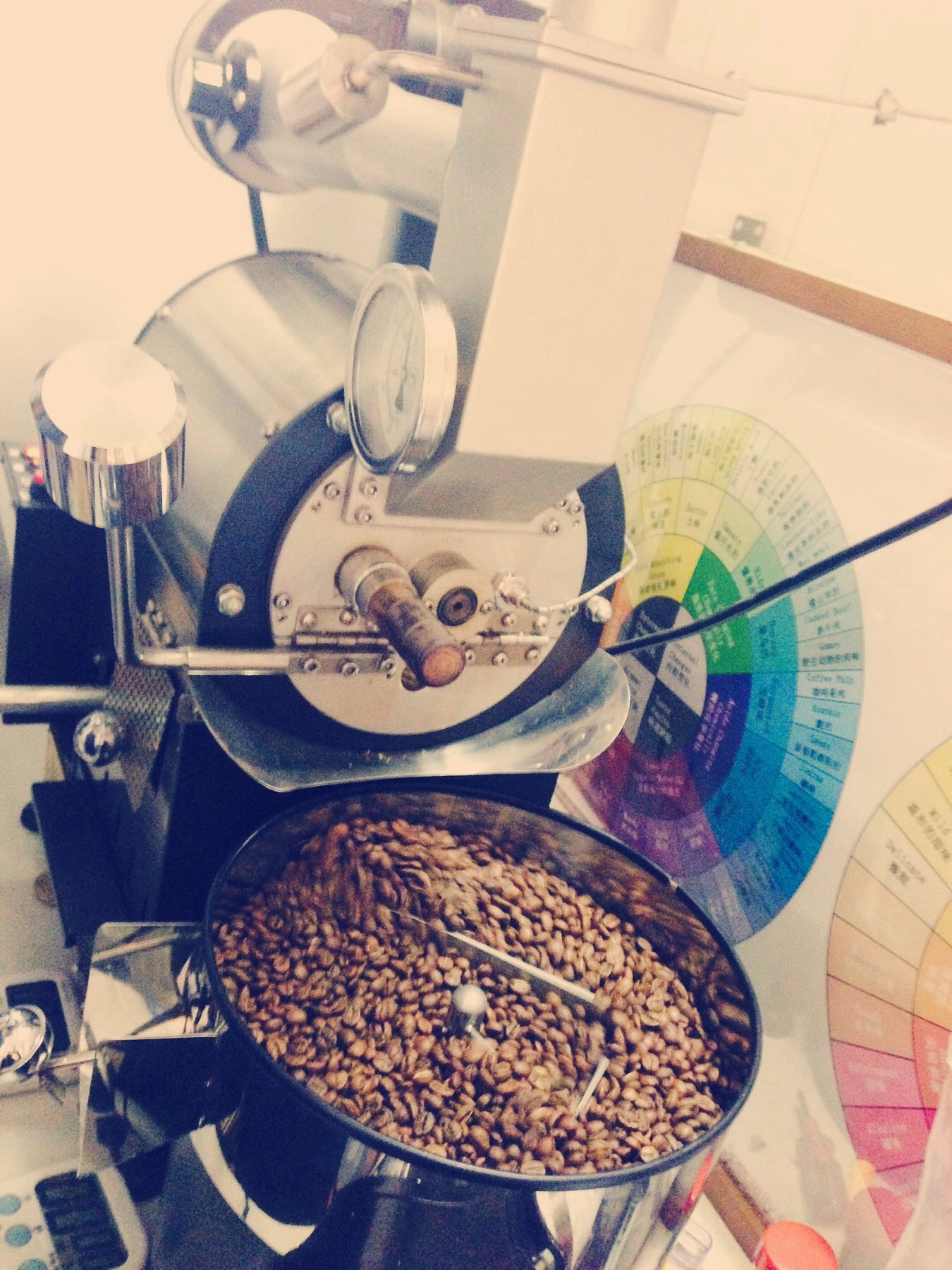
Key points of coffee roasting techniques: basic chemical reactions that take place during coffee roasting
Basic chemical reactions that occur during coffee roasting author: Carl Staub originates from the SCAA baking color classification system, developed by Agtron SCAA 1995 original text from: http://www.sweetmarias.com/roast.carlstaub.html translation: Grant, http://www.baristacn.com/forum/thread-1583-1-1.html in the roasting process
2015-12-16 Coffee roasting techniques key points process medium hair raw basic chemical reaction
Basic chemical reactions that occur during coffee roasting
Many thermal and chemical reactions take place during baking: decarbonation, dehydration of quinic acid, fragmentation, isomerization, polymerization, and complex sugar reactions (caramelization). The main thermally reactive components are monosaccharides and sucrose, chlorogenic acid, displaced amino acids, and trigonelline amide. Both aravinone and calactose in polysaccharides are transferred, and basic sulfurization contains hydroxyamino acids.
2014-08-20 Coffee knowledge Coffee roasting Chemical changes Coffee encyclopedia