“global” search results (4141)

Global Coffee Origin-Haiti
Haiti tries to produce some quality coffee despite its well-known problems and fluctuating coffee quality.
2014-06-17 Coffee knowledge coffee origin coffee encyclopedia
Global coffee producing area-Cameroon
The cultivation of Arabica coffee trees in Cameroon (Cameroon) began in 1913 as the Blue Mountain Coffee from Jamaica, but the country also produces large quantities of Robbins coffee.
2014-06-17 Coffee knowledge coffee origin coffee encyclopedia
Global coffee producing area-Nicaragua
In many countries, coffee production has been seriously affected for political reasons, and the coffee industry in Nicaragua is no exception.
2014-06-17 Coffee knowledge coffee origin coffee encyclopedia
Global coffee producing area-El Salvador
ElSalvador is one of the small countries in Central America with a dense population. The flavor of its coffee is characterized by excellent balance.
2014-06-17 Coffee knowledge coffee origin coffee encyclopedia
Global coffee producing area-Suriname
Suriname (Surinam) was the first country in South America to grow coffee. The Dutch who settled in Suriname in 1667 introduced coffee trees from Java in the early 18th century. The first coffee trees were given by the mayor of Amsterdam to a Flemish pirate, a Hansback. To be exact, these coffee trees were planted in the Dutch Gui at that time.
2014-07-02 Coffee producing area Suriname planting coffee trees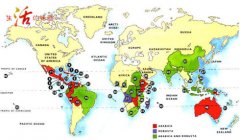
Map of Global Coffee producing areas
1. Costa Rica Costa Rica 2. Cuba Cuba 3. Dominican Republic Dominican Republic 4. Ei Salvador El Salvador 5. Guadeloupe Guadeloupe 6. Guatemala Guatemala 7. Haiti Haiti 8. Honduras Honduras 9. Jamaica Jamaica 10. Martinique Martinique 11. Mexico Mosi
2014-07-09 Coffee producing area coffee producing area map coffee planting
Global coffee producing area-Tahiti
It would be a privilege to have Tahiti coffee, because it is extremely rare. Tahiti Coffee Origin: Tahiti Coffee is a kind of Arabica Coffee (TahitiArabica). Tahiti is the largest island in the Social Islands (SocietyIslands). Tahiti coffee features: Tahiti coffee.
2014-07-09 Coffee producing area Tahiti coffee beans
Global coffee producing area-Zaire
The high-quality coffee produced in Zaire is dwindling, but the taste of Zaire coffee is still excellent. The origin of coffee in Zaire: the best Zaire coffee is grown in the north-east of the country, especially in the provinces of Oriental and Kivu, where excellent beans and giant beans have been produced in the past. Minority of Zaire
2014-07-09 Coffee origin Zaire boutique coffee origin
Global coffee producing area-Madagascar
The Malagasy government plans to develop about 2000 hectares of Robbite coffee plantations and about 5000 hectares of Arabica coffee plantations. Therefore, the development of the coffee industry on the island depends on its potential in Arabian coffee, and once successfully developed, this coffee is expected to become the best. The origin of Madagascar coffee: Madagascar (Madagascar) is basically Robbins.
2014-07-09 Coffee origin Madagascar boutique coffee origin
Global coffee producing area-Dominica
The Dominican Republic (DominicanRepublic) is adjacent to Haiti, and both own the island of Hispaniola (Hispaniola). In the early 18th century, coffee was grown in the Dominican Republic. Coffee production in the Dominican Republic: the best coffee producer in the Dominican Republic is the Barahona region in the southwest, but Juncalito
2014-07-09 Coffee origin Dominica boutique coffee
Global coffee producing area-Zambia
Coffee was introduced to Zambia (Zambia) from Kenya and Tanzania in the early 20th century. The origin of Zambian coffee: Zambian coffee is mainly grown in the northern Kasama region and in the Nakonde and Isoka areas near the capital Lusaka. Giant coffee beans and bean-shaped berry coffee beans are also produced. The characteristics of Zambian coffee:
2014-07-09 Zambia coffee producing area boutique coffee
Global Coffee Origin-Angola
Angola is the fourth largest coffee producer in the world, but it produces only a small amount of Arabica coffee, which is of high quality. Angola coffee origin: 98% of Angola's coffee is Robett coffee. Angola's best brands used to be Ambriz, Amborm and NovoRedondo, all known for consistent quality
2014-07-09 Angola Coffee producing area Fine coffee beans
Global coffee producing area-Ecuador
The Arabian Coffee Tree was first introduced to Ecuador (Ecuador) in 1952 and its coffee is of good quality, especially the coffee harvested in early June. Ecuador's coffee origin: the best Arabica coffee is produced in the Andes, especially in the Chanchagu Valley (ChanchamgoValley). The Andes are divided into two mountains, extending from south to north to central Ecuador. Ecuador
2014-07-09 Coffee producing area Ecuador boutique coffee beans
Global coffee producing area-Sudan
Two decades of disastrous civil war in southern Sudan has claimed millions of lives and caused untold damage to rural areas, including the coffee industry. Historically, Arabs shipped black people from southern Sudan to Arabia as slaves, and slaves took coffee beans with them to satisfy their hunger. It is said that these coffee beans were introduced into Yemen as a result. That's right
2014-07-09 Sudan coffee producing area boutique coffee beans
Global coffee producing area-Bolivia
In the past, coffee trees in Bolivia used to act as hedges and ornaments around the garden. Real commercial production began in the early 1950s. The coffee industry in Brazil was seriously damaged by the great frost in 1975, while Bolivia (Bolivia) benefited from it and developed rapidly. The origin of Bolivian coffee: Bolivian coffee at an altitude of 180 Muhami 670 meters.
2014-07-09 Bolivia coffee producing area boutique coffee beans
Global coffee production-Tinker Island
Martinique is a small island and the birthplace of Central American coffee, but today it produces very little coffee. The first coffee trees in the Western Hemisphere were brought from France by Gabriel Mathieu de Clieu in the early 1720s. Deckley, an early naval officer in Martinique, brought home a coffee tree and planted it in Prech.
2014-07-09 Tinker Island coffee producing area fine coffee beans
Global coffee producing area-Guadeloupe
These islands in the Caribbean used to be an important producer of coffee. In 1789, more than 1 million coffee trees on 500 hectares of land produced 4000 tons. Today, only 150 hectares of land is used to grow coffee. Coffee producing area of Guadeloupe: Guadeloupe used to be the best producer of coffee, but now it is no longer exported. The characteristics of Guadeloupe Coffee
2014-07-09 Guadeloupe coffee producing area boutique coffee beans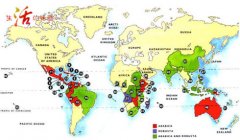
Coffee training knowledge: global Coffee producing area Map
Coffee trees grow in tropical or subtropical agricultural gardens centered around the equator and called coffee belts. Most of the coffee production is between the Tropic of Cancer, 25 degrees north of the tropical or subtropical equator and 30 degrees south of the equator. An area with an annual average temperature of 16-25 degrees Celsius, no Frosts Descent and rainfall of 1600-2000 mm.
2014-10-08 Coffee knowledge coffee distribution coffee origin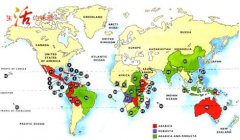
General knowledge of boutique coffee beans map of global coffee producing areas
Coffee trees grow in tropical or subtropical agricultural gardens centered around the equator and called coffee belts. Most of the coffee production is between the Tropic of Cancer, 25 degrees north of the tropical or subtropical equator and 30 degrees south of the equator. An area with an annual average temperature of 16-25 degrees Celsius, no Frosts Descent and rainfall of 1600-2000 mm.
2014-11-22 Coffee knowledge boutique coffee beans coffee common sense coffee origin
Global Cafe appreciates the recommended Cafe for French Tourism
The two ugly bastards are a cafe located in the small square of Saint-Germain, France, and have become one of the recommended places for French tour guides. It is famous because it is a famous writers' cafe on the left bank of the Seine. The Paris literary circle has also set up two ugly literary awards here.
2014-11-22 Coffee knowledge coffee shop appreciation French coffee shop