“explain” search results (2493)

Boutique Coffee Science explains in detail how to make ice drop coffee
Steps: 1, medium fine grinding powder; 2, 4 degrees Celsius cold water mixing; 3, coffee powder mixture frozen in the freezer (- 16 degrees Celsius) for 24 hours; 4. At room temperature, the frozen mixture can be finished with KF-300 ice droplets. Coffee beans: 1, medium roasted Lanshan No. 1; 2, a certain brand Blue Mountain matching, full city baking; 3, H1 baked Italian matching tasting: keep the original respectively
2014-11-10 Coffee knowledge boutique coffee iced coffee
Boutique Coffee explains in detail the definition of Italian concentration
The false impression of espresso = high caffeine seems to have taken root in everyone's mind. In fact, real espresso beans are usually roasted deeply for a long time, and there is not much caffeine left. As for the remaining little caffeine, it must be extracted for a long time to dissolve. Therefore, compared with ordinary coffee, the extraction time
2014-11-10 Coffee knowledge boutique coffee espresso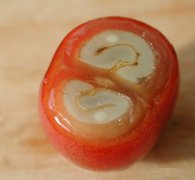
Fine Coffee Science explains the internal anatomy of fine coffee beans in detail
Coffee bean close-up, coffee bean internal cross-section map of the coffee fruit after the peel of the freshly ripe coffee fruit on the tree, the coffee fruit without the peel, inside two coffee beans with endocarp, silver peel coffee bean coffee fruit internal structure (coffee fruit includes exocarp, mesocarp, pectin layer, endocarp, coffee bean silver skin, endosperm, embryo.) Internal knot of coffee beans
2014-11-13 Coffee knowledge boutique coffee science internal anatomy of coffee beans
Fine Coffee Science explains Coffee Leaf Rust in detail
Coffee leaf rust (coffee rust) is the most destructive disease of coffee trees, which is caused by coffee camel rust (Hemileia vastatrix). The disease has long occurred in coffee-producing areas such as Africa, the near East and India, Asia and Australasia. It first appeared in the Western Hemisphere in 1970 and was found in Brazil. Once-thriving coffee plantations in Sri Lanka and Java
2014-11-18 Coffee knowledge boutique caffeine coffee leaf rust
The function of Coffee explains the 10 functions of Coffee
1. Eliminate fatigue and activate the brain. two。 Prevent cancer: reduce the risk of bowel and rectal cancer. 3. Help digestion and prevent gastroptosis: but this does not apply to people with stomach problems, who have inflammation of the mucous membranes of digestive organs. 4. Break down fat and control weight. 5. Remove bad breath: can eliminate garlic smell. 6. Promote blood circulation: (for people with a healthy heart) can improve heart function
2014-10-27 Coffee knowledge coffee efficacy coffee function
The coffee word of boutique coffee explains three meanings of mocha.
Mocha is sitting in a coffee shop, flipping through recipes and reading coffee magazines, and you will inadvertently come across a lot of Mocha, which, though simple, has many meanings. First, mocha coffee beans the earliest mocha refers to a kind of coffee beans exported from the Yemeni port of Moka. It is produced in Ethiopia in Africa and is one of the sour coffee. Mocha coffee is also known as mocha.
2014-09-27 Coffee knowledge boutique coffee coffee words coffee explanation mocha
The knowledge of growing coffee explains how to grow coffee beans
Coffee seeds cannot be grown directly with coffee fruits picked from coffee trees. Peeling coffee fruits is like planting peanuts. If you plant a peanut with a shell in the soil, it cannot sprout. You must plant peanuts. It is the same with medium coffee. If you have coffee fruit in your hand, you can first bask it in the sun and shake it until it is shaken inside.
2014-11-05 Coffee knowledge coffee tree planting coffee beans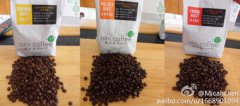
General knowledge of boutique coffee explains the roasting stage of coffee beans in detail.
Roasting of coffee beans: coffee beans can cause subtle changes in flavor due to different degrees of roasting. Generally speaking, if the baking degree is shallow, the sour taste is heavier, with the deepening of the baking degree, the sour taste will gradually disappear, and the bitter taste will highlight the depth of the baking. Before roasting coffee beans, coffee roasters must decide the most appropriate roasting according to the types, characteristics and production methods of coffee beans.
2014-11-14 Coffee knowledge boutique coffee knowledge coffee bean roasting
Boutique Coffee explains in detail the three native species of coffee
There are about 40 species of coffee plants, but only one can produce coffee beans of commercial value. Arabica, Robusta and Liberia are known as the three major native species of coffee: Arabica species are native to the Ethiopian plateau. Arabica coffee accounts for 75%, 80% of all coffee varieties, and its excellent flavor and aroma make it these.
2014-11-08 Coffee knowledge boutique coffee science coffee varieties
The production technology of boutique coffee explains all the matters needing attention.
Lahua, known as free pour abroad, is free to pour, showing a beautiful pattern on the coffee, reflecting the barista's superb production skills and the drinking experience that makes guests feel happy. Making flowers is the most handsome moment for baristas when making coffee. Of course, if you want to develop your flower skills, you need to make continuous efforts. As stated in the video, Lahua focuses on three points:
2015-01-05 Boutique coffee production technology explanation flower drawing all matters needing attention country
The general knowledge of fine coffee explains the types of coffee.
Today, there are two main types of coffee grown most widely in the world: Arabica beans (Coffee Arabica) and Robota beans (Coffee Robusta). Arabica Arabica Robusta Robusta is mainly produced in tropical Central and South America, accounting for 3/4 of the world's output. It is produced in Madagascar in central, western and eastern Africa, and Indonesia in Asia.
2014-11-11 Coffee knowledge boutique coffee coffee common sense coffee types
Boutique Coffee Science explains the types of coffee in detail
The most widely grown coffee in the world is mainly Arabica beans (Coffee Arabica) and Robota beans (Coffee Robusta). Arabica Arabica is mainly produced in tropical Central and South America, accounting for 3/4 of the world's output. It is planted on alpine slopes at an altitude of 9002000 meters. Growing in areas ranging from 15 to 20C, Arabica needs high artificial density care, rich taste and disease tolerance.
2014-10-18 Coffee knowledge boutique coffee science coffee types
Fine Coffee Science explains ESPRESSO 4m Law in detail
The first Mistura (mixture of coffee beans) in Italy, espresso beans have to be mixed with at least five kinds of beans. For example, Erie espresso beans are composed of at least 11 kinds of coffee beans, and they also need to be fresh and roasted in Italian style, so ESPRESSO can only be pure and can not be called a single product. The second Macinino (grinding method of coffee beans)
2014-10-31 Coffee knowledge boutique Coffee Espresso Golden Rule
Boutique Coffee Science explains in detail the method of making flower drawing.
◆ flower drawing method: 1, first brew the coffee, it is recommended to directly hold the coffee in the required cup. Then hit the milk foam, after completion, if there is a thicker milk foam floating on the surface, please remove it. 2. Slowly pour the milk foam into the just-finished coffee. When the milk foam is fully mixed with the coffee, the surface will show a thick shape, and this is the time to start drawing flowers.
2014-10-30 Coffee knowledge boutique Coffee Coffee pull
The sugar commonly used in drinking coffee explains in detail the collocation of various sugars and coffee.
The sugar commonly used in drinking coffee details the subtle differences in the taste of various sugars and different sugars added to the coffee. The following editor will introduce separately: White sugar (sucrose) white granulated sugar is the most common sugar used in drinking coffee in China at present, because of its sweetness all the time, there are fewer miscellaneous flavors and impurities, so the sugar packets in coffee shops are generally white granulated sugar. Yellow sugar is actually a kind of brown sugar.
2015-09-18 Coffee commonly used used detailed explanation various category and collocation coffee with
The course of Italian Coffee: how to make Coffee Milk foam (explained in picture and text)
Coffee flower, is one of the signature skills of baristas, a perfect cup of cappuccino, Latte Art, mocha works, the presentation of flowers give the beauty of coffee, give guests and baristas themselves are pleasant. When talking about the importance of milk selection and application when making delicious Cappuccino and Latte Art in coffee teaching, the principle of milk foaming is discussed.
2015-12-07 Italian style Coffee tutorial Milk foam how Picture explanation pull iconic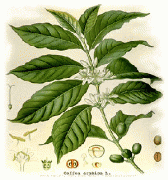
Fine Coffee Science explains the types of coffee beans in detail.
There are mainly two kinds of coffee on the market, such as Coffea Arabica and Coffea Robusta. Each of them can be subdivided into more variety branches. Most of the coffee beans in circulation on the market are distinguished by their origin. The following is a list of some of the major producing countries and their famous coffee: Brazilian coffee fruit (Arabica) Brazil: Santos, Brazil
2014-11-13 Coffee knowledge boutique coffee science coffee beans types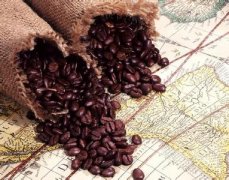
Coffee common sense explains the mystery of coffee
The world's first coffee tree was discovered by Ethiopian shepherds. Coffee has been cultivated for more than 1500 years. Coffee trees are mainly grown in Latin America, Africa and Southeast Asia. In China, coffee was first introduced in 1884, and now coffee is cultivated in tropical areas such as Taiwan, Hainan, Guangxi and Yunnan. The main components of coffee
2015-05-18 coffee common sense explanation mystery veil world one plant ethiopia
General knowledge of boutique coffee explains what caffeine is
What is caffeine? in fact, we are in contact with caffeine every day. The main source of caffeine in the food industry is coffee beans. But the caffeine content of coffee beans varies from breed to breed. Some trees found in Ethiopia in 2004 contained 15 times more caffeine than the average. The amount of caffeine in a cup of coffee ranges from 75 to 250 milligrams. Caffeine in tea and cola
2014-11-10 Coffee knowledge fine coffee coffee common sense caffeine