“diseases and insect pests” search results (400)

Characteristics of Tanzanian coffee flavor of Tanzania coffee
Due to political instability and rampant diseases and insect pests, the coffee industry in Tanzania has been damaged, leading to a decline in the overall level of coffee and instability in quality, which in turn lead to lower prices, which are usually the result of a further decline in the coffee industry. What's more, it is estimated that more than 12% of the Arabica coffee grown in northern Tanzania from 1969 to 1985 has gone.
2016-08-30 Tanzania coffee characteristics flavor due to political situation instability coupled with diseases and insect pests
Some common nouns explain the basics of coffee.
[foreword]: when tasting individual coffee, you will see some information about the varieties in addition to the producing country, producing area, geographical and climatic conditions. Such as Arabica, Robusta, Bourbon and so on. As far as the flavor of coffee is concerned, the difference in producing areas certainly has a greater impact on the flavor of coffee. When it comes to different varieties of beans produced in the same place, the differences between varieties become intentional.
2015-10-12 Some often see nouns a little bit explanation coffee basics common sense
Coffee planting Garden Coffee Baking Competition
The planting time of coffee is from June to July after the beginning of the rainy season. The planting day is cloudy or light rainy, and can be planted all day. If the planting day is sunny, it should be planted before 11:00 and after 04:30 in the afternoon. Seedlings should choose 5 pairs of true leaves, with a height of more than 0.15 meters, and strong seedlings without branches. The row spacing of planting plants is 1.2 meters and 333 plants are planted per mu.
2016-06-08 Coffee planting Garden Baking Competition time selection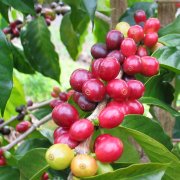
Guava Plain Manor in Guatemala New Oriental region Liquor-scented Coffee treated by the Sun
The SL28 variety is extremely rare in Central America. It originated from Lake Tanganyika in East Africa. It was discovered in 1931. It has broad and reddish leaves, can adapt to high altitude environment, and has excellent drought and disease resistance. It also has higher yield than traditional tree species and is unique in flavor. 1935 Scott Coffee Lab Scottish Labo
2016-06-22 Guatemala New Oriental producing areas guava plains manors wine sun treatment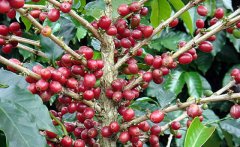
Two common coffee tree species: Arabica and Robusta
Two common coffee trees: Arabica and Robusta. Arabica coffee grows best at high altitude. this coffee has a much more refined flavor than other coffee, and its caffeine accounts for only 1% of the total weight of coffee. Robusta coffee has a mellow taste, strong resistance to diseases and insect pests, and high yield per plant. This kind of coffee grows
2016-06-06 Common two kinds coffee tree species rabbi card species Robes Booth common
World boutique Coffee Manor beans: Hawaiian Kona Coffee (part I) has a smooth and fragrant flavor
Some bloggers mentioned coffee grown in Hainan, China. As far as I know, Mr. Lin Wending, a Taiwanese businessman, grows coffee in Hainan, creates his own brands of antique coffee (synonymous with English Good Sir) and strong coffee (synonymous with Chinese China), and introduces Arabica varieties with high yield and disease resistance from Brazil, which has achieved good results. Hainan Geology belongs to volcanic Red Earth and Coffee famous Kona Coffee of Hawaii
2015-12-22 World boutique coffee manor Hawaii Kona smooth fragrant flavor
World famous Coffee Tour: Kona Coffee, Hawaii
Today, the World famous Coffee Tour series will introduce the famous coffee produced by Hawaii, the largest coffee consumer in the world, and the only coffee produced in the United States, Hawaii Kona Coffee.
2014-08-26 Coffee knowledge world famous coffee Hawaiian coffee Kona coffee
Cultivation techniques of small-grain Coffee in Yunnan Province: pest Control
1. Coffee tiger, longicorn beetle. The coffee tiger longicorn beetle harms the coffee trunk for more than 2 years. At first, it eats between the cambium and xylem, and then eats the xylem. It has a great effect on coffee, the light ones make the plants yellow, withered branches and fruit drop, and the serious ones die of the whole plant. At the initial stage of the damage, there was no obvious hole in the appearance, but only slightly raised in the epidermis of the injured area. Prevention and control methods: strengthening the management of ①
2015-10-07 Yunnan Province small grains coffee cultivation techniques insect pests control longicorn beetles larvae
The most basic knowledge that should be understood-- the three native beans of coffee
Coffee three primary bean species Arabica species (arabica): the origin of Ethiopia, equivalent to the rich and handsome coffee beans, is a precious coffee bean species. It is planted at an altitude of 700-2000 meters, accounting for 75-80% of the world coffee production. It has excellent flavor and aroma, low caffeine content, about 1-1.5% of its weight, but for dryness, frost damage and disease.
2016-09-05 Most should understand basic knowledge coffee three original bean seed
Rich aroma of Guava Coffee Flavor Manor area introduces boutique coffee beans
Java produces only a small amount of Arabica beans, most of which were imported from Africa after the rust disaster. This coffee has a strong bitter taste after roasting, but the aroma is extremely light. Although the acidity is low and the taste is delicate, it is rarely used for direct drinking. It is often used to mix mixed coffee or to make instant coffee. Diseases and insect pests are really a powerful thing, it makes Pakistan
2016-07-19 Aroma rich melon coffee flavor taste manor producing area introduction boutique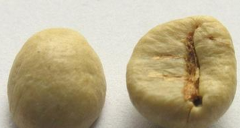
Coffee bean varieties analysis
Coffee bean varieties, in summary, the author simply shared the two major varieties of coffee trees, Araka species and Robusta species, I hope you have a better understanding of these two coffee trees.
2014-06-06 Coffee knowledge coffee beans variety analysis
Cultivation techniques of small Coffee in Yunnan Province Pest Control of Coffee trees
1. Coffee tiger, longicorn beetle. The coffee tiger longicorn beetle harms the coffee trunk for more than 2 years. At first, it eats between the cambium and xylem, and then eats the xylem. It has a great effect on coffee, the light ones make the plants yellow, withered branches and fruit drop, and the serious ones die of the whole plant. At the initial stage of the damage, there was no obvious hole in the appearance, but only slightly raised in the epidermis of the injured area. Prevention and control methods: strengthening the management of ①
2015-02-16 Yunnan Province small grains coffee cultivation techniques insect pests control longicorn beetles larvae
Rich and perfect Indonesian Java Coffee Flavor Manor characteristics of Indonesian boutique Coffee
Java produces only a small amount of Arabica beans, most of which were imported from Africa after the rust disaster. This coffee has a strong bitter taste after roasting, but the aroma is extremely light. Although the acidity is low and the taste is delicate, it is rarely used for direct drinking. It is often used to mix mixed coffee or to make instant coffee. Diseases and insect pests are really a powerful thing, it makes Pakistan
2016-08-04 Taste rich beautiful Indonesia Java coffee flavor manor producing area characteristics
World Coffee Bean Certification What is Organic Coffee Bean? How to properly certify organic coffee beans?
Organic coffee is coffee grown without the use of synthetic pesticides, herbicides or chemical fertilizers. These ways of growing coffee help maintain a healthy environment and keep groundwater pure. After harvesting, be sure to use an organic certified roasting plant to process coffee beans. Organic coffee is coffee beans grown in the shade.
2016-01-04 world coffee beans certified what organic how right coffee is in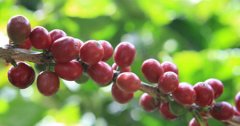
Sumatra Java boutique coffee taste and flavor of Sumatra Java boutique coffee
Java coffee is produced on the Indonesian island of Java and belongs to Arabica coffee. After baking, the bitter taste is extremely strong and the aroma is very light, without sour taste. The bitterness and mellowness of Java coffee, coupled with the sweetness of chocolate syrup, make Java coffee more mellow and palatable and very popular with women! Among the Asian coffee-producing countries, Indonesia is a very noteworthy one. Indonesia is a member of the Indian Ocean.
2016-03-30 Sumatra Java boutique coffee introduction taste flavor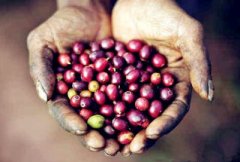
Introduction and formation process of Java Coffee Sumatran Coffee characteristics Java Coffee
Java coffee is produced on the Indonesian island of Java and belongs to Arabica coffee. After baking, the bitter taste is extremely strong and the aroma is very light, without sour taste. The bitterness and mellowness of Java coffee, coupled with the sweetness of chocolate syrup, make Java coffee more mellow and palatable and very popular with women! Among the Asian coffee-producing countries, Indonesia is a very noteworthy one. Indonesia is a member of the Indian Ocean.
2016-03-21 Java coffee Sumatra introduction and formation process characteristics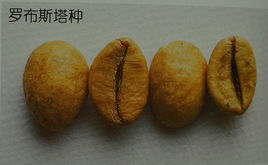
About the characteristics and uses of robusta beans-not all robusta beans are shoddy beans
[introduction] "Robusta" coffee is commonly known as "sturdy beans". It can be planted at low elevations (200 to 800 meters above sea level). It has strong resistance to diseases and insect pests and is not vulnerable to agricultural diseases. the annual output of coffee trees per unit area is higher, and it is harvested in large quantities by machine. generally speaking, the production cost is much lower than that of Ala "Robusta" coffee, commonly known as "sturdy beans", low altitude areas (elevation 200 to 800)
2015-11-30 About Robes Booth characteristics uses no some all inferior.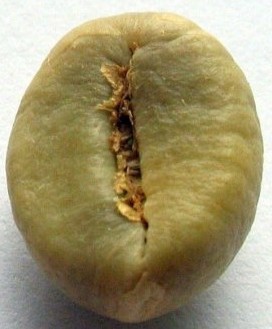
How to correctly identify robusta coffee beans and correctly understand their characteristics, uses and benefits
[introduction] "Robusta" coffee is commonly known as "sturdy beans". It can be planted at low elevations (200 to 800 meters above sea level). It has strong resistance to diseases and insect pests and is not vulnerable to agricultural diseases. the annual output of coffee trees per unit area is higher, and it is harvested in large quantities by machine. generally speaking, the production cost is much lower than that of Ala "Robusta" coffee, commonly known as "sturdy beans", low altitude areas (elevation 200 to 800)
2015-12-31 How to correctly identify Robes Booth coffee beans correct understanding talk about its characteristics
Introduction to boutique coffee-- introduction to the cultivation of Java coffee in Sumatra
Java coffee is produced on the Indonesian island of Java and belongs to Arabica coffee. After baking, the bitter taste is extremely strong and the aroma is very light, without sour taste. The bitterness and mellowness of Java coffee, coupled with the sweetness of chocolate syrup, make Java coffee more mellow and palatable and very popular with women! Among the Asian coffee-producing countries, Indonesia is a very noteworthy one. Indonesia is a member of the Indian Ocean.
2016-03-30 Boutique Coffee introduction Sumatra Java planting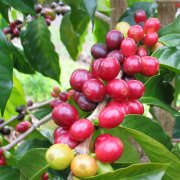
Boutique coffee SL28 variety is extremely rare in Central America, this tree species originated from Tanzania in East Africa
SL28 is extremely rare in Central America. This tree species originated from Lake Tanganyika in East Africa. It was discovered in 1931. Its leaves are broad and reddish. It can adapt to quite high altitude environment. It has excellent drought resistance and disease resistance. It also has higher yield than traditional trees. The performance of flavor is also unique. 1935 Scottish Labo
2016-05-14 Fine Coffee SL28 Cultivated Central America Extreme Rare Tree Species Originated