“cultivation area” search results (5000)

Introduction to the flavor and taste of Panamanian coffee manor with strong floral and citrus flavor
Coffee was first brought to Panama by European settlers in the 19th century. In the past, Panamanian coffee did not have a good reputation, and its output was only 1 / 10 of that of its neighbor Costa Rica, but now the coffee industry's focus on boutique coffee has made Panama more and more interested in growing coffee. Panama's geographical advantage is that it has a lot of distinguishing microclimate areas suitable for coffee.
2016-09-09 Strong floral citrus taste Panama coffee manor producing area flavor
China's first key laboratory for coffee testing starts construction of coffee in Yunnan and cultivation of Chinese coffee
According to the Yunnan Pu'er entry-exit Inspection and Quarantine Bureau, the construction of the national key laboratory for coffee testing began in Pu'er City, marking the birth of China's only national professional laboratory for coffee products in Yunnan Province. Coffee cultivation in Pu'er City began at the end of the 19th century, and its industrialization began in 1988. In 2015, the planting area of coffee in Pu'er City was 757000 mu, with an output of 402300 mu and a yield of 39900 tons.
2016-03-14 China the first coffee testing key laboratory construction Yunnan planting
Detailed Analysis of four cultivation Systems of Coffee in Ethiopia
Forest coffee (Forest Coffee): wild coffee, which accounts for 10% of Ethiopia's national output, is distributed in the wild coffee forest areas of the west and southwest, also known as the Kafa forest. The dense trees here provide the most natural shade for coffee trees and do not need manual care. Mother Earth is in charge of birth, aging, sickness and death, and coffee farmers can go directly to the woodland to harvest. Hansen
2015-02-12 Ethiopia Coffee four cultivation system detail Analysis Forest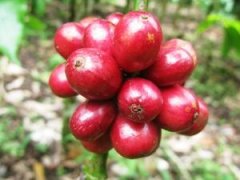
Detailed Analysis of four cultivation Systems of Coffee in Ethiopia
Forest coffee (Forest Coffee): wild coffee, which accounts for 10% of Ethiopia's national output, is distributed in the wild coffee forest areas of the west and southwest, also known as the Kafa forest. The dense trees here provide the most natural shade for coffee trees and do not need manual care. Mother Earth is in charge of birth, aging, sickness and death, and coffee farmers can go directly to the woodland to harvest. Hansen
2015-10-22 Ethiopia Coffee four cultivation system detail Analysis Forest
An introduction to the Coffee producing area of the World-- Zimbabwe Coffee growing Zinbab
Coffee cultivation in Zimbabwe began relatively recently, in the 1960s, when farmers in southern Africa set up coffee plantations. Coffee production in Zimbabwe: coffee cultivation in Zimbabwe is mainly concentrated in the eastern highlands near Mozambique, mainly in the Chimanimani Mountains and northward in Niyan.
2016-03-25 World Coffee Origin introduction Zimbabwe producing area planting Babu
Global Coffee producing area in Zimbabwe
Coffee cultivation in Zimbabwe began relatively recently, in the 1960s, when farmers in southern Africa set up coffee plantations. Coffee production in Zimbabwe: coffee cultivation in Zimbabwe is mainly concentrated in the eastern highlands near Mozambique, mainly in the Chimanimani Mountains and northward in Niyan.
2015-02-16 Global Coffee Origin Zimbabwe
Global coffee producing area-Zimbabwe
Coffee cultivation in Zimbabwe began relatively recently, in the 1960s, when farmers in southern Africa set up coffee plantations. Coffee production in Zimbabwe: coffee cultivation in Zimbabwe is mainly concentrated in the eastern highlands near Mozambique, mainly in the Chimanimani Mountains and northward in Niyan.
2015-08-24 Global Coffee Origin Zimbabwe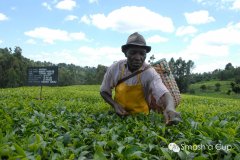
Puerto Rico has a very long history of coffee cultivation.
Puerto Rico has a very long history of coffee cultivation. As a Caribbean island country, coffee planting as a commodity began to rise here as early as the 1860s. What is interesting is that in recent years, with the increase of import tariffs on Puerto Rico coffee in the United States and other countries, although the coffee planting industry here has shrunk to a great extent, a new round of industrial reshuffle and integration
2016-06-12 Bodo Li has each has very long coffee cultivation history introduction
How many coffee growing areas are there in Kenya?
Kenya coffee varieties were first brought to Kenya for cultivation is Bourbon Bourbon, in the 1950s, then agricultural research institutions Scott Laboratory (Scott Laboratory) after unremitting efforts, breeding SL-28, SL-34 two excellent hybrids, subverting the long-term artificial breeding varieties without natural varieties excellent bias. SL-28, SL-34 help Kenya coffee
2016-07-11 Kenya coffee cultivation way variety presentation how much cultivation area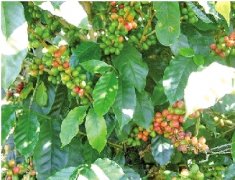
Latest Coffee Map of Yunnan
Pu'er, Xishuangbanna, Wenshan, Baoshan, Dehong, Lincang and other places in the south and west of Yunnan are all the distribution areas of small-grain coffee in Yunnan. For the future, local governments in Yunnan have also drawn a blueprint: Dehong is planning to expand the coffee planting area from the current 100000 mu to 200000 mu in the next few years, and Pu'er also plans to expand the 220000 mu coffee forest to 600000 mu. Its
2016-05-25 Yunnan latest Coffee Map South West Pu'er Xishuangbanna Wen
Introduction to the producing areas of coffee flavor description and grinding characteristics of high-quality brother Kenya Jinchugu
Kenya is bordered to the north by Ethiopia, the origin of Arabica coffee trees, but it was not until the beginning of the 20th century that coffee cultivation began. In the 19th century, missionaries introduced Arabica trees from the leaves, but did not plant them in large quantities. It was not until 1893 that coffee was cultivated on a large scale because of the introduction of Brazil's ancient bourbon seeds. That is to say, Kenyan coffee is of Brazilian origin, because of water.
2016-10-12 High quality Brother Kenya Jinchu Coffee Flavor description Grinding characteristics products
Costa Rica Diamond Hill Estate washed coffee ripe beans boutique coffee beans
Costa Rican coffee cultivation was introduced from Cuba in 1779 and exported for the first time in 1820. There are about 32,000 coffee farmers in Costa Rica, with an average cultivation area of less than one hectare (10,000 m2) per farmer. Costa Rica has a population of 4.1 million (2006), coffee cultivation area of 82,500 hectares, annual production of 1.7 million bags (60kgs per bag), annual domestic consumption of 380,000 bags, flat
2016-05-14 Costa Rica Stone Mountain Manor Wash Coffee Ripe Beans Fine Coffee Beans
Historical Source of Coffee cultivation in Kenya Manor introduction to the Central Mountain area of Nyeri
Kenyan coffee of origin Kenyan coffee entered Kenya in the 19th century, when Ethiopian coffee drinks were imported to Kenya through southern Yemen. But it was not until the early 20th century that the bourbon was introduced by the St. Austen Mission (St.AustinMission). Kenyan coffee is mostly grown at an altitude of 1500m, 2100m, and is harvested twice a year. To ensure that only mature
2016-06-23 Kenya Coffee cultivation History Source producing area Manor introduction Nyeri
History of introduction and expansion of Coffee in early China (5)
1. From the first peak period of the development of China's coffee industry (1952-1961) to the late 1940s, according to recorded figures, there are 2173.33 hectares of rubber plantations in Hainan Island, with a total of 867600 rubber trees, with an annual output of 199,000 tons of dry rubber, and more than 300,000 coffee plants. the annual output of coffee beans is 1 ton. According to a survey in the early 1950s, there was a large amount of coffee left in Fushan area of Chengmai County, with a total of 70,000.
2015-04-28 Early China coffee introduction expansion
Cultivation techniques of small-grain coffee: irrigation and fertilization
Irrigation of coffee planting areas in Yunnan Province can be divided into rainy season and dry season. Irrigation in the dry season, especially in the flowering period, can ensure the normal growth and flowering of coffee plants, improve the fertility rate, and achieve high yield. Fertilization is one of the key measures to obtain high yield of cultivated coffee. According to the data, for every kilogram of dried beans harvested, coffee trees have to come from the soil.
2015-10-07 Small grains coffee cultivation techniques irrigation fertilization Yunnan Province planting areas
General knowledge of Coffee in four cultivation Systems of Ethiopian Coffee
Ethiopia is located between three and fourteen degrees north latitude, and the planting area of coffee trees is nearly 600000 hectares. There are two rainy seasons a year in the south and east of the country, while there is only one rainy season in the west. The distribution of the rainy season is different, so coffee is harvested in Ethiopia all the year round. Coffee grows between 550 and 2750 meters above sea level. The soils in the west and south belong to volcanic rocks and are rich in minerals.
2015-02-11 Ethiopia Coffee Big four cultivation system Common sense located in
Technical rules for cultivation of small seed Coffee basic knowledge of Coffee
1 scope this part stipulates the technical methods of small seed coffee garden selection, planning, reclamation, seeds, seedlings, planting, soil management and coffee tree management. This part is suitable for the cultivation of small seed coffee. 2 normative citation documents the provisions of the following documents become the provisions of this part through the citation of this section. For all dated reference documents, all subsequent revisions
2015-10-14 Small grains coffee cultivation techniques procedures basics common sense
Coffee producing area-Zimbabwe
Coffee cultivation in Zimbabwe began relatively recently, in the 1960s, when farmers in southern Africa set up coffee plantations. Coffee cultivation in Zimbabwe is mainly concentrated in the eastern highlands near Mozambique, which are mainly composed of the Chimanimani Mountains and the northward Nyanga Mountains, while
2014-08-21 Coffee knowledge coffee origin Zimbabwe
Coffee producing area Coffee introduction to Zimbabwe
High-quality Arabica coffee beans cater to the needs of foodies. Coffee cultivation in Zimbabwe began relatively recently, in the 1960s, when farmers in southern Africa set up coffee plantations. Coffee cultivation in Zimbabwe is mainly concentrated in the eastern highlands near Mozambique, mainly by Chimanim
2014-11-05 Coffee knowledge coffee origin coffee introduction Zimbabwe
Introduction to boutique coffee producing areas: Mexican boutique coffee beans Mexican coffee characteristics Mexican coffee
Coffee production is concentrated in the south near Guatemala, with mountains running through the east and west, making its mountains tilted, making it an ideal terrain for coffee cultivation. Coffee cultivation is still common. According to the order, the highland is classified into three kinds of high-yield coffee: Arudora, Prima, Rabad and Barnabad. Coffee beans range in size from medium to large, with a rough appearance and aroma.
2016-03-21 Boutique coffee producing area introduction Mexico coffee beans characteristics place of production