“cultivated” search results (13701)

Introduction to the history of coffee cultivation in Burundi boutique coffee beans Burundian coffee taste
Due to ethnic divisions, the chaos of Burundian coffee has been going on for a long time, with a large number of raw beans mixed with the old and new, making this coffee unsuitable for grading. This coffee is rough but mild, and has characteristics similar to Kenyan coffee. The flavor is sweet and fruity, with a slightly spicy finish. Dry aroma (1-5): not suitable for wet aroma
2016-07-11 Burundi coffee cultivation history introduction boutique coffee beans flavor taste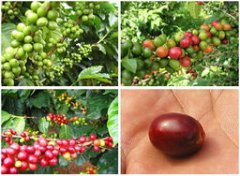
Common misunderstandings in Coffee cultivation
People often mistakenly think that coffee is grown directly with raw beans, but it takes a long time to grow coffee only to find that it doesn't sprout. In fact, coffee is grown with seeds with endocarp (Parchment). The inner fruit (or sheepskin or paper parchment) refers to the tea-brown hard skin that wraps the coffee seeds, and the coffee beans attached to that layer are called Parchment Bean. Put aside the bright red of full maturity
2015-03-06 Coffee planting common sense cultivation common misunderstanding often people some people think coffee
Classification of coffee by the National Standard for Coffee Botany
There are more than 60 types of coffee, but there are roughly two types of coffee grown on a commercial scale, one is Arabica, accounting for about 70% of the world's coffee planting area; one is Robasta, accounting for about 30% of the world's coffee planting area. According to the classification of coffee by China's national standards, it is mainly divided into the following five varieties. 1. Arabica coffee, i.e. Arabian species. origin
2015-01-17 coffee botany national standard classification class has variety commercial
The practice of coffee beans in Tanzania the cultivation of fine coffee in Tanzania
Gourmet coffee has soft acidity and attractive aroma, which is absolutely worth enjoying. Coffee exports from Tanzania (Tanzania) play an important role in the whole national economy. Bean-shaped berry coffee is very productive and is said to be more fragrant than ordinary coffee. Generally speaking, the coffee beans in Tanzania have an extraordinary quality. For example, in the neighborhood of Kilimanja
2016-05-10 Tanzania coffee beans practices cultivation boutique coffee gourmet coffee acidity
Guatemala Antigua Guatemala Coffee Bean Flavors
Antigua is located in a valley in the volcanic cliffside region of Guatemala. Farmers have worked hard to improve cultivation methods, separating defective beans by hand, and are known for their low overall rate of defective beans. It is said that the shade cultivation method used in coffee cultivation (planting tall crops such as banana trees around coffee trees to create artificial shade) originated in Guatemala
2016-05-04 Region Knowledge Guatemala Antioch Coffee Bean Flavor Location
Dirkley stole coffee seedlings and finally cultivated them successfully.
In ○, Deckley, a naval officer who returned to Paris on holiday from the French dependent island of Martinique, learned that the French coffee transplant industry was on the rocks. Based on his strong patriotism and his understanding of the soil and water of Martinique, he decided to volunteer to transplant the descendants of the Java coffee mother tree donated by the Netherlands to the dependency of Central and South America to expand the French coffee cultivation industry, so that the coffee market will not continue to be subject to the Ottoman Empire and the Netherlands.
2015-04-02 Klee Coffee Miao Hui Dharma end cultivation success 17 France dependent Martin
Basic knowledge of fine coffee basic knowledge of coffee botany
According to the botanical description of coffee: coffee is Rubiaceae, coffee genus, perennial evergreen shrubs or small trees. There are more than 60 types of coffee classified, but there are roughly two varieties of coffee grown commercially on a large scale, one is Arabica, accounting for about 70 percent of the world's coffee planting area, and the other is Robasta, accounting for about 30 percent of the world's coffee planting area. According to our country
2015-03-12 Boutique coffee basics common sense botany knowledge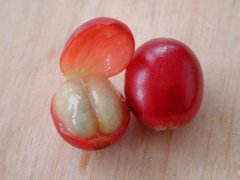
Tanzanian boutique coffee Kilimanjaro and Meru mountain barista coffee tree cultivation
From Kenya further south into Tanzania, Tanzanian coffee is a member of the East/Central African coffee family, most of which are washed beans, so it usually tastes bright and has a strong aroma. Tanzanian coffee definitely has the strength to compare with neighboring Kenya. However, the country's coffee quality control is not strict, and many of the sloppy processing processes often destroy the coffee classification into AA and A grades.
2016-07-07 tanzania boutique coffee kili maza roshan mountain meru cultivation
Basic knowledge of Fine Coffee legends and cultivation of Coffee
At present, coffee, as an elegant, fashionable and high-grade beverage, has long been popular all over the world, and has been listed as the first of the three major beverages (coffee, tea and cocoa) in the world. Coffee is also grown in 76 countries and regions all over the world. In 1983-1984 alone, the world's coffee output reached as much as 5.5 million tons, with an export volume of 4.2 million tons, of which South is known as the coffee kingdom.
2015-03-10 Boutique coffee basics common sense about legends planting
Introduction to the cultivation of three main coffee farms in the southwest of Puerto Rico
Today, Puerto Rican gourmet coffee has been exported to the United States, France and Japan. Coffee in this country is generally carefully cultivated, with pure taste, aroma and heavy granules, among which the best is among the world's famous brands. The best coffee is Yauco Selecto, which means Selecto. Grand Lares Yauco is produced in the southwest of the island.
2016-06-17 Puerto Rico Island Southwest main three Coffee Farm planting introduction
The practice of Honduran coffee beans the cultivation of fine coffee in Honduras
Overall, Honduran coffee has a good reputation and is suitable for mixed coffee. Coffee in Honduras is imported from El Salvador. Honduras produces high-acid high-quality coffee. Like other places, the coffee grade in Honduras depends on altitude: coffee grown at 700 to 1000 meters above sea level is medium, and grown at 1000 to 1500 meters above sea level
2016-05-10 Honduras coffee beans practices cultivation boutique coffee in general
Panamanian coffee planting environment coffee cultivation
Growing environment Panama is a small country located in the center of the American continent. The waters of the Atlantic and Pacific oceans flood its beaches. Panama is located at 9 degrees north latitude, the meeting point of the Central Mountains, where Mount Baru, one of the highest volcanoes in Central America, is located. The Baru volcano has an altitude of more than 11400 feet, and the land around it is rich in nutritious and fertile soil.
2016-05-29 Panama coffee planting environment located in America large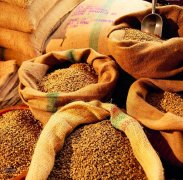
The knowledge of coffee botany is mainly divided into the following five varieties
According to the botanical description of coffee: coffee is Rubiaceae, coffee genus, perennial evergreen shrubs or small trees. There are more than 60 types of coffee classified, but there are roughly two varieties of coffee grown commercially on a large scale, one is Arabica, accounting for about 70 percent of the world's coffee planting area, and the other is Robasta, accounting for about 30 percent of the world's coffee planting area. According to our country
2015-10-19 Coffee botany knowledge mainly divided into the following varieties
History of coffee cultivation in ancient pits of Taiwan
It is located on the Tropic of Cancer. The sunshine and rainfall are very abundant. The native coffee produced in Taiwan is sweet and fragrant, but not bitter. It has its own local flavor of Taiwan, belonging to the world's best coffee.
2014-06-17 Coffee culture coffee history coffee encyclopedia
Costa Rican rosy summer coffee beans of the Goddess Manor
Coffee was first introduced in 1720 according to CR official data. Baidu sources show that 1729 were imported from Cuba. In short, coffee has taken root in CR in the 18th century. It was first planted in the central valley (central valley). In the 19th century, the government vigorously promoted the cultivation of coffee, including the allocation of land as long as it was willing to cultivate coffee, and that it could become a landowner after five years of cultivation.
2016-05-04 Goddess Manor Costa Rica Rose Summer Flavor excellent Coffee beans first introduced
Description of Flavor of Yunnan small-grain Coffee Huaguoshan Coffee; introduction to the taste of varieties in producing areas
The main planting sites are also concentrated in Dehong Lincang and Pu'er Banna in Baoshan, western Yunnan. The coffee introduced by missionaries in the 19th century was mainly Robusta, but it was no longer planted on a large scale. In the 1950s, experts assisted by the Soviet Union brought two mainstream Arabica varieties: iron pickup typica and Bourbon bourbon to Baoshan, Yunnan, for cultivation and promotion, which was well received.
2016-10-14 Yunnan small grains Coffee Huaguoshan Flavor description Grinding characteristics varieties producing areas
Scientific research and cultivation of coffee in Costa Rica
The research center, located about 30 kilometers northeast of San Jose, the capital of Costa Rica, belongs to the Costa Rican Coffee Association and is the research institution for planting, breeding and quality inspection of Brazilian coffee fruits in Costa rica. in addition, it also has 10 hectares of experimental plots, planting a number of excellent varieties. Coffee is the main agricultural product in Costa Rica, with an annual output of more than 2 million bags
2016-05-31 Costa Rica coffee scientific research cultivation located in Costa Rica capital San Jose
The planting and cultivation of Coffee Tree Seedling which country has the best coffee planting area?
Coffee fruit contains two seeds, namely coffee beans. The two beans are connected face to face with each other on one side of the plane. Each coffee bean has a thin outer film, which is called silver skin, and its outer layer is covered with a yellow outer skin, called endocarp. The whole coffee bean is wrapped in a sticky pulp to form coffee pulp, which is soft and sweet.
2016-07-30 Coffee growth habits seedlings planting cultivation which country producing area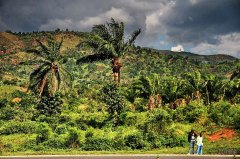
Dagaska is basically the producer of Robbins coffee and the cultivation of Arabica coffee beans.
Boutique coffee has a rich and beautiful taste. Even if the coffee made of boutique coffee beans is not all fine coffee, it depends on whether it gives full play to the characteristics of coffee beans, whether it has a good taste, if not, it can not be called boutique coffee. Madagascar is basically a producer of Robbins Coffee, but has plans to increase
2016-06-03 Garth basically Robbins Coffee producing countries Arabian Coffee beans growing
Cultivation techniques of Yunnan Coffee with small grains
Disease control: 1. Coffee rust is the main disease of coffee, the most harmful, the damaged plants, light reduced yield, heavy death. Coffee rust is mainly harmful to leaves and sometimes to young fruits and twigs. After the leaves were infected, many light yellow spots appeared at first and enlarged in the form of water stains, followed by orange-yellow powdery spores on the back of the leaves, and there was a light green halo around the disease spots, and the disease spots in the later stage.
2014-09-02 Coffee knowledge Yunnan coffee small grain coffee coffee tree planting cultivation techniques