“coffee tree planting requirements” search results (600)

Sidamo production area introduced by Coffee Tree Plantation
Variety classification Arabica bean coffee tree can be divided into two main varieties: Arabica species (Coffea Arabica) and Robusta species (Coffea Robusta/Coffea Canephora). There are also some minor species, such as the Liberian species (Coffea Liberica) and the Alabasta species (Coffea Arabusta), but they are rare on the market. Rob.
2016-06-16 Coffee planting Manor introduction West Dharma producing area Variety Classification Rabbi
Robusta coffee with weak aroma and bitter taste describes the characteristics of grinding degree and introduces the taste of varieties in producing areas.
[Arabica] Coffee has a varied and broad potential flavor. Arabica coffee produced in different regions, different elevations and different climates usually has its own characteristics and can show a completely different flavor. "Arabica" coffee smells like grass when it is not roasted. After proper roasting, it shows a "fruity" aroma.
2016-10-15 Aroma bitterness heavy Robes Booth Coffee Flavor description Grinding characteristics
Two different coffee bean varieties Arabica and Robusta are different
In many places where coffee is sold, it is not difficult to find words like "100% Arabica", and even canned coffee has a style called "XX Arabica Coffee", which makes one wonder: What is "Arabica Coffee"? In fact, Arabica is the name of the coffee tree species. Coffea Arabica and Cof
2015-03-18 two kinds different coffee beans varieties rabbi robbs booth lots sales coffee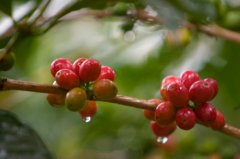
Understand that coffee trees are evergreen shrubs or trees belonging to Rubiaceae.
1 Coffee trees are evergreen shrubs or trees belonging to the Rubiaceae; wild coffee trees can grow to a height of 5 to 10 meters, but coffee trees planted in the manor are often cut to a height of less than 2 meters in order to increase fruit and facilitate harvesting. The opposite leaf of the coffee tree is long oval, the leaf surface is smooth, the end branch is very long, the branch is few, and the flower is white, opening on the petiole.
2015-06-05 Coffee belonging to the grass family evergreen shrubs trees coffee
Planting skills of herbaceous coffee trees
First, planting time: April 15-25 period. Second, planting location: plain, hillside, wasteland, front and back house, forest and fruit tree seedlings can be planted, but should not be planted in tall trees or other unventilated places. Third, herbal coffee does not like flood and fertilizer, conditional planting can use farm manure, during the growth period, it is best to irrigate 1-2 water during the growth period, absolutely do not allow the use of all kinds of chemical fertilizers and
2014-09-02 Coffee knowledge herbal coffee coffee tree planting coffee tree planting skills
The three best quality coffee beans in the world
At present, the best quality coffee beans in the world mainly come from Arabica, Robusta and Liberia, which are mainly proud of the coffee trees in the three places.
2014-05-13 Coffee knowledge coffee beans good quality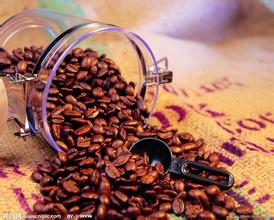
Introduction to the origin of coffee beans in Madagascar
There are more than 6000 species of coffee trees, most of which are tropical trees and shrubs. There are four main coffee trees in the world, of which only two are of real commercial value and are planted in large quantities, and the quality of the coffee beans produced by other coffee trees is also higher than that of other coffee trees. The first is Arabica beans, which account for 70% of the world's output, the world-famous Blue Mountain.
2016-06-05 Motor Garth coffee beans origin introduction coffee category 500 many kinds products
Introduction to high-quality coffee classified by coffee
Arabica species VS Robusta species as a crop, tree species and planting environment are the basic factors for the good ring of coffee beans. At present, the coffee beans in circulation in the coffee market are Arabica (Coffea Arabica) or Robusta (Coffea Robusta). Generally speaking, Arabica coffee trees have fragile vitality, low resistance to diseases and insect pests, and requirements for planting environment.
2014-05-21 Coffee knowledge boutique coffee coffee classification
Varieties of coffee trees
1.5 Arabica coffee varieties improved Arabica coffee beans include traditional varieties that are very close to the original, as well as mutants or hybrids mated with Robusta. Coffee variety improvement is not only limited to the fight against diseases and insect pests, but also the pursuit of a steady stream of harvests. 1. The variety of Arabica coffee belongs to the evergreen shrub Ara of the genus Rubiaceae.
2014-07-04 Coffee knowledge coffee trees varieties coffee encyclopedia
Practical explanation on the examination rules of roasting Coffee production license [GB]
The coffee tree belongs to the Rubiaceae. Out of a total of 73 varieties, only Arabica (Coffea ara-bica Linnaeus) and Canifera (Coffea canephora Pierre) are cultivated by humans. The remaining 71 varieties are wild, but of no value to growers.
2014-08-15 Coffee knowledge coffee production license coffee roasting
Coffee trees are evergreen shrubs or trees belonging to Rubiaceae.
Coffee trees are evergreen shrubs or trees belonging to the Rubiaceae family. Wild coffee trees can grow to a height of 5 to 10 meters, but coffee trees planted in the manor are often cut to a height of less than 2 meters in order to increase fruit and facilitate harvesting. The opposite leaf of the coffee tree is long oval, the leaf surface is smooth, the end branch is very long, the branch is few, and the flower is white, opening at the base of the petiole connecting the branch.
2015-06-05 Coffee belonging to Grass Family evergreen shrubs trees
Coffee trees grow around the equator.
Coffee trees grow in tropical or subtropical agricultural gardens centered around the equator and called coffee belts. Most of the coffee production is between the Tropic of Cancer, 25 degrees north of the tropical or subtropical equator and 30 degrees south of the equator. An area with an annual average temperature of 16-25 degrees Celsius, no Frosts Descent and rainfall of 1600-2000 mm. At present, coffee is mainly produced by seven countries.
2015-05-29 Coffee tree grow equator center coffee for the middle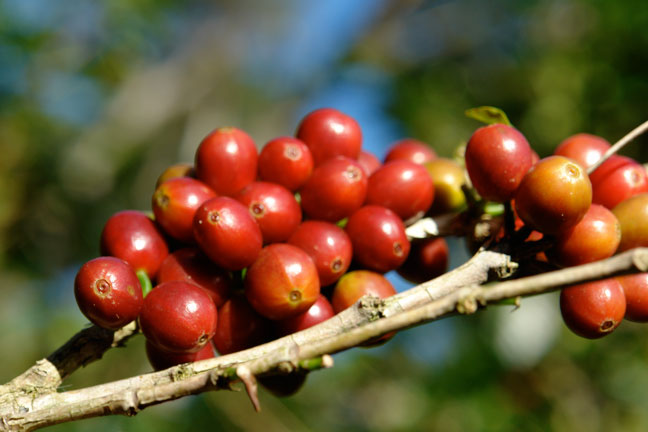
Why choose manor coffee beans? Visit Panamanian producing area and Manor Carmen Manor Kaduai half Water
Carmen Manor [Origin]: Panama [Manor]: Carmen Manor [Grade]: SHB, EP [altitude]: 1750 m [soil]: black soil [particles]: 17 mesh [varieties]: Kaduai Catuai 70%, Kaddura Caurra20%, iron truck Typica, dwarf San Ramon San Ramon, New World Mundo Novo 10% [raw bean treatment]: semi-washed [taste wind]
2016-04-18 Why choose manor coffee beans visits Panama producing areas Carmen Kadu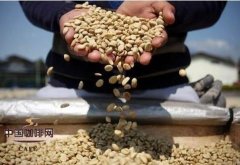
The comparison of coffee beans the difference between Arabica and Robusta
In many places where coffee is sold, it is not difficult to find words like "100% Arabica". Even canned coffee appears in a style called "XX Arabica Coffee", which makes one wonder: what is "Arabica Coffee"? In fact, Arabica is the name of the coffee tree variety (species). Arabica (Coffea Arabica) and Robusta (Cof)
2015-02-02 Coffee beans comparison rabbi Robbins Booth different many sales Coffee Land
The comparison of coffee beans the difference between Arabica and Robusta
In many places where coffee is sold, it is not difficult to find words like "100% Arabica". Even canned coffee appears in a style called "XX Arabica Coffee", which makes one wonder: what is "Arabica Coffee"? In fact, Arabica is the name of the coffee tree variety (species). Arabica (Coffea Arabica) and Robusta (Cof)
2015-05-07 Coffee beans comparison rabbi Robbins Booth different many sales Coffee Land
Coffee Coffee Coffee introduction to Arabica species
Arabica species VS Robusta species as a crop, tree species and planting environment are the basic factors for the good ring of coffee beans. At present, the coffee beans in circulation in the coffee market are Arabica (Coffea Arabica) or Robusta (Coffea Robusta). Generally speaking, Arabica coffee trees have fragile vitality, low resistance to diseases and insect pests, and requirements for planting environment.
2015-06-12 Coffee classification boutique introduction rabbi card species Robbins Booth
Carmen Manor Fine Coffee in Panama
Carmen Manor Fine Coffee (specialty coffee) is also known as specialty coffee selection. It refers to coffee made from a small number of raw beans with excellent taste grown in an ideal geographical environment. Depending on the special soil and climatic conditions in which they grow, they have outstanding flavor. After strict selection and grading, this kind of coffee has a hard texture and taste.
2016-05-27 Panama Carmen Manor Fine Coffee sp
What is Arabica coffee based on boutique coffee?
In many places where coffee is sold, it is not difficult to find words like "100% Arabica". Even canned coffee has a style called Arabica coffee, which makes one wonder: what is "Arabica coffee"? In fact, Arabica is the name of the coffee tree variety (species). "Arabica" and "Robusta" are two kinds.
2015-04-15 Boutique coffee basics what rabbi a lot sell place we
The basic knowledge of different coffee beans between Arabica and Robusta
In many places where coffee is sold, it is not difficult to find words like "100% Arabica". Even canned coffee appears in a style called "XX Arabica Coffee", which makes one wonder: what is "Arabica Coffee"? In fact, Arabica is the name of the coffee tree variety (species). Arabica (Coffea Arabica) and Robusta (Cof)
2015-11-02 Rabbi Robbins Booth different coffee beans basics common sense a lot sales coffee.
Boutique Coffee General knowledge of Coffee Arabica vs Robsta
In many places where coffee is sold, it is not difficult to find words like "100% Arabica". Even canned coffee appears in a style called "XX Arabica Coffee", which makes one wonder: what is "Arabica Coffee"? In fact, Arabica is the name of the coffee tree variety (species). Arabica (Coffea Arabica) and Robusta (Cof)
2015-01-22 Boutique coffee common sense rabbi Robbins booth many sales places