“coffee tree cultivation” search results (3000)

Introduction to the lemon tree manor in Matagalpa producing area
Author: Ellen Li Yi Link: https://zhuanlan.zhihu.com/p/20468996 Source: Zhihu copyright belongs to the author. Commercial reprint please contact the author for authorization, non-commercial reprint please indicate the source. The suitable climate provides an excellent growth environment for the cultivation of coffee. The mineral-rich pozzolanic soil provides abundant nourishment for the cultivation of coffee trees.
2016-06-27 Processing processing Nicaragua coffee type producing area introduction Mataga Erpa
Important conditions for the cultivation of Fine Coffee
There is a noun called coffee belt. There are more than 60 coffee producing countries in the world, most of which are located in the tropics and subtropics between the Tropic of Cancer (latitude 2326). This coffee growing area is called coffee belt (Coffee Belt) or coffee area (Coffee Zone). The annual average temperature of the coffee belt is above 20 ℃, because the coffee tree is a tropical plant, if the temperature is below 20 ℃.
2014-12-20 Boutique coffee common sense cultivation important condition there is a noun called coffee.
Varieties of coffee beans how long does it take for coffee trees to blossom
The Liberian species, the large seed species, is native to Liberia in Africa, as well as a few countries such as Malaysia. Its cultivation history is slightly shorter than the other two coffee trees. Liberian coffee trees are suitable for growing in lowlands. Its trunk is high and strong, it is 18 meters high, its leaves are large and tough, and its fruits and coffee beans are also very large. Its seed coat is close to the seed kernel and is scarlet when it is mature. Cited
2016-06-08 Coffee beans varieties coffee flowering need how long Libby subspecies large grains produced in
Classification of coffee trees
In recent years, coffee producing countries no longer blindly pursue high output while neglecting quality. Many countries have begun to introduce a new coffee evaluation system in order to arouse the enthusiasm of producers and promote the production of fine coffee. For example, Brazil began to implement the Cup of excellence coffee rating system in 1999 in order to better subdivide boutique coffee. And boutique coffee has become
2016-05-23 Coffee classification in recent years coffee producing countries no longer blindly pursuit high output
Plant classification of coffee beans
Green trees and Rubiaceae plants have been dominated by plants with special effects since ancient times, such as quinine tree, which is regarded as a specific drug for malaria, and Dugen, which is used to treat amigellosis. Coffee is positioned as the most unique alkaloid drinking plant group. Usually after sowing for two to three years, coffee trees can grow to a height of about five to ten meters, but to prevent coffee beans from losing their aroma and taste, and
2016-05-25 Coffee beans plants taxonomy trees grasses since ancient times special efficacy
Introduction to the Flavor Grinding scale of the name of the Manor in the Coffee Bean planting area of Yunnan Province
According to Yunnan Coffee, in 1892, French missionary Father Tian used coffee fruit to breed the first coffee tree outside the church, and then cultivated more coffee trees and planted them around the church. Since then, the village of Zhukula began to grow coffee, and the village has been surrounded by coffee trees ever since. The two oldest elders in the village
2016-10-21 Yunnan coffee beans planting region name manor flavor taste grinding
The classification of coffee beans. Classification of raw beans.
Plant classification Coffee tree belongs to the evergreen tree of Rubiaceae. Rubiaceae plants have been dominated by plants with special effects since ancient times, such as quinine tree, which is regarded as a specific drug for malaria, and Dugan, which is used to treat Amiba dysentery. Coffee is defined as the most unique alkaloid drinking flora. The fruit of coffee is made up of outer skin, pulp, endocarp, silver skin, and the species wrapped in the innermost layers mentioned above.
2016-03-21 Coffee planting raw beans fruits coffee beans classification plants coffee tree genus
What kind of coffee beans do they belong to in plants
Coffee tree belongs to the evergreen tree of Rubiaceae. Since ancient times, most of the plants of Rubiaceae are plants with special effects, such as quinine tree, which is regarded as a specific drug for malaria, and Dugan, which is used to treat amoeba dysentery. Coffee is defined as the most unique alkaloid drinking flora.
2014-08-22 Coffee knowledge coffee beans plants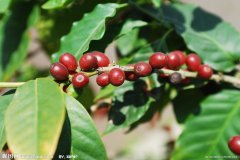
Coffee basic knowledge what conditions do you need to grow coffee?
Coffee is a perennial evergreen shrub or small tree of Rubiaceae. It is a horticultural perennial cash crop with the characteristics of fast growth, high yield, high value and wide market. Wild coffee trees can grow to a height of 5 to 10 meters, but coffee trees planted on the manor are often cut to a height of less than 2 meters in order to increase the amount of fruit and facilitate harvesting. The opposite leaves of coffee trees are long oval.
2015-06-21 Coffee basics common sense planting needs what conditions
Four major cultivation systems of Ethiopian coffee how is Ethiopian coffee cultivated? Ethiopia
Ethiopia is located between three and fourteen degrees north latitude, and the planting area of coffee trees is nearly 600000 hectares. There are two rainy seasons a year in the south and east of the country, while there is only one rainy season in the west. The distribution of the rainy season is different, so coffee is harvested in Ethiopia all the year round. Coffee grows between 550 and 2750 meters above sea level. The soils in the west and south belong to volcanic rocks and are rich in minerals.
2016-03-16 Ethiopia coffee big four cultivation system how
Simple and mild Ugandan coffee grind taste variety characteristics of high-quality coffee beans
Uganda is the country of origin of coffee grown in Robusta, but commercial cultivation of Arabica species here did not begin until early 1900. Today, there are still a large number of wild robusta coffee trees in Uganda, which is rare in cities in the world. As a landlocked country, the large coffee cultivation in Uganda is often interplanted, where coffee trees are mixed with food crops and rubber trees.
2016-10-09 Plain mild Uganda coffee grinding taste variety producing area characteristics boutique
Barista course
Climate is the decisive factor for coffee cultivation. Coffee trees are only suitable for growing in the tropics or subtropics, so the zone between latitude 25 degrees south and north is generally called
2014-07-16 Coffee knowledge barista coffee training
Introduction of lemon tree manor in Nicaraguan coffee growing area with suitable climate
The suitable climate provides an excellent growth environment for the cultivation of coffee. The mineral-rich pozzolanic soil provides abundant nutrients for the cultivation of coffee trees. High-quality Nicaraguan coffee is also grown in the northern and central highlands of the country. The best coffee is produced in Matagalpa (Matagalpa), which is highly respected by coffee lovers all over the world.
2016-07-15 Suitable climate Nicaragua coffee planting area lemon tree manor introduction suitable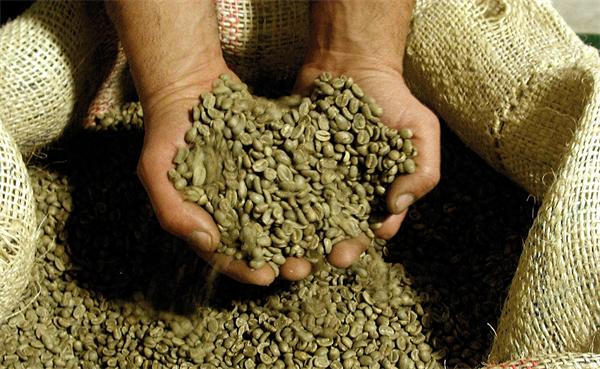
Species of coffee trees Arabica species Robasta species Liberian species Esselsa species
There are more than 6000 species of coffee trees, most of which are tropical trees and shrubs. There are four main coffee trees in the world, of which only two are of real commercial value and are planted in large quantities, and the quality of the coffee beans produced by other coffee trees is also higher than that of other coffee trees. The first is Arabica beans, which account for 70% of the world's output, the world-famous Blue Mountain.
2016-03-15 Coffee species rabbi card species Robbas Buzz Libby subspecies Ethel Serbia
Scientific research and cultivation of coffee in Costa Rica
The research center, located about 30 kilometers northeast of San Jose, the capital of Costa Rica, belongs to the Costa Rican Coffee Association and is the research institution for planting, breeding and quality inspection of Brazilian coffee fruits in Costa rica. in addition, it also has 10 hectares of experimental plots, planting a number of excellent varieties. Coffee is the main agricultural product in Costa Rica, with an annual output of more than 2 million bags
2016-05-31 Costa Rica coffee scientific research cultivation located in Costa Rica capital San Jose
What are the types of coffee trees?
The shape of the bean is small, the front is long oval, the middle crack is narrow and tortuous, and the arc on the back of the bean is flat. Arabica coffee is grown in Brazil and Colombia in South America, Central America, Costa Rica in the Caribbean, Guatemala, Jamaica, Mexico and Ethiopia. Arabica coffee beans are large, uniform in size and glossy in color.
2016-05-31 Coffee class which bean-shaped smaller face oval middle crack zigzag
The method of planting coffee trees the origin of coffee trees is in Ethiopia, Africa.
The output and quality of coffee depend to a large extent on whether the planting of coffee trees is reasonable and whether the growth of coffee trees is luxuriant, so how to plant coffee trees and under what environment is suitable for growth? let's learn together today. The origin of the coffee tree is Ethiopia in Africa. Botanically, coffee trees belong to the subgenus Rubiaceae.
2015-10-22 Coffee planting method Origin Africa Ethiopia output good or bad
How many varieties of coffee beans are there in the world
There are more than 70 kinds of coffee in the world, of which 3 are mainly cultivated in China. ① small seed species, also known as Arabica coffee, is native to Ethiopia and is cultivated in Taiwan, Fujian, Guangdong, Guangxi, Yunnan and Sichuan. Shrub, 4-6 m tall, with many branches in the basal part; leaves thinly leathery, ovate-lanceolate or lanceolate, entire or undulate, terminal bud green or bronzed, so
2016-06-05 Global total how many coffee beans varieties
How many varieties of coffee beans are there in the world
There are more than 70 kinds of coffee in the world, of which 3 are mainly cultivated in China. ① small seed species, also known as Arabica coffee, is native to Ethiopia and is cultivated in Taiwan, Fujian, Guangdong, Guangxi, Yunnan and Sichuan. Shrub, 4-6 m tall, with many branches in the basal part; leaves thinly leathery, ovate-lanceolate or lanceolate, entire or undulate, terminal bud green or bronzed, so
2016-06-05 Global total how many coffee beans varieties
Introduction of Kenya Coffee producing country of Arabica Coffee Tree Origin
Kenya is bordered to the north by Ethiopia, the origin of Arabica coffee trees, but it was not until the beginning of the 20th century that coffee cultivation began. In the 19th century, missionaries introduced Arabica trees from Yemen, but did not plant them in large quantities until 1893. Brazil's ancient bourbon coffee seeds were introduced to cultivate coffee on a large scale. In other words, the current Kenyan coffee is of Brazilian origin.
2016-07-02 Rabbi Coffee Origin Kenya country of production introduction North neighbor