“coffee growing environment” search results (3000)

Kenyan Coffee introduces the growing Environment
Coffee entered Kenya in the 19th century, when Ethiopian coffee drinks were imported into Kenya through southern Yemen. But it was not until the early 20th century that the Bourbon Coffee Tree was created by the St. Austen Mission (St). Austin Mission) is introduced. Kenyan coffee is mostly grown at an altitude of 1500 to 2100 meters and is harvested twice a year. To ensure that only ripe berries are picked, people must
2016-06-01 Kenya coffee introduction growth environment 19th century entering
Introduction to the Variety characteristics of Coffee growing Environment in Valenford Manor with Classic equilibrium characteristics
The difference in transportation between Blue Mountain Coffee and other coffee is that it is transported in barrels with a capacity of 70 kilograms, a replica of Bonifieur barrels produced in Guadeloupe in the last century. The barrel was originally used to carry flour shipped from the United Kingdom to Jamaica, usually with a trademark and the name of the manufacturer. The Coffee Industry Committee for all authentic Jamaican coffee
2016-09-18 Classic balanced sexual Warren Ford Manor Coffee planting Environment producing area
Panamanian Coffee growing Environment Panamanian Rosa: a rare Wild Variety
Panama Coffee, the king of coffee price in Central America, has been among the best coffee producers in the world since three years ago, surprising countries that have been in the vanguard of developer production for many years. Panamanian coffee is mainly produced in the west near the Costa Rican border, producing the best washed coffee. Compared with coffee beans grown at low and middle elevations
2016-04-13 Panama Coffee planting Environment Rosa rare Wild Variety
The growing environment of coffee beans how to grow coffee beans
First, planting time: April 15-25 period. Second, planting location: plain, hillside, wasteland, front and back house, forest and fruit tree seedlings can be planted, but should not be planted in tall trees or other unventilated places. Third, coffee does not like water and fertilizer, conditional planting can use farm manure, during the growth period, if the drought watering 1-2 is the best, absolutely do not allow the use of various chemical fertilizers and weeding
2016-06-06 Coffee beans planting environment how time April 15 -25
Environmental requirements for growing Coffee in Coffee Farm in India
Coffee planting conditions and distribution 1. What is coffee? Coffee (Coffee) is derived from the Latin word Coffea (biological word name) and belongs to a member of the Rubiaceae family. These plants are all woody plants, most of which are distributed in the tropics, with more than 500 classifications and about 6000 varieties. Most of the Coffea plants are tropical 5-6 meters high.
2016-06-15 India coffee manor planting environment requirements conditions distribution
Jasmine scented Ethiopian Yega Sheffivoka Coffee growing Environment Fine Coffee is introduced.
Ethiopia is located at 6 ~ 9 degrees north latitude and 34 ~ 40 degrees east longitude. It is located in the center of the Horn of Africa and is a landlocked country. It is bordered by Djibouti and Somalia to the east, Sudan to the northwest, Eritrea to the north and Kenya to the south. [5] there are mainly mountain plateaus in Ethiopia, and most of them belong to the Ethiopian plateau. The central and western regions are the main body of the plateau, accounting for the whole territory.
2016-08-17 Jasmine incense Ethiopia Yega Sheffield Waka Coffee planting Environment
Introduction to the flavor and taste of coffee growing environment in Lusha Coffee Manor, Tanzania
The Arusha Coffee Garden Hotel was built on a coffee plantation, and each hut is surrounded by clumps of coffee trees. If interested, hotel staff will be more than happy to take guests nearby for a free and in-depth coffee trip. In addition, coffee elements can be found everywhere in the room, the mini-bar prepares roasted coffee beans and homemade biscuits, and coffee is placed on the desk.
2016-07-15 Tanzania ah Lu coffee manor planting environment producing area flavor taste introduction
Colombian coffee growing environment Colombian coffee culture
The history of coffee cultivation in Colombia can be traced back to the Spanish colonial era in the 16th century, and there are many theories about the history of coffee in Colombia: one: it is said to come from the island of Haiti in the Caribbean and from El Salvador in Central America. Second: in 1808, a priest introduced coffee beans to Colombia for the first time from the French Antilles via Venezuela. One of them
2016-05-25 Colombia Coffee planting Environment Coffee Culture
Temperatures Mild Honduran coffee plantations Flavor Taste Growing environment Introduction Santa Barbara
Honduras 'high-quality coffee uses water washing to treat coffee beans, usually after soaking, in the soaking time, defective fruit will surface, can be discarded first. The good fruit is then placed in a fruit peeler and peeled off by the rotating force of the machine. The peeled fruits are screened by machines to select excellent quality fruits. usually larger fruit
2016-08-04 temperature mild honduras coffee estate appellation flavor taste cultivation ring
The story of Hawaiian coffee beans the characteristics of Hawaiian coffee beans the growing environment of coffee beans
Hawaiian Coffee Kona coffee beans from Hawaii have the perfect appearance, and their fruit is extremely full and shiny. The taste of coffee is rich and aromatic, with cinnamon flavor, and the acidity is well balanced. Hawaiian coffee is the only top variety produced in 50 states in the United States, and the United States is naturally the largest market for Kona coffee, which is grown in summer.
2016-04-27 Hawaii Tourism Coffee profile Coffee beans characteristics growth Environment
Introduction to the planting Environment and Flavor of Indonesian Coffee
The chairman of the Indonesian Special Coffee Association (SCAI), one of the high-quality coffee institutions in Indonesia, gave a brief overview of the export coffee business. Indonesia's total exports grew by an average of 50-20% a year from 2000 to 2009, until it became the third largest coffee manufacturer in the world. Robasta coffee accounted for about 70% of the total exports, because the earliest
2016-06-12 Indonesia coffee planting environment flavor introduction development
Organic Coffee growing Environment in Peru
Peru: organic coffee flavor and taste characteristics: high quality and balanced, palatable acidity, can be used for mixed drinks. Peruvian coffee cultivation history is not long, but as a rising star, Peruvian coffee is gradually opening up its popularity and entering the international market. Peru is located in western South America, with a coastline of 2254 kilometers. The Andes runs from north to south, and the mountains account for 1% of the total area of the country, which belongs to tropical sand.
2014-09-01 Coffee knowledge Peruvian coffee organic coffee coffee encyclopedia
Peruvian Coffee growing Environment introduces Peruvian boutique coffee beans
Peruvian coffee is grown in a planned way, which has greatly increased coffee production. Its rich acidity and mellow smoothness are its most prominent features. Peruvian coffee has a soft sour taste, medium texture, good taste and aroma, and is an indispensable ingredient in the production of comprehensive coffee. High-quality Peruvian coffee with a strong aroma, smooth, layered and full-bodied
2016-07-15 Peru coffee cultivation environment producing areas introduction boutique coffee beans
Coffee producing area in El Salvador Coffee growing environment in El Salvador
Flavor: balanced taste, excellent texture suggested baking method: medium to deep, there are many uses of high-quality beans: El SHB taste characteristics: sour, bitter, sweet mild and moderate. Salvadoran coffee ranks side by side with Mexico and Guatemala as the producers of Asa and Merdo, and is fighting for the top one or two places in China and the United States with other countries. The highland of origin is equal in size and size.
2016-05-27 Salva more coffee origin planting environment flavor taste balance texture
Colombian coffee growing environment Colombian coffee variety grade
Colombian coffee grades are divided into several Colombian coffee-growing histories, dating back to the Spanish colonial era in the 16th century, and there are many theories about the history of coffee in Colombia: one: it is said to come from the island of the Caribbean and from El Salvador in Central America. Second: in 1808, a priest transferred coffee beans from the French Antilles to Venezuela.
2016-05-27 Colombia Coffee planting Environment Variety Grade Columbia Coffee
Mild taste, very aromatic, rich joy Manor coffee flavor Taste Variety Growing environment Introduction
Nicaragua is one of the main coffee producing countries, producing coffee of high quality. Even the coffee in Guatemala's Antigua Mountains, which is famous in Asia, imports green beans from Nicaragua. Although Nicaragua coffee is not yet famous in Asia, in fact, Nicaragua coffee is famous all over the world (Starbucks has many cooperative coffee farmers in Nicaragua), while several coffee producing countries in Central America,
2016-09-18 taste mild very strong aroma delight manor coffee flavor variety
Peruvian coffee growing environment flavor and taste of Peruvian coffee beans
Peruvian coffee is grown in a planned way, which has greatly increased coffee production. Peruvian coffee has a mellow taste and proper acidity, and this lukewarm coffee attitude has made more and more people like it. Peruvian coffee has always been used as one of the stable mellow mixed beans of comprehensive coffee, and its rich acidity and mellow smoothness are its most prominent features. Peruvian coffee
2016-07-22 Peru coffee planting environment producing area flavor taste introduction coffee beans varieties
Introduction to the characteristics of planting environment in the production process of Cuban Crystal Mountain Coffee Flavor description
The cultivation of coffee is regulated by the state, and the best coffee growing area in Cuba is located in the Central Mountains. Because this area not only grows coffee, but also produces quartz, crystal and other precious minerals, it is also known as Crystal Mountain. At present, Crystal Mountain Coffee is synonymous with top Cuban coffee. Crystal Mountain is adjacent to the Blue Mountains of Jamaica, with similar climatic conditions, but
2016-09-19 Cuba Crystal Mountain coffee flavor description production process planting environment producing area
The mild climate of Colombian coffee growing environment introduces the taste of manors in Colombian coffee producing areas.
Colombia's mild climate, humid air, and diverse climate make it a harvest season all year round, with different kinds of coffee ripening at different times. What they grow is Arabica coffee beans of unique quality, and the coffee made from this coffee bean has a rich taste and endless aftertaste, which can be called fine coffee. Nowadays, many people combine Colombian coffee with high quality and delicious coffee.
2016-07-29 Climate mild Colombian coffee planting environment introduction producing area manor wind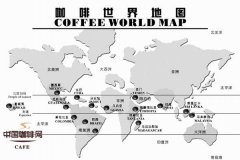
On the growing conditions of coffee
Coffee belt: coffee can not be grown in any environment, because it is originally a plant growing in a tropical rain forest, and in phylogeny, it forms the habit of requiring calm wind, cool, shaded or semi-shaded and humid environment. Therefore, coffee has strict requirements on planting conditions. We call the strips on both sides of the equator, between latitudes 25 degrees south and north, suitable for coffee growth as coffee belts. 1 、
2014-08-29 Coffee planting conditions Coffee Encyclopedia