“coffee growing conditions” search results (4000)
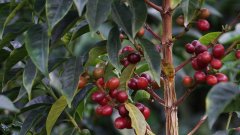
Cultivation conditions in Nicaragua SHG grade the most classic flavor of traditional coffee varieties
The global trend of modern coffee has gone through three popular stages: the first stage is the popularity of cheap coffee represented by instant coffee from the post-World War II to the 1960s; the second stage is the popularity of commercial coffee represented by Starbucks from the 1960s to the beginning of this century; the third stage is the popularity of boutique coffee, which originated in the 1970s and has become a trend in the past decade.
2016-06-20 Nicaragua planting condition SHG grade Classic Flavor tradition
What makes Jamaican Blue Mountain Coffee so special?
One might ask what makes Jamaican Blue Mountain Coffee so special? The answer is everything about it. The real Blue Mountain Coffee is one of the most advantageous coffee growing conditions in the world. The weather, geological structure and topography of Jamaica provide a unique ideal place. The designated Jamaican Blue Mountain Coffee can only. One might ask what makes Jamaican Blue Mountain Coffee so special?
2014-07-01 Jamaican boutique coffee blue mountain coffee Jamaican blue mountain coffee
The planting conditions of coffee trees the types of coffee trees
The Robastian coffee tree, which originated in the Congo in Africa, accounts for about 20% of the world's production. 30%. Robasta coffee tree is suitable for planting in the lowlands below 500 meters above sea level, has strong adaptability to the environment, can resist bad climate, resist diseases and insect pests, and does not need much manual care during soil preparation, weeding and pruning, and can be allowed to grow in the wild. It is easy to cultivate.
2016-06-06 Coffee cultivation conditions species Robbas Bath Origin Africa just
Introduction of varieties with slightly sour flavor and taste characteristics in the coffee producing area of Crystal Mountain, Cuba
With fertile land, humid climate and abundant Rain Water, Cuba can be called a natural treasure land for coffee cultivation. The suitable natural conditions provide a favorable natural environment for the growth of coffee trees. Coffee is well cultivated and developed here, and the best coffee growing area in Cuba is located in the Central Mountains. Because in addition to growing coffee in this area, there are also precious minerals such as quartz and crystals.
2016-09-09 Slight sour Cuba Crystal Mountain coffee manor producing area flavor taste characteristics
Planting requirements and conditions of Coffee trees
The origin of the coffee tree is Ethiopia in Africa. In botany, coffee trees belong to the evergreen trees of the subgenus Rubiaceae, and coffee beans, commonly known as coffee beans, are actually the seeds of the fruit of coffee trees. They are called coffee beans only because they are shaped like beans. Climate is the decisive factor for coffee cultivation. Coffee trees are only suitable for growing in the tropics or subtropics, so latitude 25 degrees south and north.
2014-08-01 Coffee planting peace conditions coffee origin Africa Ethiopia plants
Hawaiian Coffee Flavor Description Grind Characteristics Variety Producing Area Taste Boutique Coffee Introduction
Real Hawaiian Kona coffee gives you a unique pleasure and leads you slowly into the transcendent state of coffee tasting. And this is all from the oldest Arabica coffee tree. Hawaii is the only state in the United States to grow coffee, which is grown on the five main islands of the Hawaiian archipelago: Oahu, Hawaii, Maui, Kauai and Mauroka.
2016-10-13 Hawaiian Coffee Flavor Description Grind Characteristics Variety Region Taste Fine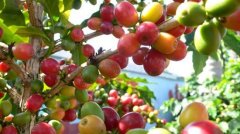
Philippine Coffee Variety Robbins Terrika Exelsa Arabica Coffee beans
The growth environment of boutique coffee beans also has higher requirements. Generally grow at an altitude of 1500 meters or even more than 2000 meters above sea level, with appropriate precipitation, sunshine, temperature and soil conditions. Some world-famous coffee beans also have a special geographical environment, such as the alpine clouds in the Blue Mountains, the free shade provided by the afternoon clouds in Kona, and the volcanic ash soil in Antigua.
2016-06-17 Philippines cultivation Coffee Variety Robbins Berry Ecke Searle Arabian
Basic knowledge of coffee beans comparison of basic data of coffee bean varieties
Suitable cultivation conditions: Arabica variety (Arabica) is suitable for plateau cultivation, Robesta variety (Robusta) is suitable for lowland cultivation, and Liberian variety (Liberica) is suitable for minimum cultivation. Production: the Arabica variety (Arabica) accounts for about 70-80% of the world's total output; the Robesta variety (Robusta) accounts for about 20-30% of the world's total output of Liberian varieties (Liberica)
2015-03-04 Coffee beans basic knowledge varieties basic information comparison suitability cultivation conditions pull
General knowledge of high-quality coffee planting requirements and conditions of coffee trees
The origin of the coffee tree is Ethiopia in Africa. In botany, coffee trees belong to the evergreen trees of the subgenus Rubiaceae, and coffee beans, commonly known as coffee beans, are actually the seeds of the fruit of coffee trees. They are called coffee beans only because they are shaped like beans. Climate is the decisive factor for coffee cultivation. Coffee trees are only suitable for growing in the tropics or subtropics, so latitude 25 degrees south and north.
2014-12-15 Boutique coffee common sense planting summation conditions origin Africa Ethiopia
Hawaiian Kona Coffee with strong sour and sweet taste introduces fine coffee
Kona coffee beans are average and neat in shape, with strong sour and sweet taste, moist and smooth taste. Because it grows on volcanoes and has high-density artificial farming, each bean can be said to be a spoiled lady, beautiful, plump and with baby-like skin. Although Hawaii is often affected by tornadoes, climatic conditions affect the coffee industry
2016-06-28 With strong sour sweet Hawaiian Kona coffee introduction boutique
Introduction to Coffee Culture and Flavor in Ethiopia
Sustainable coffee culture Ethiopian coffee beans grow in close to the natural environment, after years of planting under the same growth conditions, Ethiopian coffee beans have gradually adapted to the environment here. More than 60% of coffee beans are grown in forests or semi-forests. The villages that grow coffee in large areas account for about the total amount of coffee produced in the country.
2016-05-31 Ethiopia coffee culture flavor introduction sustainable development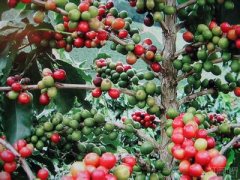
The conditions for planting coffee trees in the basic coffee belt.
Coffee belt: coffee can not be grown in any environment, because it is originally a plant growing in a tropical rain forest, and in phylogeny, it forms the habit of requiring calm wind, cool, shaded or semi-shaded and humid environment. We call the strips on both sides of the equator between latitudes 25 degrees south and north suitable for the growth of coffee trees as coffee belts. Temperature: the requirement for temperature varies with the species of cultivation, small
2015-03-30 Coffee tree planting planting foundation conditions coffee is in any environment
Introduction to the characteristics of Hawaiian Kona Coffee Flavor Manor with very suitable Climatic conditions
Kona coffee has always been grown at home. At first, only men were allowed to work in the coffee garden, and later women joined in. This kind of family production of Hawaiians preferred to rely on the efforts of their families rather than hiring workers to work, so it was normal for Hawaiians to have eight or nine children at that time. Since then, there have been new immigrants from the Philippines and the United States.
2016-08-08 Climate conditions very suitable Hawaii Kona coffee flavor taste manor
Ethiopian Coffee Features Ethiopian Coffee Flavor Boutique Coffee
Ethiopian coffee beans grow in a near-natural environment. After years of cultivation under the same growing conditions, Ethiopian coffee beans have gradually adapted to the environment here. More than 60% of coffee beans are forest or semi-forest grown coffee. Coffee farming villages produce about 35 percent of the country's coffee. Many of these are used.
2016-07-27 Ethiopia Coffee Characteristics Flavor Boutique Coffee Bean Grown in
Introduction of Colombian boutique coffee in high-altitude growing environment
Colombian coffee, the first to think of is the coffee golden triangle, which is called the coffee triangle by the provinces of Caldas, Quindo and Risaralda. It produces the best coffee in the world and is the source of the mellow aroma of Colombian coffee. And Quindo Cordillera is a producing area in central Colombia, in West Cortez in the Andes.
2016-07-04 High altitude altitude planting Environment Columbia boutique Coffee introduction Columbus
Coffee planting techniques conditions for planting coffee trees coffee beans are planted
Coffee belt: coffee can not be grown in any environment, because it is originally a plant growing in a tropical rain forest, and in phylogeny, it forms the habit of calm wind, cool, shaded or semi-shaded and humid environment. We call the strips on both sides of the equator between latitudes 25 degrees south and north suitable for the growth of coffee trees as coffee belts. Temperature: the requirements for temperature vary with the species of cultivation
2016-05-08 Coffee planting technology conditions coffee beans coffee is in any environment can
Common sense of Coffee the basic environmental conditions of planting coffee trees
Coffee belt: coffee can not be grown in any environment, because it is originally a plant growing in a tropical rain forest, and in phylogeny, it forms the habit of requiring calm wind, cool, shaded or semi-shaded and humid environment. We call the strips on both sides of the equator between latitudes 25 degrees south and north suitable for the growth of coffee trees as coffee belts. Temperature: the requirement for temperature varies with the species of cultivation, small
2015-05-19 Coffee common sense planting basics environment conditions coffee is in any
Introduction of Ethiopian Coffee Flavor and Fine Coffee
Ethiopian coffee beans grow in close to the natural environment, after years of planting under the same growth conditions, Ethiopian coffee beans have gradually adapted to the environment here. More than 60% of coffee beans are grown in forests or semi-forests. Large-scale coffee-growing villages account for about 35% of the country's total coffee production. Many of these are used.
2016-07-29 Ethiopia coffee producing area manor introduction flavor taste boutique
Ethiopian Coffee Bean Flavor Manor introduces Ethiopian Coffee Brands
Ethiopian coffee beans grow in close to the natural environment, after years of planting under the same growth conditions, Ethiopian coffee beans have gradually adapted to the environment here. More than 60% of coffee beans are grown in forests or semi-forests. Large-scale coffee-growing villages account for about 35% of the country's total coffee production. Many of these are used.
2016-07-16 Ethiopia coffee beans flavor taste manor producing area introduction coffee brand
Boutique Coffee teaches you to identify the types of specialty coffee beans
At present, the most important coffee beans mainly come from two varieties, namely coffeaarabica and coffeacanephore. The former is the so-called arabica growing coffee beans. The latter is also known as robusta to grow coffee beans. The plants, cultivation methods, environmental conditions, appearance, chemical composition and even the processing methods of the subsequent raw beans of the two kinds of coffee beans are different.
2014-11-13 Coffee knowledge boutique coffee specialty coffee beans types