“cm” search results (1757)

Soft, slightly sour Salvadoran coffee beans with beautiful sweetness
El Salvador boutique coffee is concentrated in the volcanic rock producing areas of Santa Ana in the west and Charantanan fruit in the northwest. In recent years, the top 10 cup tests are almost entirely from these two producing areas, with an altitude of about 9-1500 meters, mainly bourbon (68%). Followed by Pacas (29%), mixed-race Pakamara, Dulaai and Kaddura accounted for only 3%. The coffee harvest season has been held since November.
2016-07-01 Soft slightly sour okay sweetness El Salvador coffee beans boutique coffee
Introduction to the characteristics of El Salvador Coffee Manor IzaIco area of Renas Manor Sonsonate Province
Pacamara is the artificial breeding variety of Pacas and Maragogipe. It was first cultivated by researchers in El Salvador in 1958. Pacamara is an excellent variety under rare artificial breeding, which is better than blue, and perfectly inherits the advantages of the mother plant. It not only has the excellent taste of Pacas, but also inherits the large size of Maragogipe, and the bean body is at least like beans.
2016-07-18 El Salvador coffee manor producing area characteristics introduction Linus Nass Son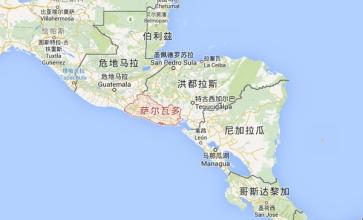
El Salvador Coffee--Once the world's fourth largest coffee producer El Salvador Coffee
Many friends don't know El Salvador, a country located in northern Central America. Honduras to the north, the Pacific Ocean to the south, Guatemala to the west and northwest, and the Gulf of Fonseca to the east. The smallest and most densely populated country in Central America. Terrain to mountains, plateau-based, volcanic, Santa Ana active volcano elevation of 2,385 meters, the highest peak for the country; north
2016-02-27 el salvador coffee used to be the fourth largest country in the world a lot of coffee friends do not know
Coffee and its products-- terminology (2)
Pulper--mipped bean cut or scraped wet processed coffee beans, often with brown black scars. 3.20 Brown coffee beans brown bean brown-black coffee beans. 3.21 White coffee beans white bean are simply called white beans, that is, coffee beans with a white surface. 3.22 Amber beans amber bean yellow coffee beans
2015-08-14 Coffee and its products nouns terms 3.19 damaged beans pulper-
Colombian Coffee Lanhuihuila Coffee Bean Flavor description Variety taste treatment
The main varieties of Colombian coffee are small grains of coffee. Plants are small trees or large shrubs, 5-8 m tall, usually much branched at base; old branches gray-white, nodes dilated, young branches glabrous, compressed. Leaves thinly leathery, ovate-lanceolate or lanceolate, 6-14 cm long and 3.5-5 cm wide, tip long acuminate, acuminate part 10-15 mm long, base cuneate or slightly obtuse, rarely rounded, entire or
2016-10-20 Columbia Coffee Lanhui Huila Coffee beans Flavor description characteristics varieties
Introduction to the characteristics of Coffee Flavor description and Grinding Variety in Santa Rita Manor, Colombia
The main varieties of Colombian coffee are small grains of coffee. Plants are small trees or large shrubs, 5-8 m tall, usually much branched at base; old branches gray-white, nodes dilated, young branches glabrous, compressed. Leaves thinly leathery, ovate-lanceolate or lanceolate, 6-14 cm long and 3.5-5 cm wide, tip long acuminate, acuminate part 10-15 mm long, base cuneate or slightly obtuse, rarely rounded, entire or
2016-10-10 Columbia Santa Rita Manor Coffee Flavor description Grinding Variety producing area
Brief introduction of Coffee planting History and planting Technology
In China, according to historical records, coffee trees were planted in Taiwan for the first time in 1884, and coffee cultivation in mainland China began in Yunnan. In 1902, a French missionary named Tian introduced seeds from Yingong, Binchuan County, Yunnan Province. it was successfully planted in a place called Zhu Kula, a tributary of the Jinsha River. The commercial cultivation of coffee in Yunnan began in 1985.
2014-07-09 Coffee cultivation coffee history coffee planting technology
Brief introduction of Coffee planting History and planting Technology
In China, according to historical records, coffee trees were planted in Taiwan for the first time in 1884, and coffee cultivation in mainland China began in Yunnan. In 1902, a French missionary named Tian introduced seeds from Yingong, Binchuan County, Yunnan Province. it was successfully planted in a place called Zhu Kula, a tributary of the Jinsha River. The commercial cultivation of coffee in Yunnan began in 1985.
2015-10-07 Coffee planting History Technology introduction China Historical data Records 1884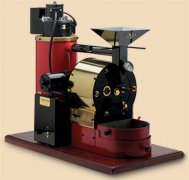
20 years experience of handmade coffee roaster made by San Franciscan Roaster 1LB in USA
San Franciscan Roaster 1LB baking capacity: 454g body weight: 45kg size: 43 * 81 * 68.5 cm (length * width * height) exhaust pipe: diameter 10.1cm, exhaust capacity per minute 1.4m3 working voltage: 110V current: 2A gas pressure: natural gas 1.7kPa, gas 2.2kPa gas consumption: 0.3kg heat per hour: 10000 BTU
2015-10-27 San Franciscan Roaster 1LB USA
El Salvador boutique coffee producing area Sonsonate province IzaIco region Santa Ana volcano region library
El Salvador boutique coffee is concentrated in the volcanic rock producing areas of Santa Ana in the west and Charantanan fruit in the northwest. In recent years, the top 10 cup tests are almost entirely from these two producing areas, with an altitude of about 9-1500 meters, mainly bourbon (68%). Followed by Pacas (29%), mixed-race Pakamara, Dulaai and Kaddura accounted for only 3%. The coffee harvest season has been held since November.
2016-06-24 El Salvador boutique coffee producing area Sonsonate IzaIco![Super detailed coffee flower pulling steps [GIF dynamic image]](https://www.coffeesearch.net/uploads/allimg/151010/15395U395-0-lp.gif)
Super detailed coffee flower pulling steps [GIF dynamic image]
Make a cup of coffee as the basis for ultra-detailed coffee pull flower steps of the practice step 1. 1/3 of the selected point injection, coffee cup tilt 10-15 degrees, first raise the flower cylinder about 10 cm into the milk bubble to pierce the grease. 2. Lower the flower pulling jar. Close the opening of the flower pulling jar to the coffee cup. Keep the flow rate shaking left and right. When shaking, control the flower pulling flow rate. It is better to form milk by shaking the distance in a zigzag shape to the left and right.
2015-10-10 detailed coffee pull flowers steps GIF dynamic brew well cup for base
Control of Diseases and pests in Coffee
(1) Pest control 1. Coffee tiger longicorn beetles are distributed in all coffee producing areas in the world, and also occur in Yunnan, Guangxi and Hainan Island in China. It is one of the major pests of coffee. The coffee tiger longicorn beetle harms the coffee trunk for more than 2 years. At first, it eats between the cambium and xylem, and then eats the xylem. The victim was in a curved tunnel filled with sawdust.
2015-10-07 Coffee diseases and pests control diseases pests
Sweet Colombia Arabica Flavor Description Grind Variety Description
Colombia coffee varieties are mainly small coffee. Plants are small trees or large shrubs, 5-8 meters high, usually multi-branched at the base; old branches are gray, nodes expand, young branches glabrous, compressed. Leaves thinly leathery, ovate-lanceolate or lanceolate, 6-14 cm long, 3. 5 -5 cm wide, apex long acuminate, acuminate part 10-15 mm long, base cuneate or slightly obtuse, rarely rounded, entire or rounded
2016-10-09 Sweet Colombia Arabica Coffee Flavor Description Ground Variety Region Special
Kalantan fruit volcanic rock producing area in the northwest of El Salvador coffee producing area
El Salvador boutique coffee is concentrated in the volcanic rock producing areas of Santa Ana in the west and Charantanan fruit in the northwest. In recent years, the top 10 cup tests are almost entirely from these two producing areas, with an altitude of about 9-1500 meters, mainly bourbon (68%). Followed by Pacas (29%), mixed-race Pakamara, Dulaai and Kaddura accounted for only 3%. The coffee harvest season has been held since November.
2016-06-28 El Salvador coffee producing areas northwest Charan Tannan volcanic rocks
A brief introduction to Coffee planting History and planting techniques
According to historical records, coffee trees were first planted in Taiwan in 1884, and coffee cultivation in mainland China began in Yunnan. In 1902, a French missionary named Tian introduced seeds from Yinggong County in Binchuan County, Yunnan Province. it was successfully planted in a place called Zhu Kula, which is located on the bank of the Yushan River, a tributary of the Jinsha River. The commercial cultivation of coffee in Yunnan began in 1985, but its development is slow.
2015-02-25 Coffee Common sense planting History Technology introduction Historical data Records 1884
An introduction to the Salvadoran Coffee producing area in the volcanic Rock producing area of Charantan, Northwest China
El Salvador boutique coffee is concentrated in the volcanic rock producing areas of Santa Ana in the west and Charantanan fruit in the northwest. In recent years, the top 10 cup tests are almost entirely from these two producing areas, with an altitude of about 9-1500 meters, mainly bourbon (68%). Followed by Pacas (29%), mixed-race Pakamara, Dulaai and Kaddura accounted for only 3%. The coffee harvest season has been held since November.
2016-06-27 Northwest Charan Tannan volcanic rocks producing areas El Salvador coffee introduction Thrall
Species morphology of Colombian coffee-flavored coffee
The main varieties of Colombian coffee are small grains of coffee. Plants are small trees or large shrubs, 5-8 m tall, usually much branched at base; old branches gray-white, nodes dilated, young branches glabrous, compressed. Leaves thinly leathery, ovate-lanceolate or lanceolate, 6-14 cm long and 3.5-5 cm wide, tip long acuminate, acuminate part 10-15 mm long, base cuneate or slightly obtuse, rarely rounded, entire or
2016-06-05 Columbia Coffee Flavor species Morphology varieties Major
Introduction of coffee from the Santa Ana volcano area of El Salvador with excellent thickness and grease.
El Salvador boutique coffee is concentrated in the volcanic rock producing areas of Santa Ana in the west and Charantanan fruit in the northwest. In recent years, the top 10 cup tests are almost entirely from these two producing areas, with an altitude of about 9-1500 meters, mainly bourbon (68%). Followed by Pacas (29%), mixed-race Pakamara, Dulaai and Kaddura accounted for only 3%. The coffee harvest season has been held since November.
2016-06-27 Thickness grease excellent El Salvador Anna volcano area coffee introduction sa
Introduction to the flavor and taste of Salvadoran coffee manor
Pacamara is the artificial breeding variety of Pacas and Maragogipe. It was first cultivated by researchers in El Salvador in 1958. Pacamara is an excellent variety under rare artificial breeding, which is better than blue, and perfectly inherits the advantages of the mother plant. It not only has the excellent taste of Pacas, but also inherits the large size of Maragogipe, and the bean body is at least like beans.
2016-07-26 El Salvador coffee manor producing area flavor taste introduction boutique coffee beans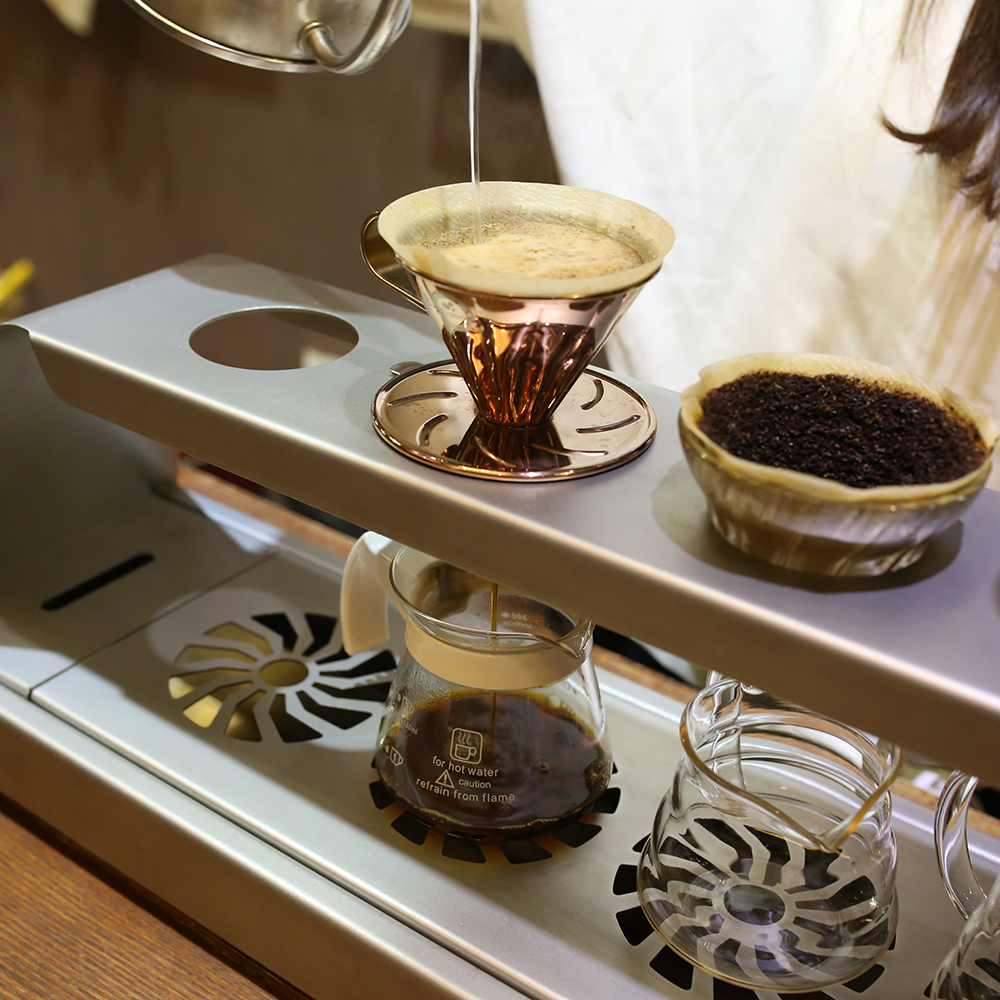
4-hole coffee hand frame Philharmonic pressure rack coffee bar special 2mm stainless steel sandblasting novice must have
Single hole aperture: 79 mm, can perfectly control the Philharmonic pressure, Harrio V60, TIAMO and other brands of filter cups, strong compatibility. The position of the four-hole distribution has also been precisely calculated, so that there will be no hindrance to the operation. Specification L*H*W (cm): 72.3X 22.9X 20.2 2mm stainless steel, integral sandblasting treatment. Because on the premise of self-use, there is no design and production at all.
2016-01-04 4 holes coffee hand rack Philharmonic press rack bar special purpose mm stainless steel spray