“Yunnan small-grain coffee beans” search results (400)

Introduction to the characteristics of Arabica Coffee Flavor description, Grinding degree treatment, Price and planting Environment
Arabica coffee accounts for 70% of all coffee production, and its excellent flavor and aroma make it a direct drinkable coffee with only eight Arabica beans (8). However, its resistance to dryness, frost, diseases and insect pests is too low, especially the natural enemy of coffee-leaf rust, so all producing countries are committed to products.
2016-10-15 Rabbi coffee flavor description grinding processing characteristics price planting environment
Arabica Coffee Bean Coffee Manor introduction Arabica Coffee Manor
The origin of the Arabica species (Coffea arabica) is the Abyssini Arabica subplateau (Abyssinia, now known as the Ethiopian plateau) in Ethiopia. In the early days, it was mainly eaten as medicine (Islamic monks used as a secret medicine for physical and mental therapy or for awakening the brain), developed the habit of baking and drinking in the 13th century, and passed through Allah in the 16th century.
2016-07-11 Rabbi coffee beans coffee manor introduction rabbi card species Coffea a
Yunnan small Grain Coffee, the Top Coffee in China
Most people think that Blue Mountain and Mocha can be called kings in coffee. Blue Mountain Coffee is mellow, slightly sweet in bitterness, soft and smooth, and slightly sour, which can make the taste more sensitive and taste its unique taste. Mocha coffee has the most unique, richest and most fascinating complex flavor in the world: red wine, wild game, dried fruit,
2015-10-21 China coffee medium top grade Yunnan small grain most think blue mountain
Characteristics of Arabica Coffee Flavor description method introduction to the characteristics of high-quality coffee beans in producing areas
Arabica coffee accounts for 70% of all coffee production, and its excellent flavor and aroma make it a direct drinkable coffee with only eight Arabica beans (8). However, its resistance to dryness, frost, diseases and insect pests is too low, especially the natural enemy of coffee-leaf rust, so all producing countries are committed to products.
2016-10-13 Rabbi coffee flavor description treatment characteristics varieties producing areas boutique coffee beans
Cultivation techniques of small-grain Coffee in Yunnan Province: disease Control
1. Coffee rust is the main disease of coffee, the most harmful, the damaged plants, light reduced yield, serious death. Coffee rust is mainly harmful to leaves and sometimes to young fruits and twigs. After the leaves were infected, many light yellow spots appeared at first and enlarged in the form of water stains, followed by orange-yellow powdery spores on the back of the leaves, and there was a light green halo around the disease spots, which gradually expanded or connected in the later stage.
2015-10-07 Yunnan Province small grains coffee cultivation techniques diseases control
General knowledge of fine coffee the growing environment of small-grain coffee
Small grain coffee scientific name: Coffea arabica family genus: Rubiaceae coffee genus morphological characteristics: small trees or large shrubs, plant height 5 meters 8 meters. Base usually much branched, old branches gray-white. Nodes inflated, young branches glabrous. Leaves thinly leathery-ovate-lanceolate or lanceolate, apex long acuminate, base cuneate or slightly obtuse, entire or shallowly wavy, both surfaces glabrous. Cymes several clustered in leaf axils
2015-01-19 Boutique coffee common sense small grain growth environment scientific name Cof
Arabica coffee bean variety Arabica variety
Arabica bean scientific name: coffea arabica (Arabica bean) family: Rubiaceae coffee tree can be divided into two main varieties: Arabica species (coffea arabica) and Robusta species (coffea robusta/coffea canephora) (rare on the market). Arabica (Coffea arabica) is the most traditional Arabica coffee variety. Originated in the east
2015-03-10 Arabic Coffee Bean Variety Rabbi Card seed Kadou Scientific name coff
Introduction to the planting situation of Arabica Coffee Manor
Arabica coffee trees grow between 900m and 2000 m above sea level; they are hardy, and the suitable growth temperature is 1524 ℃; they need more humidity, and the annual rainfall is not less than 1500 ml. At the same time, they also require higher cultivation techniques and conditions. Arabica coffee beans are mainly grown in South America (except Argentina and parts of Brazil), Central American countries and Africa.
2016-07-12 Rabbi card seed coffee origin introduction manor planting situation rabbi card species
Release of Coffee in Yunnan Coffee Bean Roaster structure Diagram
The western and southern parts of Yunnan Province are located between the 15th latitude and the Tropic of Cancer. Most areas are 1000-2000 meters above sea level. The topography is dominated by mountains and slopes. Here, the land is fertile, the sunshine is sufficient, the rainfall is abundant, and the temperature difference between day and night is large. The unique natural conditions form the special taste of Yunnan small-grain coffee, which is rich but not bitter, fragrant but not strong, slightly fruity. Pu'er in the south and west of Yunnan
2016-06-06 Yunnan Coffee release situation Coffee Bean Roaster structure Map Yunnan Province Western China
Fine coffee beans Yunnan coffee Yunnan small grain coffee the latest coffee origin introduces the unique flavor
The western and southern parts of Yunnan Province are located between the 15th latitude and the Tropic of Cancer. Most areas are 1000-2000 meters above sea level. The topography is dominated by mountains and slopes. Here, the land is fertile, the sunshine is sufficient, the rainfall is abundant, and the temperature difference between day and night is large. The unique natural conditions form the special taste of Yunnan small-grain coffee, which is rich but not bitter, fragrant but not strong, slightly fruity. Pu'er in the south and west of Yunnan
2016-01-09 Boutique coffee beans Yunnan coffee small grains latest origin introduction flavor unique
Arabica, the most traditional Arabica coffee variety.
Arabica bean scientific name: coffea arabica (Arabica bean) family: Rubiaceae coffee tree can be divided into two main varieties: Arabica species (coffea arabica) and Robusta species (coffea robusta/coffea canephora) (rare on the market). Arabica (Coffea arabica) is the most traditional Arabica coffee variety. Originated in the east
2014-12-03 Traditional Arabic coffee variety rabbi card species kadou scientific name co
The most traditional Arabica coffee variety, Rabica.
Arabica bean scientific name: coffea arabica (Arabica bean) family: Rubiaceae coffee tree can be divided into two main varieties: Arabica species (coffea arabica) and Robusta species (coffea robusta/coffea canephora) (rare on the market). Arabica (Coffea arabica) is the most traditional Arabica coffee variety. Originated in the east
2015-02-05 Traditional Arabic coffee variety rabbi card species kadou scientific name co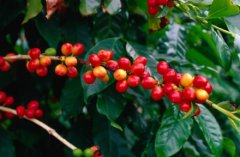
Arabica, the most traditional Arabica coffee variety.
Arabica bean scientific name: coffea arabica (Arabica bean) family: Rubiaceae coffee tree can be divided into two main varieties: Arabica species (coffea arabica) and Robusta species (coffea robusta/coffea canephora) (rare on the market). Arabica (Coffea arabica) is the most traditional Arabica coffee variety. Originated in the east
2015-04-28 Traditional Arabic coffee variety rabbi card species kadou scientific name co
Which coffee machine manufacturers are there in the world's largest coffee producing countries in China?
Excellent, 100% purity, small and symmetrical particles, can be boiled and soaked, mellow, deeply favored by western countries. It was rated as first class in London, England as early as the late 1950s. In recent years, with the expansion of international trade, Lujiang small grain coffee is more well-known. Merchants in Europe, the United States, Egypt, Hong Kong and Macao, especially in Britain, the United States, Egypt, Hong Kong and Macao all regard it as the best beverage.
2016-07-16 China coffee place of production which world big producing country coffee machine production factory
The most traditional Arabica coffee variety-Arabica Arabica coffee
Arabica bean scientific name: coffea arabica (Arabica bean) family: Rubiaceae coffee tree can be divided into two main varieties: Arabica species (coffea arabica) and Robusta species (coffea robusta/coffea canephora) (rare on the market). Arabica (Coffea arabica) is the most traditional Arabica coffee variety. Originated in the east
2016-02-29 Traditional Arabic coffee variety rabbi card species kadou scientific name co
Introduction to the characteristics of Yunnan "small Coffee" Tieka Coffee Flavor Manor
So when Nestl é succeeded in promoting high-yield new varieties in Pu'er in the 1990s, brown farmers in Baoshan also cut down the old varieties and changed them to new ones. With a round of coffee expansion, the new varieties increased and the old varieties decreased day by day. Finally, today's situation: the old varieties have almost been cut down, and the little ones that survived are old, weak, sick and old.
2016-07-25 Yunnan small grain coffee pickup coffee flavor taste manor producing area characteristics introduction
Description characteristics of Yunnan Coffee Bean Catimor,Bourbon,Typica small Coffee Brand Flavor
Yunnan coffee flavor description Zhu Kula is poor and backward, but it is a place with an inextricable bond with coffee. In addition to growing coffee all over the country, the villagers all have a tradition of drinking coffee: self-growing, self-grinding and self-brewing, and now men, women and children in the village have the habit of drinking coffee. The villagers here have a special affection for coffee trees, even if the coffee beans do not bring them any responsibility.
2016-10-20 Yunnan coffee beans Catimor Bourbon Typica
Description of Flavor of Tieka Coffee in Yunnan, China. Introduction to the treatment methods of grinding degree.
Pu'er, Xishuangbanna, Wenshan, Baoshan, Dehong, Lincang and other places in the south and west of Yunnan are all the distribution areas of small-grain coffee in Yunnan. As of January 1, 2012, according to the comprehensive survey of Yunnan Province, the planting area of coffee in Yunnan has exceeded 800000 mu, and the output of coffee beans in this period is expected to exceed 55000 tons. For the future, the blueprints of local governments in Yunnan have also been drawn up:
2016-09-30 China Yunnan pickup coffee flavor description grinding treatment methods
Famous Coffee Raw beans introduce Yunnan small Coffee
The western and southern parts of Yunnan small grain coffee Bourbon Bobang AA Yunnan Province are located between 15 N and the Tropic of Cancer, most areas are 1000-2000 meters above sea level, and the topography is mainly mountainous and sloping, with large ups and downs, fertile soil, sufficient sunshine, rich rainfall and large temperature difference between day and night. These unique natural conditions form the particularity of Yunnan small grain coffee taste.
2015-06-04 Well-known coffee raw beans introduction Yunnan small grains
Introduction to the characteristics of fine coffee beans in the manor area of small-grain iron pickup coffee made in Yunnan, China
Panama is located in the isthmus of Panama in Central America, bordered by Colombia to the east, the Pacific Ocean to the south, the map of Panama to Costa Rica to the west and the Caribbean Sea to the north. The territory is S-shaped to connect North and South America, and the Panama Canal connects the Atlantic and Pacific oceans from north to south. It is known as the bridge of the world. [5] Panama has a land area of 75517 square kilometers.
2016-09-22 Domestic China Yunnan small grains pickup coffee flavor taste manor producing area