“Yunnan small-grain coffee beans” search results (300)
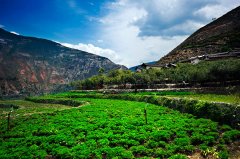
Yunnan Coffee A hundred-year Coffee Legend in Zhukula Village, Dali, Yunnan
Zhu Kula, located in the depths of the mountains in the northeast of Pingchuan Town, Binchuan County, Yunnan Province, is the junction of Chuxiong, Dali and Lijiang, surrounded by the Yupao River, a tributary of the Jinsha River. Due to inconvenient transportation, Zhu Kula is almost isolated from the rest of the world, so it is a little-known Yi shanzhai. When it comes to the history of Chinese coffee, we have to mention Zhukula Coffee in Dali, Yunnan.
2016-06-14 Yunnan Coffee Dali Zhu Kula hundred years Legend located in Yunnan Province
Nestle coffee production line
During the coffee harvest season, farmers are picking coffee beans.
2014-07-24 Coffee News Nestle Coffee Coffee production Line Coffee Encyclopedia
Full-bodied Yunnan Tieka Coffee Flavor and Taste introduction to the characteristics of Fine Coffee in Manor area
Coffee is a short-day plant. Coffee has the characteristics of multiple flowering and concentrated florescence. The florescence of small seed coffee in Yunnan is from February to July, and the flowering period is from March to May. The flowering of coffee is greatly affected by climate, especially rainfall and temperature. Coffee flowers have a short life span of only 2-3 days. Small seed coffee usually opens at 3: 5 in the morning and blooms from 5 to 7 o'clock. The development time of coffee fruit is longer.
2016-09-08 Mellow full-bodied Yunnan pickup coffee flavor taste manor producing area characteristics
Introduction to the basic knowledge of Yunnan Fine Coffee Bean varieties description of hand-made taste of Yunnan small-grain coffee
[scientific name] small grain species are CoffeaarabicaL., medium grain species are Coffeacanephora, large grain species are Coffealiberica family genus: Rubiaceae Coffea [alias] small grain species, also known as Arabian species, medium grain species also known as Gaffra species, large grain species also known as large seed species
2023-02-05 Boutique Coffee Basics Common sense Yunnan Xiao Grain characteristics Scientific name Cof
The coffee harvest is full but my heart is worried.
According to the Yunnan Coffee Industry Association: in 2013, Yunnan coffee planting area has exceeded 1.4 million mu, the new harvest season, Yunnan coffee output is expected to be close to 100000 tons. Yunnan coffee acreage and output account for more than 98% of China's coffee; the current New York coffee futures price remains between 110 and 115 cents, compared with this price, Yunnan coffee purchase offer is not expected
2014-08-06 Coffee bumper harvest Xinjiao Yunnan Province coffee industry association bulletin 2013
Introduction to the characteristics of Yunnan Tieka Coffee Flavor Flavor Manor
Typica and Bourbon, two classic high-quality coffee varieties, are the main coffee varieties in Yunnan. In 1991, Katimo Catimor series varieties were introduced from Kenya (with stronger anti-virus ability and higher yield). A variety of Arabian species (also known as small seed species). Because the morphology and habits of the two varieties are similar, the two varieties are mostly mixed. Iron
2016-09-22 Yunnan pickup coffee flavor manor producing area characteristics boutique coffee beans varieties
Introduction of Yunnan Coffee Flavor and Flavor Flavor Manor area
Small-grain coffee is suitable for growing in the mountains at an altitude of 800 to 1800 meters. If the altitude is too high, it will taste sour, and if it is too low, it will taste bitter. Small grains of coffee are mostly planted in dry and hot valleys about 1100 meters above sea level, so they are moderately sour, rich and mellow. There is a unique environment suitable for the growth of small seed coffee in many areas of Yunnan, and the quality of small seed coffee is excellent. The planting area is mainly distributed in the
2016-07-21 Yunnan coffee flavor taste manor producing area introduction small grains boutique coffee beans
Home-grown coffee, pay attention to the price of Chinese coffee, Yunnan small coffee beans
Yunnan small-grain coffee is a kind of beverage crop with high economic value, which is called the three largest beverages in the world with cocoa and tea, and its output and consumption ranks first among the three beverages. Coffee is rich in protein, fat, sucrose, starch, glucose, caffeine and other substances, rich aroma and delicious taste. Coffee is a perennial evergreen shrub or small tree of the genus Coffea of Rubiaceae.
2014-07-22 Yunnan coffee beans Yunnan small coffee beans Yunnan small boutique coffee beans coffee bean prices
Yunnan small Fine Coffee Bean introduction Iron Card Fine Coffee China Yunnan Coffee
Although Zhu Kula is poor and backward, it has an inextricable bond with coffee. In addition to growing coffee all over the country, the villagers all have a tradition of drinking coffee: self-growing, self-grinding and self-brewing, and now men, women and children in the village have the habit of drinking coffee. The villagers here have a special feeling for coffee trees, even if the coffee beans do not bring them any economic benefits.
2016-07-20 Yunnan small grains boutique coffee beans introduction pickup coffee China Zhu Kula although
Unique and full-bodied Yunnan Tieka Coffee Coffee Flavor description Variety introduction
Yunnan small-grain coffee is of good quality. Take Lujiangba small-grain coffee as an example: the percentage contents of crude fat, reducing sugar, starch, nitrogen, crude protein, ash, crude fiber, caffeine and sucrose are 17.1, 0.93,3.07,2.27,2.27,3.70,19.33,2.14,9.20 and 6.87 respectively. Coffee has the characteristics of multiple flowering and concentrated florescence.
2016-10-07 Unique full-bodied Yunnan pickup coffee small grains flavor description taste variety
Introduction to the flavor and taste of Arabica seed manor of small seed coffee
Arabica is deeply loved by Chinese people with a short history of coffee contact because of its strong fruity aroma. it was introduced to China by missionaries in the 19th century and was widely planted in Panzhihua, Sichuan, and the dry-hot valley of the Jinsha River in western Yunnan, where the sunshine was long and there was a big temperature difference between day and night. The local people solved the problem of insufficient seasonal rainfall by diverting water up the mountain.
2016-07-16 Small grains coffee rabbi card seed manor producing area flavor taste introduction
How to brew Yunnan small Coffee Flavor description how to deal with the characteristics of varieties and growth environment
Although Yunnan coffee Zhu Kula is poor and backward, it has an inextricable bond with coffee. In addition to growing coffee all over the country, the villagers all have a tradition of drinking coffee: self-growing, self-grinding and self-brewing, and now men, women and children in the village have the habit of drinking coffee. The villagers here have a special affection for coffee trees, even if the coffee beans do not bring them any economic benefits.
2016-10-20 Yunnan small grains coffee how brewing way flavor description treatment
Yunnan Dehong small Coffee planting Base
Dehong small grain coffee is native to Africa and Ethiopia and is the main cultivated variety in the world. In 1951, coffee seed was first introduced to Dehong Luxi Cotton cropping Experimental Station for productive cultivation. The seedlings were planted in 6 mu and grew well. In 1956, the Dehong Prefecture Committee decided to vigorously develop coffee in the whole state, and held a training course on coffee planting techniques throughout the state, so that small-grain coffee was widely developed in the whole state. 1958 de
2015-10-07 Yunnan Dehong Xiao Grain Coffee planting Base Origin
The species of Arabica beans, the classification of Arabica beans, coffee beans, Arabica.
Variety editor native species in all coffee production, Arabica coffee accounts for 70% of the coffee 80%, its excellent flavor and aroma make it the only coffee that can be drunk directly. However, its resistance to dryness, frost, diseases and insect pests is too low, especially the natural enemy of coffee-leaf rust, so all producing countries are committed to variety improvement.
2016-03-17 Rabbi kadou species classification coffee beans varieties editors native all coffee
Yunnan Dehong small Coffee planting Base
Dehong small grain coffee is native to Africa and Ethiopia and is the main cultivated variety in the world. In 1951, coffee seed was first introduced to Dehong Luxi Cotton cropping Experimental Station for productive cultivation. The seedlings were planted in 6 mu and grew well. In 1956, the Dehong Prefecture Committee decided to vigorously develop coffee in the whole state, and held a training course on coffee planting techniques throughout the state, so that small-grain coffee was widely developed in the whole state. 1958 de
2014-04-27 Yunnan Dehong Xiao Grain Coffee planting Base Origin
Yunnan Tieka Coffee Variety Flavor description introduction of Fine Coffee beans
Pu'er, Xishuangbanna, Wenshan, Baoshan, Dehong, Lincang and other places in the south and west of Yunnan are all the distribution areas of small-grain coffee in Yunnan. As of January 1, 2012, according to the comprehensive survey of Yunnan Province, the planting area of coffee in Yunnan has exceeded 800000 mu, and the output of coffee beans in this period is expected to exceed 55000 tons. For the future, the blueprints of local governments in Yunnan have also been drawn up:
2016-09-29 Yunnan pickup coffee variety producing area flavor description boutique coffee beans introduction
Common sense of coffee beans in Yunnan Dehong small grain coffee planting base
Dehong small grain coffee is native to Africa and Ethiopia and is the main cultivated variety in the world. In 1951, coffee seed was first introduced to Dehong Luxi Cotton cropping Experimental Station for productive cultivation. The seedlings were planted in 6 mu and grew well. In 1956, the Dehong Prefecture Committee decided to vigorously develop coffee in the whole state, and held a training course on coffee planting techniques throughout the state, so that small-grain coffee was widely developed in the whole state. 1958 de
2015-02-15 Yunnan Dehong Xiao Grain Coffee planting Base Coffee Bean Common sense
Cultivation techniques of Chinese small-grain Coffee cultivation of Coffee varieties of Tieli Katim in Yunnan, China
Prevention and treatment methods: ① strengthen management, reasonable pruning, appropriate shade. ② artificially killed adults and larvae, cut off the damaged branches and burned them in time. two。 Coffee leopard bark moth. It is widely distributed and is one of the common coffee pests, which can harm a variety of cash crops. The larvae overwintered in the branches, and the larvae often ate upward in the branches, forming a tunnel of 30cm to 60cm. Prevention and control methods:
2015-10-07 Small grains coffee cultivation techniques coffee beans planting control methods strengthening tube
Introduction to the Flavor and taste of Arabica Coffee in China
Arabica coffee accounts for 70% of all coffee production, and Arabica coffee accounts for 70% of all coffee products. its excellent flavor and aroma make it a direct drinkable coffee with only 8 Arabica beans (8). But its resistance to dryness, frost, diseases and insect pests is too low, especially the natural enemy of coffee-leaf rust, so all producing countries are in
2016-07-12 China rabbi coffee planting situation flavor taste introduction domestic native
Cultivation techniques of small-grain Coffee in Yunnan Province: disease Control
1. Coffee rust is the main disease of coffee, the most harmful, the damaged plants, light reduced yield, serious death. Coffee rust is mainly harmful to leaves and sometimes to young fruits and twigs. After the leaves were infected, many light yellow spots appeared at first and enlarged in the form of water stains, followed by orange-yellow powdery spores on the back of the leaves, and there was a light green halo around the disease spots, which gradually expanded or connected in the later stage.
2014-07-09 Yunnan small grain coffee beans Yunnan small grain coffee cultivation techniques Yunnan small grain coffee beans price