“Regions” search results (4677)

Puerto Rico coffee beans, which used to be one of the most productive regions in the world
Puerto Rico has a history of producing coffee for nearly 300 years and was once one of the most productive regions in the world. According to the Starbucks website, Spanish explorers brought coffee from Louis XIV plantations in France to the island in 1736. The fame of Yaucono Selecto was once indistinguishable from that of Kona in Hawaii and the Blue Mountains in Jamaica. It was also the palace of European kings and Vandi.
2016-06-21 Once in the world production large regional one Puerto Rico coffee beans introduction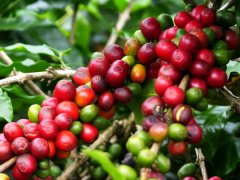
Which countries and regions can grow coffee? What conditions do you need to grow coffee?
Since coffee trees are tropical plants, they need to be planted in warm places. The main planting area is distributed between latitude 25 south and latitude 25 north with the equator as the center, so this area is also called the coffee belt. However, even in the coffee belt, Arabica and Robeska do not grow in exactly the same area, but grow up in an environment that is more suitable for their own growth.
2015-10-20 Which countries regions talents cultivation coffee needs what conditions due to
Twelve famous premium coffee producing regions of Galapagos
In 1875, Manuel J. Cobos, an indigenous Ecuadorian, began growing arabic bourbon coffee trees on Hacienda El Cafetal in San Cristobal. Coffee growing in the Galapagos Islands: Coffee is grown in Saint Cristobal. Hacienda El Cafetal in San Cristobal
2015-06-01 Famous Twelve Quality Coffee Origin Lapa Goss 1875 Ecuador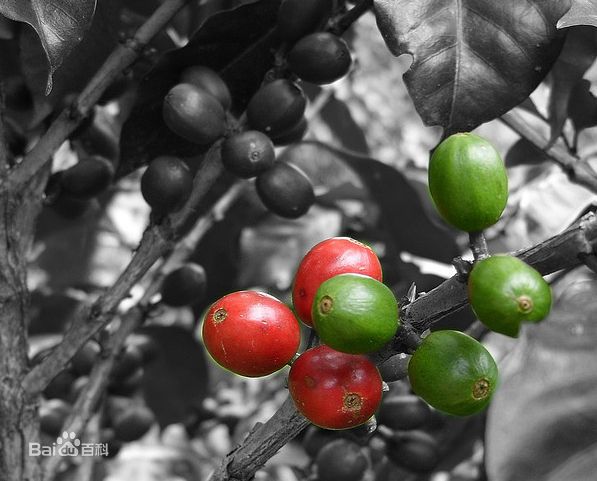
Antigua coffee in the volcanic regions of Guatemala is famous for its smoky taste.
Guatemala (Guatemala) aroma 3.5 minutes brightness 4.5 minutes mellow 3.5 minutes flavor 4.5 minutes aftertaste 4.5 points suitable for baking: Light/Medial/City shallow roasting, city degree can best show the characteristics of Guatemalan coffee, too deep will reduce the fruit flavor, if you like the smoky flavor, you can bake close to the second explosion, but still do not enter the second explosion as the principle. Due to
2016-07-25 Guatemala mountains Antioch Antigua coffee smoked famous dangerous land
Antigua coffee in the volcanic regions of Guatemala is famous for its smoky taste.
Guatemala (Guatemala) aroma 3.5 minutes brightness 4.5 minutes mellow 3.5 minutes flavor 4.5 minutes aftertaste 4.5 points suitable for baking: Light/Medial/City shallow roasting, city degree can best show the characteristics of Guatemalan coffee, too deep will reduce the fruit flavor, if you like the smoky flavor, you can bake close to the second explosion, but still do not enter the second explosion as the principle. Due to
2016-07-25 Guatemala mountains Antioch Antigua coffee smoked famous dangerous land
Costa Rican coffee bean producing areas where natural disasters are several times higher than those in other regions
This coffee producer, with all grades and types of coffee, accounts for 1/3 of the global consumption and accounts for a share of the global coffee market, although the natural disasters faced by Costa Rica are several times higher than those in other regions. but its arable area is enough to make up for it. There are many kinds of coffee here, but its industrial policy is abundant and cheap, so it is excellent.
2016-06-30 Natural disasters other regions several times Costa Rica coffee beans producing areas this
What is the taste of coffee beans in different regions?
(2) bitterness-based comprehensive coffee formula: Sumatra Mantenin G1 (40%), Colombia SUP (30%), Brazil NO.2?19 (20%), Kilimanjaro AA (10%). To produce strong-flavored coffee beans, you have to choose strong-flavored coffee beans, such as Sumatra manning in Indonesia, bitter and sour Colombia.
2016-06-08 Coffee beans region different taste what bitter main comprehensive coffee
Introduction of the six major coffee producing areas in Honduras to the western and southern regions
In Honduras, coffee-producing areas are divided into six major areas, spread to the west and south, namely Santa Barbara (Santa Barbara), El Paraiso (El Paraiso), Copan (Copan), La Paz (La Paz) and Comayagua (Olan Mound), with an average planting height of more than 1100 meters above sea level. The variety of coffee is Elaraby
2016-06-17 Honduras six Coffee production area introduction West South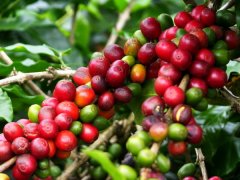
Which countries and regions can grow coffee? Why?
Since coffee trees are tropical plants, they need to be planted in warm places. The main planting area is distributed between latitude 25 south and latitude 25 north with the equator as the center, so this area is also called the coffee belt. However, even in the coffee belt, Arabica and Robeska do not grow in exactly the same area, but grow up in an environment that is more suitable for their own growth.
2015-09-10 Which country region talent cultivation coffee why because tropical
Which countries and regions can grow coffee? Why?
Since coffee trees are tropical plants, they need to be planted in warm places. The main planting area is distributed between latitude 25 south and latitude 25 north with the equator as the center, so this area is also called the coffee belt. However, even in the coffee belt, Arabica and Robeska do not grow in exactly the same area, but grow up in an environment that is more suitable for their own growth.
2015-10-22 Which country region talent cultivation coffee why because tropical
Ugandan coffee producing regions that produce only small amounts of Arabica beans
Later, when ships replaced sailboats, people drank fresher coffee beans because of shorter delivery times. But people accustomed to old beans are not used to this fresh taste, so they desperately pursue old Java coffee, so that the Indonesian government and some businessmen deliberately store fresh beans in warehouses for one to two years before selling them to consumers. In fact, aged Java beans are more common than fresh beans.
2016-07-02 production small amount rabbi kadou uganda coffee origin flavor presentation later
The name and definition of the three major coffee growing regions in Tanzania
3 major planting areas view north: 1 and 2 harvest season: July-December west: 3 and 4 harvest season: may-October (3 is the Luodou area) south: 5 and 6 harvest season: July-December total planting area of about 250000 hectares of economic importance to feed 400000 families, the annual contribution of 15 cups shows that the coffee in the north is full of aroma, bright acidity, mellow taste and good taste.
2016-05-29 Tanzania coffee big three planting region level name definition area
Nestl é Yunnan Coffee Project won the honor
The award, sponsored by the United Nations Development Programme, the International Chamber of Commerce and the International Business leaders Forum, aims to recognize the efforts of business organizations in helping people in developing countries and regions of the world improve their living conditions. A total of 11 award-winning projects were selected from 115 applications from 38 countries and regions. Nestle Yunnan Coffee Project is the only one in China.
2014-08-06 Nestle Company Yunnan Coffee Project Honor good Cake Internet News Award
Coffee regions around the world introduce the most fashionable luxury cafes
Costa Rica Famous coffee: Tarrazu Nicaragua Famous coffee: Nicaragua Honduras Famous coffee: Honduras Panama Famous coffee: Panama El Salvador Famous coffee: Sal
2016-06-07 worldwide coffee region presentation fashion luxury cafe Costa Rica
Ecuadorian coffee producing regions that can be made into premium blends Coffee Introduction Fine Coffee
Ecuador is one of the few countries in South America that produces both Arabica coffee and Robaik coffee. But as the land available for arabica coffee trees dwindles, robert coffee production is increasing. The best Arabica coffee is grown in the Andes, especially in the Chanchamgo Valley, which divides the Andes into two mountain ranges.
2016-07-01 Made Quality Blend Coffee Ecuador Region Presentation Boutique
Introduction of Coffee production regions in Western and Southern Yunnan
Small-grain coffee is suitable for growing in the mountains at an altitude of 800 to 1800 meters. If the altitude is too high, it will taste sour, and if it is too low, it will taste bitter. Small grains of coffee are mostly planted in dry and hot valleys about 1100 meters above sea level, so they are moderately sour, rich and mellow. There is a unique environment suitable for the growth of small seed coffee in many areas of Yunnan, and the quality of small seed coffee is excellent. The planting area is mainly distributed in the
2016-06-16 Yunnan western southern coffee production region introduction small grains suitable
Which countries and regions can grow coffee? Why? Where does coffee come from? Coffee
Since coffee trees are tropical plants, they need to be planted in warm places. The main planting area is distributed between latitude 25 south and latitude 25 north with the equator as the center, so this area is also called the coffee belt. However, even in the coffee belt, Arabica and Robeska do not grow in exactly the same area, but grow up in an environment that is more suitable for their own growth.
2016-03-18 Which country region talent cultivation coffee why where produce
The growing Environment of Coffee trees Coffee Baking Caramel reaction
Growing environment: coffee grows in a treeless climate with medium rainfall and plenty of sunshine. The main coffee growing regions in the world are the Americas, Africa, the Arab region and Indonesia. Coffee is grown in about 80 countries in these regions. The fruit of the coffee tree will show a bright red when it is ripe, which is generally called coffee cherry.
2016-06-08 Coffee growth environment roasting saccharification reaction coffee requirements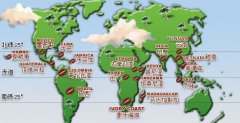
Introduction to the origin of coffee knowledge coffee
Coffee belt (coffee belt) coffee is mainly grown in tropical and subtropical regions, and coffee is mainly produced in more than 70 countries in the world. Most of them are distributed between 25 degrees of the Tropic of Cancer. According to the statistics of the Food and Agriculture Organization of the United Nations in 1976, coffee is grown in 76 countries and regions in the world, with an area of 118.845 million mu, of which Latin America is 64.86 million mu, accounting for the world's acreage.
2014-09-18 Coffee knowledge coffee origin coffee belt
Flavor performance of main Coffee varieties in different countries and regions
Rose summer variety (Geisha) Panama (Geisha): strawberry (strawberry), jasmine (jasmine floral), mint (bergamot), caramel (caramelly), chocolate (chocolate), grapefruit (grapefruity), plum (plum), citrus (citrus-orange) Costa Rica (Geisha): sweet flower (sweet floral), jasmine (ja)
2014-09-13 Coffee variety coffee flavor coffee culture