“Mid” search results (2583)

Jamaican coffee flavor manor area introduction to Atlanta Manor Caribbean region
As early as the mid-18th century (around 1750), Clifton Farm began to grow and produce coffee. According to a survey conducted by the Jamaica Institute in 1810, Robert Hamilton was the owner of the farm at that time. This map shows that Clifton Mountain is divided into two parts: 427 mu of pasture with 80 mu of coffee at the top, 111 mu of coffee and 264 mu of grazing at the foot of the mountain.
2016-07-13 Jamaica coffee flavor taste manor producing area introduction art large manor plus
Introduction to Santa Cruz Manor
The best Ecuadorian coffee is grown on St. Cristobal Island in the Galapagos Islands, which has the unique natural geographical conditions for giving birth to the best quality coffee in the world. A cup of Galapagos coffee, like the beautiful scenery of the Galapagos Islands, is sure to impress you. In the mid-15th century, fishermen fishing in the western Pacific Ocean of South America were in the middle stream.
2016-07-25 Ecuador coffee manor producing area flavor characteristics taste introduction Crewe good
The blending method of coffee beans
Espresso, a strong-tasting type of coffee, is brewed with extremely hot but non-boiling hot water under high pressure to grind it into a very fine coffee powder. It was invented and developed in Italy and began in the early 20th century, but until the mid-1940s, it was a drink made separately through vapor pressure. Meanwhile, Espresso is considered to be in coffee.
2016-06-05 Coffee beans blending method Espresso a kind of taste strong coffee
A brief History of Coffee production in El Salvador
A brief History of Coffee production in 1742, coffee was introduced to El Salvador from the Caribbean (1740). In the mid-19th century, El Salvador's original export pillar Indigo (one of the dyes) received a gradual decline in the development of synthetic dyes in Europe, and coffee gradually became the main export product under the guidance of the government. In 1856, the first 693 bags of coffee beans were shipped to Europe. all long
2016-06-17 Tradition cultivation way El Salvador coffee production brief history
Coffee knowledge what kind of coffee machine is the flat knife bean grinder
Flat knife bean grinder as for flat knife is the largest in the market. Whether it is a single bean grinder or an Italian bean grinder. Whether it is the top commercial German Mehdi EK43 or the mid-range MAZZER MAJOR, or the Eureka MMG designed for home use. Flat knife bean grinder generally has a clear positioning, either pure Italian bean grinder represented by Italian brand MAZZER, or
2016-05-14 Coffee knowledge flat knife bean grinder how coffee machine Yu Ping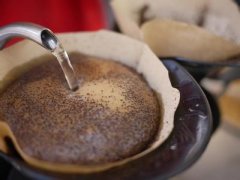
Coffee Culture Amsterdam Coffee style
The most famous in the Netherlands is tulips, windmills, wooden shoes, and a big coffee trading country. The Dutch began drinking coffee at home at the turn of the 16th century. Until the opening of the first coffee shop in the mid-1660s, almost no family did not drink coffee in the morning. Not only the upper-middle class, but also their servants can taste coffee. These coffee houses all have their own unique style. Especially
2015-03-16 Coffee culture Amsterdam amorous feelings Holland famous tulips wind
French Coffee Culture has a long history
When it comes to Bordeaux in France, people may think more of the world-famous Bordeaux wine. But in fact, the commodity coffee in world trade has been closely related to the city of Bordeaux for many years. The first coffee shop in Europe appeared in the mid-17th century. With the development of coffee trade, the two French ports Le Alpha and Bordeaux have gradually become imports of coffee beans.
2015-11-07 France coffee culture has a long history mention Bordeaux people maybe
World Coffee producer Peru Peru
Coffee is high-quality and balanced and can be used for mixed drinks. Peru (Peru) is also a big coffee producer. Up to 98% of Peruvian coffee is grown in forest areas, and most producers are small farmers. Peru has good economic conditions and a stable political situation, thus ensuring the good quality of coffee. However, there are many local problems, in addition to guerrilla warfare and drug trafficking, in the 20th century
2014-09-28 Coffee knowledge World Coffee producing area Peru
Boutique coffee who invented the siphon pot to make coffee
In 1840, a glass test tube in a laboratory triggered the invention of the siphon coffee maker (Syphon). The British took the test tube used in Biya's chemical experiment as a model to create the first vacuum coffee pot. Two years later, Mrs. Bachang of France improved the kettle, and the familiar upper and lower convection siphon pot was born. The siphon coffee maker lived in France for a long time.
2014-12-30 Boutique coffee who sends clear siphon brewing 1840 one laboratory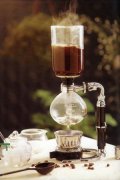
The History of siphon Pot basic knowledge of Coffee utensils
In 1840, a glass test tube in a laboratory triggered the invention of the siphon coffee maker (Syphon). The British took the test tube used in Biya's chemical experiment as a model to create the first vacuum coffee pot. Two years later, Mrs. Bachang of France improved the kettle, and the familiar upper and lower convection siphon pot was born. The siphon coffee maker lived in France for a long time.
2015-10-15 Siphon history coffee utensils basics common sense 1840 one laboratory
The best coffee in Indonesia Java coffee boutique coffee introduces the latest news
Among the Asian coffee-producing countries, Indonesia is a very noteworthy one. Indonesia is an island country in the Indian Ocean, the islands are distributed on both sides of the equatorial line, of which three islands: Java, Sumatra and Sulawesi produce the world's important coffee. In the mid-17th century, the Dutch brought coffee trees to Ceylon (Sri Lanka) and Java, Indonesia. India in the 18th century
2015-11-22 Indonesia OK coffee Java boutique introduction latest news Asia home
Basic knowledge of siphon pot making coffee
In 1840, a glass test tube in a laboratory triggered the invention of the siphon coffee maker (Syphon). The British took the test tube used in Biya's chemical experiment as a model to create the first vacuum coffee pot. Two years later, Mrs. Bachang of France improved the kettle with a little spring in shape, and the familiar upper and lower convection siphon pot was born.
2014-07-01 Coffee knowledge siphon pot coffee encyclopedia coffee making
How to make espresso, bean fancy coffee, coffee with cream, Herbalife.
Espresso (Espresso), or espresso espresso, is a strong type of coffee that is flushed out by 130PSI under high pressure and ground into a fine coffee powder at 90.5 degrees Celsius hot water. It was invented and developed in Italy and began in the early 20th century, but until the mid-1940s, it was a drink made separately through vapor pressure.
2016-07-06 Italian coffee beans fancy coffee how cream Campbell espresso E
Introduction to the Western Ruwensori Mountain area of washed Robst Bean production area in Uganda
Uganda's coffee production ranks first in Africa, accounting for more than 70% of its total exports. Uganda is also the hometown and main producing area of Robes specialty coffee. In the 1960s, Ugandan coffee production remained at 3.5 million bags a year. By the mid-1980s, coffee production had dropped to 2.5 million bags a year, mainly for political reasons. But now coffee production is on the rise again, which is large at present.
2016-06-18 Wash Uganda Rob Strowster production area introduction West Wenzori Ruwe
French coffee pays attention to environment and sentiment.
When it comes to Bordeaux in France, people may think more of the world-famous Bordeaux wine. But in fact, the commodity coffee in world trade has been closely related to the city of Bordeaux for many years. The first coffee shop in Europe appeared in the mid-17th century. With the development of coffee trade, the two French ports Le Alpha and Bordeaux have gradually become imports of coffee beans.
2014-07-31 French style coffee exquisite environment sentiment mention France Bordeaux people but
Noda enamel moon rabbit prints 1.2L Japanese coffee utensils. Famous Japanese coffee utensils.
Noda Enamel Moon Rabbit imprint 1.2L http://dongxi.douban.com/show/3716847/ put at home with a pot, 0.7L version of 250L can be bought, suggested purchasing agents, can be cheap 70-80 yuan of a large number of fans, received on the Mid-Autumn Festival day, there is really a hexagonal moon rabbit seal, cute not to do, the whole person bling-bling up! say
2016-04-29 Noda Enamel Moon Rabbit 1.2L Japanese Coffee utensils Brand famous Wild
Introduction to the flavor and taste of Yinshan Manor in Jamaica Coffee Manor
As early as the mid-18th century (around 1750), Clifton Farm began to grow and produce coffee. According to a survey conducted by the Jamaica Institute in 1810, Robert Hamilton was the owner of the farm at that time. This map shows that Clifton Mountain is divided into two parts: 427 mu of pasture with 80 mu of coffee at the top, 111 mu of coffee and 264 mu of grazing at the foot of the mountain.
2016-07-25 Jamaica Coffee Manor producing area Silver Mountain Flavor taste introduction
Boutique coffee culture Amsterdam coffee style
The most famous in the Netherlands is tulips, windmills, wooden shoes, and a big coffee trading country. The Dutch began drinking coffee at home at the turn of the 16th century. Until the opening of the first coffee shop in the mid-1660s, almost no family did not drink coffee in the morning. Not only the upper-middle class, but also their servants can taste coffee. These coffee houses all have their own unique style. Especially
2014-12-31 Boutique coffee culture Amsterdam coffee amorous feelings Holland famous
Introduction to the treatment of superior Jamaican Blue Mountain Coffee
In 1717 King Louis XV of France ordered coffee to be grown in Jamaica, and in the mid-1920 s, the Governor of Jamaica, Nicholas. Nicholas Lawes imported Arabica seeds from Martinique and began to plant them in St. Andrew. To this day, the St. Andrews area is still the Jamaican Blue Mountain Coffee.
2016-06-27 Superior Jamaica Blue Mountain Coffee adoption what treatment way introduction
History and Culture of Coffee planting in Ethiopia
People in Ethiopia began chewing coffee and spices together in the sixth century, and it was most common for hunters to wrap coffee in bacon as the best dry food, so that they could have enough to eat and have the spirit to hunt. So chewing coffee as a tradition. In the mid-13th century, Ethiopia was already using pans as a tool for roasting coffee, leading the coffee culture.
2016-05-31 Ethiopia coffee cultivation history and culture sixth century people