“Lamp” search results (906)

Boutique Coffee learn how to choose and buy coffee pots
Now the coffee pots on the market are all drip-type, and they are divided into Japanese style, American style and Italian style. The Japanese coffee maker, also known as the siphon pot, has an alcohol lamp on the base and two glass balls on it. It heats the water from the lower glass ball to produce water vapor, pushes the hot water from the lower sphere to the upper pot, and then sucks back the coffee extracted from the upper glass ball after the lower pot cools. Cooked in a Japanese coffee pot
2014-12-22 Boutique coffee how to buy coffee maker now the market noodles coffee pot all for
Jamaican Blue Mountain Coffee
Suggested dosage: about 10-15g Blue Mountain Coffee Powder per cup, brewing 6-8oz coffee. To use a siphon pot to brew Blue Mountain Coffee: the first step is to grind the beans, and the second step is to avoid a gap between the filter and the glass container, because the gap will not only make the coffee powder fall into the water below. it will also make the container leak and affect the extraction effect. The third step is to put down the pot.
2016-06-01 Jamaica Blue Mountain quality coffee suggestion dosage 10-15g per cup blue
Coffee growing environment
Arabica scientific name: Coffea arabica family: Rubiaceae coffee morphological characteristics: small trees or large shrubs, plant height 5~8 meters. Base usually much branched, older branches gray. nodes dilated, young branches glabrous. Leaves thin leathery ovate-lanceolate or lanceolate, apex long acuminate, base cuneate or slightly obtuse, entire or shallowly undulate, glabrous on both sides. Cymes several clustered in leaf axils
2014-08-08 Coffee knowledge Arabica coffee Coffee encyclopedia
A complete knowledge of siphon pot
The working principle of the siphon pot How does it work: the main principle of Syphon is to use the ideal gas equation: PV=nRT, under a fixed volume, heat the boiling water to make the steam pressure of the boiling water, press the boiling water into the upper layer to brew the coffee through the glass tube, and then cool the lower layer in a similar vacuum state to absorb the brewed coffee from the upper layer, and filter the dregs with a filter in the middle. You can take it while looking at it.
2014-08-25 Coffee knowledge siphon pot how to use siphon pot
Coffee making DIY (2) siphon pot method which is popular all over the world
The siphon pot is said to have been invented in 1840 by a Scottish naval engineer named Napier (another term was invented by German scientists). Although the inventors at that time did not necessarily have such a wonderful invention because of coffee, the siphon pot was widely used to make coffee. It was popular in the United States as early as World War I. Until now, it is also very popular with coffee lovers.
2014-11-06 Coffee knowledge coffee making siphon pot
Coffee machine method siphon tube boiling method
Filter paper dripping method (Paper Drip) 1. First put the prepared filter paper into the drip, then put the ground coffee powder into (about 2 tablespoons per person, about 12 grams) 2. Pour 95 ℃ of boiled water gently from the center and slowly let the coffee powder and boiling water permeate and spread all over it. At this time, the coffee powder begins to expand and slowly sink. Wait 25 seconds before preparing.
2015-05-27 Coffee machine cooking method siphon boiling
How to tell the true from the false hario siphon pot
Japanese hario is the first choice for siphon pots. What's so good about it? In addition to exquisite workmanship, the last step of siphon production is to use a cold wet cloth to cool the next pot. This step is to prevent the high temperature of the next pot from coking the refluxing coffee and affecting the taste. Domestic glass may crack because of instant cooling. This is rarely the case with Japanese products. It is also because of the excellent quality and fame of hario.
2015-04-21 How to distinguish between true and false hario siphon start first choice Japan
Growth Environment and brewing of small Coffee
Small grain coffee scientific name: Coffea arabica family genus: Rubiaceae coffee genus morphological characteristics: small trees or large shrubs, plant height 5 meters 8 meters. Base usually much branched, old branches gray-white. Nodes inflated, young branches glabrous. Leaves thinly leathery-ovate-lanceolate or lanceolate, apex long acuminate, base cuneate or slightly obtuse, entire or shallowly wavy, both surfaces glabrous. Cymes several clustered in leaf axils
2015-04-28 Small grains coffee growth environment brewing small grains scientific name Coffea
The introduction and source of small coffee novice must see
Arabica scientific name: Coffea arabica family: Rubiaceae coffee morphological characteristics: small trees or large shrubs, plant height 5~8 meters. Base usually much branched, older branches gray. nodes dilated, young branches glabrous. Leaves thin leathery ovate-lanceolate or lanceolate, apex long acuminate, base cuneate or slightly obtuse, entire or shallowly undulate, glabrous on both sides. Cymes several clustered in leaf axils
2015-11-24 Arabica Coffee Introduction Origin Beginners Must-See Scientific Name Cof
Yunnan coffee common sense coffee growing environment and brewing
Arabica scientific name: Coffea arabica family: Rubiaceae coffee morphological characteristics: small trees or large shrubs, plant height 5~8 meters. Base usually much branched, older branches gray. nodes dilated, young branches glabrous. Leaves thin leathery ovate-lanceolate or lanceolate, apex long acuminate, base cuneate or slightly obtuse, entire or shallowly undulate, glabrous on both sides. Cymes several clustered in leaf axils
2015-02-07 Yunnan coffee common sense small grains growth environment brewing scientific name
Learn two different ways to extract coffee tips
Paper Drip 1. Put the prepared filter paper into the drip, and then put the ground coffee powder into it (about 2 tablespoons for 1 person, about 12 grams) 2. Pour the boiled water from the center at 95℃, and slowly rotate to make the coffee powder and boiling water completely penetrate and spread. At this time, the coffee powder begins to expand and slowly sink. Wait for 25 seconds before preparing.
2014-12-06 boutique coffee two kinds different method extraction tips filter paper drip Pap
Irish Coffee Cocktail Coffee the original formulation of Irish Coffee and its Origin
Irish Coffee (Irish Coffee) is a cocktail, which is based on Irish Whiskey and supplemented with coffee. According to legend, a bartender at Dublin airport blends whisky with hot coffee for the first time to make an Irish coffee cocktail for the girl he likes. The origin of an Irish coffee is a kind of coffee containing alcohol, in 19.
2016-03-07 Ireland coffee cocktails initially recipes production methods and origin Al
Introduce the cooking methods of two kinds of coffee machines
Filter paper dripping method (Paper Drip) 1. First put the prepared filter paper into the drip, then put the ground coffee powder into (about 2 tablespoons per person, about 12 grams) 2. Pour 95 ℃ of boiled water gently from the center and slowly let the coffee powder and boiling water permeate and spread all over it. At this time, the coffee powder begins to expand and slowly sink. Wait 25 seconds before preparing.
2015-08-28 Introduction 2 kinds coffee machine cooking method
Common sense of Chinese Coffee growth Environment and brewing of small Coffee
Small grain coffee scientific name: Coffea arabica family genus: Rubiaceae coffee genus morphological characteristics: small trees or large shrubs, plant height 5 meters 8 meters. Base usually much branched, old branches gray-white. Nodes inflated, young branches glabrous. Leaves thinly leathery-ovate-lanceolate or lanceolate, apex long acuminate, base cuneate or slightly obtuse, entire or shallowly wavy, both surfaces glabrous. Cymes several clustered in leaf axils
2014-12-01 China coffee common sense small grain growth environment brewing scientific name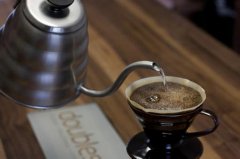
General knowledge of fine coffee the growing environment of small-grain coffee
Small grain coffee scientific name: Coffea arabica family genus: Rubiaceae coffee genus morphological characteristics: small trees or large shrubs, plant height 5 meters 8 meters. Base usually much branched, old branches gray-white. Nodes inflated, young branches glabrous. Leaves thinly leathery-ovate-lanceolate or lanceolate, apex long acuminate, base cuneate or slightly obtuse, entire or shallowly wavy, both surfaces glabrous. Cymes several clustered in leaf axils
2015-01-19 Boutique coffee common sense small grain growth environment scientific name Cof
Common sense of Coffee beans in Yunnan growth Environment and brewing of small Coffee
Small grain coffee scientific name: Coffea arabica family genus: Rubiaceae coffee genus morphological characteristics: small trees or large shrubs, plant height 5 meters 8 meters. Base usually much branched, old branches gray-white. Nodes inflated, young branches glabrous. Leaves thinly leathery-ovate-lanceolate or lanceolate, apex long acuminate, base cuneate or slightly obtuse, entire or shallowly wavy, both surfaces glabrous. Cymes several clustered in leaf axils
2015-03-10 Yunnan coffee beans common sense small grains coffee growth environment brewing
Use a siphon pot to make individual coffee
The siphon pot should be washed and ready for use, and its appearance should be dried to prevent it from bursting in case of fire. Pour 2 portions of hot water into the ball and heat it with an alcohol lamp. Put the filter in the upper half of the container, pull the small spring under the filter to hook to the bottom of the container, and the filter is glued to the bottom entrance to prevent the coffee powder from falling. Take two tablespoons of single powder (such as Colombian coffee or Brazilian coffee) with a spoon, about 10 grams per spoon
2014-08-14 Coffee knowledge siphon pot individual coffee coffee encyclopedia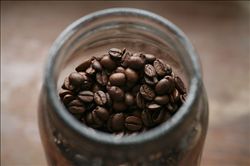
Jamaica Blue Mountain Coffee specially made quality Coffee
Pour a whole bag of top products into a cup, add 180C.C hot water, stir well and serve! Cold drink first pour a whole package of products into a cup, add 180C.C hot water, put into the refrigerator after cooling, about four hours later, cold coffee and milk tea, can wash your mind, will be muggy summer completely frozen up quality coffee editor suggested dosage: about 10 per cup
2016-05-31 Jamaica Blue Mountain Coffee Special production quality Hot drink a whole bag Top
The siphon pot method that is popular all over the world
The siphon pot is said to have been invented in 1840 by a Scottish naval engineer named Napier (another term was invented by German scientists). Although the inventors at that time did not necessarily have such a wonderful invention because of coffee, the siphon pot was widely used to make coffee. It was popular in the United States as early as World War I. Until now, it is also very popular with coffee lovers.
2014-09-02 Siphon pot method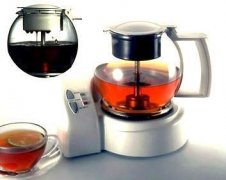
Coffee machine brewing method Introduction 2 kinds of coffee machine brewing method
The following describes two kinds of coffee machine brewing method: Paper Drip method (Paper Drip) 1. First put the prepared filter paper into the drip, and then put the ground coffee powder into (1 person about 2 spoons, about 12 grams) 2. The boiled water 95℃ gently poured from the center, slowly in a rotating way to let the coffee powder and boiling water completely penetrate, spread, at this time the coffee powder began to expand and
2015-08-06 coffee machine brewing method introduction 2 kinds brewing method