“High Resistance” search results (1000)

Iron pickup Coffee with large beans introduce the producing area of iron pickup coffee flavor
. Typica: the oldest native variety of Ethiopia (birthplace of coffee), with elegant flavor, weak physique, poor disease resistance and low yield. the well-known Mantenin in Indonesia, Blue Mountain in Jamaica, elephant beans in Cuba, Hawaii Kona, Yunnan small grains, geisha, etc., are all derived varieties of Ironpickup, which are large, pointed oval or thin. two
2016-07-27 Beans large pickup coffee introduction flavor producing area Typica
What are the three primary coffee species?
Liberian: West Africa is the origin of Liberian coffee. It has strong adaptability to various environments such as high temperature or low temperature, humidity or dryness, etc., except for leaf rust resistance, and its flavor is worse than Arabica, so it is only traded domestically in some West African countries (Libya, Cote d'Ivoire, etc.) or planted for research. circulating in world markets
2016-06-15 Coffee Big Three Native
Comparison of various Coffee varieties in Fine Coffee
Arabica species VS Robusta species as a crop, tree species and planting environment are the basic factors for the good ring of coffee beans. At present, the coffee beans in circulation in the coffee market are Arabica (Coffea Arabica) or Robusta (Coffea Robusta). Generally speaking, Arabica coffee trees have fragile vitality and low resistance to diseases and insect pests.
2015-02-02 Boutique coffee all kinds kinds comparison rabbi card Robes Booth as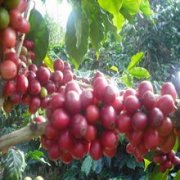
A brief introduction to the Gene Mutants of Coffee species
Kenya [SL28] and [SL34]: French and British missionaries and researchers sifted in Kenya at the beginning of the 20th century
2015-03-09 Coffee species genes mutants brief introduction
Why is it so difficult to brew espresso in boutique coffee?
The problems with making a great espresso are mostly due to two factors: the uneven flow of water and the fact that the aroma of coffee is very volatile. Water flow problems-modern espresso machines can produce water pressure of 120 to 130 pounds, while coffee cakes are less than half an inch thick. And the big problem with espresso comes from
2014-12-04 Boutique coffee common sense espresso how so want boil out
Boutique coffee (specialty coffee) II
With regard to the cultivation of crops, seed selection is a very important factor. Every year, agronomists are studying higher quality and higher yield varieties of wheat, soybeans, and corn, as well as how to make apples more delicious, beautiful and resistant to diseases and insect pests. In fact, the same is true of coffee. The quality and taste of coffee are determined by the quality of the varieties. Coffee trees are generally divided into three categories in the industry: Arabica species
2014-09-28 Coffee knowledge boutique coffee coffee encyclopedia
How to maintain the standard of high quality coffee produced by coffee utensils and coffee processing factories
How to operate the siphon pot to siphon the physical properties of coffee may be complicated, but the process is not mysterious. Coffee has nothing to do with your attitude, handmade bamboo sticks or stirring techniques, because no matter what method is used, a good siphon pot can extract a reasonable amount evenly from the whole range of coffee extraction at the right temperature. When the upper pot is tightened and the lower pot is screwed
2016-06-24 How to maintain high quality coffee products utensils processing factories standards how
How to maintain the standard of high quality coffee produced by coffee utensils and coffee processing factories
How to operate the siphon pot to siphon the physical properties of coffee may be complicated, but the process is not mysterious. Coffee has nothing to do with your attitude, handmade bamboo sticks or stirring techniques, because no matter what method is used, a good siphon pot can extract a reasonable amount evenly from the whole range of coffee extraction at the right temperature. When the upper pot is tightened and the lower pot is screwed
2016-06-24 How to maintain high quality coffee products utensils processing factories standards how
The growing process of coffee beans the growing conditions of coffee beans
At present, coffee trees are mainly planted in Arabica, Robusta and Liberia. Arabica species produced in Elaraby Sinia (now Ethiopia) have the highest quality of the three major tree species, accounting for 2/3 of the world's coffee production. Coffee beans are oval and flat, characterized by fragrance and good quality. Robusta seeds are produced in Congo, Africa, with strong disease resistance, high temperature resistance and fruit.
2016-07-16 Coffee beans planting growth process conditions current coffee main tree species
Boutique coffee (specialty coffee) II
With regard to the cultivation of crops, seed selection is a very important factor. Every year, agronomists are studying higher quality and higher yield varieties of wheat, soybeans, and corn, as well as how to make apples more delicious, beautiful and resistant to diseases and insect pests. In fact, the same is true of coffee. The quality and taste of coffee are determined by the quality of the varieties. Coffee trees are generally divided into three categories in the industry: Arabica species
2015-10-12 Boutique coffee specialty number two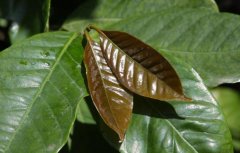
What are the types of boutique coffee
In plant taxonomy, coffee belongs to the Genus Coffea family of Rubiaceae, and there are at least a hundred varieties of coffee under it. The more common types of coffee are Arabica (Arabica, elegant flavor, is the main boutique coffee) and Robusta (or thick beans, rough flavor, high caffeine content, not boutique coffee). In addition to these two categories
2015-01-17 Boutique coffee common sense what species plants taxonomy grass family
Introduction to the quality of Kenyan coffee varieties different from bourbon beans in Central and South America
Different from bourbon beans in Central and South America. This Kenyan native species was created by Scott Laboratories in 1930, known as SL for short. Agronomists wanted to find a kind of bourbon with high yield and resistance to diseases and insect pests, and obtained SL28 through experiments. SL28 is a genetic variant with a mixed pedigree of French missionaries, mochas and Yemens Tibica, which was originally cultivated for SL28.
2016-06-30 Different from Central and South American bourbon Kenya coffee variety quality type introduction
Espresso falls in love with fine coffee
In plant taxonomy, coffee belongs to the GenusCoffea family of Rubiaceae, and there are at least a hundred varieties of coffee under it. In the healthy Life post "falling in love with boutique coffee", I mentioned that the more common coffees are Arabica (Arabica, elegant flavor, is the main boutique coffee) and Robusta (coarse beans, rough flavor, high caffeine content).
2014-09-16 Coffee knowledge Italian coffee boutique coffee
Introduction to Coffee Coffee
In plant taxonomy, coffee belongs to the Genus Coffea family of Rubiaceae, and there are at least a hundred varieties of coffee under it. In the healthy Life post "falling in love with boutique coffee", I mentioned that the more common coffees are Arabica (Arabica, elegant flavor, is the main boutique coffee) and Robusta (or sturdy beans, rough flavor, caffeine content
2014-11-06 Coffee knowledge coffee common sense boutique coffee coffee types
Boutique coffee specialty coffee coffee bean variety
Abstract: coffee trees are generally divided into three categories: Arabica species, Robesta species and Liberika species. With regard to the cultivation of crops, seed selection is a very important factor. Every year, agronomists are studying higher quality and higher yield varieties of wheat, soybeans and corn, as well as how to make apples more delicious, beautiful and resistant to diseases and insect pests. in fact, the same is true of coffee.
2016-05-05 Boutique coffee specialty coffee beans varieties
Introduction of Arabica coffee VS Robusta coffee
Arabica species VS Robusta species as a crop, tree species and planting environment are the basic factors for the good ring of coffee beans. At present, the coffee beans in circulation in the coffee market are Arabica (Coffea Arabica) or Robusta (Coffea Robusta). Generally speaking, Arabica coffee trees have fragile vitality and low resistance to diseases and insect pests.
2015-11-09 Introduction boutique coffee rabbi card seed Robbs booth Rob
Brazil is committed to the study of "tomorrow Coffee"
Brazil is the strongest coffee producer in the world, and coffee technology is leading the world. A few years ago, scientists used genetic comparisons to find out whether the descendants of Bourbon and Tibica introduced 300 years ago still exist in Brazil. it was found that Brazil's existing bourbon and Tibica had nothing to do with their counterparts in Yemen, Ethiopia, Bourbon and Kenya, and had long been assimilated or localized. If you say "E"
2015-04-02 Brazil committed to tomorrow's coffee research national strength strong coffee producing country
Coffee Coffee Coffee introduction to Arabica species
Arabica species VS Robusta species as a crop, tree species and planting environment are the basic factors for the good ring of coffee beans. At present, the coffee beans in circulation in the coffee market are Arabica (Coffea Arabica) or Robusta (Coffea Robusta). Generally speaking, Arabica coffee trees have fragile vitality, low resistance to diseases and insect pests, and requirements for planting environment.
2015-06-12 Coffee classification boutique introduction rabbi card species Robbins Booth
Introduction to the varieties of boutique coffee beans what are the ancient native species?
In plant taxonomy, coffee belongs to the Genus Coffea family of Rubiaceae, and there are at least a hundred varieties of coffee under it. In the healthy Life post "falling in love with boutique coffee", I mentioned that the more common coffees are Arabica (Arabica, elegant flavor, is the main boutique coffee) and Robusta (or sturdy beans, rough flavor, caffeine content
2015-10-17 Boutique coffee beans varieties introduction antiquity native what
4 principles to follow when making a cup of Espresso
(1)The amount of coffee beans must be standard, generally 14-16 g/cup, using high-quality deep-roasted coffee beans. (2)The grinding powder shall be selected with appropriate particle size, not too coarse or too fine. Coffee beans are ground too coarse or too fine to make thick and delicious espresso coffee. When the coffee powder is ground too coarse, the coffee gap in the filter bowl is too large, the resistance to water is not enough, and the coffee flow is too fast, which is easy to cause extraction.
2015-04-16 Make One Cup Espresso Follow Four Principles