“Distribution” search results (1981)


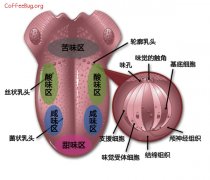
Basic knowledge of sensory training in coffee tasting tongue taste area distribution map
With regard to taste maps, coffee and red wine are often used in tasting. Taste refers to the ability to sense the taste of substances, including the taste of food, certain minerals and toxic substances, which is close to the sense of smell, which is also chemically induced. Western experts have traditionally believed that taste consists of four basic flavors: sweet, salty, sour and bitter.
2015-10-26 Coffee tasting senses training basics tongue taste area distribution map
How to clean the water distribution network of the E61 coffee machine how to clean the Italian machine correctly
Recently, I found that more and more friends use quasi-professional Italian machines to make coffee, including Oscar,Silvier and E61 small machines for brewing their heads. But when I asked them how to clean and maintain them, many people were surprised. Some friends would backwash regularly, but they would not clean the watershed. In fact, the Italian machine is a rather skinny guy.
2016-04-05 E61 coffee maker brewing head water net cleaning how Italian machine correct recently
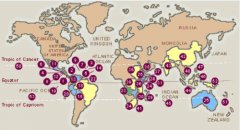
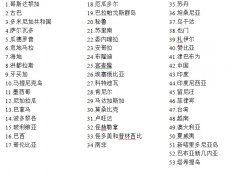
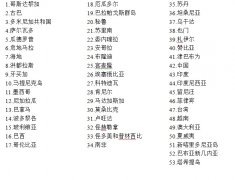
Introduction of Coffee beans Distribution Map of Coffee growing areas in the World
1. Costa Rica Costa Rica 2. Cuba Cuba 3. Dominican Republic Dominican Republic 4. Ei Salvador El Salvador 5. Guadeloupe Guadeloupe 6. Guatemala Guatemala 7. Haiti Haiti 8. Honduras Honduras 9. Jamaica Jamaica 10. Martinique Martinique 11. Mexico Mosi
2015-11-09 Coffee beans introduction World Coffee planting Origin Distribution Map Costa R
How to confirm the distribution of the proportion of coffee blending
It is understood that Arabica coffee beans are harsh on planting conditions, they need to grow at higher elevations, fertile soil, sufficient moisture, moderate sunshine and shade conditions, and their ability to resist diseases and insect pests is poor; while Robusta, this kind of coffee beans, known as stout beans, can be grown at low elevations, and it is more resistant to diseases and insect pests. Maybe coffee lovers
2016-06-30 Coffee blending how confirmation proportion distribution it is understood rabbi coffee beans species
Official training basic knowledge tongue taste area distribution map sweet, salty, sour, bitter professional coffee
Taste refers to the ability to sense the taste of substances, including the taste of food, certain minerals and toxic substances, which is a near sense compared with the sense of smell, which is also chemically induced. Western experts traditionally use taste maps, coffee and red wine tastings. Taste refers to the ability to feel the taste of substances, including food, certain minerals, and
2016-04-26 Training basics tongue taste region distribution map specialty coffee reading guide
How to achieve uniform distribution of powdered coffee brewing espresso espresso China Coffee Network
How to achieve uniform distribution of powder? It's actually very simple. After putting the coffee powder into the powder bowl, first gently pat the edge of the powder bowl to make the coffee powder slide to the edge of the powder bowl to achieve the basic cover; then use your fingers or the powder bin lid to move the coffee powder from more places around so that the coffee powder is evenly distributed in the powder bowl. Using finger push is more suitable for double-headed handles (that is, you can
2016-04-18 How to achieve uniform cloth powder coffee brewing way Italian concentrated China
The global distribution of coffee the growth habits of coffee
Coffee is a kind of drink that gives the public the impression that it is black, bitter, sleepless and excited. The coffee beans we see in the coffee shop are tea-brown, which belongs to roasted coffee beans, while the color of the coffee liquid is amber. Coffee comes from coffee beans, which are harvested and processed from the fruit of trees.] Distribution of coffee: coffee
2015-10-07 Coffee global distribution growth habits coffee one beverage public like
Comparison of Philharmonic pressure filter tools Coffee utensils comparison of various brands of Philharmonic pressure
Abstract: people who can use Philharmonic pressure to make coffee are very common, because it is simple, fast and stable. And on the basis of simplicity, can you make it taste better with Philharmonic pressure? Let's make a comparison of Philharmonic pressure's filtering tools today to see which one is more suitable for you. Here, we pass through the IMS water distribution network, the thick hole of Able. It is common for people who can use Philharmonic to make coffee.
2016-04-28 Philharmonic filtering tools contrast coffee utensils various brands abstracts can use
The planting and Distribution of Coffee trees in the World
Coffee is distributed near the equator, tropical and subtropical regions. It is widely distributed in South America, Central America, West Indies, Asia, Africa, Arabia, South Pacific and Oceania. Brazil leads the world in coffee production, accounting for about 30 per cent, followed by Colombia, accounting for about 10 per cent. Taking Central and South America as the center accounts for 60%, followed by Africa and Arabia accounting for about 30%, and the remaining 10%
2014-09-09 Coffee knowledge coffee tree planting coffee tree distribution
Morphological characteristics and geographical distribution of coffee trees
The ripe coffee berries look like cherries and are bright red with sweet flesh and contain a pair of seeds, namely coffee beans (Coffee Beans). Coffee varieties can be divided into small-grain, medium-grain and large-grain species, the former contains low caffeine content and strong flavor, while the latter two have high caffeine content but poor flavor. The coffee sold in the world is generally made up of small and medium seeds according to different ratios.
2016-06-06 Coffee morphological characteristics geographical distribution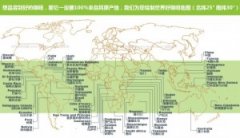
Understand the types of boutique coffee beans world-famous boutique coffee beans and their origin distribution map
World Fine Coffee Map Latin American Coffee beans (Central and South America) Brazil: Santos, Bahia, Cerrado, Mogiana Mexico: Coatepec, Huatusco, Orizaba, Maragogype, Tapanchula, H
2014-07-22 Variety of boutique coffee beans distribution map of boutique coffee beans
Kilimanjaro Coffee Flavor Description Grind Characteristics Variety Producing Area Taste Price Introduction
Rainfall types are divided into bimodal distribution and unimodal distribution. The areas with bi-modal rainfall distribution include the provinces around Lake Victoria Basin, the northeast highlands, the coast and the northeast inland. The bi-modal rainfall distribution area is characterized by two long and short rainy seasons. The short rainy season occurs from September to December, and the total rainfall can reach 200-500 mm. The long rainy season occurs from March to May.
2016-10-12 coffee flavor description grinding characteristics varieties origin
Philadelphia pressure filtration tools compare coffee utensils
People who can make coffee with Philharmonic pressure are very common, because it is simple and fast, and the product is stable. And on the basis of simplicity, can you make it taste better with Philharmonic pressure? Let's make a comparison of Philharmonic pressure's filtering tools today to see which one is more suitable for you. Here, we study which is done through IMS water distribution network, Able coarse pore filter, Able fine pore filter and ordinary filter paper.
2016-05-17 Philharmonic filtration tools contrast coffee utensils know how to use pressure
Introduction to the description of the characteristics and flavor of Tanzanian coffee
The eastern coastal areas and inland lowlands of Tanzania have a savanna climate, while the western inland plateau has a tropical mountain climate, with an average temperature of 21-25 ℃ in most areas. More than 20 islands in Zanzibar have a tropical maritime climate, hot and humid all the year round, with an annual average temperature of 26 ℃. [6] rainfall types can be divided into bimodal distribution and unimodal distribution. Areas with double bee distribution of rainfall include
2016-09-19 Tanzania coffee use what grinding best characteristics flavor description introduction