“Distributed” search results (3488)

Introduction to the characteristics of Fine Coffee in Fenghuang Manor, Costa Rica
Costa Rica is located in the Central American isthmus, belonging to North America, 10 north latitude, 84 west longitude. It is bordered by the Caribbean Sea to the east and the North Pacific Ocean to the west, with a coastline of 1290 km (212km on the east coast and 1016 km on the west coast). Costa Rica borders Nicaragua in the north (309 km long border) and Panama (639 km long border) south-southeast. Total
2016-09-03 Costa Rica Fire Phoenix Manor Coffee Flavor Taste producing area characteristics Fine goods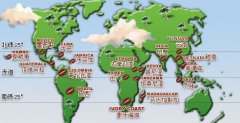
Introduction to the origin of coffee knowledge coffee
Coffee belt (coffee belt) coffee is mainly grown in tropical and subtropical regions, and coffee is mainly produced in more than 70 countries in the world. Most of them are distributed between 25 degrees of the Tropic of Cancer. According to the statistics of the Food and Agriculture Organization of the United Nations in 1976, coffee is grown in 76 countries and regions in the world, with an area of 118.845 million mu, of which Latin America is 64.86 million mu, accounting for the world's acreage.
2014-09-18 Coffee knowledge coffee origin coffee belt
About Coffee World Map
COFFEE WORLD MAP Most coffee production areas are located between the Tropic of Cancer, that is, 25 degrees north of the equator and 30 degrees south of the equator in the tropics or subtropics. Areas with an annual average temperature of 16-25 degrees Celsius, frost-free and rainfall of 1600-2000 mm. At present, there are more than 70 major coffee producing countries, and the Greater China is located at an altitude of 300-400 meters.
2014-09-10 Coffee belt coffee knowledge coffee encyclopedia coffee beans
Latest details of Indonesian Java Coffee Sumatra Coffee
Among the Asian coffee-producing countries, Indonesia is a very noteworthy one. Indonesia is an island country in the Indian Ocean, the islands are distributed on both sides of the equatorial line, of which three islands: Java, Sumatra and Sulawesi produce the world's important coffee. In the mid-17th century, the Dutch brought coffee trees to Ceylon (Sri Lanka) and Java, Indonesia. India in the 18th century
2015-11-28 Indonesia Java Coffee latest details Sumatra Asia Home
Fragrant Ecuadorian coffee flavor and taste introduction of boutique coffee beans in manor production area
Central mountain: after entering Ecuador from Colombia, the Andes is divided into the eastern and western Cordillera mountains, with a plateau high in the north and low in the south, averaging between 2500 and 3000 meters above sea level. The Andes run through the middle of the border. The ridges crisscross, dividing the plateau into more than ten intermountain basins. The most important are the Quito basin and the Cuenca basin in the south. Volcanic crowds in the territory
2016-09-01 Aroma fragrance Ecuador coffee flavor taste manor producing area boutique
A variety of coffee from Guatemala.
Guatemala is bordered by Mexico to the north, Honduras and El Salvador to the south, the Caribbean to the east and the Pacific Ocean to the west, with tropical rain forests, volcanic geology, plateau valleys and changeable microclimate. The average elevation of dangerous countries is high, with coffee belts distributed over 1500 meters and between 14 and 16 degrees north latitude, it is easiest to grow extremely hard beans, all of which are washed, 45% of which are washed.
2015-10-26 Guatemala coffee variety north Mexico south neighbor Honduras
Introduction to boutique coffee-Guatemala
Guatemala is bordered by Mexico to the north, Honduras and El Salvador to the south, the Caribbean to the east and the Pacific Ocean to the west, with tropical rain forests, volcanic geology, plateau valleys and changeable microclimate. The average elevation of dangerous countries is high, with coffee belts distributed over 1500 meters and between 14 and 16 degrees north latitude, it is easiest to grow extremely hard beans, all of which are washed, 45% of which are washed.
2016-06-29 Boutique coffee introduction Guatemala north Mexico south neighbor Hong
Coffee trees grow around the equator.
Coffee trees grow in tropical or subtropical agricultural gardens centered around the equator and called coffee belts. Most of the coffee production is between the Tropic of Cancer, 25 degrees north of the tropical or subtropical equator and 30 degrees south of the equator. An area with an annual average temperature of 16-25 degrees Celsius, no Frosts Descent and rainfall of 1600-2000 mm. At present, coffee is mainly produced by seven countries.
2015-07-01 Coffee tree grow equator center coffee for the middle
Yunnan small grain coffee beans | how about Yunnan small grain coffee _ Yunnan small grain coffee is better
Yunnan small-grain coffee, Rubiaceae, coffee genus, the planting area is mainly distributed in Lincang, Baoshan, Simao, Xishuangbanna, Dehong and other states. Small grains of coffee refer to Arabica, which is originally from Ethiopia or Arabian Peninsula. It is cultivated in Fujian, Guangdong, Hainan, Guangxi, Sichuan, Guizhou and Yunnan. The so-called Yunnan small grain
2021-10-17 Yunnan small grain coffee bean coffee grass family plant area main distribution
Indonesian Coffee Asian Coffee
Asian coffee is more full-bodied than Central and South American and African beans, but less sour, with a hint of heavy wood, herbs, spices and earth, and a deep, smoky aroma over an elevated acid aroma. At the end of the seventeenth century, the Dutch East India Company transplanted the Arabica tree (tibica) from India to Jakarta, Java. Due to the favorable climate and soil conditions, Arabica soon spread to Sumatra on Java Island.
2015-04-14 Indonesia coffee Asia presentation thickness Central and South America Africa beans
Caffebene Seoul Coffee, the largest coffee shop chain in Korea.
South Korea's largest coffee chain, which has more than 900 stores in South Korea since its establishment in 2008, is headquartered in Qingtandong, Gangnam District, Seoul. In addition to coffee, it also manages a variety of high-end tea, lattes, fruit juices, waffles, breads and other goods. at present, there are more than 1200 chain stores in the world, distributed in South Korea, the United States, the Philippines, Cambodia and other countries. 2012
2016-04-28 Korea big coffee chain coffee shop accompany you caffebene first
Ecuadorian Coffee with Special aroma Manor introduces Galapagos Coffee
The Republic of Ecuador is located in northwestern South America. It is bordered by Colombia in the northeast, Peru in the southeast and the Pacific Ocean in the west. It covers an area of 256370 square kilometers and the coastline is about 930km long. The equator runs through the north of the border, and Ecuador means the central mountain of the Spanish equator: after Colombia entered Ecuador, the Andes is divided into the East and West Cordillera Mountains.
2016-08-22 Have special aroma Ecuador coffee flavor taste manor introduction pull
Introduction to the fragrant Ecuadorian Coffee Flavor and the Fine Coffee in the Manor area
The country is divided into three parts: the western coast, the central mountainous region and the eastern region. Map of Ecuador the western coast of the map of Ecuador: including coastal plains and foothills, high in the east and low in the west, generally below 200 meters above sea level, with some hills and low mountains at an altitude of 600 to 700 meters. Belongs to the tropical rain forest climate, the southernmost end begins to transition to the savanna climate. The average annual precipitation from north to south is 3.
2016-08-10 Aroma fragrance Ecuador coffee flavor taste manor producing area characteristics essence
Some knowledge about coffee tasting.
After proper roasting and standard extraction, the coffee looks like a drifting vapor and a dark brown liquid. But after tasting it carefully, it can be found that it has completely different characteristics. These characteristics will be affected by different producing areas, differences in planting height, types of soil, minor changes in climate, the number of Rain Water and other factors. Just like good wine.
2014-11-08 Coffee knowledge coffee knowledge coffee tasting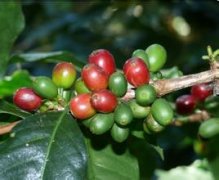
A brief talk on the basic knowledge of Fine Coffee with Coffee beans
1. Summary: coffee is a perennial evergreen shrub or small tree of Rubiaceae. It is native to tropical Africa and has been cultivated for more than 2000 years. The Arabs began to grow coffee in 525 BC, and it was popular for Arabs to stir-fry coffee beans. They began to grow coffee beans on a large scale after the 15th century, and were widely distributed in the tropics and subtropics of Europe, Asia, Africa and Latin America after the 18th century.
2015-06-04 Talking about coffee beans boutique coffee basics common sense overview grass for many years
The taste of Costa Rican coffee is mellow. An introduction to the Goddess Manor.
The seven provinces are: Alajuela Alajuela (central, northwest of San Jose), Catago Cartago (central, east of San Jose), Guanacaster Guanacaste (northwest), Eredia Heredia (central, north of San Jose), Limon Limn (east, along the Caribbean), Pentalenas Puntarenas (west, along the Pacific Ocean), San Jose San
2016-08-26 Taste mellow Costa Rica coffee flavor manor producing area characteristics goddess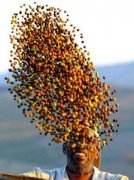
Coffee trees grow around the equator.
Coffee trees grow in tropical or subtropical agricultural gardens centered around the equator and called coffee belts. Most of the coffee production is between the Tropic of Cancer, 25 degrees north of the tropical or subtropical equator and 30 degrees south of the equator. An area with an annual average temperature of 16-25 degrees Celsius, no Frosts Descent and rainfall of 1600-2000 mm. At present, coffee is mainly produced by seven countries.
2015-05-29 Coffee tree grow equator center coffee for the middle
Introduction to the description of the grinding degree, taste and flavor of Costa Rican Yerzaro coffee with good sweetness
Costa Rica accounts for only 0.03% of the world's land area, but with nearly 4% of the world's species, Costa Rica is one of the countries with the richest biological species in the world. 26% of the land area is a national park or nature reserve, including 11 wetlands, 2 biological reserves and 3 World Natural Heritage sites. The national forest coverage rate is 52%. Natural resources include iron, manganese, mercury, bauxite,
2016-09-30 Sweetness good Costa Rica Yelsa Luo coffee coffee grinding taste special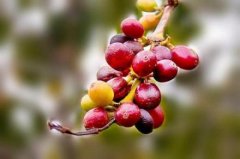
Coffee knowledge equator-centered coffee belt
Most of the coffee production is between the Tropic of Cancer, 25 degrees north of the tropical or subtropical equator and 30 degrees south of the equator. An area with an annual average temperature of 16-25 degrees Celsius, no Frosts Descent and rainfall of 1600-2000 mm. At present, coffee is mainly produced in more than 70 countries. The Big self is located at an altitude of 300,400m, sometimes between 2000 and 2500 meters above sea level.
2014-09-11 Coffee knowledge coffee belt coffee tree coffee encyclopedia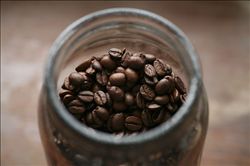
Introduction to the characteristics of coffee flavor and taste in Santa Cruz Manor, Ecuador
Central mountain: after entering Ecuador from Colombia, the Andes is divided into the eastern and western Cordillera mountains, with a plateau high in the north and low in the south, averaging between 2500 and 3000 meters above sea level. The Andes run through the middle of the border. The ridges crisscross, dividing the plateau into more than ten intermountain basins. The most important are the Quito basin and the Cuenca basin in the south. Volcanic crowds in the territory
2016-09-03 Ecuador Crewe Manor Coffee Flavor Taste producing area characteristics boutique