“Cultivated” search results (4547)

Colombia Coffee Introduction Colombia Coffee Features Colombia Coffee Estate
Colombia is the world's second largest coffee producer, producing 12% of the world's total production, although ranked lower than Brazil, but its coffee beans are of good quality. Coffee trees are cultivated in upland areas and cultivated in small areas. Cautiously harvested and processed by washing, the coffee produced is beautiful and fragrant, and is suitable for drinking alone or mixed. The main species is Supremo Colomb.
2016-07-26 Colombia Coffee Introduction Characteristics Manor World Second largest
Coffee knowledge
Coffee (scientific name: Coffea arabica), also known as coffee tree, Arabica coffee, etc., is the national flower of Yemen. Before the 6th century in the park, Yemen was called Arab, so the coffee trees transported from them to other places were also called Arabian coffee trees. The name coffee comes from the Arabic word "Qahwah", which means plant drink. Later, coffee spread all over the world.
2014-08-06 Coffee knowledge Coffee Encyclopedia
Costa Rican coffee beans introduce culture
There are many coffee growing areas in Costa Rica. The unique microclimate and soil composition of each region lead to subtle changes in coffee from region to region. Most Costa Rican coffee is not grown on a large scale, but is cultivated by many small-scale coffee farmers and then takes their harvest to coffee factories for processing. Some Costa Rican coffees are processed with pectin scrapers.
2016-06-01 Costa Rica coffee beans introduction culture Gos Dali Jiayu many coffee
Introduction to the flavor and taste of Ethiopian coffee beans grade classification of Ethiopian Sidamo coffee beans
Ethiopia has unique natural conditions suitable for growing all imaginable varieties of coffee. As a upland crop, Ethiopian coffee beans are mainly grown in areas between 1100 and 2300 meters above sea level, roughly distributed in southern Ethiopia. Deep soil, row
2022-07-22 Yes Tiandu thick natural conditions Ethiopia coffee flavor characteristics mouth
Introduction of planting conditions and Environment in Nicaragua Heavenly Coffee Manor producing area
Los Congo Manor is one of the few estates that are self-sufficient, raising livestock, logging and making organic fertilizers from coffee berries, so that their planting and treatment processes do not use chemicals at all. It has unique conditions in Central America-- rich water resources and excellent water quality, growing coffee and excellent volcanic mud soil, and the soil area of cultivated land is large.
2016-07-12 Nicaragua planting conditions environment introduction divine gift manor coffee producing area Luo
Introduction to the Flavor of Arabica Coffee Manor
Tibica coffee, which is native to Ethiopia and southeastern Sudan, is the most widely cultivated variety of coffee in the Western Hemisphere and has a higher yield in Hawaii. Hawaii Kona is on a par with Blue Mountain coffee, with a price difference of only $1 to $3. The bourbon subspecies was emigrated by French immigrants from the island of Island of Bourbon in the 18th century, today's French island of Reunion Island of R
2016-07-12 Rabbi Coffee Manor producing area Flavor introduction Allah Biya Coffee beans Tippi
Colombian Coffee Lazimus Manor with rich nutrients and moderate acidity
The suitable climate in Colombia provides a real natural pasture for coffee. Coffee trees in Colombia are mainly cultivated in the Andes, on steep slopes about 1300 meters above sea level, where the annual temperature is about 18 degrees Celsius, annual rainfall is 2000 to 3000 millimeters, latitude 1-11 15 north, longitude 72-78 west, and the specific range of elevation can exceed 2.000 meters. By
2016-07-01 Nutrition rich acidity medium Columbia coffee Raz Moss Manor Brother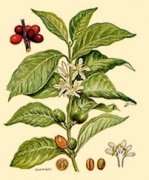
Boutique Coffee Analysis of Coffee beans
There are about 60 species of coffee in the world, of which only 25 species are cultivated to make coffee, of which only 4 species are used as commercial coffee: large fruit coffee (Coffea liberica), medium fruit coffee (Coffea canephora), small fruit coffee (Coffea arabica) and high yield coffee (Coffea dewevrei). These are botanical names. Coffee in the world at present
2014-09-30 Coffee knowledge boutique coffee science coffee beans
Cultivation of small Coffee in Yunnan
Small-grain coffee is suitable for living in mountains with an altitude of 800 to 1800 meters. If the altitude is too high, it will taste sour, and if it is too low, it will taste bitter. Small grains of coffee are mostly planted in dry and hot valleys at an altitude of 1100 meters above sea level, so they are moderately sour, rich and mellow.
2014-06-05 Coffee cultivation in Yunnan
Knowledge about Yunnan small grain coffee
Small-grain coffee is suitable for living in mountains with an altitude of 800 to 1800 meters. If the altitude is too high, it will taste sour, and if it is too low, it will taste bitter. Small grains of coffee are mostly planted in dry and hot valleys at an altitude of 1100 meters above sea level, so they are moderately sour, rich and mellow.
2014-09-02 Coffee knowledge Yunnan coffee knowledge small grain coffee knowledge
Visit Columbia Coffee Manor Coffee Bean Manor
The basic data area of the Republic of Colombia is three times the size of the capital of Japan, Bogota, Spanish, Spanish, per capita GDP48 ten thousand yen Japan is 4.2 million yen above sea level Bogota is 2600m above sea level the land of Colombia has a mountain area. As an equatorial country, coffee is produced in mountains at higher elevations. It's a long journey from Japan to the capital Bogota! It's 26 above sea level.
2015-10-07 Visits Colombia coffee estates coffee beans visits
Yunnan small grain coffee
Origin: in 1892, French missionary Father Tian succeeded in growing coffee in a place called Zhukula in Yunnan. Up to now, there are still 24 coffee trees which are more than 90 years old in Zhukula Township. Zhu Kula is a mysterious, legendary and beautiful natural village, which belongs to the Zhukula Village Committee of Pingchuan Town, Binchuan County, Dali Prefecture. It is located on the banks of Yupao River, a tributary of the Jinsha River. It is a Dali Prefecture and Chuxiong.
2014-07-02 Yunnan small grains of coffee Yunnan coffee beans boutique coffee beans
Coffee beans Yunnan Arabica coffee
Origin: In 1892, French missionary Father Tian tried to plant coffee successfully in a place called Zhu Kula in Yunnan Province. Up to now, there are still 24 coffee trees growing in Zhukula Township, which are more than 90 years old. Zhukula is a mysterious, legendary and beautiful natural village. It belongs to Zhukula Village Committee of Pingchuan Town, Binchuan County, Dali Prefecture. It is located on the bank of Yupao River, a tributary of Jinsha River. This is a Dali Prefecture and Chuxiong County.
2014-09-19 Coffee beans Yunnan Arabica coffee
Introduction to the characteristics of Flavor description Grinding degree of Coffee Variety in Ethiopian Coffee Manor
Large-scale coffee-growing villages account for about 35% of the country's total coffee production. These coffee farms, which use a multi-tier coffee planting system, are carefully cared for. Coffee farmers do not use chemical fertilizers, but use fallen leaves and animal and plant debris to increase soil nutrition. In addition to coffee, farmers also frequently grow non-coffee crops. It even accounts for the total amount of coffee in the country.
2016-10-12 Ethiopia coffee manor taste variety producing area flavor description grinding
Varieties and characteristics of Arabica Coffee
Arabica Coffee varieties and their characteristics Typica this is the closest Arabica species to the native species, almost all Arabica coffee varieties are derived from this. Used to be widely cultivated in Central and South America, the bean shape is long and has excellent sour taste and aroma, but it is not resistant to leaf rust and requires quite a lot of shading trees, resulting in low yield (sweet with bourbon every two years).
2014-09-12 Arabica Coffee varieties Coffee Encyclopedia Coffee knowledge
Fragrant Yunnan small Coffee Huaguoshan Coffee grindability characteristics Variety description of producing area
According to reports, in 1892, French missionary Father Tian used coffee fruit to breed the first coffee tree outside the church, and then cultivated more coffee trees and planted them around the church. Since then, the village of Zhukula began to grow coffee, and the village has been surrounded by coffee trees ever since. The two oldest elders in the village, Qi Guanghui and Li Fu
2016-10-10 Aroma rich Yunnan small grain coffee flower and fruit mountain grinding characteristics varieties producing areas
Qianjie Yunnan Coffee planting Story Yunnan small Coffee Bean Variety Katim Coffee Bean flavor
The skin of ripe fruit is red. Because its shape and color are similar to cherries, ripe coffee fruit is called coffecherry in many places. Under the bright red pericarp, the peel, pulp and a sweet sticky yellow substance wrap the coffee beans. Normally, there are two grains of coffee per fruit.
2023-05-23 One tree coffee several times a year planting
The Origin of Yunnan small Coffee
Origin: in 1892, French missionary Father Tian succeeded in growing coffee in a place called Zhukula in Yunnan. Up to now, there are still 24 coffee trees which are more than 90 years old in Zhukula Township. Zhu Kula is a mysterious, legendary and beautiful natural village, which belongs to the Zhukula Village Committee of Pingchuan Town, Binchuan County, Dali Prefecture. It is located on the banks of Yupao River, a tributary of the Jinsha River. It is a Dali Prefecture and Chuxiong.
2015-06-05 Yunnan small grains Coffee Origin 1892 France Missionary Tian God
The latest information and introduction of Yunnan small grain coffee boutique coffee beans
Small-grain coffee is suitable for growing in the mountains at an altitude of 800 to 1800 meters. If the altitude is too high, it will taste sour, and if it is too low, it will taste bitter. Small grains of coffee are mostly planted in dry and hot valleys about 1100 meters above sea level, so they are moderately sour, rich and mellow. There is a unique environment suitable for the growth of small seed coffee in many areas of Yunnan, and the quality of small seed coffee is excellent. The planting area is mainly distributed in the
2015-12-10 Yunnan small grains coffee boutique coffee beans latest information introduction
Introduction of Coffee Bean growing Environment in Ethiopia
Ethiopian coffee beans grow in close to the natural environment, after years of planting under the same growth conditions, Ethiopian coffee beans have gradually adapted to the environment here. More than 60% of coffee beans are grown in forests or semi-forests. Large-scale coffee-growing villages account for about 35% of the country's total coffee production. Many of these are used.
2016-07-05 Ethiopia coffee beans growth environment introduction coffee manor producing area