“Conconcaón” search results (1700)
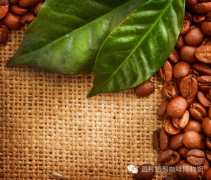
Columbia Coffee introduces Santander Paisaje cultural cafetero Huila production
Thanks to the fact that the National Coffee producers Association of Colombia (FNC) is acutely aware of the importance of naming of origin and geographical indications (D.O.-G.I.), naming of origin (Denominacin de Origen) is a system of protection of appellations of origin, mainly used to protect the quality and credibility of agricultural products. This law guarantees that only food actually produced in a certain area can be used in this way.
2016-06-27 Columbia Coffee introduction Santander Paisaje c
What are the conditions for producing high-quality coffee? the coffee producing areas in that country are the best.
Coffee production in Guatemala has declined relatively, at 700kg per hectare, while that in El Salvador is 900kg per hectare and that in Costa Rica is even more astonishing, at 1700 kg per hectare. The export of dangerous Dimara coffee is controlled by private companies, but the National Coffee Council (Asociacion Nacional de Cafe) controls the coffee industry.
2016-05-24 Rich high quality coffee need what condition that country producing area best
Fragrant and attractive Coffee Flavor description of Los Congo Manor in Nicaragua
Columbus arrived here in 1502 and reached the east coast of Nicaragua. In 1522, Spanish colonists began to conquer the region. The cities of Granada and Leon were founded in 1524. From then on, Nicaragua became a Spanish colony and came under the jurisdiction of the Governor's Office of Guatemala. The city of Leon developed into a political and cultural center; Granada became a commercial and agricultural center. In the later period of colonial rule
2016-09-29 Aroma Human Nicaragua Los Congo Manor Coffee Flavor description Product
La Jas Manor in the Central Valley of Costa Rica
Lajas is also the first manor in Central America to start honey treatment and natural sun treatment. Tanning is a very traditional practice, which uses the least resources, but because there are too many uncontrollable factors, it is very difficult to do well. Francesca added many innovations, such as using the sugar meter (Brix meter), which is often equipped in the wine industry, to measure the sugar content of fruits and roots.
2016-06-07 Costa Rica Central Valley Haas Manor also Central America first
An introduction to the Cultural course of Coffee beans in Costa Rica
Las Lajas small coffee processing farm has a history of growing and processing coffee for more than 80 years. In 1995, when the second generation operator of Las Lajas small coffee processing farm died of cancer, the third generation French Francisca and Oscar Chacn husband and wife suspected the chemistry used on the farm.
2016-06-14 Costa Rica coffee beans culture history introduction Haas Las Laja
Colombia Coffee Boutique Coffee Basics
Colombia Coffee Producers Association (Federación Nacional de Cafeteos de Clolambia), or industry abbreviation [FNC] staff introduced the two main varieties of Colombian coffee, Cadura and Colombia. Kadura was introduced from Brazil in the 1960s and now accounts for 45-50% of Colombia's production, replacing the earliest Tibica. A new breed of the same name as Colombia [Colombi
2015-04-14 Colombia Coffee Fine Basic Common sense Producer Association
What is the uniqueness of Colombian coffee? Colombian coffee and its
The Colombian Coffee producers Association (Federacion Nacional de Cafeteos de Clolmbia), known as [FNC] for short in the industry, introduced the two main varieties of Colombian coffee, Kaddura and Colombia. Kaddura, which was introduced from Brazil in the 1960s, now accounts for 45-50% of the country's output and has replaced the earliest Tibica. A new breed with the same name as Colombia [Columby]
2016-03-16 Colombia coffee unique what compared with its production
Introduction of coffee flavor description and grinding degree of Santa Cruz Manor in Ecuador with special aroma
Ecuador is one of the few countries in South America that produces both Arabica coffee and Robbins coffee. However, as the land suitable for Arabica coffee trees is decreasing, the production of Robbins coffee is gradually increasing. The best Arabica coffee comes from the Andes, especially the Chanchagu Valley (ChanchamgoValley), which is divided into two mountains, from the south to the south.
2016-09-30 Special aroma Ecuador Crewe Manor Coffee Flavor description Grinding mouth
The Cologne Islands, a coffee-growing region, was formed by huge undersea volcanic eruptions four or five million years ago.
The Cologne Islands were formed by huge undersea volcanic eruptions four or five million years ago and rose to the surface more than a million years ago. Volcanic eruptions on the island still occur from time to time, and volcanoes on Isabella and Fernandina, the westernmost island of the archipelago, have not stopped, with the most recent two eruptions in 1995 and 1998. In September 1998, Mount Alcedo (Alquito) on Isabella Island (
2016-06-17 Five hundred ten thousand years ago large undersea volcano eruption formation coffee planting area
Costa Coffee Manor introduces Galajas Manor
The natural treatment process of French Sika is quite laborious. The artificially picked high-sugar coffee fruit is first placed in an African viaduct in the sun for about 10 days, and then placed in a plastic-covered greenhouse to create more direct heat and continue to dry. until the water content reaches 11.5%. The slow drying process allows raw beans to develop more natural sweetness from within, but it also needs to be more careful.
2016-06-15 Goth Dali Coffee Manor introduction producing area Gallas Haas France Sica
Costa Rican Coffee Manor Fire Phoenix Manor introduction Coffee flavor and taste
The natural treatment process of French Sika is quite laborious. The artificially picked high-sugar coffee fruit is first placed in an African viaduct in the sun for about 10 days, and then placed in a plastic-covered greenhouse to create more direct heat and continue to dry. until the water content reaches 11.5%. The slow drying process allows raw beans to develop more natural sweetness from within, but it also needs to be more careful.
2016-07-19 Costa Rica Coffee Manor Fire Phoenix introduction Flavor taste France Silk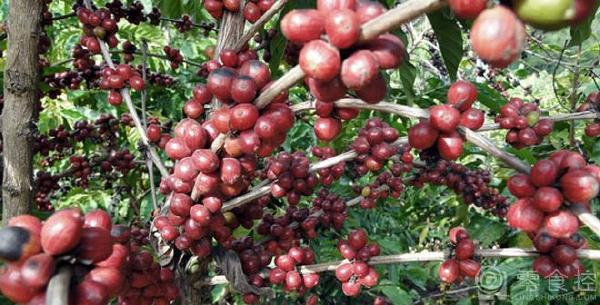
The latest news of the world coffee industry: the decline of coffee cultivation in Costa Rica
According to the Costa Rican "financier" newspaper reported on December 14. The planting area of coffee in Colombia has decreased by 6.4% in the past 30 years. It was 89881 hectares in 1984 and only 84133 hectares remained in 2015. Coffee gardens have to give up their land to real estate, especially in metropolitan areas. At the same time, the changes in coffee prices in the world have gradually reduced the profits of coffee cultivation, which are all placed on the main side of the coffee garden.
2015-12-23 World Coffee Industry latest Information Costa Rica farming decline Goss
Introduction of Ecuadorian Coffee grindability treatment method for recording the Baking degree of varieties
Ecuador is one of the few countries in South America that produces both Arabica and Robbins. However, as the land suitable for Arabica coffee trees is decreasing, the production of Robbins coffee is gradually increasing. The best Arabica coffee comes from the Andes, especially the Chanchagu Valley (Chanchamgo Valley), which is divided into two mountains from the south.
2016-10-10 Ecuador Coffee Grinding processing Taste Variety Baking degree record Chong
Costa Rican coffee beans main estate introduction Goddess estate
Francesca's natural processing process is laborious. The hand-picked high-sugar coffee fruit is placed in the sun for about 10 days in an African elevated shed, then placed in a plastic sheet covered greenhouse to create more direct heat and continue drying until the moisture content reaches 11.5%. The slow drying process allows the beans to develop more natural sweetness from within, but also requires more care.
2016-07-19 Costa Rica Coffee Bean Main Manor Presentation Goddess France Silka Self
Costa Rican Coffee Manor Goddess Manor introduces boutique coffee beans in the western valley
The natural treatment process of French Sika is quite laborious. The artificially picked high-sugar coffee fruit is first placed in an African viaduct in the sun for about 10 days, and then placed in a plastic-covered greenhouse to create more direct heat and continue to dry. until the water content reaches 11.5%. The slow drying process allows raw beans to develop more natural sweetness from within, but it also needs to be more careful.
2016-07-11 Costa Rica coffee manor goddess introduction boutique coffee beans west valley
High-quality coffee Honduran coffee manor Honduran coffee making method
Honduran coffee seems strange to many coffee drinkers. When it comes to coffee production, the geographical conditions of Honduras are no less than those of neighboring coffee-producing countries such as Guatemala and Nicaragua. However, in the past, Honduras was less well-known in the consumer market because it did not have strong support in the handling and transportation of raw beans. But in recent years, the country has become extremely
2016-05-22 Boutique coffee Honduras manor production method many
Introduction to the Central Valley and the Western Valley of Costa Rica Coffee producing area
The natural treatment process of French Sika is quite laborious. The artificially picked high-sugar coffee fruit is first placed in an African viaduct in the sun for about 10 days, and then placed in a plastic-covered greenhouse to create more direct heat and continue to dry. until the water content reaches 11.5%. The slow drying process allows raw beans to develop more natural sweetness from within, but it also needs to be more careful.
2016-06-17 Costa Rica Coffee Origin Central Valley West introduction France Sica
Fine Coffee Guatemala Coffee Processing Method Washing
The extra hard coffee beans here are full, delicious and balanced, and the coffee brewed with them is pure and rich. Guatemala coffee once enjoyed a reputation as the best coffee in the world, but quality declined for a while. Happily, however, its popularity is gradually being restored. Father Jesuit introduced coffee trees to Guatemala in 1750, late 19th century
2016-05-19 boutique coffee Guatemala treatment way method wash here extra hard
La Jas Manor in Costa Rica's Central Valley "Black Honey" American Coffee Flavor America (La
Costa Rica Finca las lajas flavor: sweet, syrup, fruit aroma, cherry (also understood as sour apple), strawberry with heavy fermentation, thick and thick texture, shallow baking with fermented grape with a hint of strawberry and chocolate, deep baking with fruit aroma more origin: Costa Rica altitude: 1300-1500 m bean seed: Kaddura Kaduai
2016-06-17 Costa Rica Central Valley Haas Manor Black Honey America Coffee flavor
Boutique Coffee Guatemala Coffee Introduction Guatemala Coffee Features
The extra hard coffee beans here are full, delicious and balanced, and the coffee brewed with them is pure and rich. Guatemala coffee once enjoyed a reputation as the best coffee in the world, but quality declined for a while. Happily, however, its popularity is gradually being restored. Father Jesuit introduced coffee trees to Guatemala in 1750, late 19th century
2016-05-19 boutique coffee Guatemala presentation characteristics here extra hard coffee beans granules