“Brazil rainfall” search results (700)

Introduction to the Variety characteristics of Kaddura Tieka Coffee from Nicaragua with obvious sour aroma
Tin pickup boutique coffee bean flavor description Coffee is a short-day plant. Coffee has the characteristics of multiple flowering and concentrated florescence. The florescence of small seed coffee in Yunnan is from February to July, and the flowering period is from March to May. The flowering of coffee is greatly affected by climate, especially rainfall and temperature. Coffee flowers have a short life span of only 2-3 days. Small seed coffee is usually served at 3: 5 a.m. and 5: 7 a.m.
2016-10-20 Aroma obvious Nicaragua Dula pickup coffee flavor description processing product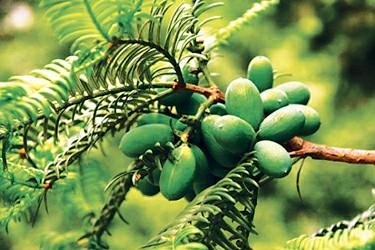
The planting conditions of coffee trees what kind of geographical environment is conducive to coffee planting and the introduction of coffee trees
Coffee tree coffee (Xoffea arabica Linn) coffee is a perennial evergreen shrub or small tree of Rubiaceae. It is a horticultural perennial cash crop with the characteristics of fast growth, high yield, high value and wide market. Wild coffee trees can grow to 5 to 10 meters high, but coffee trees planted on manors are often cut to less than 2 meters in order to increase fruit and facilitate harvesting.
2016-01-12 Coffee planting conditions how geographical environment favorable introduction
Introduction to the excellent flavor of Colombian coffee boutique coffee bean manor
China Coffee Network World Coffee is divided into two series, one is the hard coffee represented by Brazil, which has a strong flavor, and the other is the soft coffee represented by Colombia, which has a light flavor. The difference lies in the altitude of the producing area and the method of planting. Coffee is planted extensively in hilly red soil in Brazil and intensive cultivation in mountain black soil in Colombia. Colombian coffee is divided into more than 200 grades.
2016-09-14 Excellent flavor Columbia coffee boutique coffee beans manors producing areas varieties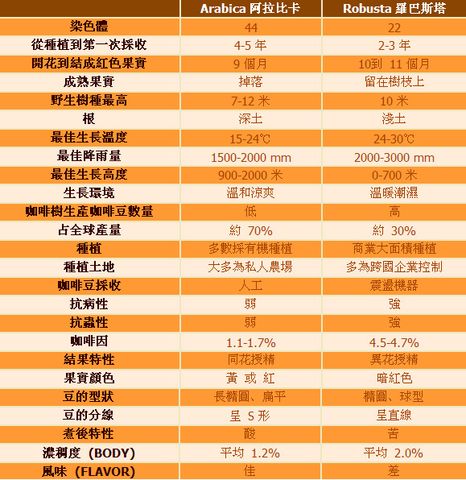
The difference between Arabica and Rubusta
Arabica coffee (transferred from www.molinarichina.com) Arabica coffee (Coffee.Arabica): Arabica coffee, also known as Arabica coffee, its taxonomic position was determined by Linnaeus in 1753. It can produce Arabica coffee (C.Arabica) beans, which can be called high-quality coffee beans in the world and the only coffee that can be drunk without any ingredients. Allah
2015-11-25 Rabbi Arabica Robbas Buzz Rubusta difference Ra
Coffee tree species are divided into three main categories: Arabica, Robersta and Liberica.
Villasarchi Velasacci is a hybrid of bourbon developed in the Costa Rican town of sarchi. The branches are at a 45-degree angle to the trunk and the leaves are bronze. Shade tree cultivation and minimal pesticide application make it an excellent organic coffee. Elegant acidity, delicate fruity flavors and nice sweetness. Caturra, Brazil, is a higher-yielding
2016-05-04 coffee tree species divided into major categories rabbi card species robersta billy boutique
Types of Arabica coffee
Arabica coffee (Coffee.Arabica): also known as Arabica coffee, its taxonomic position was determined by Linnaeus in 1753. It can produce Arabica coffee (C.Arabica) beans, which can be called high-quality coffee beans in the world and the only coffee that can be drunk without any ingredients. It accounts for about 70% of the world's total coffee production. Arabica coffee (C
2014-09-13 Arabica coffee coffee type
Coffee variety Arabica coffee
Arabica coffee (Coffee.Arabica): also known as Arabica coffee, its taxonomic position was determined by Linnaeus in 1753. It can produce Arabica coffee (C.Arabica) beans, which can be called high-quality coffee beans in the world and the only coffee that can be drunk without any ingredients. It accounts for about 70% of the world's total coffee production. Arabica coffee (C
2014-09-17 Coffee variety Arabica coffee
Introduction to the varieties and characteristics of Coffee beans
Typica, also known as Tippica, is the closest to the native species of Arabica, where almost all Arabica varieties originated. It was widely cultivated in Central and South America in the past, with long beans and excellent aroma and sour taste, but it is not resistant to leaf rust and requires a considerable number of shading trees, resulting in low production (same as bourbon, every two).
2016-06-05 Coffee beans varieties and their characteristics introduction
Where did Brazilian coffee come from? introduction to the history and culture of development.
In 1657, an English newspaper reported that coffee has many effects on gastric ulcers, can strengthen the heart, promote digestion, lift spirits, relax the mood, treat eye diseases, colds, coughs, lung diseases, headaches, edema, gout, scurvy, adenosis, and other diseases. Coffee is sometimes described as an elixir of immortality, and sometimes it is regarded as poison, because some people suffer from coffee discomfort, such as insomnia and anger
2016-10-17 Brazil coffee originally from where development history and culture introduction 165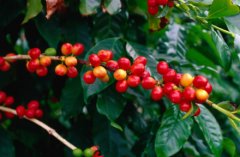
The planting and Distribution of Coffee trees in the World
Coffee is distributed near the equator, tropical and subtropical regions. It is widely distributed in South America, Central America, West Indies, Asia, Africa, Arabia, South Pacific and Oceania. Brazil leads the world in coffee production, accounting for about 30 per cent, followed by Colombia, accounting for about 10 per cent. Taking Central and South America as the center accounts for 60%, followed by Africa and Arabia accounting for about 30%, and the remaining 10%
2014-09-09 Coffee knowledge coffee tree planting coffee tree distribution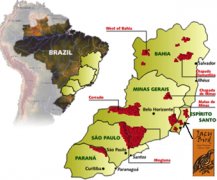
The rarest coffee in the world: Brazilian bird shit coffee
In the 1960s and 1970s, when the Camocim farm in Brazil was still under the name of the old gentleman Sr. Olivar Fontenelle de Ara ú jo, he thought of various ways, such as introducing exotic tree species such as slash pine and eucalyptus (Pinnus Elliottii and Eucalyptus), planting orchid couplets of the family Lageraceae, building small reservoirs, and so on, to protect the farm forest.
2014-06-23 Coffee knowledge bird shit coffee rare coffee
The life journey of coffee trees, from the planting of coffee trees to the harvest of coffee beans
(1) the seedling stage is the period from the germination of seeds (or cuttings or grafting) to the emergence of seedlings (the stage of raising seedlings in the nursery), about 0.5-1.5 years. After the coffee seeds were sown, the cotyledons began to be unearthed after a period of germination, which took about 30-100 days, and the length of time was closely related to temperature and humidity. Cotyledons must be removed after germination
2016-08-15 Coffee life journey planting coffee beans harvest seedling from seeds cuttings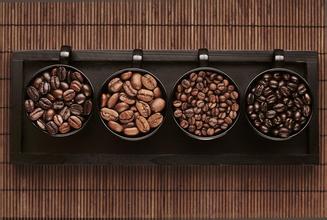
Colombian coffee growing environment
The suitable climate in Colombia provides a real natural pasture for coffee. Coffee trees in Colombia are mainly cultivated in the Andes, on steep slopes about 1300 meters above sea level, where the annual temperature is about 18 degrees Celsius, annual rainfall is 2000 to 3000 millimeters, latitude 1-11 15 north, longitude 72-78 west, and the specific range of elevation can exceed 2.000 meters. By
2016-05-31 Colombia coffee planting environment suitable climate available
Colombian coffee growing environment
The suitable climate in Colombia provides a real natural pasture for coffee. Coffee trees in Colombia are mainly cultivated in the Andes, on steep slopes about 1300 meters above sea level, where the annual temperature is about 18 degrees Celsius, annual rainfall is 2000 to 3000 millimeters, latitude 1-11 15 north, longitude 72-78 west, and the specific range of elevation can exceed 2.000 meters. By
2016-06-02 Colombia coffee planting environment suitable climate available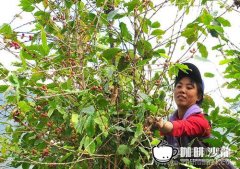
The Coffee planting Industry in China is booming and changing the Poverty-stricken villages
In China, in big cities such as Beijing, Shanghai and Guangzhou, cafes are decorated with urban customs and become fashionable consumption elements. In recent years, China's coffee consumption market has been growing at a rate of 10% to 15% every year. Not only consumption, but also the development of coffee cultivation in China has attracted more and more attention from the world. The best growing environment for coffee is low latitude, high altitude, sufficient rainfall and sunshine.
2016-06-29 China Coffee cultivation Industry Prosperity change Poverty villages Beijing
Coffee beans-country of origin and name
Brazilian coffee beans Brazil is the most important coffee producing area in the world, accounting for 1% of the total output in the world. Brazil has 10 states producing coffee beans. Due to differences in region and climate, the quality of Brazilian coffee beans is inevitably mixed. Therefore, Brazilian coffee beans are divided into No.1-No.3,Screen 18 grade screen 19 according to the grade, so that the quality is neat and stable, and it can be better when processing and roasting.
2016-05-31 Coffee beans origin name Brazil coffee beans atlas the most important in the world coffee
Outside morning review: ICE Arabica coffee futures and cocoa futures rose
New YORK / London (Reuters)-ICE Arabica coffee futures rebounded from an one-month low on Tuesday as cocoa futures rose on technical signals and low buying, driven by technical factors, offsetting a general decline in commodity markets and ample supply. ICE raw sugar futures fell to an one-month low on weak commodity markets, rainfall in Brazil, a major producer, and
2014-11-05 Coffee news coffee futures Arabica rising
Colombia coffee growing environment
Growing Environment Colombia's favorable climate provides a true natural pasture for coffee. Coffee trees in Colombia are mainly cultivated in the Andes mountains, on steep slopes up to 1,300 meters above sea level, where the annual temperature is about 18 degrees Celsius, the annual rainfall is 2000 to 3000 mm, the latitude is 1 - 11 15, the longitude is 72 - 78, and the specific altitude range can exceed 2.
2016-06-14 Colombia Coffee Cultivation Environment Introduction Fit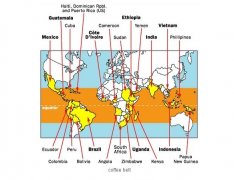
Where do coffee beans with good common sense come from?
Coffee trees need high altitude, tropical climate and fertile soil to grow the best coffee beans. Such climatic conditions on earth surround the equator, about 25 degrees north latitude to 30 degrees south latitude. In addition to location, there are many other factors that affect the quality of coffee: planting methods, soil fertility, weather, especially rainfall and light, and exact latitude.
2014-09-16 Coffee knowledge coffee common sense coffee beans
What's the difference between Arabica coffee and Roberta coffee?
Arabica coffee (transferred from www.molinarichina.com) Arabica coffee (Coffee.Arabica): Arabica coffee, also known as Arabica coffee, its taxonomic position was determined by Linnaeus in 1753. It can produce Arabica coffee (C.Arabica) beans, which can be called high-quality coffee beans in the world and the only coffee that can be drunk without any ingredients. Allah
2015-01-19 Rabbi coffee Rob Starr where is the difference rabbi transferred from