“Artificial” search results (2359)

Production and processing of coffee Sidamo guji coffee beans
At present, about 25% of the Ethiopian population directly or indirectly depends on coffee production for a living. The majority of farmers use traditional planting methods. Artificial care of coffee trees, the use of organic fertilizers, do not use harmful pesticides and herbicides, etc. Therefore, most of the coffee produced by Ethiopia is organic coffee. Due to different planting methods, coffee can be divided into forest-semi-forest coffee (Forest or semi-f).
2016-06-06 Coffee production processing Dharma guji coffee beans currently 25% Ethiopia
Robots run cafes. Do you want to experience it?
The man-machine war of the century ended not long ago, when Google AlphaGo swept South Korean go master Lee se-dol at 4:1, once again refreshing the world's understanding of artificial intelligence. Now, Shanghai has set off the tide of the times again, and the army of robots has reached the center of the world. Hongqiao new nuclear Vanke Hongqiao Cloud, their goal is to detonate China's cloud future! Enjoy the future Vanke led the creation of the first robot cafe in Shanghai
2016-08-26 Robots operators cafes you want experience century man-machine war not long ago
Introduction of coffee from the Santa Ana volcano area of El Salvador with excellent thickness and grease.
El Salvador boutique coffee is concentrated in the volcanic rock producing areas of Santa Ana in the west and Charantanan fruit in the northwest. In recent years, the top 10 cup tests are almost entirely from these two producing areas, with an altitude of about 9-1500 meters, mainly bourbon (68%). Followed by Pacas (29%), mixed-race Pakamara, Dulaai and Kaddura accounted for only 3%. The coffee harvest season has been held since November.
2016-06-27 Thickness grease excellent El Salvador Anna volcano area coffee introduction sa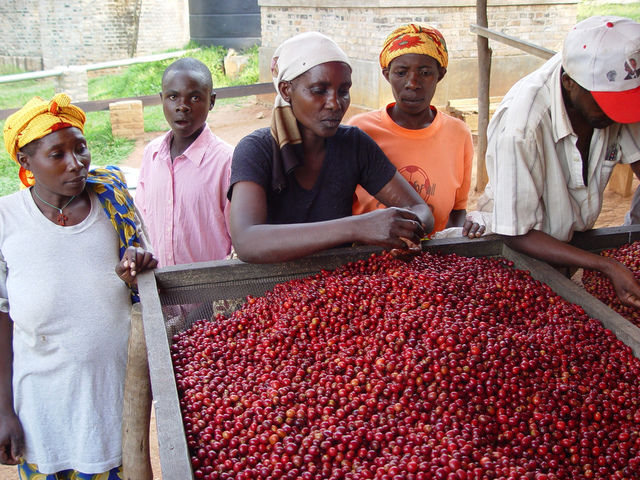
The processing method of raw coffee beans in China Coffee Network the method of solarization in Ethiopia Yega Xuefeijia
Due to the use of natural sunlight to dry the fruits and raw beans of coffee, it is also called natural drying. Due to the use of artificial and natural treatment methods in the process, the sun-cured beans look irregular and unflattering in appearance. 1. Choose beans: put the harvested fruit in the water tank, and the ripe fruit will sink, while the unripe and overripe fruit
2016-04-25 China Coffee Raw beans treatment methods Solar Ethiopia Yega Sheffield
An introduction to the Salvadoran Coffee producing area in the volcanic Rock producing area of Charantan, Northwest China
El Salvador boutique coffee is concentrated in the volcanic rock producing areas of Santa Ana in the west and Charantanan fruit in the northwest. In recent years, the top 10 cup tests are almost entirely from these two producing areas, with an altitude of about 9-1500 meters, mainly bourbon (68%). Followed by Pacas (29%), mixed-race Pakamara, Dulaai and Kaddura accounted for only 3%. The coffee harvest season has been held since November.
2016-06-29 Northwest Charan Tannan volcanic rocks producing areas El Salvador coffee introduction Thrall
Introduction to the description of the flavor of the varieties produced by the treatment of civet coffee
Coconut cats are omnivores. In addition to eating seeds, they also eat insects, snakes, birds, amphibians and reptiles, so the feces discharged by really wild coconut cats will be mixed with all kinds of substances. Local farmers in Indonesia catch coconut cats to raise them and feed coffee beans to make them. But there is a difference between artificial cultivation and natural ones after all. In the coffee industry, cat shit coffee
2016-10-12 Musk coffee treatment taste variety producing area flavor description introduction coconut
Introduction to Robusta Coffee, the planting method of Kenyan Coffee varieties
The Kenyan coffee variety was first brought to Kenya to be planted in Bourbon bourbon. In the 1950s, through unremitting efforts, the then agricultural research institution Scott Laboratory selected two excellent hybrids, SL-28 and SL-34, subverting the long-standing prejudice that artificial breeding varieties are not excellent natural varieties. SL-28 and SL-34 help Kenyan coffee
2016-06-18 Kenya Coffee Variety planting way Robes Booth introduction
Introduction of Manning Arabica Coffee Manor with characteristics and Flavor description
Although coffee shops are now full of variety, in the final analysis, there are only two kinds of artificial coffee, one is Arabica, the other is Coffea robusta (canephora), both of which are introduced from wild species. However, it has low resistance to dryness, frost, diseases and insect pests, especially to the biggest natural enemy of coffee, leaf rust, so all producing countries are committed to improvement.
2016-10-11 Manor rabbi card seed coffee manor producing area characteristics flavor description variety
Introduction to the baking degree of the flavor description of the Salvadoran coffee variety specializing in Central America
Features of Salvadoran coffee: Salvadoran coffee is a specialty of Central America, where coffee is light, fragrant, pure and slightly sour. Flavor: balanced taste, good texture recommended roasting method: medium to deep, there are many uses ★: general Salvadoran coffee market: the best quality Salvadoran coffee is exported from January to March, 35% of the extra hard beans are exported to Germany. nineteen
2016-09-26 Central America specialty El Salvador coffee variety producing area flavor description baking
Introduction to the manor of rich and round Indonesian musk cat shit coffee flavor and taste.
Coconut cats are omnivores. In addition to eating seeds, they also eat insects, snakes, birds, amphibians and reptiles, so the feces discharged by really wild coconut cats will be mixed with all kinds of substances. Local farmers in Indonesia catch coconut cats to raise them and feed coffee beans to make them. But after all, there are some differences between artificial cultivation and natural ones. Civet coffee
2016-07-14 Rich round Indonesia musk cat coffee flavor taste producing area manor
Coffee tree (Coffee Plant)
Coffee. When it comes to coffee, the first thing that comes to mind is drinks. Beverage coffee is made from coffee beans. Where do coffee beans come from: coffee trees (flowering, fruiting) Coffee fruits, or coffee berries or coffee cherries (peeled and a series of processing) Coffee is a plant, the biological classification of ta is as follows: (Kingdom) Angiosperms quilts of the Plantae plant kingdom
2014-09-03 Coffee tree
In the leisurely afternoon, books and coffee go better.
In the leisure afternoon, it is perfect to have a cup of coffee, read a book and enjoy the afternoon quietly. But do you know all the knowledge and etiquette about coffee? Today, the editor will come to popularize science for everyone. If you need it, please collect it quickly! Life Tips: coffee knowledge Coffee Classification: coffee trees can be roughly divided into five types, including Arabica (Arabica) and Robart
2016-09-18 Leisurely afternoon coffee more leisure a cup of coffee this book quiet
Panamanian Pocket Flower Butterfly Coffee Bean producing area Manor Esmeralda Manor Panamanian Coffee
In addition to creating good coffee cultivation conditions, the Lamastus family, which runs the Elida estate, has also planted many different native tree species on the estate, not only to shade the coffee trees, but also to provide a friendly habitat for birds. In terms of fertilization, the Lamastus family uses artificial fertilization and a small amount of chemical fertilizers, but never uses pesticides and herbicides that are harmful to the environment. Eye
2016-07-20 Panama Pokui Tehua Butterfly Coffee Bean producing area Manor introduction Ace Mei
Boutique Coffee Ataisi Manor in El Salvador, America, Micro-batch washing Pacamara Pacamara
Country: El Salvador Grade: SHG production area: Izalco area, Sonsonate Province, planting height: 1800 m picking season: January treatment: washing fermentation, sun drying varieties: Pacamara Manor: Finca Ataisi flavor: nut chocolate, passion fruit, cream, strawberry El Salvador is located in Central America, bordering Guatemala and Honduras in the north and west.
2016-03-25 Boutique Coffee America El Salvador Ataisi Manor batch Water washing
Description characteristics of mature and sweet civet coffee flavor introduction of high-quality coffee beans in producing areas
Indonesian coconut cats are omnivores. Apart from eating seeds, they also eat insects, snakes, birds, amphibians and reptiles, so the feces emitted by really wild coconut cats will be mixed with all kinds of substances. Local farmers in Indonesia catch coconut cats to raise them and feed coffee beans to make them. But after all, there are some differences between artificial cultivation and natural ones. Civet, coffee, civet.
2016-10-10 Ripe sweet musk coffee flavor description characteristics variety producing area boutique
El Salvador boutique coffee producing area-Santa Ana in the west and Charantan fruit volcanic rocks in the northwest
El Salvador boutique coffee is concentrated in the volcanic rock producing areas of Santa Ana in the west and Charantanan fruit in the northwest. In recent years, the top 10 cup tests are almost entirely from these two producing areas, with an altitude of about 9-1500 meters, mainly bourbon (68%). Followed by Pacas (29%), mixed-race Pakamara, Dulaai and Kaddura accounted for only 3%. The coffee harvest season has been held since November.
2016-06-23 El Salvador boutique coffee producing areas west Santa Anna northwest Charan
Comparison between instant coffee and freshly ground coffee: the three-in-one calorie is 20 times that of ground coffee.
You can't just drink coffee quickly, conveniently and cheaply. Three-in-one coffee contains a variety of artificial additives, which has reached six-in-one and seven-in-one. Sugar-free two-in-one, which you think is healthier, actually contains high fat, and it is even more unhealthy to eat. The calorie of three-in-one coffee is 20 times that of filter-hanging ground coffee. Do you really want to drink three-in-one and two-in-one? The convenience of three-in-one instant coffee is improved
2015-11-27 Instant coffee fresh grinding evaluation three-in-one heat grinding 20 times
Brewing method of Kopi Luwak in Kopi Luwak Culture Base
Coconut cats are omnivores. In addition to eating seeds, they also eat insects, snakes, birds, amphibians and reptiles, so the feces discharged by really wild coconut cats will be mixed with all kinds of substances. Local farmers in Indonesia catch coconut cats to raise them and feed coffee beans to make them. But after all, there are some differences between artificial cultivation and natural ones. Kopi Luwak, made from Indonesian coconut
2016-05-23 Cat poop coffee breeding base brewing method coconut omnivorous animal
Flavor and taste of Indonesian civet coffee introduce the characteristics of fine coffee beans in the manor area.
Coconut cats are omnivores. In addition to eating seeds, they also eat insects, snakes, birds, amphibians and reptiles, so the feces discharged by really wild coconut cats will be mixed with all kinds of substances. Local farmers in Indonesia catch coconut cats to raise them and feed coffee beans to make them. But after all, there are some differences between artificial cultivation and natural ones. Civet Coffee Coffee (
2016-08-20 Indonesia musk coffee flavor taste manor producing area characteristics introduction boutique
Salvador Mercedes Estate Coffee Flavor Description Grind Treatment Method Taste Introduction
The chaos caused by the civil war affected economic development, but ironically allowed the ancient coffee species to remain. The situation was too chaotic for Salvadoran coffee farmers to catch up with the trend of coffee variety renewal in Central and South America. El Salvador produces 100% Arabica coffee, of which 68% is Bourbon (Coffea arabica var. bourbon), 29% Pacas, the rest
2016-09-30 El Salvador Messe Des Manor Coffee Flavor Description Grind Process Square