“16” search results (4530)

Singapore study says drinking Coffee helps prevent liver Cancer
According to the German news agency, July 16, the Straits Times said today that a survey involving Chinese in Singapore found that drinking three or more cups of coffee a day could reduce the risk of liver cancer by 44 percent. Researchers from the Department of Epidemiology at the National University of Singapore suggested that two kinds of oil caffeine and caffeinol found in coffee beans have hepatoprotective effects. There are more and more signs that coffee
2015-06-25 Singapore Research Coffee help liver Cancer German News Agency July 16 report
Coffee terms explain Italian espresso
The word Espresso comes from Italian, meaning fast, because espresso is delivered to customers as soon as it is made. Double espresso is made from 47 to 62.5 milliliters (1.5 to 2 ounces) of coffee extract, 88 to 95 degrees Celsius of pure water and 9 to 10 atmospheres in 22 to 28 seconds. The coffee extract is concentrated from 14 to 16 grams of coffee powder.
2014-09-24 Coffee knowledge coffee term explanation Italian espresso
Blue Mountain Coffee, a grading system that gives priority to size and defects
Although the output of Blue Mountain Coffee is very small, it has a strict grading system, even if it is produced in the legal Blue Mountain area, it should be graded according to the size of beans and the proportion of defects. Blue Mountain No.1 Blue Mountain No. 1 bean type: 96% above 17 Blue 18 eyes defective bean proportion: 2% Blue Mountain No.2 Blue Mountain 2 bean type: 96% above 16 inch defective bean proportion: 2% Blue
2015-06-04 Size priority balance defects grading system Blue Mountain Coffee
The spread of basic knowledge of Fine Coffee
1. Coffee was introduced into Europe in the 16th century, and coffee attracted the attention of European countries in the name of Arabic wine. In the middle of the 17th century, coffee became popular in Europe. 2. When coffee was introduced into Asia in 1600, Baba Budan, a Muslim, successfully smuggled seven seeds on his belly and planted them for trial in the mountains of Mysore in southern India without large-scale cultivation. sixteen
2015-04-23 Boutique coffee basics common sense dissemination introduction Europe 16th century A
History of the spread of Coffee Coffee was introduced into China
1. Coffee was introduced into Europe in the 16th century, and coffee attracted the attention of European countries in the name of Arabic wine. In the middle of the 17th century, coffee became popular in Europe. 2. When coffee was introduced into Asia in 1600, Baba Budan, a Muslim, successfully smuggled seven seeds on his belly and planted them for trial in the mountains of Mysore in southern India without large-scale cultivation. sixteen
2015-07-28 Coffee Communication History introduction China Day Europe 16th
Decryption of the Laboratory of Musk Coffee screen Science and Technology University
The "musk coffee" produced by the laboratory of Taiping University of Science and Technology has become no longer untouchable after it has been mass-produced in the past. (Lin Hesheng) the "Musk Coffee" produced by the University of Science and Technology of the screen, the process of baking beans and fried beans is all done in the laboratory. (Lin Hesheng) the screen University of Science and Technology extracted 16 kinds of bacteria from musk stool to decrypt the high-end coffee. (Lin Hesheng) developed by the screen University of Science and Technology
2015-04-22 Musk Coffee University of Science and Technology Laboratory decryption screen HKUST production Musk Deer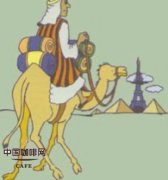
The spread of Coffee the basic knowledge of Coffee
1. Coffee was introduced into Europe in the 16th century, and coffee attracted the attention of European countries in the name of Arabic wine. In the middle of the 17th century, coffee became popular in Europe. 2. When coffee was introduced into Asia in 1600, Baba Budan, a Muslim, successfully smuggled seven seeds on his belly and planted them for trial in the mountains of Mysore in southern India without large-scale cultivation. sixteen
2015-01-29 Coffee communication boutique basics coffee introduction Europe 16th century Allah
Grading of raw coffee beans there are two ways to grade raw coffee beans.
There are two ways to classify raw coffee beans, one is the filter number, and the other is the elevation. It is divided by the filter number, and the size is size in terms of the screen size. Round beans are generally smaller than flat beans, between 8-13 and 12-29. 8, 9, 10. 12, 13. 18. 29 = small, medium, ordinary. Quasi-big. Big, extra large. The bigger the size, the bigger the beans. Like SC-.
2015-06-05 Coffee beans grading coffee raw beans methods two kinds
History of Coffee Culture on the Source of Coffee
The history of coffee can be traced back to the tenth century AD, but those are unverifiable history. For example, the widely spread story of shepherds, the story of monks across the desert and so on. What is really well documented is the spread time of coffee beans, that is, from Africa to Europe and the whole world, probably around the 16th-17th century AD, which is known to be a great voyage.
2014-09-05
The grading system of giving priority to defects in the size of Blue Mountain Coffee
Although the output of Blue Mountain Coffee is very small, it has a strict grading system, even if it is produced in the legal Blue Mountain area, it should be graded according to the size of beans and the proportion of defects. Blue Mountain No.1 Blue Mountain No. 1 bean type: 96% above 17 Blue 18 eyes defective bean proportion: 2% Blue Mountain No.2 Blue Mountain 2 bean type: 96% above 16 inch defective bean proportion: 2% Blue
2014-09-30 Coffee knowledge coffee beans blue mountain coffee coffee grading
The grading system of Blue Mountain Coffee grading Standard size giving priority to defects
Although the output of Blue Mountain Coffee is very small, it has a strict grading system, even if it is produced in the legal Blue Mountain area, it should be graded according to the size of beans and the proportion of defects. Blue Mountain No.1 Blue Mountain No. 1 bean type: 96% above 17 Blue 18 eyes defective bean proportion: 2% Blue Mountain No.2 Blue Mountain 2 bean type: 96% above 16 inch defective bean proportion: 2% Blue
2015-10-13 Blue Mountain Coffee grading Standard size priority consideration defects system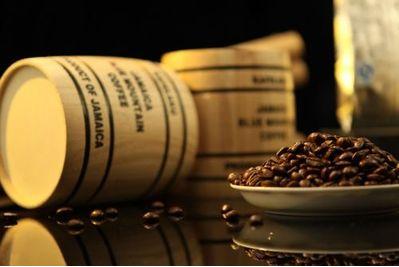
The grading system of Blue Mountain Coffee giving priority to defects. Blue Mountain Flavor imported Coffee beans
Although the output of Blue Mountain Coffee is very small, it has a strict grading system, even if it is produced in the legal Blue Mountain area, it should be graded according to the size of beans and the proportion of defects. BlueMountainNo.1 Blue Mountain No.1 Bean: 96% above 17 BlueMounta 18 defective Bean: 2% BlueMountainNo.2 Blue Mountain 2 Bean: 96% above 16 Universe 17 defective Bean: 2%
2016-04-12 Blue Mountain Coffee size priority balance defects grading system
The grading system of giving priority to defects in the size of boutique Blue Mountain Coffee
Although the output of Blue Mountain Coffee is very small, it has a strict grading system, even if it is produced in the legal Blue Mountain area, it should be graded according to the size of beans and the proportion of defects. Blue Mountain No.1 Blue Mountain No. 1 bean type: 96% above 17 Blue 18 eyes defective bean proportion: 2% Blue Mountain No.2 Blue Mountain 2 bean type: 96% above 16 inch defective bean proportion: 2% Blue
2014-11-20 Coffee knowledge Blue Mountain Coffee Coffee Bean defects grading system
What exactly does the name of coffee mean?
1. What is the amount of information contained in the name of the raw coffee bean? 2. Why is it that sometimes the manor comes first in the name of the coffee bean, and sometimes the description of the treatment and grade is interspersed with it? what is the naming rule? Is there a uniform standard? 3. How to see the grade from the name of the raw coffee bean? This article will provide an in-depth answer to how to treat the naming of coffee beans, and
2016-08-25 Coffee name exactly what does it mean?
General knowledge of fine coffee beans grading of raw coffee beans
There are two ways to classify raw coffee beans, one is the filter number, and the other is the elevation. It is divided by the filter number, and the size is size in terms of the screen size. Round beans are generally smaller than flat beans, between 8-13 and 12-29. 8, 9, 10. 12, 13. 18. 29 = small, medium, ordinary. Quasi-big. Big, extra large. The bigger the size, the bigger the beans. Like SC-.
2014-11-13 Coffee knowledge boutique coffee coffee bean common sense grading
The grading system of giving priority to the size and defects of Blue Mountain Coffee
Although the output of Blue Mountain Coffee is very small, it has a strict grading system, even if it is produced in the legal Blue Mountain area, it should be graded according to the size of beans and the proportion of defects. Blue Mountain No.1 Blue Mountain No. 1 bean type: 96% above 17 Blue 18 eyes defective bean proportion: 2% Blue Mountain No.2 Blue Mountain 2 bean type: 96% above 16 inch defective bean proportion: 2% Blue
2015-09-15 Blue Mountain Coffee size priority balance defects grading system
The spread of coffee when coffee was introduced into China?
1. Coffee was introduced into Europe in the 16th century, and coffee attracted the attention of European countries in the name of Arabic wine. In the middle of the 17th century, coffee became popular in Europe. 2. When coffee was introduced into Asia in 1600, Baba Budan, a Muslim, successfully smuggled seven seeds on his belly and planted them for trial in the mountains of Mysore in southern India without large-scale cultivation. sixteen
2015-10-19 Coffee spread introduction China time Europe 16th Century A
Espresso about making ESPRESSO Checklist
one。 Observe whether the flow rate of coffee from the handle of the filter is between 25 and 30 seconds Q. The possible reason for the excessive flow rate is: 2, 4, 4, 5 Q. The possible reasons for the slow flow rate are as follows: 32. Observe the shape of the CREMA of coffee flowing out of the handle of the filter, whether it is a thick and smooth flow of Q.CREMA too much water, not a smooth flow, but a possible reason for splashing off the handle. Observation gram
2014-09-09 Coffee knowledge espresso Espresso coffee encyclopedia
There are a lot of exquisite coffee, you know?
When brewing a cup of strong coffee, how much should the water temperature be? Should the brewing speed be fast or slow?
2014-07-09 Coffee knowledge boutique coffee coffee exquisite coffee encyclopedia
Making problem checklist by ESPRESSO
There are always some problems when we use coffee machines to extract espresso, so let's see what the problems will be. And how to find the reason: one. Observe whether the flow rate of coffee from the handle of the filter is between 25 and 30 seconds Q. The possible reason for the excessive flow rate is: 2, 4, 4, 5 Q. The possible reasons for the slow flow rate are as follows: 32. Watch the coffee flow out of the filter handle (CR)
2014-07-11 ESPRESSO ESPRESSO production ESPRESSO problem