“1 Century” search results (4000)

Introduction to the characteristics of coffee flavor and taste varieties in Fuyin Manor, Indonesia
Lived in the Indonesian archipelago about 1.5 million to 35000 years ago, known as the Javanese ape-man. Homo sapiens entered the area about 45000 years ago. A number of scattered feudal kingdoms were established in the 7th century AD. Recorded dynasties include the death of the Buddhist Sri Buddha (mid-7th century-1293) [4], later conquered by Manabacher, and the Kingdom of New Keshali, which controls the Strait of Malacca (122).
2016-09-02 Full-bodied fragrant Indonesia Fuyin manor coffee flavor taste variety producing area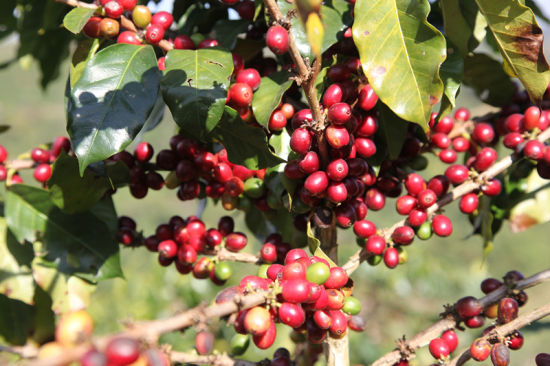
How to grow Arabica coffee beans, one of the most important coffee trees in the world?
Arabica species (scientific name CoffeeArabica). The origin of Arabica species is Ethiopia's Abyssinia Plateau (present-day Ethiopian Plateau). In the early days, it was mainly used as medicine, and in the 13th century it developed the habit of baking and drinking. It was introduced into Europe through the Arab world in the 16th century and further became a favorite drink all over the world.
2016-04-06 The most important thing in the world coffee tree species one rabbi tree coffee beans pull
History of the spread of Coffee Coffee was introduced into China
1. Coffee was introduced into Europe in the 16th century, and coffee attracted the attention of European countries in the name of Arabic wine. In the middle of the 17th century, coffee became popular in Europe. 2. When coffee was introduced into Asia in 1600, Baba Budan, a Muslim, successfully smuggled seven seeds on his belly and planted them for trial in the mountains of Mysore in southern India without large-scale cultivation. sixteen
2015-07-28 Coffee Communication History introduction China Day Europe 16th
Introduction to the Prospect of Coffee Industry in Brazil
Coffee is a traditional industry in Brazil. Since 1960, coffee cultivation in Brazil has been ranked first in the world, with an average annual output of 24.6 million bags (60 kg each). In 2002, due to favorable weather and a good year for coffee production, Brazilian coffee reached the best level in history, reaching 47.2 million bags, an increase of 59.6 per cent over 28.137 million bags in 2001. According to the November 2002 report of the United States Department of Agriculture,
2016-06-05 Brazil Coffee Industry Prospect introduction tradition 196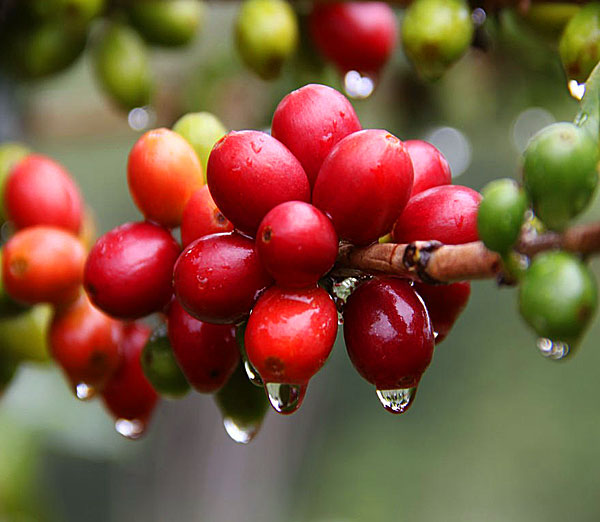
History of Arabica beans Arabica bean varieties derived from Arabica beans
The origin of the historical Arabica species (Coffea arabica) is the Abyssini Arabica sub-plateau (Abyssinia, now known as the Ethiopian plateau) in Ethiopia. In the early days, it was mainly eaten as medicine (Islamic monks used as a secret medicine to cure the body and mind or to awaken the brain), developed the habit of baking and drinking in the 13th century, and passed through the Arab region in the 16th century.
2016-03-22 Rabbi Kadou History Source Variety Card species Coffea
Introduction of high-quality coffee beans with flavor and taste in Xidamo Shachiso producing area of Ethiopia
Ethiopia is an ancient country with a history of 3000 years of civilization. The Hamite people who immigrated from the southern Arabian Peninsula were the earliest inhabitants. Monlinique I reigned in 975 BC. The Kingdom of Nubia was established in the 8th century BC. From the 1st century to 976 AD, the Ethiopian Empire, also known as the Kingdom of Aksum, was established in Aksum in the north. Christianity was introduced into Ethiopia in the 4th and 5th centuries.
2016-09-23 Ethiopia Dharma Shaquiso producing area flavor taste boutique coffee beans medium
Aromatic, full-bodied Rwandan coffee flavor Taste Manor characteristics Fine coffee Introduction
Clans began to coalesce into kingdoms in the 15th century, and by 1700 there were eight kingdoms in Rwanda. The Kingdom of Rwanda, ruled by the Tutsi Nyiginya clan, grew from the mid-18th century until it reached its peak in the 19th century under King Kigali IV. Between 700 BC and 1500 AD, some Bantu groups migrated to Rwanda, clearing forests for seed production
2016-08-20 Aroma Granular Full Rwanda Coffee Flavor Taste Manor Region Characteristics
Rich and full-bodied flavor of Rwandan coffee description of grinding degree of taste introduction to the methods of variety treatment
Clans began to form kingdoms in the 15th century, and in 1700 there were eight kingdoms in Rwanda. The Kingdom of Rwanda, ruled by the Tutsi Nyiginya clan, grew gradually in the mid-18th century and reached its peak under the rule of King Kigali IV in the 19th century. Between 700 BC and 1500 AD, some Bantu groups moved to Rwanda to destroy forests and open up wasteland.
2016-10-07 Aroma full-bodied Rwanda coffee flavor description grinding taste variety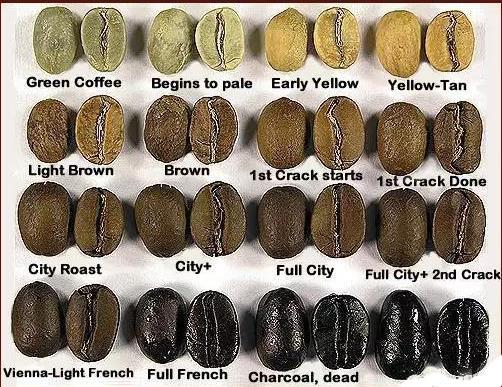
The common sense about coffee roasting, the roasting of coffee beans, the mellow taste of coffee
What is baking? What is the definition of baking? Generally speaking, the so-called coffee roasting (coffee roasting) refers to the process that through heating the raw beans, a series of physical and chemical reactions take place inside and outside the coffee beans, and in this process, the sour, bitter, sweet and other flavors of the coffee are formed, forming mellowness and hue, and converting the raw beans into dark brown beans. The baked one is heavy
2016-01-16 About coffee roasting those common sense understanding coffee beans mellow taste
Arabica Coffee Bean Coffee Manor introduction Arabica Coffee Manor
The origin of the Arabica species (Coffea arabica) is the Abyssini Arabica subplateau (Abyssinia, now known as the Ethiopian plateau) in Ethiopia. In the early days, it was mainly eaten as medicine (Islamic monks used as a secret medicine for physical and mental therapy or for awakening the brain), developed the habit of baking and drinking in the 13th century, and passed through Allah in the 16th century.
2016-07-11 Rabbi coffee beans coffee manor introduction rabbi card species Coffea a
Indonesian Coffee Fuyin Manor Coffee Flavor description Grinding degree Taste characteristics Variety treatment method Price introduction
1. Java Coffee, the oldest producing area of Java Coffee in Java, has been famous since the glory days of Indonesian coffee in the 18th century. When it comes to Java coffee, it is still reminiscent of high-quality delicacy, when the most famous blend is Java coffee with Yemeni mocha. In addition, Java also has a very famous old coffee Aged coffee, or monsoon coffee Monsooned.
2016-10-08 Indonesia coffee fuyin manor flavor description grinding taste characteristics variety
Introduction to the characteristics of High-quality Coffee in the Flavor Manor of Xidamo Chiso Coffee, Ethiopia
Ethiopia is an ancient country with a history of 3000 years of civilization. The Hamite people who immigrated from the southern Arabian Peninsula were the earliest inhabitants. Monlinique I reigned in 975 BC. The Kingdom of Nubia was established in the 8th century BC. From the 1st century to 976 AD, the Ethiopian Empire, also known as the Kingdom of Aksum, was established in Aksum in the north. Christianity was introduced into Ethiopia in the 4th and 5th centuries.
2016-08-25 Ethiopia Dharma Shaquiso coffee flavor taste manor producing area characteristics
Kenyan Coffee introduces the growing Environment
Coffee entered Kenya in the 19th century, when Ethiopian coffee drinks were imported into Kenya through southern Yemen. But it was not until the early 20th century that the Bourbon Coffee Tree was created by the St. Austen Mission (St). Austin Mission) is introduced. Kenyan coffee is mostly grown at an altitude of 1500 to 2100 meters and is harvested twice a year. To ensure that only ripe berries are picked, people must
2016-06-01 Kenya coffee introduction growth environment 19th century entering
Kenyan Coffee Culture Kenyan Coffee Development
Coffee entered Kenya in the 19th century, when Ethiopian coffee drinks were imported into Kenya through southern Yemen. But it was not until the early 20th century that the Bourbon Coffee Tree was created by the St. Austen Mission (St). Austin Mission) is introduced. Kenyan coffee is mostly grown at an altitude of 1500 to 2100 meters and is harvested twice a year. To ensure that only ripe berries are picked, people must
2016-05-26 Kenya coffee culture coffee development history 19th century entering Ken
Coffee making fancy coffee cappuccino
Cappuccino introduction: in the early 20th century, the Italian Archibucha invented the steam pressure coffee machine, but also developed cappuccino coffee. Cappuccino is an Italian coffee mixed with the same amount of Italian espresso and steamed milk. The color of the coffee at this time is like a monk of the St. Franciscan Church (Capuchin) covering a dark brown coat with a head.
2014-09-05 Coffee making fancy coffee cappuccino
How to use Vietnam drip pot? How to use the coffee drip pot
Vietnamese coffee originated from drip coffee, which was very popular in France in the early 19th century, and was introduced into Vietnam with the colonial relationship between France and Vietnam. Vietnamese coffee is not brewed in a coffee pot, but a special drip coffee cup, which we call a drip pot. Contents [Hide] Vietnamese coffee originated in France in the early 19th century, very popular drip coffee, with the French and Vietnamese colonization
2015-11-09 how use vietnam drip coffee since nineteenth century
Introduction to the flavor of Kenyan coffee
Coffee entered Kenya in the 19th century, when Ethiopian coffee drinks were imported into Kenya through southern Yemen. But it was not until the early 20th century that the Bourbon Coffee Tree was created by the St. Austen Mission (St). Austin Mission) is introduced. Kenyan coffee is mostly grown at an altitude of 1500 to 2100 meters and is harvested twice a year. To ensure that only ripe berries are picked, people must
2016-06-03 Kenya coffee flavor introduction 19th century entering at that time
There are 40 cross-border cooperative cafes for Tsinghua students throughout the country this year.
On June 28, two alumni from Tsinghua University, Liu Minghui, founder of Yunnan Aixing Coffee, and Mei Xiangrong, founder of Pacific Century Law firm, opened their business in the beautiful seaside city of Qingdao. Yunnan coffee fragrance Qingdao, driving into the lawyer's office, this is a cross-border cooperation between the Chinese coffee industry and the legal profession. At the opening ceremony, PCG Law firm worked together all over the world.
2015-08-07 Tsinghua University students Cross-border Cooperation Cafe year National layout 40
Coffee rookie entry-level learning coffee lesson 1 basic knowledge of coffee introduction to coffee varieties
Coffee belongs to the evergreen shrub of the genus Rubiaceae, which is centered in the tropics. There are about 6000 species of Rubiaceae belonging to 500 genera. Coffee has always been thought to have certain effects, such as strengthening the stomach, waking up the brain, stopping bleeding, dissipating heat, strengthening the body, and so on. The more famous Rubiaceae plant is Gardenia jasminoides, whose fruit was dried and used as medicinal material a long time ago. The three native species of coffee
2016-02-17 Coffee rookie introduction learning one lesson fundamentals knowledge learning variety coffee
The earliest export port of Yemeni coffee mocha
Yemeni coffee, a well-known coffee named after a port in Yemen. The most familiar mocha coffee. When the word appears on the recipes of bags and cafes, the meaning is different. The former refers to the port where coffee beans are exported, while the latter refers to a kind of coffee. Strictly speaking, coffee beans exported from the port of Mocha in Yemen can be called mocha coffee. Later, the port
2014-06-27 Yemeni coffee coffee beans mocha coffee boutique coffee