What is the difference between the first coffee roasting process and the second coffee roasting process?
Professional coffee knowledge exchange more coffee bean information please follow the coffee workshop (Wechat official account cafe_style)
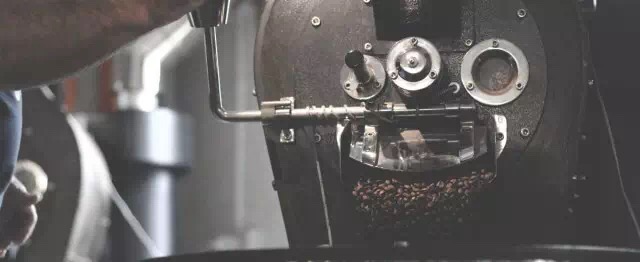
Professional coffee roasting | is coffee roasting too complicated? A picture teaches you about the baking process.
After the first article on Coffee roasting, this time we will briefly introduce the process of coffee roasting.
The process of roasting coffee
Simple analogy coffee roasting process is like popcorn, it is difficult to swallow before roasting, but like corn kernels, white fluffy, delicious and sweet popcorn pops out after roasting, and coffee roasting is the same. It also needs to go through a period of heating before it can become the coffee we drink.
The roasting process of raw coffee beans is a continuous and complex chemical reaction, generally referred to as thermal decomposition (pyrolysis), which causes coffee to produce or release more than 700 chemicals.
It is because these chemicals bring out the flavor of coffee.
Through the following video, you can see that the color of raw coffee beans changes slowly from bright green (or turquoise) to light yellow, brown and dark coffee after heating.
Start baking → for the first or second burst
In the 38-second part of the film, the water in the beans turns to steam and pops out of the coffee beans, causing the coffee beans to burst for the first time.
As the temperature continues to heat, the beans begin to swell and the silver film peels off, and the color darkens as the light coffee begins to caramel with the internal polysaccharides.
Finally, the coffee is divided from light roasting, moderate roasting to deep roasting by each baking time.
Changes of roasting degree and bitterness of coffee
Different degrees of roasting also affect the changes of chemical elements in coffee. Taguchi, a well-known coffee master, talks in his book that during roasting, chlorogenic acid (Chlorogenic Acid) [2] in coffee will produce bitter substances, and these substances will vary with different degrees of roasting. This is why the flavor of most light-roasted coffee beans is bright and refreshing while the deep-baked flavor is rich in bitterness.
On the other hand, the roaster will make the coffee show the best flavor according to the appropriate roasting degree of different raw beans.
Scientific roasting of coffee
People often compare coffee roasting to a combination of art and science, because roasters keep finding the best roasting degree and time from experiments, among which there are many factors, such as weather, water content and quality of raw coffee beans, weather during baking, characteristics of the roaster, and so on. These factors all affect the coffee flavor, so in addition to making the coffee reflect the best flavor, it is also necessary to maintain consistency!
What is interesting is that now that the scientific and digital roasting of coffee has matured, it should be hard to imagine that it was popular to stir-fry coffee at home in the United States before the mid-19th century. [3]
Reference books:
Note 1: baked taste table; Taguchi's boutique Coffee Collection; page 49; Taguchi / author; 2012; Building Block Culture publication
Note 2: antioxidants in coffee: chlorogenic acid; Zova Cafe
Note 3: coffee industry before the Civil War; long live Coffee ─ how Coffee changed the World; p. 53; Mark Pandergrast / author; 2000; Lianjing Press
.
Share
Follow Coffee Search for the latest coffee updates. Reproduced from "Coffee Search"
Article URL: https://www.coffeesearch.net/coffee115572.html
Related Articles
- Beginners will see the "Coffee pull flower" guide!
- What is the difference between ice blog purified milk and ordinary milk coffee?
- Why is the Philippines the largest producer of crops in Liberia?
- For coffee extraction, should the fine powder be retained?
- How does extracted espresso fill pressed powder? How much strength does it take to press the powder?
- How to make jasmine cold extract coffee? Is the jasmine + latte good?
- Will this little toy really make the coffee taste better? How does Lily Drip affect coffee extraction?
- Will the action of slapping the filter cup also affect coffee extraction?
- What's the difference between powder-to-water ratio and powder-to-liquid ratio?
- What is the Ethiopian local species? What does it have to do with Heirloom native species?