“Co-operative” search results (222)

A car powered by coffee
At an event held by a foreign food company (Co-operative Food), a coffee-fueled car, a Ford F100 pickup truck equipped with a special Bean Machine engine, drove at a speed of 65 miles per hour, making it the fastest coffee-fueled car.
2014-05-26 Coffee news creative coffee coffee car
Coffee-fueled vehicle
It is said that the price of domestic oil products will be raised again after the Lantern Festival. well, fortunately, we have other options, such as the car powered by shit and urine introduced before, and the coffee-fueled car to be introduced today: this is what happened at an event held by a foreign food company called Co-operative Food, a car fueled by coffee.
2014-04-27 Coffee fuel cars it is said domestic refined oil Lantern Festival and then to mention
Flavor description characteristics of Burundian AA Coffee introduction to the characteristics of Grinding degree by Variety treatment
Burundian Coffee Bean Flavor description the degree of grinding of coffee beans in Burundi is similar to that of Yisuobi, and most of them are produced in small ones. Farmers in the Nielu Deer Co-operative Society (Nyarunasi Cooperative) send their harvested ripe fruits to the processing system. The coffee received by the people is washed with traditional water and soaked in the sink after the fruit has been removed.
2016-10-19 Burundian coffee flavor description characteristics taste variety treatment grinding
Coffee flavor and taste of Bloomberg Manor area introduces Burundian coffee producing area of boutique coffee beans
The coffee production type of Bloomberg is similar to that of Yisuobi, and most of them are produced by small ones. Farmers in the Nielu Deer Co-operative Society (Nyarunasi Cooperative) send their harvested ripe fruits to the processing system for unified treatment. The coffee collected by the people is washed and processed with traditional water. After the fruit is removed, the coffee is soaked and washed in the sink and placed on the scaffolding to be dried every day.
2016-07-18 Broom coffee flavor taste manor producing area introduction boutique coffee beans bloom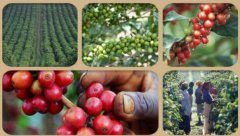
Ethiopian Coffee Conger Cooperative Ethiopia Yejia Sheffield Conger Cooperative
Ethiopia Yirgacheffe Konga Cooperative Ethiopian Yejia Sheffield Conger Cooperative: Conger Cooperative (YCFCU member, Yega Sheffield Coffee Farmers Cooperative Union, Yirga Cheffe Coffee Farmers Cooperative Union) member: 2000 Farmer area: Kongo, altitude near Konga,Yirgacheffe: 2100m left
2016-04-06 Ethiopia Coffee Conger Cooperative Yejia Sheffield
The Geographic History of Blue Mountain Coffee
In 1717, King Louis XV of France ordered the cultivation of coffee in Jamaica. In the middle of the Blue Mountain Coffee era, the Governor of Jamaica, Sir Nicholas Nicholas Lawes, imported Arabica seeds from Martinique and began to plant them in St. Andrew. To this day, the St. Andrews area is still a dental buyer.
2016-06-05 Blue Mountains coffee geography history
Planting History of Blue Mountain Coffee beans in Jamaica
In 1717, King Louis XV of France ordered the cultivation of coffee in Jamaica. In the middle of the 20th century, the Governor of Jamaica, Sir Nicholas Nicholas Lawes, imported Arabica seeds from Martinique and began to plant them in St. Andrew. To this day, St.
2016-06-15 Jamaica Blue Mountains coffee beans cultivation history
Introduction of Jamaican boutique Blue Mountain Coffee Flavor and Taste
In the mid-1970s, the Governor of Jamaica, Sir Nicholas Lloyd (Nicholas Lawes), imported Arabica seeds from Martinique and began to plant them in St. Andrew. To this day, St. Andrews is still one of the three major producing areas of Jamaican Blue Mountain Coffee, with the other two producing areas: Portland (Por).
2016-07-25 Jamaica Warren Ford coffee manor introduction boutique Blue Mountain flavor taste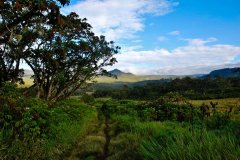
Qianjie Cafe Kenya AA TOP Strange processing Plant washes coffee beans
Details of coffee beans: country: Kenya factory: Kirinyaga altitude: 1900 m varieties: SL28, SL34 treatment plant: Kii treatment method: full washing treatment, sun drying producer: Rungento Farmers Cooperative Society member small farmers (about 1214) area: about 0.3ha per small farmer, annual rainfall of about 1900 coffee trees
2015-02-13 Front Street Cafe Kenya TOP Strange processing Plant Water washing Coffee beans Coffee
Yega chiffon Wauka flavor
Perhaps Yega snow caffeine is one of the most familiar words among coffee lovers. The birthplace of coffee-a small town under the province of Yega Xidamo, the representative of Ethiopia, is a boutique producing area. With its unique fruit flavor, thousands of coffee fans are fascinated by sweet and sour feelings. On the way to coffee, if you haven't had Yega Snow Coffee, then you haven't started yet. Esther is the most
2016-08-31 Yega Chefe Wauka Flavor maybe Coffee enthusiast most
The History and Culture of Jamaican Blue Mountain Coffee Latitha Manor
In 1717, King Louis XV of France ordered the cultivation of coffee in Jamaica. In the middle of the 20th century, the Governor of Jamaica, Sir Nicholas Nicholas Lawes, imported Arabica seeds from Martinique and began to plant them in St. Andrew. To this day, St. Andrew
2016-06-14 Jamaica Blue Mountain Coffee History and Culture Ratti Manor
Introduction to Burundian Coffee producing area
Rich through the introduction of the Belgian people, Bloomberg began to grow coffee in 1930, and most of the varieties are bourbon series, and coffee grows on mountains ranging from 1750 to 2000 meters above sea level. The first Burmese Arabica coffee shop was introduced by Billy in the 1930s. Since then, there are more than 800,000 families in Bloomberg.
2016-07-30 Taste slippery Burundian coffee flavor characteristics introduction producing area tail rich
Flavor and taste of Blue Mountain Coffee Manor in Jamaica
In the mid-1970s, the Governor of Jamaica, Sir Nicholas Lloyd (Nicholas Lawes), imported Arabica seeds from Martinique and began to plant them in St. Andrew. To this day, St. Andrews is still one of the three major producing areas of Jamaican Blue Mountain Coffee, with the other two producing areas: Portland (Por).
2016-07-18 Jamaica Blue Mountain Coffee Manor producing area Flavor Taste Cliff introduction medium
Introduction of very fragrant Kenyan coffee beans with the fragrance of wine
Accounting for 55% of Kenya's total coffee production (40% of the number of estates) is run by numerous small operators. Seeing that coffee is absolutely profitable, these small operators continue to increase the need for agronomy and the development of high-quality coffee tree species, thus greatly promoting the development of coffee in Kenya. To ensure that only ripe coffee fruits are picked, people must be in the forest
2016-06-28 Very strong wine fragrant Kenya coffee beans introduction coffee
Panama poquet washed processed boutique coffee emerald estate rose summer coffee beans
On Panama's fine coffee scene, there are also a few estates that continue to strive for coffee quality and win good competitions. La Berlina Estate is one of them, and it is also one of the most famous estates under CASA RUIZ Caesar Luis Cooperative. This batch of Geisha was collected from very young coffee trees, and because
2016-07-02 Panama Poque Wash Treat Boutique Coffee Emerald Manor Rose Summer
History and culture of blue mountain coffee is the flavor characteristic of authentic blue mountain coffee bitter
In 1717, King Louis XV of France ordered the cultivation of coffee in Jamaica. In the middle of the 20th century, the Governor of Jamaica, Sir Nicholas Lloyd (NicholasLawes), imported Elaraby from Martinique.
2021-11-15 Blue Mountain Coffee History and Culture introduction
An introduction to the Historical Origin of Jamaica Blue Mountain Coffee with a good balance of Acid, Glycol, Alcohol and bitterness
In 1950, the Government of Jamaica established the Jamaica Coffee Industry Committee (the Jamaica Coffee Industry Board), which sets quality standards for Jamaican coffee and oversees the implementation of quality standards to ensure the quality of Jamaican coffee. The committee awarded a special official seal to raw coffee and roasted coffee exported from Jamaica, which is the highest level of national coffee in the world.
2016-06-21 Bitter very balanced Jamaica Blue Mountain Coffee History Origin introduction
Jamaica Blue Mountain Coffee producing area-St. Thomas producing area Fine Coffee beans
In 1717, King Louis XV of France ordered the cultivation of coffee in Jamaica. In the middle of the 20th century, the Governor of Jamaica, Sir Nicholas Nicholas Lawes, imported Arabica seeds from Martinique and began to plant them in St. Andrew. To this day, St. Andrew
2016-06-16 Jamaica Blue Mountain Coffee producing area Thomas Fine goods Coffee beans
Panamanian Rose Summer Coffee Bean Emerald Manor Poket Flower Butterfly Coffee Bean Baru Volcano producing area
This batch of Geisha is collected from very young coffee trees, which is why they give it the name baby geisha. It has a high purity and elegant aroma that mature trees do not have, making people fall in love with TA without hesitation. It can also be predicted that after a few years, the coffee tree will become more mature, its flavor will be more rich and complex. Baby Ge
2016-06-17 Panama Rose Summer Coffee beans
A Historical introduction to Jamaica Blue Mountain Coffee Why Blue Mountain Coffee is so expensive
In 1717, King Louis XV of France ordered the cultivation of coffee in Jamaica. In the middle of the 20th century, the Governor of Jamaica, Sir Nicholas Nicholas Lawes, imported Arabica seeds from Martinique and began to plant them in St. Andrew. To this day, St. Andrew
2016-06-18 Jamaica Blue Mountain coffee history introduction why then expensive