“AA17” search results (200)

Grading of raw coffee beans
At present, there are three main rating criteria for raw coffee beans, and different countries adopt different rating methods according to their own production conditions and national conditions (not all coffee producing countries adopt the same method). Let's introduce these three popular rating methods. One: the reason for the emergence of such a classification standard according to the altitude of the coffee producing area is mainly because of the high level.
2014-07-22 Coffee raw beans coffee raw bean grading coffee encyclopedia coffee knowledge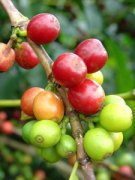
Boutique coffee is classified according to sieve grade.
The way of grading according to the screen is the method of grading according to the size of raw coffee beans. Raw beans are graded by determining the size of the beans through a holed iron plate sieve. The size of the hole in the screen is 1x64 inches (less than 0.4mm), so the size of the screen indicates that there are several screens with a size of 64 inches. For example, the size of the screen size 17 is 17thumb 64 inches, which is about 6.75mm, so the screen
2016-05-16 Boutique coffee sieve grading classification way is according to
The latest cup test of Kenya
Kenya is a neighbor of Ethiopia, but coffee was introduced at the end of the 19th century. Although it has a history of only more than 100 years, Kenyan coffee is now an important representative of the boutique coffee market. Kenyan coffee is graded according to the size of raw beans (sieve), raw beans into a PB, flat beans are mainly AA++,AA+,AA,AB,C,E and other grades. Beans above AA level are used on the 17th.
2014-09-02 Cup test Kenya
Graded coffee raw bean treatment
At present, there are three main rating criteria for raw coffee beans, and different countries adopt different rating methods according to their own production conditions and national conditions (not all coffee producing countries adopt the same method). Let's introduce these three popular rating methods. One: the reason for the emergence of such a classification standard according to the altitude of the coffee producing area is mainly because of the high level.
2014-09-18 Grading of raw coffee beans and treatment of raw coffee beans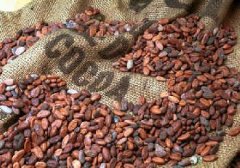
Classification of coffee beans
Grade Grade1 (level 1): washed bean highest Grade2 (second level): washed bean standard level Grade3 (third level): sun dried bean highest standard grade Grade3 (fourth level): sun dried bean standard grade Grade5 (fifth level): basic level of sun dried bean export this grading region representative: Ethiopia according to size particle classification: e Peaberry round bean super large PB P
2014-05-12 Coffee beans grade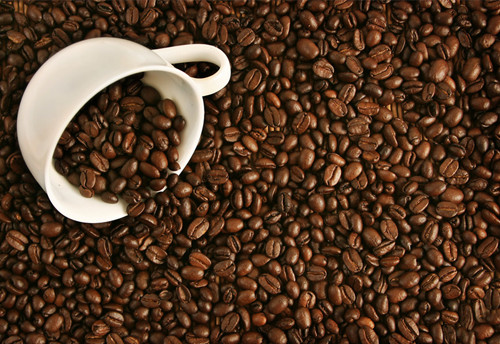
Basic knowledge of fine coffee grading of raw coffee beans
At present, there are three main rating criteria for raw coffee beans, and different countries adopt different rating methods according to their own production conditions and national conditions (not all coffee producing countries adopt the same method). Let's introduce these three popular rating methods. One: the reason for the emergence of such a classification standard according to the altitude of the coffee producing area is mainly because of the high level.
2015-04-17 Boutique coffee basics common sense raw beans grading at present
Kenya Coffee Grade: Kenya AA
Kenyan coffee has many followers in the boutique coffee industry, and Kenyan AA has an extraordinary popularity. Usually, Kenyan coffee is classified as follows: 1) Common categories: coffee fruits picked by hand, picked by hand, picked out immature fruit (unripe), overripe fruit (overripe) and other defects, peeled, fermented for about 36 hours, and dried in the sun on a metal grid.
2014-09-03 Kenyan coffee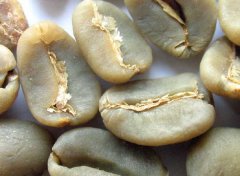
The way the sieve is graded is by the size of the green coffee beans. Fine coffee
The method of sieve classification is the method of classifying green coffee beans according to their size. Raw beans are passed through a perforated iron sieve to determine the size of the beans and thus the grade. The hole size unit of the screen is 1/64 inch (less than 0.4mm), so the number of screens indicates that there are several 1/64 inches, such as the size of the 17th screen is 17/64 inches, about 6.75mm, so the screen
2016-05-27 sieve grading way is by coffee green beans size method fine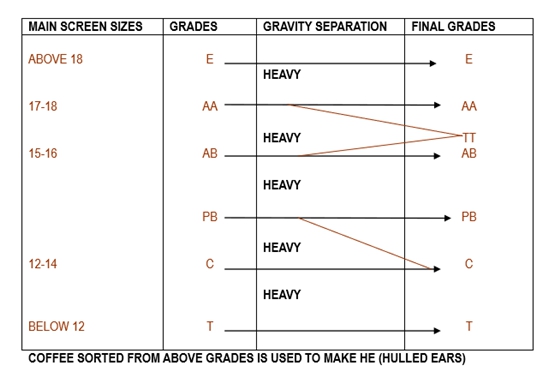
World boutique Coffee beans: Kenya Coffee Grade Kenya AA
Kenyan coffee has many followers in the boutique coffee industry, and Kenyan AA has an extraordinary popularity. Usually, Kenyan coffee is classified as follows: 1) Common categories: coffee fruits picked by hand, picked by hand, picked out immature fruit (unripe), overripe fruit (overripe) and other defects, peeled, fermented for about 36 hours, and dried in the sun on a metal grid.
2015-12-09 World boutique coffee beans Kenya coffee grade division Ken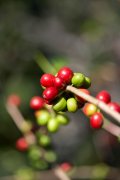
The way of sieve grading is to grade according to the size of raw coffee beans. The raw bean passes through the iron with holes.
The way of grading according to the screen is the method of grading according to the size of raw coffee beans. Raw beans are graded by determining the size of the beans through a holed iron plate sieve. The size of the hole in the screen is 1x64 inches (less than 0.4mm), so the size of the screen indicates that there are several screens with a size of 64 inches. For example, the size of the screen size 17 is 17thumb 64 inches, which is about 6.75mm, so the screen
2016-05-10 Sieve grading way is pressed coffee raw beans size method pass hit
Kenyan Kenya AA Coffee Kenyan Coffee beans mocha Coffee
This classification method is based on a variety of perforated screen classification, the screen has a variety of specifications, identified by the number, the number is associated with the mesh. The size of the mesh-1 stroke 64 inches is the unit of calculation. If the diameter of the mesh is 18 stroke 64 inches, the number of the screen is 18; if the diameter of the mesh is 17 inch 64 inches, the number of the screen is 17. And so on, there are 19, 16, 15, 1
2016-05-03 Kenya coffee coffee beans characteristics mocha
Characteristics of Jinchu Valley in Kenya
Kenya Coffee Grade Kenya is a well-known producer based on the size of coffee beans. It is usually divided into nine grades, according to the bean type, there are PB (round beans, accounting for about 10% of the total output), in addition, there are E (elephant beans), AA, AB, C, T, TT, MH, ML according to size. The best coffee grade is bean-shaped berry coffee PB, followed by AA++, AA+, AA, AB and so on.
2016-08-29 Kenya Jinchu characteristics coffee grade well-known coffee beans grain size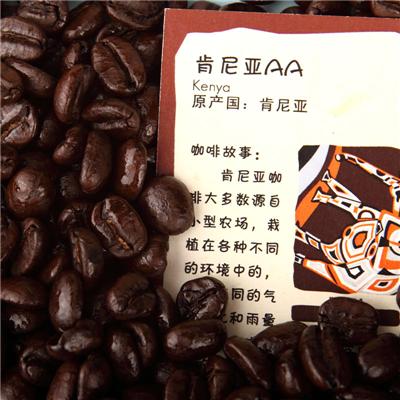
World boutique coffee beans: details of Kenya AA coffee beans
Kenya, located in East Africa, is one of the major coffee producing countries. More than 6 million people in the country are engaged in the coffee industry, mostly in the form of a combination of small farmers and cooperatives. Coffee trees in Kenya are mostly planted at 1400 m-2000 m above sea level, and the growing areas include Ruiri, Thika, Kirinyaga and Mt. Kenya West, Nyeri, Kiambu and Muranga. With Mt.Kenya
2015-12-09 World boutique coffee beans Kenya details introduction
Kenyan Kenya AA coffee beans Kenyan specialty Kenyan coffee boutique coffee beans how much is a jin
This classification method is based on a variety of perforated screen classification, the screen has a variety of specifications, identified by the number, the number is associated with the mesh. The size of the mesh-1 stroke 64 inches is the unit of calculation. If the diameter of the mesh is 18 stroke 64 inches, the number of the screen is 18; if the diameter of the mesh is 17 inch 64 inches, the number of the screen is 17. And so on, there are 19, 16, 15, 1
2016-05-04 Kenya coffee beans specialty coffee boutique less money one jin
Species Planning of Coffee beans in Kenya
1) Common classification: hand-picked coffee fruit, picked by hand, picked out immature fruit (unripe), overripe fruit (overripe) and other defects, peeled, after about 36 hours of fermentation, placed on a metal grid for sun drying, in the processing plant to remove the seed shell (parchment), become a blue-green appearance of attractive Kenyan raw beans. These beautiful raw beans, roots
2016-06-02 Kenya coffee beans species planning common classification manual picking coffee classics
Classification standard of raw coffee beans
There are two ways to classify raw coffee beans, one is the filter number, and the other is the elevation.
2014-06-04 Coffee knowledge coffee raw beans grading standards
An introduction to the Origin and Cultural course of Coffee beans in Kenya
1) Common classification: hand-picked coffee fruit, picked by hand, picked out immature fruit (unripe), overripe fruit (overripe) and other defects, peeled, after about 36 hours of fermentation, placed on a metal grid for sun drying, in the processing plant to remove the seed shell (parchment), become a blue-green appearance of attractive Kenyan raw beans. These beautiful raw beans, roots
2016-06-03 Kenya coffee beans species grading introduction origin culture history common points
Introduction to the production area with excellent medium purity Berman Manor coffee flavor
Kenya AA coffee beans Kenya is adjacent to Ethiopia, the origin of Arabica coffee trees to the north, but it was not until the beginning of the 20th century that coffee cultivation began. Missionaries introduced Arabica trees from Yemen in the 19th century, but did not plant them in large quantities. Coffee was not cultivated on a large scale until 1893, when Brazil's ancient "bourbon" coffee seeds were introduced.
2016-09-14 With excellent medium purity Berman manor coffee flavor taste producing area
Grade planning of coffee beans in Kenya
Common classification: hand-picked coffee fruit, picked by hand, picked out immature fruit (unripe), overripe fruit (overripe) and other defects, peeled, after about 36 hours of fermentation, placed on a metal grid for sun drying, in the processing plant to remove the seed shell (parchment), become a blue-green appearance of attractive Kenyan raw beans. These beautiful raw beans, according to one
2016-06-06 Kenya coffee beans grades planning common classification manual picking coffee classics
Kenya Coffee Raw Bean Kenya AA Manor Import Raw Coffee Bean Water washing Kenyan Coffee processor
Kenyan coffee has many followers in the boutique coffee industry, and Kenyan AA has an extraordinary popularity. Kenyan coffee, known as the Cup of connoisseurs (ConnoisseursCup), is famous in the coffee industry for its rich aroma, bright and vibrant acidity, full and elegant mellowness and red wine flavor. Caffeine in different producing areas has its own fine due to the difference of microclimate.
2016-04-05 Kenya coffee raw beans manor import coffee beans washing