“yellowish brown” search results (300)

Why does coffee always spill disposable coffee cups even with a lid?
When you realize that you are going to be late for work, you may rush to buy a cup of coffee and rush to the office as fast as you can. It's just that by the time you get to the office, the coffee in the disposable cup in your hand has spilled the small hole in the lid, and maybe there will be some yellowish-brown spots on your shirt. After that, you'll have to wear this spot lining.
2015-08-29 Why there is lid coffee always spill disposable coffee cup realize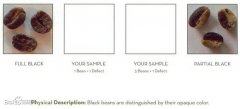
SCAA Fine Coffee Grading All kinds of defective beans
Whole black beans/partial black beans Appearance characteristics: black opaque raw beans Cup sensory characteristics: diversity: fermented flavor, sharp choking flavor, turbidity, mildew, sharp sour flavor, chemical stimulation flavor and other single or multiple odors mixed. Cause: Excessive fermentation, leading to microbial invasion infection. Whole/partial sour beans Appearance characteristics: Raw beans have a yellow, tan or reddish brown appearance, usually
2015-11-03 SCAA Fine Coffee Grading amp Various Flaw Black Bean Partial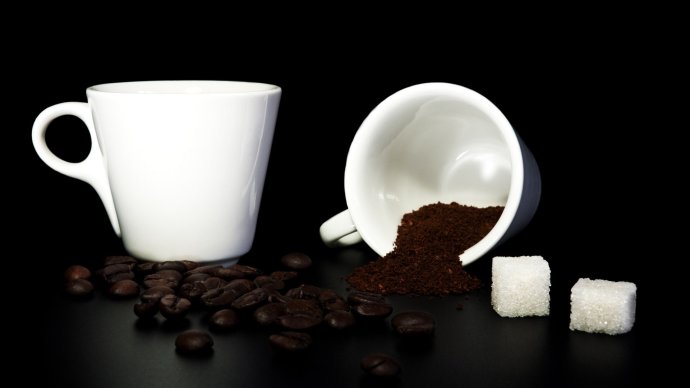
Operation Technology of Italian Coffee: introduction of Espresso Coffee Powder filling Technology
Where to put the filter handle is a matter of opinion for the time being, let's see how to load the powder. Andre Yili has a short sentence of 7g, but in the eyes of some careful people, this stage can be described as the most difficult step in the Espresso process. The coffee powder compacted in the filter handle is often called the cake. For Espresso, how much water passes through the coffee cake per second.
2015-12-15 Italian style Coffee Operation Technology Espresso Coffee Powder loading Powder introduction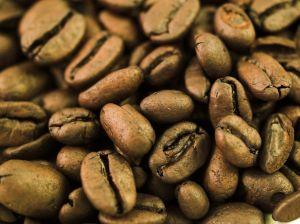
The production of Espresso is a technical work, the technology of loading powder.
Production of Espresso: where to put the handle of the powder filter is a matter of opinion for the time being, let's see the powder loading. Andre Yili has a short sentence of 7g, but in the eyes of some careful people, this stage can be described as the most difficult step in the Espresso process. The coffee powder compacted in the filter handle is often called the cake, and for Espresso, there are more than one per second.
2015-02-26 Espresso production technology work powder loading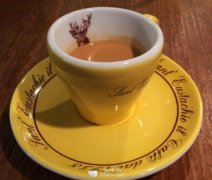
The production of Espresso is a technical work, the technology of loading powder.
Production of Espresso: where to put the handle of the powder filter is a matter of opinion for the time being, let's see the powder loading. Andre Yili has a short sentence of 7g, but in the eyes of some careful people, this stage can be described as the most difficult step in the Espresso process. The coffee powder compacted in the filter handle is often called the cake, and for Espresso, there are more than one per second.
2015-05-21 Espresso production technology work powder loading
What's the difference between Manning and Blue Mountain Coffee in flavor Shanghai?
Black coffee is unembellished coffee, black coffee brings the original feeling of tasting coffee. When brewing coffee with a small household coffee machine, the foam on the coffee can be seen visually. If brewed properly, the foam should be even yellowish brown. If the coffee beans are mostly Arabica varieties, the foam is fine, dark brown and slightly reddish; if most of the coffee beans are robusta, then
2016-10-17 Mant Blue Mountain coffee no flavor altitude what different coffee.
The production of Espresso is a technical work, the technology of Espresso powder loading.
Where to put the filter handle is a matter of opinion for the time being, let's see how to load the powder. Andre Yili has a short sentence of 7g, but in the eyes of some careful people, this stage can be described as the most difficult step in the Espresso process. The coffee powder compacted in the filter handle is often called the cake. For Espresso, how much water passes through the coffee cake per second.
2015-11-11 Espresso manufacturing technology work powder loading technical filter handle
Foam on the surface of "Espresso"
Foam on the surface of Espresso: foam: coffee fat (Cream Crema), also known as aromatic oil, is a reddish-brown foam on the surface of coffee, with a uniform color, about 3 mm ~ 5 mm thick. It consists of vegetable oils, proteins and sugars. Coffee fat has the combination of emulsion and foam colloid. If the emulsion is dark brown or even black, it indicates that the coffee has been extracted
2014-08-18 Espresso Espresso grease Espresso foam
Control of Coffee Bark Moth, a Disease and insect of Garden plants
The adult is gray-white with a length of 15-28mm and a wingspan of 25-55mm. Male moth antennae are double pectinate in the middle and lower part, and the ends are linear. There are 3 pairs of blue spots on the back of the chest. The abdomen is white with black stripes. The front wing is white, translucent, covered with bluish blue spots of different sizes, and there are 8 bluish blue spots on the outer edge of the hindwing. Female moths are generally larger than male moths, with filamentous antennae. The eggs are round and yellowish. End
2014-06-11 Plants coffee control
Analysis of Coffee Bean Composition
Caffeine is the most noticeable of all coffee ingredients. Its effect is extremely extensive, will affect the human body's brain, heart, blood vessels, gastrointestinal, muscle, kidney and other parts.
2014-08-18 Coffee knowledge coffee bean ingredients ingredient analysis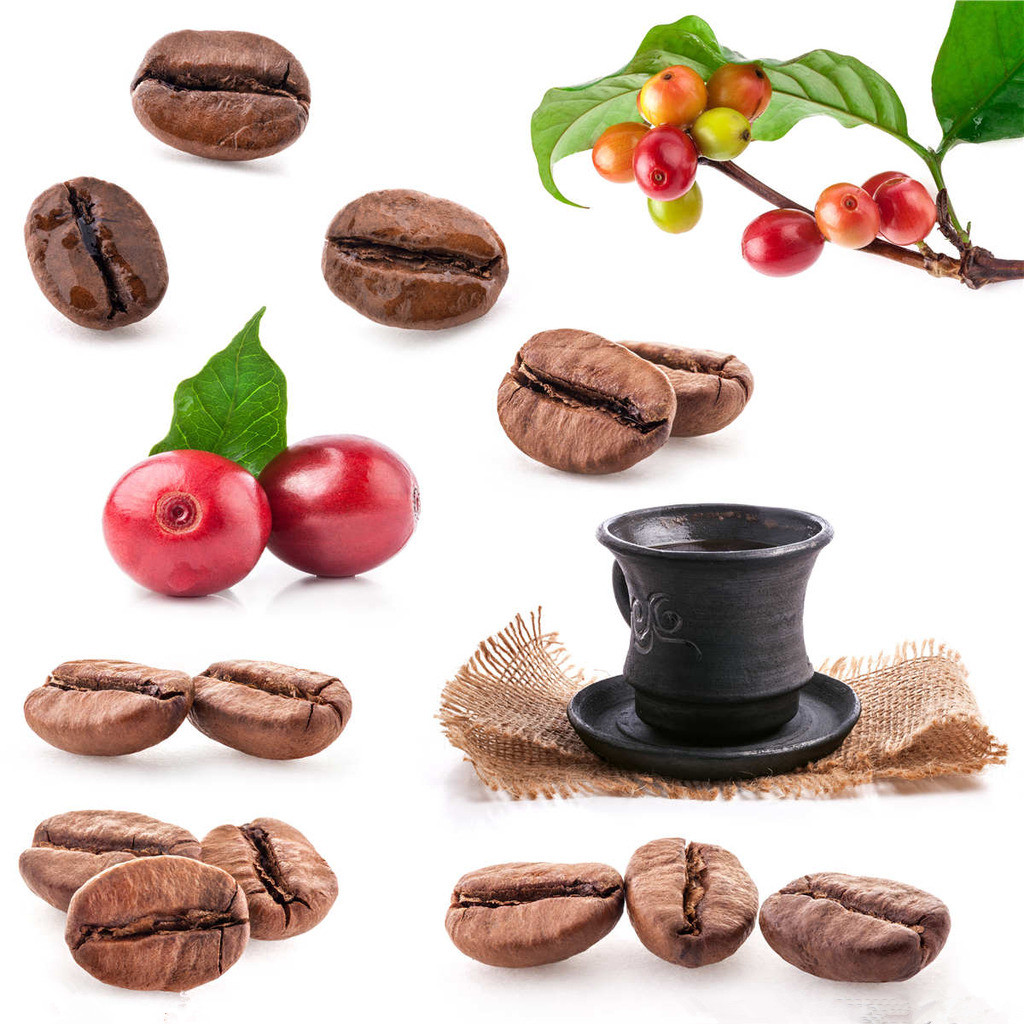
The journey of coffee beans: the movement of raw beans from seed beans across the ocean to ripe beans
Sandoz, Rio, Mocha, Amsterdam, Cuba. These are both worldwide port cities and coffee export and import ports. As a transportation terminal for coffee, these cities are very famous. Coffee can be transported by land and air depending on the situation, but most of it is still transported by sea. So some of the coffee is also named after the port. Such as Mocha, three degrees.
2015-12-17 Coffee beans travel raw beans moving seeds drifting across the sea cooked beans process degrees
Standard of SCAA pecialty Coffee Fine Coffee Raw Bean
[SCAA "Specialty Coffee" standard for high-quality coffee raw beans] the raw bean defects of SCAA can be divided into two types: I and II. The requirement for premium coffee grade (specialty coffee) is: 1. There are no class I defects; 2. No more than 5 II class defects 3. There can be no "quaker" (0 quaker) Quick beans in cooked coffee beans. 4. The appearance of raw coffee beans
2015-01-08 SCAA pecialty Coffee boutique coffee raw beans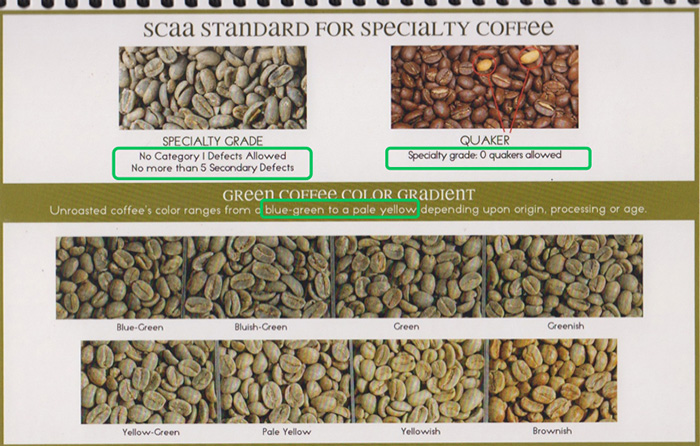
Boutique coffee beans: the standard of SCAA pecialty Coffee boutique coffee raw beans
The raw bean defects of SCAA can be divided into two types: I and II. The requirement for premium coffee grade (specialty coffee) is: 1. There are no class I defects; 2. No more than 5 II class defects 3. There can be no "quaker" (0 quaker) Quick beans in cooked coffee beans. 4. The color range of raw coffee beans is pale yellow (light yellow), yellow-green (
2015-12-08 Boutique coffee beans SCAA pecialty Coffee coffee
Analysis of Coffee Bean Composition
Coffee Bean Composition Analysis Green Bean (Unit: Percentage) Moisture: 11.3 Fat: 11.7 Protein: 11.8 Sugar: 8.0 Essence: 17.1 Caffeine: 1.3 Tannin: 6.0 Minerals: 4.2 Crude Fiber: 28.6 Cooked Bean Moisture: 2.5 Fat: 13.2 Protein: 12.8 Sugar: 1.8 Essence: 29.6 Caffeine: 1.3 Tannin: 4.0 Minerals
2014-06-26 Coffee bean ingredients single-ingredient coffee beans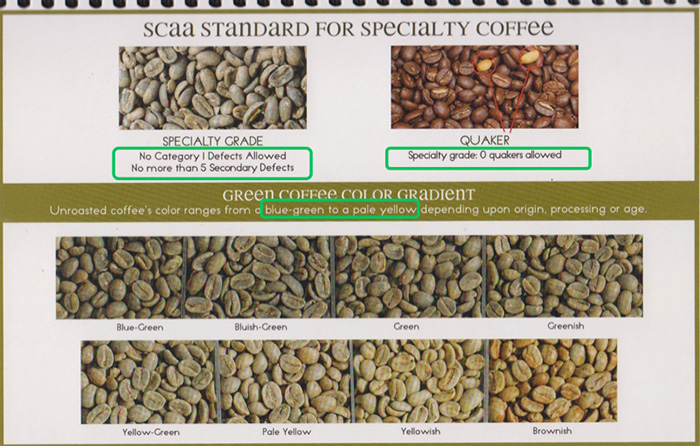
The standard of SCAA pecialty Coffee boutique coffee raw beans is necessary for a good cup of coffee.
The raw bean defects of SCAA can be divided into two types: I and II. The requirement for premium coffee grade (specialty coffee) is: 1. There are no class I defects; 2. No more than 5 II class defects 3. There can be no "quaker" (0 quaker) Quick beans in cooked coffee beans. 4. The color range of raw coffee beans is pale yellow (light yellow), yellow-green (
2015-12-05 SCAA pecialty Coffee boutique coffee raw beans
Basic knowledge of distinguishing Fine Coffee from genuine Coffee
The coffee here refers to the brown powdered solid drink of raw coffee beans roasted and ground. Common adulterants in coffee are chicory root powder, roasted ground grains, etc., or processed with other bean-shaped seeds instead of coffee beans. The sensory coffee is brown and powdery. Due to the Maillard reaction during roasting, the coffee has a special aroma, and counterfeit coffee has no or
2015-03-26 True and false coffee identification boutique basics common sense
Composition Analysis of Coffee beans basic knowledge of Fine Coffee
Raw bean (unit: percentage) moisture: 11.3 fat: 11.7 protein: 11.8 sugar: 8.0 essence: 17.1 caffeine: 1.3 Salmonic acid: 6.0 Minerals: 4.2 crude fiber: 28.6 cooked bean moisture: 2.5 fat: 13.2 protein: 12.8 sugar: 1.8 essence: 29.6 caffeine: 1.3 Salvianolic acid: 4 .0 mineral: 5.2 crude fiber: 29.
2015-04-13 Coffee beans ingredients analysis boutique coffee basics common sense raw beans units percent
Identification of genuine and fake coffee
Common adulterants in coffee are chicory root powder, roasted ground grains, etc., or processed with other bean-shaped seeds instead of coffee beans. The sensory coffee is brown and powdery. Due to the Maillard reaction during roasting, the coffee has a special aroma, and counterfeit coffee has no or
2014-08-07 True or false coffee identification here refers to coffee beans roasted ground after
Analysis of the components of high-quality coffee beans with knowledge
Raw bean (unit: percentage) moisture: 11.3 fat: 11.7 protein: 11.8 sugar: 8.0 essence: 17.1 caffeine: 1.3 Salmonic acid: 6.0 Minerals: 4.2 crude fiber: 28.6 cooked bean moisture: 2.5 fat: 13.2 protein: 12.8 sugar: 1.8 essence: 29.6 caffeine: 1.3 Salvianolic acid: 4 .0 mineral: 5.2 crude fiber: 29.
2015-01-26 Boutique coffee beans knowledge ingredients analysis raw beans unit percentage moisture 1
Effect of Silver skin of Coffee on Flavor
The surface of each raw coffee bean has a thin outer film, the silver skin treated by the sun is generally yellowish brown, and the silver skin treated by water is generally rice white, translucent, tightly wrapped in coffee raw beans, so under normal circumstances we see the color of the raw coffee bean or the bean itself, this film is called silver skin. In the coffee fruit, the outer layer of the silver skin is covered with a yellow layer.
2014-06-06 Coffee flavor taste coffee coffee flavor brew coffee