“wood pulp” search results (300)
Introduction of fine coffee by taste treatment in producing areas with characteristics of grinding degree of coffee in Rwanda
When it comes to the flavor of Rwanda, I am ashamed of the biased perception of Rwanda in the first place. I still remember that when I first came into contact with coffee, smell training was very resistant to No. 3 in the 36-smell bottle, and I even felt nauseous when I smelled it. So subjectively, I always like to make up the taste similar to grass automatically for the smell of green peas. Due to lack of experience in tasting and production,
2016-10-15 Rwanda Coffee Grinding characteristics Variety producing area Taste processing Fine products introduction
Brazilian coffee green beans processing technology American coffee beans honey processing commercial Brazilian beans green beans
The four most common treatments for Brazilian coffee are sun, desizing, half-washing and washing, with sun being the most popular. Since the harvest seasons of Cerrado Mineiro and Mogiana Paulista, Brazil's two main producing areas, are both dry seasons of the year, natural solarization is common in this area.
2016-06-28 Brazil Coffee Green beans Processing Craft Americas Coffee beans Commercial
Shanghai K11 turns into a coffee museum and teaches you to make coffee on the spot.
Lianshang.com news: from March 10th, Shanghai K11 will be transformed into a coffee museum, throughout the Art Mall coffee knowledge, all the favorite coffee brands will participate in various coffee courses, in addition to popularizing coffee culture, but also hope to bring you more creativity and inspiration in life! There will not only be an on-site hand-brewed coffee event, but also a wonderful
2015-03-04 Shanghai K11 Transfiguration Coffee Museum Live teach you Joint Business message 3
Flavor and taste characteristics of coffee manor in Tanzania introduction of Kilimanjaro Coffee Bean
The national emblem of Tanzania was developed in 1964 on the basis of the Tanganyika national emblem. The shield in the center is divided into four parts: the top burning torch cuts through the pre-dawn darkness and lights the flame of freedom and hope; it is painted with the Tanzanian flag; the red ground below is crossed with tomahawks and spears; finally, the waters of the Indian Ocean and the lakes in the territory. Shield
2016-08-12 Tanzania coffee manor producing area flavor taste characteristics boutique coffee beans
Introduction of Rwandan Coffee Flavor Fine Coffee beans in the Manor of Rwanda Coffee producing area
When it comes to the flavor of Rwanda, I am ashamed of the biased perception of Rwanda in the first place. I still remember that when I first came into contact with coffee, smell training was very resistant to No. 3 in the 36-smell bottle, and I even felt nauseous when I smelled it. So subjectively, I always like to make up the taste similar to grass automatically for the smell of green peas. Due to lack of experience in tasting and production,
2016-07-30 Rwanda coffee flavor introduction producing area manor taste boutique coffee beans said
The production method of Indonesian Manning Coffee which is not astringent and sour the production process, brewing method, flavor description and production
Due to the very humid climate in Indonesia, coffee drying time is often about 40% longer than in other areas, so local coffee farmers independently invented the wet planing method, which can make coffee beans ferment more completely and dry quickly. Today, I will not talk about the wet planing method. I remember that @ coffee knowledge has been published, and Maoye seems to have talked about Wechat in the past, so everyone himself
2016-09-19 Not astringent not sour Nieman Tenin coffee production method production process brewing way
Coffee Basics About Coffee Trees and Caffeine
Linnaeus classified coffee plants in the Rubiaceae family, e.g. Gardenia. The great naturalist named it Coffea. Although plants in the wild can grow to 10-12 metres tall, those in plantations are about 3 - 5 metres tall, except in Colombia, where few species exceed 2 metres. This makes farming and picking easier and cultivation more economical. leaves
2014-09-11 coffee knowledge coffee basics coffee tree caffeine
Basic knowledge of all aspects of coffee
Linnaeus (Swedish naturalist) classifies coffee plants into the Rubiaceae family, such as gardenia. The great naturalist named it Coffea. Although wild plants can grow as high as 10-12 meters, the plantations are about 3 to 5 meters high, with the exception of Colombia, where tree species rarely exceed 2 meters. This makes farming and picking easier and more economical to cultivate. Leaves
2015-08-25 About coffee parties noodles basic knowledge
Basic knowledge of all aspects of coffee decaf coffee
Linnaeus (Swedish naturalist) classifies coffee plants into the Rubiaceae family, such as gardenia. The great naturalist named it Coffea. Although wild plants can grow as high as 10-12 meters, the plantations are about 3 to 5 meters high, with the exception of Colombia, where tree species rarely exceed 2 meters. This makes farming and picking easier and more economical to cultivate. Leaves
2015-10-07 About coffee parties noodles basics caffeine
The basic knowledge of coffee encyclopedia on all aspects of coffee
Linnaeus (Swedish naturalist) classifies coffee plants into the Rubiaceae family, such as gardenia. The great naturalist named it Coffea. Although wild plants can grow as high as 10-12 meters, the plantations are about 3 to 5 meters high, with the exception of Colombia, where tree species rarely exceed 2 meters. This makes farming and picking easier and more economical to cultivate. Leaves
2014-10-16 Coffee knowledge coffee encyclopedia coffee basics
The Sour and Sweet Coffee Manor of El Salvador introduces the flavor and taste of Salvadoran coffee
The area where the estate is located is located on the slope of the San Salvador volcano and belongs to the quezaltepec Mountains, which overlooks the Kesaltepec Valley. The treatment plant is located at an altitude of 1430 m, from where you can enjoy the highest point of the volcano, Pinnacle (1960 m above sea level). Finca Loma La Gloria Manor is about 12001770 meters above sea level. At the top of the manor
2016-08-04 Carambola sweet El Salvador coffee manor producing area flavor taste characteristics introduction
Basic knowledge about all aspects of coffee-baristas must see
Linnaeus (Swedish naturalist) classifies coffee plants into the Rubiaceae family, such as gardenia. The great naturalist named it Coffea. Although wild plants can grow as high as 10-12 meters, the plantations are about 3 to 5 meters high, with the exception of Colombia, where tree species rarely exceed 2 meters. This makes farming and picking easier and more economical to cultivate. Leaves
2015-11-24 About coffee all parties noodles basics knowledge points division will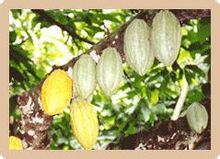
Coffee bean varieties: the historical cause and classification of cocoa bean varieties are explained in detail.
Morphological characteristics of the trunk: up to 12 meters high, trees, wide branches, branchlets brown pubescent. The trunk is solid and the cacao trunk has a luxuriant crown. Leaves: alternate, elliptic, leathery, 20-30 cm long, slightly stellate hairy on veins. Flowers: old cauline flowers, blooming directly on the trunk or main branch, about 1.8 cm in diameter; Calyx pink, smelly. 5 deep cracks; petals 5, lower sunken helmets
2015-12-28 Coffee beans varieties cocoa beans species history reasons classification details explanation
Introduction to the flavor and taste of Lin Dong Manning Coffee from Sumatra Gold Manning, Indonesia
Manning coffee is produced in Sumatra, Indonesia, Asia, also known as Sumatran coffee. The main producing areas are Java, Sulawesi and Sumatra, 90% of which are Robusta species. Among them, the "Mantelin" produced in Sumatra is the most famous. The essence of Sumatra from northern Sumatra.
2022-12-15 Mante coffee taste origin Sumatra Lindong Lake East Lake
About the defective beans of raw beans
The same apple tree does not necessarily have a sweet and sour taste, not every apple has a good appearance and consistent maturity, some may have been bitten by insects, some may be stunted, and so on, this is a very normal phenomenon. The same is true of coffee. The raw coffee beans obtained from the treated coffee fruits are not always good.
2014-09-02 A defective bean.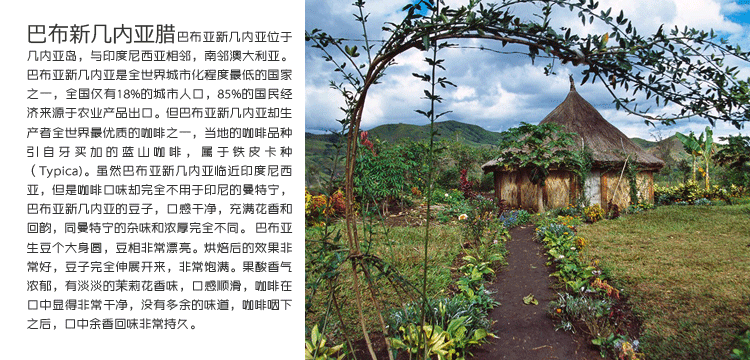
World Fine Coffee beans: introduction to the Flavor, Grade and roasting degree of Papua New Inner Asia Coffee beans
[product name] Papua New Inner Asia Coffee beans [Villa] sigri [varieties] Typica [Grade] AA [production] Papua New Inner Asia [planting altitude] about 1600 meters [harvest] 2009 new arrived [batches] 166/7/NM29 [appearance defects] Grass Green 0d/300g is washed in three stages in the first section and natural days in the latter section
2016-01-04 World Fine goods Coffee beans Babu Yaxin Guinei Flavor Grade Baking degree
The use of coffee filter paper in American coffee pot using 102 filter paper skillfully
The first coffee pot I bought was the American drip coffee maker, because I didn't have much choice and more coffee knowledge at that time, but I didn't use the American drip coffee maker a long time ago. Because I don't like the plastic smell after the high temperature, I am more sensitive to it. Things invented by Americans are often fast and convenient, but the quality of brewing coffee? American drip coffee pot when brewing
2015-03-16 American style coffee maker coffee filter paper usage skillful use 102
Defective beans-a fatal wound in the taste of coffee
The grapes produced on the same vine may not necessarily have a sweet and sour taste, not every grape may have a good appearance and consistent maturity, some may have been bitten by insects, some may be stunted, and so on. This is a normal phenomenon, and so is coffee. The raw coffee beans obtained from the treated coffee fruits are not always good.
2016-08-30 Blemish coffee taste medium fatal wound the same a grape a tree bear fruit
Processing Technology of Brazilian Coffee Raw beans Coffee Tree Fine Coffee
The Brazilian coffee industry follows the principle of picking first and screening later, but in other Latin American countries, people only pick fully ripe fruit, and if it is not mature enough, growers will leave the fruit on the tree. Why is there such a big difference between the two methods? The reason lies in the picking and treatment of raw beans. First of all, except for Brazil, the scale is larger.
2016-06-16 Brazil coffee raw beans processing craft coffee beans boutique
Coffee common sense can coffee beans with two different flavors be blended?
Today, there are two main types of coffee grown in some of the most important producing countries: Arabica and Robusta. Several different species are obtained from the grafting of these two species, represented by the name of the producing country. Coffea Arabica, a valuable species, has been cultivated for centuries, accounting for 3/4 of the world's coffee production. As the name means, it
2016-06-28 Coffee common sense two kinds different taste flavor coffee beans can carry on spell