“turn on the alcohol lamp” search results (300)

The selection of coffee pots
Now the coffee pots on the market are all dripping type, and they are divided into three types: Japanese style, American style and Italian style. The Japanese coffee maker, also known as the siphon pot, has an alcohol lamp on the base and two glass balls on it. It heats the water from the lower glass ball to produce water vapor, pushes the hot water from the lower sphere to the upper pot, and then sucks back the coffee extracted from the upper glass ball after the lower pot cools. Use a Japanese coffee maker
2014-07-28 Coffee pot selection coffee utensils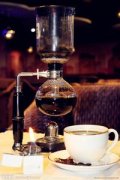
Analysis of homemade coffee: siphon pot
Siphon pot (Syphon), commonly known as "glass ball" or "siphon", is a simple and easy-to-use method of coffee brewing, and it is also one of the most popular coffee brewing methods in cafes. Although the siphon pot has the nickname of "plug wind type", it has nothing to do with the siphon principle, but uses water heating to produce water vapor, resulting in thermal expansion and cold contraction principle, push the hot water from the lower sphere to the upper pot, and then wait for the lower pot to cool.
2014-07-22 Coffee course homemade coffee siphon pot coffee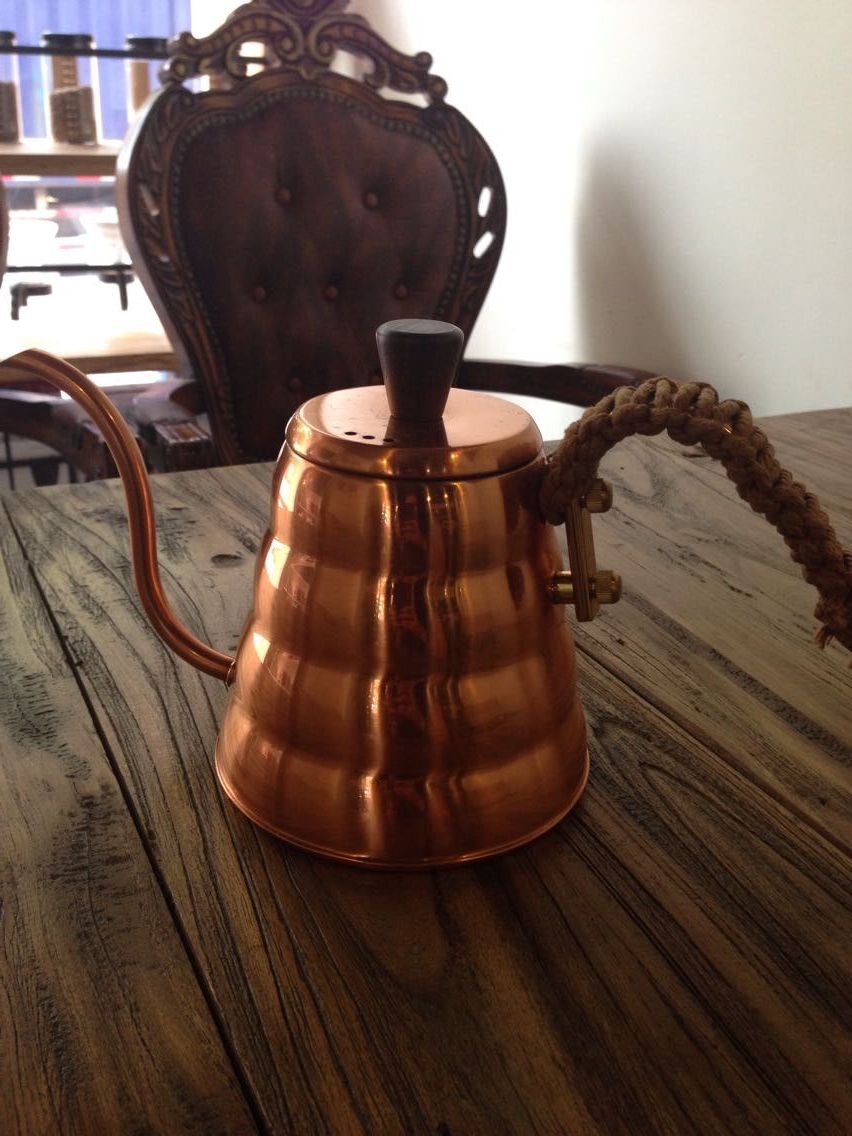
Recommend 6 common coffee pots in cafes
Hand filter cup features: simple, convenient and quick operation. It is also suitable for friends in the office and those who are at home (those who have high requirements for the taste of coffee). Accessories: hand flushing pot filter paper filter cup cone pot taste: can perfectly reflect the flavor characteristics of coffee siphon coffee pot introduction: siphon pot (Syphon) commonly known as "glass ball" or "siphon", is simple and easy to use
2015-08-24 Recommended coffee shop common coffee pot hand flushing filter cup characteristics easy to operate convenient
Coffee growing environment
Arabica scientific name: Coffea arabica family: Rubiaceae coffee morphological characteristics: small trees or large shrubs, plant height 5~8 meters. Base usually much branched, older branches gray. nodes dilated, young branches glabrous. Leaves thin leathery ovate-lanceolate or lanceolate, apex long acuminate, base cuneate or slightly obtuse, entire or shallowly undulate, glabrous on both sides. Cymes several clustered in leaf axils
2014-08-08 Coffee knowledge Arabica coffee Coffee encyclopedia
How to learn to make coffee?
It's easy to learn to make coffee, but difficult to learn. Coffee making. Yo, ah, you really have your own home and open a shop. If you have money at home, buy a household coffee machine. If you have patience, buy a set of siphon pots. The expensive ones are hundreds, and the cheap ones are more than a hundred yuan. Impatient, if you think of it, you should buy a set of mocha pots or Belgian pots. These two kinds of acne are very simple and are not as fastidious as siphon pots.
2016-09-14 How study coffee learn to cook use easy learn essence make yo
The selection of coffee maker: Japanese, American and Italian
Now the coffee pots on the market are all dripping type, and they are divided into three types: Japanese style, American style and Italian style. The Japanese coffee maker, also known as the siphon pot, has an alcohol lamp on the base and two glass balls on it. It heats the water from the lower glass ball to produce water vapor, pushes the hot water from the lower sphere to the upper pot, and then sucks back the coffee extracted from the upper glass ball after the lower pot cools. Use a Japanese coffee maker
2015-07-15 Coffee maker selection Japanese style American style Italian style present market noodles coffee maker all for
The introduction and source of small coffee novice must see
Arabica scientific name: Coffea arabica family: Rubiaceae coffee morphological characteristics: small trees or large shrubs, plant height 5~8 meters. Base usually much branched, older branches gray. nodes dilated, young branches glabrous. Leaves thin leathery ovate-lanceolate or lanceolate, apex long acuminate, base cuneate or slightly obtuse, entire or shallowly undulate, glabrous on both sides. Cymes several clustered in leaf axils
2015-11-24 Arabica Coffee Introduction Origin Beginners Must-See Scientific Name Cof
Yunnan coffee common sense coffee growing environment and brewing
Arabica scientific name: Coffea arabica family: Rubiaceae coffee morphological characteristics: small trees or large shrubs, plant height 5~8 meters. Base usually much branched, older branches gray. nodes dilated, young branches glabrous. Leaves thin leathery ovate-lanceolate or lanceolate, apex long acuminate, base cuneate or slightly obtuse, entire or shallowly undulate, glabrous on both sides. Cymes several clustered in leaf axils
2015-02-07 Yunnan coffee common sense small grains growth environment brewing scientific name
Growth Environment and brewing of small Coffee
Small grain coffee scientific name: Coffea arabica family genus: Rubiaceae coffee genus morphological characteristics: small trees or large shrubs, plant height 5 meters 8 meters. Base usually much branched, old branches gray-white. Nodes inflated, young branches glabrous. Leaves thinly leathery-ovate-lanceolate or lanceolate, apex long acuminate, base cuneate or slightly obtuse, entire or shallowly wavy, both surfaces glabrous. Cymes several clustered in leaf axils
2015-04-28 Small grains coffee growth environment brewing small grains scientific name Coffea
The most important thing in making coffee is the coffee pot.
Now the coffee pots on the market are all dripping type, and they are divided into three types: Japanese style, American style and Italian style. The Japanese coffee maker, also known as the siphon pot, has an alcohol lamp on the base and two glass balls on it. It heats the water from the lower glass ball to produce water vapor, pushes the hot water from the lower sphere to the upper pot, and then sucks back the coffee extracted from the upper glass ball after the lower pot cools. Use a Japanese coffee maker
2015-10-06 Coffee pot selection skill coffee the heaviest if now the market noodles coffee pot
Explain in detail how various coffee utensils work in brewing coffee.
1. The working principle of the drip coffee machine when the power is turned on and the switch is turned on, the indicator light is on and the heating tube starts to work. When there is no water in the tank, the temperature rises. When the temperature rises to a certain temperature, the thermostat is disconnected and the heating tube stops working. When the temperature begins to drop, the thermostat is restored and the heating tube continues to work to achieve heat preservation. 2. The working principle of high-pressure steam coffee machine coffee pot has
2015-01-21 Detailed description various coffee utensils how work drip coffee machine principle
Common sense of Chinese Coffee growth Environment and brewing of small Coffee
Small grain coffee scientific name: Coffea arabica family genus: Rubiaceae coffee genus morphological characteristics: small trees or large shrubs, plant height 5 meters 8 meters. Base usually much branched, old branches gray-white. Nodes inflated, young branches glabrous. Leaves thinly leathery-ovate-lanceolate or lanceolate, apex long acuminate, base cuneate or slightly obtuse, entire or shallowly wavy, both surfaces glabrous. Cymes several clustered in leaf axils
2014-12-01 China coffee common sense small grain growth environment brewing scientific name
General knowledge of fine coffee the growing environment of small-grain coffee
Small grain coffee scientific name: Coffea arabica family genus: Rubiaceae coffee genus morphological characteristics: small trees or large shrubs, plant height 5 meters 8 meters. Base usually much branched, old branches gray-white. Nodes inflated, young branches glabrous. Leaves thinly leathery-ovate-lanceolate or lanceolate, apex long acuminate, base cuneate or slightly obtuse, entire or shallowly wavy, both surfaces glabrous. Cymes several clustered in leaf axils
2015-01-19 Boutique coffee common sense small grain growth environment scientific name Cof
Common sense of Coffee beans in Yunnan growth Environment and brewing of small Coffee
Small grain coffee scientific name: Coffea arabica family genus: Rubiaceae coffee genus morphological characteristics: small trees or large shrubs, plant height 5 meters 8 meters. Base usually much branched, old branches gray-white. Nodes inflated, young branches glabrous. Leaves thinly leathery-ovate-lanceolate or lanceolate, apex long acuminate, base cuneate or slightly obtuse, entire or shallowly wavy, both surfaces glabrous. Cymes several clustered in leaf axils
2015-03-10 Yunnan coffee beans common sense small grains coffee growth environment brewing
The usage of siphon coffee siphon pot
1. Tools and materials to be prepared: coffee beans 25g (for two, 12-15G/ for one person), bean grinder, alcohol lamp (with plenty of alcohol in it) or gas lamp or other heating apparatus, siphon pot one set, measuring spoon (about 8G), wooden or bamboo mixing rod, coffee cup group 2, siphon pot filled with water, the amount of water for two is 240CC, that is, the mark of 2CUP in the lower pot, which can be high.
2015-11-05 Siphon brewing coffee usage need preparation tools materials coffee beans
Boutique Coffee learn how to choose and buy coffee pots
Now the coffee pots on the market are all drip-type, and they are divided into Japanese style, American style and Italian style. The Japanese coffee maker, also known as the siphon pot, has an alcohol lamp on the base and two glass balls on it. It heats the water from the lower glass ball to produce water vapor, pushes the hot water from the lower sphere to the upper pot, and then sucks back the coffee extracted from the upper glass ball after the lower pot cools. Cooked in a Japanese coffee pot
2014-12-22 Boutique coffee how to buy coffee maker now the market noodles coffee pot all for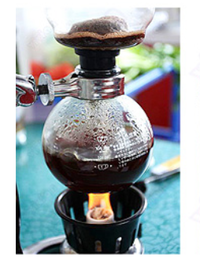
Coffee brewing method: Siphon pot of the correct operation of the order of introduction
1. Fill the water-hook the filter element: fill the lower pot with hot water to the "two cups" icon mark, put the filter element into the upper pot, pull the end of the chain with your hand, and gently hook it on the end of the glass tube. Be careful not to release the hook suddenly, so as not to damage the glass tube of the pot. 2. Ignite-Insert pot obliquely-Wait for big bubbles: Light alcohol lamp, insert upper pot obliquely, and let rubber edge press against lower pot
2015-12-11 coffee brewing way siphon correct operation order presentation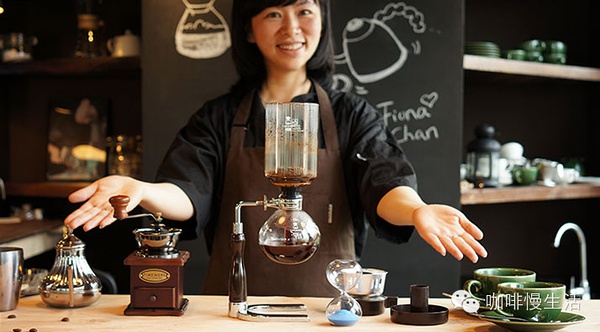
The most complete siphon pot in history uses a tutorial to teach you how to use an artifact to make coffee.
There are many utensils for making coffee, just like looking for an object, be sure to choose one that suits you, many novices ask about the use of the siphon pot, and then share a set of operating tutorials that I hope will be helpful to you. All kinds of coffee utensils let the coffee come into contact with hot water and extract the delicious substances from the coffee powder. unlike the cauldron, it can: 1, control the water temperature, 100
2015-10-20 History complete siphon use tutorials hands-on teach you artifacts coffee making
Tutorials on the working principle and use of 5 common coffee machines
Friends who like to drink coffee know that there are two kinds of coffee machines commonly used in families, one is the American coffee machine, also called the American coffee maker, and the other is the high-pressure steam coffee machine. The following is a simple description of the working principle of these two coffee machines: 1, the working principle of the drip coffee machine when the power switch is turned on, the indicator light is on, and the heating tube starts to work. When there is no water in the tank, Wen
2015-09-10 Common 5 coffee maker work principle use tutorial like coffee friends
Family siphon Pot Coffee making course the process of making Coffee in the Air Pot
Siphon pot is an excellent way to make coffee. Many people are fascinated by making bottles and cans similar to chemical experiments when making siphon, as well as the barista's attentive attitude, and some even fall in love with coffee because they fall in love with siphon pot. The siphon pot originated in 1840, when the Scottish engineer RobertNapier invented the coffee pot, which was later invented by Lady Vasser of France.
2015-09-11 Family siphon production coffee tutorials plug pot process one watch