“south most” search results (8000)
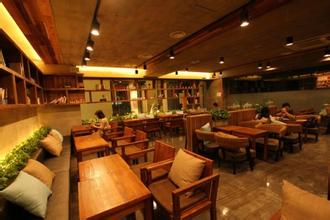
Development of Coffee in Korea South Korea imported nearly 140000 tons of coffee in 2014
Although South Korea's economy is still in the doldrums and consumption is shrinking, South Korea's coffee imports hit an all-time high in 2014, according to statistics released by the South Korean Customs Agency on the 29th. Data show that South Korea imported 139764 tons of coffee in 2014, an increase of 14.8 percent over the previous year, and imports of US $595.415 million, an increase of 18.2 percent over the previous year. Coffee imports are at an all-time high.
2015-02-27 South Korea coffee development 2014 imports close to 140000 tons although
Morgiana Serrado and South Minas are juxtaposed as the three major boutique producing areas of Brazil.
Brazil is flat, coffee farms are mostly about 600-1000 meters above sea level, flat and monotonous landforms, lack of micro-climate, and are accustomed to planting unshaded trees, resulting in the development of Brazil's unique soft bean flavor of low sour taste, heavy nutty flavor, chocolate sweet and mellow, but slightly woody and earthy, flower and orange fragrance is not obvious. But the Serrado platform and Nanmi west of Minas
2016-06-20 Mogi Anna Lado Nanmi Nass listed as Brazil three boutique producing areas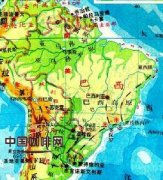
Basic knowledge of boutique coffee introduction to coffee in South America
[Colombia] is the world's second-largest coffee producer, accounting for about 12% of the world's annual output, which is much lower than Brazil's 30% to 35%, but most of them are high-quality mountain-washed beans. Central Colombia is divided into valleys by three north-south longitudinal mountains, of which the central and eastern mountains are the main coffee producing areas. The coffee here is named after the distributed market
2014-11-27 Boutique Coffee Basics Common sense South America introduction Columbia World No. 2
Medium texture description of Peruvian Coffee Flavor method of Grinding of Fine Coffee beans in producing areas
Peru is located in western South America, with a coastline of 2254 kilometers. The Andes runs from north to south, and the mountains account for 1% of the country's area. it belongs to the tropical desert region with a dry and mild climate. Peruvian coffee is mostly grown at the foot of the Andes, where it is rich in traditional Central American top coffee beans. Peru is a huge and diverse land for them to produce a large number of different kinds.
2016-09-27 Medium texture Peru coffee flavor description producing area boutique coffee beans grinding
The History and Culture of Fine Coffee Coffee History of South America
[Colombia] is the world's second-largest coffee producer, accounting for about 12% of the world's annual output, which is much lower than Brazil's 30% to 35%, but most of them are high-quality mountain-washed beans. Central Colombia is divided into valleys by three north-south longitudinal mountains, of which the central and eastern mountains are the main coffee producing areas. The coffee here is named after the distributed market
2014-11-27 Boutique Coffee History and Culture South America Colombia World No. 2 Health
Producing countries in South America
Brazil Brazil is the first coffee producer and marketer in the world. The annual output of coffee beans exceeds 30 million bags (60 kilograms each). Coffee experts do not think highly of their beans, saying that they are too monotonous, bitter, sour and fragrant enough, and are not even included in the list of producing areas of fine coffee. Because most of the Brazilian coffee gardens are less than 1200 meters above sea level, there are no big trees to shade, and they are picked.
2014-08-08 Coffee knowledge South America coffee producing countries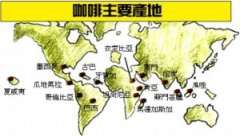
South American Coffee History Flavor and taste characteristics of Brazilian Bahia boutique coffee beans
Bahia is one of the 26 states in Brazil and is located in the northeast. It covers an area of 564692 square kilometers, accounting for 6.6 per cent of Brazil's land area. The capital is Salvador. Culture: due to historical reasons, Bahia is the place where Brazil is most influenced by Africa, and it is one of the non-Brazilian cultures.
2021-11-21 Big country in South America and Brazil Bahia boutique coffee beans
Coffee trees grow around the equator.
Coffee trees grow in tropical or subtropical agricultural gardens centered around the equator and called coffee belts. Most of the coffee production is between the Tropic of Cancer, 25 degrees north of the tropical or subtropical equator and 30 degrees south of the equator. An area with an annual average temperature of 16-25 degrees Celsius, no Frosts Descent and rainfall of 1600-2000 mm. At present, coffee is mainly produced by seven countries.
2015-05-29 Coffee tree grow equator center coffee for the middle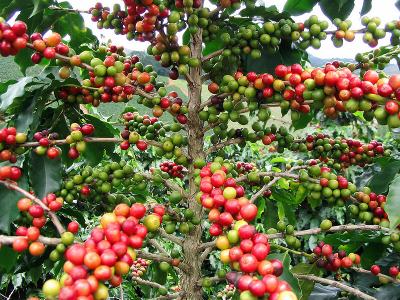
Fine coffee beans: 4 forms of Ethiopian coffee growing and producing
Growth and production patterns: There are four growth and production patterns in Ethiopia, from which 95% of coffee is produced. 1. Forest In Ethiopia's coffee-producing areas in the south and south-west, most of them are wild or planted under natural forests, which provide natural shade for coffee trees, but the resistance is slightly weak. This production system accounts for about
2015-12-07 boutique coffee beans esoteric bea coffee growing production 4 species morphology
Introduction to Peruvian Coffee Flavor Flavor beans with High quality and balanced acidity
The history of growing coffee in Peru is not long, but as a rising star, Peruvian coffee is gradually opening up its popularity and entering the world. Peru is located in western South America, with a coastline of 2254 kilometers. The Andes runs from north to south, and the mountains account for 1% of the country's area. it belongs to the tropical desert region with a dry and mild climate. Peruvian coffee is mostly grown at the foot of the Andes.
2016-09-14 Quality balance acidity palatability Peru coffee flavor manor boutique coffee beans
Introduction to Coffee Bean producing areas-- Panamanian Fine Coffee from South America
Famous representative coffee: Panama Panama is bordered by Costa Rica to the west and Colombia to the east of South America. Most of its coffee is grown in the mountains near Costa Rica to the west. Panamanian coffee has a medium and uniform flavor and texture, with a blue mountain temperament, so it is said that Panamanian coffee is often used to imitate the high-priced Hawaiian Kona or the Jamaican Blue Mountains. But Ba
2016-03-28 Coffee beans producing areas introductions South America Panama boutique coffee characteristics well-known
Coffee knowledge equator-centered coffee belt
Most of the coffee production is between the Tropic of Cancer, 25 degrees north of the tropical or subtropical equator and 30 degrees south of the equator. An area with an annual average temperature of 16-25 degrees Celsius, no Frosts Descent and rainfall of 1600-2000 mm. At present, coffee is mainly produced in more than 70 countries. The Big self is located at an altitude of 300,400m, sometimes between 2000 and 2500 meters above sea level.
2014-09-11 Coffee knowledge coffee belt coffee tree coffee encyclopedia
Coffee Basics Where is the coffee belt distributed
Coffee production occurs mostly between Tropic of Cancer, 25 degrees north of the equator and 30 degrees south of the equator in tropical or subtropical regions. Areas with an annual average temperature of 16-25 degrees Celsius, frost-free and rainfall of 1600-2000 mm. At present, there are more than 70 major coffee producing countries. The largest one is located at an altitude of 300-400 meters, and sometimes at an altitude of 2000-2500 meters.
2014-11-21 Coffee knowledge Coffee basics Coffee belt
The world's boutique coffee producing countries in South America
Brazil Brazil is the first coffee producer and marketer in the world. The annual output of coffee beans exceeds 30 million bags (60 kilograms each). Coffee experts do not think highly of their beans, saying that they are too monotonous, bitter, sour and fragrant enough, and are not even included in the list of producing areas of fine coffee. Because most of the Brazilian coffee gardens are less than 1200 meters above sea level, there are no big trees to shade, and they are picked.
2014-10-29 Coffee knowledge boutique coffee coffee producing place South American producing country
Where is the basic knowledge of boutique coffee?
Coffee trees grow in tropical or subtropical agricultural gardens centered around the equator and called coffee belts. Most of the coffee production is between the Tropic of Cancer, 25 degrees north of the tropical or subtropical equator and 30 degrees south of the equator. An area with an annual average temperature of 16-25 degrees Celsius, no Frosts Descent and rainfall of 1600-2000 mm. At present, coffee is mainly produced by seven countries.
2015-03-04 Boutique coffee basic knowledge where tree grow equator center
Introduction to the Flavor and Price characteristics of Santa Rita Coffee Bean in Colombia
Introduction to Colombian Coffee Manor in 1815, Bolivar envisioned in the letter from Jamaica that when South America was liberated from Spanish colonial rule, New Granada and Venezuela should form a country, named Colombia. In August 1819, Bolivar's Patriotic Army defeated the Spanish colonial army at the Battle of Boyaca and liberated Bogota. So
2016-10-21 Columbia Santa Rita coffee beans flavor price characteristics grinding processing quality
Introduction to the mild taste of high-quality coffee beans in Peruvian coffee producing areas
In 1542, the Spanish royal family set up the Government House in Lima and established the Governor's District of Peru, which became the center of Spanish colonial rule in South America. At that time, Peruvian commerce was prosperous, merchants controlled most of South America's import and export trade, and the precious metals and other goods looted by the Spaniards from South America were shipped out of Peru. The colonists encroached on land in Peru, forced the Mita system, and forced the Indians to
2016-09-23 Taste smooth Peru coffee variety producing area flavor boutique coffee beans mild
Korean Coffee Brand Korean Coffee Culture Guangzhou Coffee Learning Italian Coffee with beans
The sharp increase in coffee consumption in South Korea is closely related to the increase in coffee shops. According to the survey, there were only more than 8000 coffee shops in South Korea in 2010, but now the number has increased to 20, 000. Although there are most large coffee shops like Starbucks, there are also many small coffee shops with unique decorations scattered in various alleys in South Korea. The increase in coffee shops marks a gradual rise in the status of coffee in Korean culture.
2016-07-06 Korea Coffee Brand Coffee Culture Guangzhou Learning Italian blending
soft, silky Colombia coffee in northwest south America
The National Coffee Management Association of Colombia, like Kenya's National Management Association, is a model for coffee organizations. Colombia is more concerned with product development and production promotion than other producing countries. It is this, coupled with its superior geographical and climatic conditions, that makes Colombia coffee delicious and famous all over the world. Coffee's status in Colombia is illustrated by the following examples
2016-06-21 Location South America Northwest Taste Soft Smooth Colombia Coffee Introduction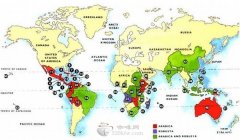
Coffee belt coffee trees grow at the center of the equator
Coffee trees grow in tropical or subtropical agricultural gardens centered around the equator and called coffee belts. Most of the coffee production is between the Tropic of Cancer, 25 degrees north of the tropical or subtropical equator and 30 degrees south of the equator. An area with an annual average temperature of 16-25 degrees Celsius, no Frosts Descent and rainfall of 1600-2000 mm. At present, coffee is mainly produced by seven countries.
2014-09-13 Coffee knowledge coffee belt coffee tree growth