“solubility” search results (1459)

What is the definition and concept powder-to-water ratio of SCAA's gold cup theory?
The proportion of SCAA refined cup coffee defined by the Gold Cup Fine Coffee Association of the United States and the European Fine Coffee Association of scae, the extraction rate of coffee must be about 20%, while the TDS (concentration ratio) is about 1.1% to 1.3%. For Drip Filter dripping and brewing, how to extract the best coffee flavor, the controlling factors are nothing more than the changes of the extract of coffee powder and the concentration in a cup of coffee.
2015-10-16 SCAA Golden Cup Theory definition concept Powder Water how much
About the storage of coffee beans
The ideal way to buy and make coffee is to buy a lot of raw coffee, bake it yourself, and grind it before you prepare it. But most people like to buy roasted coffee beans, and they probably buy more than we use for several days. Water is the enemy of storing coffee. Coffee oil is water soluble. It makes coffee more flavored, while moist conditions can corrupt coffee oil.
2014-09-04 Storage of coffee beans
The storage of coffee beans directly affects the quality of coffee beans. Water is the enemy of coffee storage.
Second, the storage of coffee beans 1. Factors affecting the quality of coffee beans Water is the enemy of coffee storage. Coffee oil is water-soluble, it makes coffee more flavor, and moist environment can spoil coffee oil. Another enemy of coffee beans is oxygen, which oxidizes volatile odors. That's why coffee beans are ground before making coffee. When coffee beans are ground
2015-11-03 Coffee beans storage direct impact quality coffee enemies coffee beans
How to determine the thickness of coffee beans?
When grinding beans, the size of the powder depends on the way it is cooked. Generally speaking, the shorter the cooking time, the finer the ground powder; the longer the cooking time, the thicker the ground powder. In terms of actual cooking, the Espresso machine takes a very short time to make coffee, so the coffee powder is the finest, and the coffee powder is as fine as flour; it is cooked in a "plug" way.
2015-06-09 Coffee beans grinding beans thickness how time powder
The relationship between Coffee Bean Grinding and utensils
The thickness of the powder depends on the way it is cooked. Generally speaking, the shorter the cooking time, the finer the ground powder; the longer the cooking time, the thicker the ground powder. In terms of actual cooking, 1.ESPRESSO machines, espresso machines and mocha pots take a very short time to make coffee, so the grinding is the finest and the coffee powder is as fine as flour. Filter cup with filter paper
2015-06-09 Coffee basics common sense coffee beans grinding utensils for use relationship powder thickness
How does the sour and bitter in coffee come from?
Many thermal and chemical reactions take place during baking: decarbonation, dehydration of quinic acid, subdivision, isomerization, polymerization, and complex sugar reactions (caramelization).
2014-08-25 Coffee knowledge sour coffee bitter coffee why coffee is bitter
The relationship between Coffee Bean Grinding and utensils
The thickness of the powder depends on the way it is cooked. Generally speaking, the shorter the cooking time, the finer the ground powder; the longer the cooking time, the thicker the ground powder. In terms of actual cooking, 1.ESPRESSO machines, espresso machines and mocha pots take a very short time to make coffee, so the grinding is the finest and the coffee powder is as fine as flour. Filter cup with filter paper
2015-10-13 Coffee basics common sense coffee beans grinding utensils for use relationship powder thickness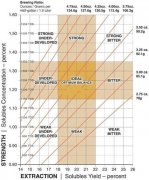
American boutique coffee association SCAA coffee brewing gold gouache ratio
The proportion of SCAA fine cup coffee defined by the Gold Cup Fine Coffee Association of the United States and the scae European Fine Coffee Association must be about 20% of the coffee extraction rate, while the TDS is about 1.1% to 1.3%. For Drip Filter dripping and brewing, how to extract the best coffee flavor is controlled by two variables: the extract of coffee powder and the concentration in a cup of coffee.
2015-01-27 USA boutique coffee association SCAA brewing gold gouache proportion S
Basic chemical reactions that occur during coffee roasting
Many thermal and chemical reactions take place during baking: decarbonation, dehydration of quinic acid, fragmentation, isomerization, polymerization, and complex sugar reactions (caramelization). The main thermally reactive components are monosaccharides and sucrose, chlorogenic acid, displaced amino acids, and trigonelline amide. Both aravinone and calactose in polysaccharides are transferred, and basic sulfurization contains hydroxyamino acids.
2014-08-20 Coffee knowledge Coffee roasting Chemical changes Coffee encyclopedia
Introduction to the main points of World Coffee knowledge: a detailed explanation of the Powder-to-Water ratio of SCAA Gold Cup Theory
The proportion of SCAA refined cup coffee defined by the Gold Cup Fine Coffee Association of the United States and the European Fine Coffee Association of scae, the extraction rate of coffee must be about 20%, while the TDS (concentration ratio) is about 1.1% to 1.3%. For Drip Filter dripping and brewing, how to extract the best coffee flavor, the controlling factors are nothing more than the changes of the extract of coffee powder and the concentration in a cup of coffee.
2015-12-22 World Coffee knowledge Essentials introduction SCAA Golden Cup Theory Powder Water ratio
A brief talk on the Story of Milk Coffee and Milk
Before combing the conclusion, the spectators who need to come in should first understand the following three concepts. Emulsification is a very old concept used in espresso, but only one result of emulsification is given. in fact, oil and some fat-soluble, insoluble substances are extracted under high pressure and used as a surface agent by proteins and other strange things in coffee, making these lipids suspended in
2015-09-10 Talking about milk coffee coffee story carding conclusion need come in spectator man
Fine coffee beans how to determine the thickness of ground beans
When grinding beans, the size of the powder depends on the way it is cooked. Generally speaking, the shorter the cooking time, the finer the ground powder; the longer the cooking time, the thicker the ground powder. In terms of actual cooking, the Espresso machine takes a very short time to make coffee, so the coffee powder is the finest, and the coffee powder is as fine as flour; it is cooked in a "plug" way.
2014-11-17 Coffee knowledge boutique coffee beans coffee bean grinding thickness
Teach you to judge a good Espresso
People like to drink coffee because it releases flavor and aroma when it is brewed. The sources of flavor in coffee are mostly water-soluble, such as caffeine, protein, sugar and so on, while the sources of aroma are mostly insoluble, such as coffee oil. The volatile aroma of coffee oil is found in roasted coffee cells. Some of these oils are insoluble in water and are only used on Espresso machines.
2014-09-16 Coffee knowledge Espresso Coffee Encyclopedia
About extraction and powder quantity
Recently, I have encountered some problems with many friends about extraction. I will put my thoughts here first. For your reference and correction.
2014-06-12 Coffee knowledge Coffee extraction Coffee Encyclopedia
How to store coffee beans
The ideal way to buy and make coffee is to buy a lot of raw coffee, bake it yourself, and grind it before you prepare it. But most people like to buy roasted coffee beans, and they probably buy more than we use for several days. Water is the enemy of storing coffee. Coffee oil is water soluble. It makes coffee more flavored, while moist conditions can corrupt coffee oil.
2015-05-12 How to store coffee coffee beans preservation method purchase blending the most reasonable
Coffee common sense the relationship between coffee bean grinding and utensils
The thickness of the powder depends on the way it is cooked. Generally speaking, the shorter the cooking time, the finer the ground powder; the longer the cooking time, the thicker the ground powder. In terms of actual cooking, 1.ESPRESSO machines, espresso machines and mocha pots take a very short time to make coffee, so the grinding is the finest and the coffee powder is as fine as flour. Filter with filter paper
2014-12-11 Coffee common sense coffee beans grinding utensils for use relationship powder thickness cooking
Where can you tell whether coffee is good or bad by coffee beans?
How to tell whether coffee is good or bad? Like taste? Color? Solubility? There are only two ways to identify coffee: (1) identification before brewing? Good instant caffeine is brown to dark brown due to different varieties and processes; irregular particles with a size of about 2 mm mixed with some fine powder; the unique aroma of coffee is reflected by Maillard reaction during stir-frying. ? Inferior quality and speed
2015-02-28 Through coffee beans where distinguish coffee good or bad how
The basic chemical reaction of coffee roasting process
Many thermal and chemical reactions take place during baking: decarbonation, dehydration of quinic acid, subdivision, isomerization, polymerization, and complex sugar reactions (caramelization). The main components of the thermal reaction are monosaccharides and sucrose, chlorogenic acid, free amino acids, and fenugreek amide. Both aravinose and calactose in the polysaccharides are transferred, and the basic vulcanization contains hydroxylated amino acid.
2014-08-15 Coffee knowledge coffee roasting process baking chemical reaction
Coffee beans, coffee beans, coffee beans.
The ideal way to buy and brew coffee is to buy large quantities of green coffee, roast it yourself, and grind it before preparing it for brewing. But most people like to buy coffee beans that have been roasted, and probably buy more than we use for days. Water is the enemy of coffee storage. Coffee oil is water soluble. It adds flavor to coffee, while moisture spoils coffee oil.
2014-12-10 boutique coffee beans basics common sense storage buy brew coffee optimal square
The basic chemical reaction that takes place during coffee roasting.
Many thermal and chemical reactions take place during baking: decarbonation, dehydration of quinic acid, subdivision, isomerization, polymerization, and complex sugar reactions (caramelization). The main components of the thermal reaction are monosaccharides and sucrose, chlorogenic acid, free amino acids, and fenugreek amide. Both aravinose and calactose in the polysaccharides are transferred, and the basic vulcanization process includes hydroxylamine.
2014-11-22 Coffee knowledge coffee common sense coffee roasting chemical reaction