“shading” search results (4258)

Rich and sweet Peruvian coffee flavor and taste characteristics of boutique coffee bean manor
Peruvian coffee beans are best known for their coffee beans from Chimacha Mayou in the middle and Cusco in the south. In addition, some areas in northern Peru also produce characteristic organic coffee. Organic coffee is made of beans grown in the shade of trees. Although the yield of coffee beans is not high because of the method of planting in the shade, its quality can reach the level of gourmet coffee. This is due to
2016-09-22 Rich sweet Peruvian coffee flavor taste producing area characteristics boutique coffee beans
Introduction of Tanzania Coffee Manor
Kilimanjaro Coffee Manor: Total =? 90% small Farmers 10% Plantation Harvest season: October to February of the following year Coffee Practitioners: 270000 people, treatment: AA (14%) A (24%) the lowest grade is HP, produced at low elevations, with many defective beans. Shade planting: mixed planting of coffee and banana to grow in the shade of a banana tree.
2016-06-13 Tanzania coffee manor introduction
Coffee common sense what is the difference between organic coffee and traditional coffee
Coffee factories have traditionally been accompanied by shade trees and other food and commodity crops. This approach is done for healthier soil and prevented water pollution. Unfortunately, many coffee growers have abandoned this approach in favor of larger crops and greater profits. However, integrated pesticides, herbicides and fertilizers have become necessary to maintain these crops and make coffee with them.
2015-03-10 Coffee common sense organic tradition difference where coffee factory traditionally long
Coffee production in Brazil and coffee bean production in coffee farms
Coffee plantations in Brazil range from large farms mechanized on flat land to small farms harvested artificially in mountain areas. There are no shade trees for shade in Brazilian agricultural gardens. The production of coffee is mainly taken into account, ① production, ② diseases and insect pests ③ quality as far as the stability pursued by agriculture is concerned, the first priority is production. In addition, 80% of Brazilian coffee is dried coffee.
2015-02-15 Brazil coffee production farm coffee beans ground implementation
An introduction to the flavor and taste of Indonesian civet coffee with elegant and mild sour taste.
Peruvian coffee beans are best known for their coffee beans from Chimacha Mayou in the middle and Cusco in the south. In addition, some areas in northern Peru also produce characteristic organic coffee. Organic coffee is made of beans grown in the shade of trees. Although the yield of coffee beans is not high because of the method of planting in the shade, its quality can reach the level of gourmet coffee. This is due to
2016-08-29 Contains elegant mild sour Indonesian musk coffee flavor taste manor
The coffee producing countries of Puerto Rico are mostly concentrated in the mountains of the island.
In Utuado, the heart of the coffee producing area, the University of Puerto Rico also offers courses for farmers to teach them how to optimize production, and soil experts guide people in the fields to cultivate quality coffee to increase product value and increase income. In the university laboratory, they have also set up a coffee tasting room to give growers a better understanding of their products. Professor's Cup
2016-06-29 Coffee producing area mostly concentrated island middle inter - Puerto Rico producing country
Introduction to the mild taste of high-quality coffee beans in Peruvian coffee producing areas
In 1542, the Spanish royal family set up the Government House in Lima and established the Governor's District of Peru, which became the center of Spanish colonial rule in South America. At that time, Peruvian commerce was prosperous, merchants controlled most of South America's import and export trade, and the precious metals and other goods looted by the Spaniards from South America were shipped out of Peru. The colonists encroached on land in Peru, forced the Mita system, and forced the Indians to
2016-09-23 Taste smooth Peru coffee variety producing area flavor boutique coffee beans mild
Alida Manor Elida Natural Pocket (Boquete) Geisha Rose Summer
Cup tester Ken Davids scored a high score of 93 for coffee at Elida Manor in 2012! Elida is also a regular on the bean list of players from all over the world in the World Barista Competition (WBC). It is also common to see contestants use a single Elida to concentrate SOE in the finals of Taiwan's TBC (Taiwan baristas contest) and domestic CBC (Chinese baristas competitions). Be blessed by nature
2016-07-12 Lida Manor Sun Elida Natural Kate Boqu
Introduction to the flavor and taste characteristics of fine coffee beans in the mellow and smooth Peruvian coffee manor area
In 1542, the Spanish royal family set up the Government House in Lima and established the Governor's District of Peru, which became the center of Spanish colonial rule in South America. At that time, Peruvian commerce was prosperous, merchants controlled most of South America's import and export trade, and the precious metals and other goods looted by the Spaniards from South America were shipped out of Peru. The colonists invaded the land in Peru, forced the Mita system, and forced the Indians to go to the mines.
2016-09-18 Mellow smooth Peru coffee manor producing area boutique coffee beans flavor taste
Boutique coffee Nicaraguan coffee origin Nicaraguan coffee practice
Planted with volcanic ash and shaded trees, it produces high-quality Nicaraguan coffee with a mediocre, soft and slightly sour flavor. Nicaraguan coffee is the largest of all coffee beans, while MADRIZ (Madriz) is located in the mountains of northern Nicaragua, adjacent to Nueva Segovia, Jinotega and Esteli, a quiet and elegant area with the famous Somoto
2016-05-16 Boutique coffee Nicaragua origin practice everywhere volcanic ash shade
Rich aroma of Peruvian coffee flavor description of grinding degree taste characteristics of high-quality coffee in producing areas
Peruvian coffee beans are best known for their coffee beans from Chimacha Mayou in the middle and Cusco in the south. In addition, some areas in northern Peru also produce characteristic organic coffee. Organic coffee is made of beans grown in the shade of trees. Although the yield of coffee beans is not high because of the method of planting in the shade, its quality can reach the level of gourmet coffee. This is due to
2016-10-14 Full-bodied aroma Peru coffee flavor description grinding taste characteristics variety
Peruvian organic coffee with good acidity introduces Peruvian boutique coffee
Peru: organic coffee flavor and taste characteristics: high quality and balanced, palatable acidity, can be used for mixed drinks, Peruvian coffee does not have a long history, but as a rising star, Peruvian coffee is gradually opening up its popularity and entering the international market. Peru is located in western South America, with a coastline of 2254 kilometers. The Andes runs from north to south, and the mountains account for 1% of the country's area. it belongs to the tropics.
2016-07-22 Acidity palatability Peru organic coffee flavor taste introduction boutique
Boutique coffee Nicaraguan Coffee characteristics introduction to Nicaraguan Coffee
Planted with volcanic ash and shaded trees, it produces high-quality Nicaraguan coffee with a mediocre, soft and slightly sour flavor. Nicaraguan coffee is the largest of all coffee beans, while MADRIZ (Madriz) is located in the mountains of northern Nicaragua, adjacent to Nueva Segovia, Jinotega and Esteli, a quiet and elegant area with the famous Somoto
2016-05-16 Boutique coffee Nicaragua features introduction all over volcanic ash shade
Introduction to the quality of Katim Coffee in Yunnan Province by description of taste and flavor
Katim coffee bean flavor describes the annual average temperature of 1921 ℃ years, the accumulated temperature of 10 ℃ per year is more than 6800 ℃, the coldest monthly average temperature is 11.5 ℃, the absolute lowest temperature is above 1 ℃, the coldest monthly average temperature is 11.5 ℃, the monthly average temperature of 13 ℃ is more than two months, the extremely lowest general year is above 0 ℃, and there are areas of-1 ℃ or short-2 ℃ in some years. Below 1200 m above sea level, year
2016-10-21 South Carolina Tim coffee taste characteristics flavor description handling quality
Boutique coffee Nicaraguan coffee manor Nicaraguan coffee producing area
Planted with volcanic ash and shaded trees, it produces high-quality Nicaraguan coffee with a mediocre, soft and slightly sour flavor. Nicaraguan coffee is the largest of all coffee beans, while MADRIZ (Madriz) is located in the mountains of northern Nicaragua, adjacent to Nueva Segovia, Jinotega and Esteli, a quiet and elegant area with the famous Somoto
2016-05-16 Boutique coffee Nicaragua manor producing area all over volcanic ash shade
Full-bodied and sweet boutique coffee Peruvian coffee flavor introduction Peruvian coffee bean variety manor
Peru's finest coffee is produced in Chanchmayo, Cuzco, Norte and Puno. It is most famous for the coffee beans produced in Chaximayo in the middle and Cusco in the south. Most Peruvian coffee is grown under natural conditions and produces characteristic organic coffee. Organic coffee is made of beans grown in the shade of trees. Nature
2016-08-01 Rich sweet boutique coffee Peru flavor taste introduction coffee beans variety
Flavor description of Peruvian coffee beans with fragrant taste introduction to the producing areas of varieties with the characteristics of grinding degree
Peruvian coffee beans are best known for their coffee beans from Chimacha Mayou in the middle and Cusco in the south. In addition, some areas in northern Peru also produce characteristic organic coffee. Organic coffee is made of beans grown in the shade of trees. Although the yield of coffee beans is not high because of the method of planting in the shade, its quality can reach the level of gourmet coffee. This is due to
2016-10-20 Fragrant taste Peru coffee beans flavor description grinding characteristics varieties producing areas
Introduction of Indonesian Coffee Flavor with Sweet Fruit introduction to Kahayang Gan Manor
Shade planting: there are shade tree species in the coffee garden, such as orange tree, avocado tree, banana tree, papaya tree, pineapple tree and several local flowers and herbs. Harvest time: raw beans in December, January and February each year. Appearance: emerald green grade: 18, 19 mesh plus average annual temperature: 25 C (daily temperature difference is about 10 C) annual rainfall: 2700 mm, volcanic ash porous water seepage geological treatment method: washing and drying
2016-07-19 Fruit sweetness obvious Indonesia coffee flavor taste introduction Kaha
Roasting method of Super Hawaiian Kona Coffee beans
But the climatic conditions are very suitable for the coffee growing industry. There is plenty of rain and sunshine here, and there is no worry of frost. In addition, there is a strange natural phenomenon called free shade (freeshade). On most days, at about two o'clock in the afternoon, white clouds appear in the sky, providing the necessary shade for the coffee trees. As a matter of fact, it is so excellent.
2016-06-05 Super Hawaii Kona coffee beans baking way but climate conditions coffee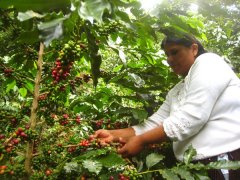
Boutique coffee Peru has become a rising star in the coffee industry
The growth environment of boutique coffee beans also has higher requirements. Generally grow at an altitude of 1500 meters or even more than 2000 meters above sea level, with appropriate precipitation, sunshine, temperature and soil conditions. Some world-famous coffee beans also have a special geographical environment, such as the alpine clouds in the Blue Mountains, the free shade provided by the afternoon clouds in Kona, and the volcanic ash soil in Antigua.
2016-06-01 Boutique coffee Peru become a rising star boutique coffee beans growth environment