“scientific analysis” search results (200)

National barista professional standard the country's best barista training barista professional qualification certificate
According to the relevant provisions of the Labor Law of the people's Republic of China, in order to further improve the system of national vocational standards and provide a scientific and standardized basis for vocational education, vocational training and vocational skills appraisal, the Ministry of Labor and Social Security organized relevant experts to formulate the "National Professional Standard for baristas (trial)" (hereinafter referred to as "Standard"). I. this Standard is objective.
2016-01-13 Country Coffee occupation Standard National good training qualification description according to
Barista must read the duty of the director of the bar.
Many of the friends considered are very proficient in the bar management department. 1. According to the company's guidelines, safeguard the company's interests, support the company's rules and regulations, and actively promote the use of the company's materials and equipment. obey the arrangement of the manager in the store and be responsible for the overall affairs of the bar. 2. The bar staff can be allocated reasonably and arranged uniformly. 3. Yes
2014-11-07 Coffee knowledge barista bar responsibility
Coffee is basically used as four nouns for commercial coffee.
[Latin name] four kinds of commercial coffee: large fruit coffee Coffea liberica medium fruit coffee Coffea canephora small fruit coffee Coffea arabica high yield coffee Coffea dewevrei Coffea is a coffee tree [English] coffee [alias] small seed species also known as Arabian species, medium seed species also known as Gaffra species, large seed species also known as Liberian species
2015-07-27 Coffee basic used as commodity 4 kinds noun
A basic introduction to coffee used as four nouns for commercial coffee
[Latin name] four kinds of commercial coffee: large fruit coffee Coffea liberica medium fruit coffee Coffea canephora small fruit coffee Coffea arabica high yield coffee Coffea dewevrei Coffea is a coffee tree [English] coffee [alias] small seed species also known as Arabian species, medium seed species also known as Gaffra species, large seed species also known as Liberian species
2015-06-23 Coffee basic introduction use commodity 4 kinds noun
History of introduction and expansion of Coffee in China in the early stage of Coffee Development (5)
1. From the first peak period of the development of China's coffee industry (1952-1961) to the late 1940s, according to recorded figures, there are 2173.33 hectares of rubber plantations in Hainan Island, with a total of 867600 rubber trees, with an annual output of 199,000 tons of dry rubber, and more than 300,000 coffee plants. the annual output of coffee beans is 1 ton. According to a survey in the early 1950s, there was a large amount of coffee left in Fushan area of Chengmai County, with a total of 70,000.
2015-03-09 China coffee development course early stage introduction expansion
History of introduction and expansion of Coffee in early China (5)
1. From the first peak period of the development of China's coffee industry (1952-1961) to the late 1940s, according to recorded figures, there are 2173.33 hectares of rubber plantations in Hainan Island, with a total of 867600 rubber trees, with an annual output of 199,000 tons of dry rubber, and more than 300,000 coffee plants. the annual output of coffee beans is 1 ton. According to a survey in the early 1950s, there was a large amount of coffee left in Fushan area of Chengmai County, with a total of 70,000.
2015-04-28 Early China coffee introduction expansion
Coffee planting History of Coffee introduction and expansion in China in the early stage (5)
1. From the first peak period of the development of China's coffee industry (1952-1961) to the late 1940s, according to recorded figures, there are 2173.33 hectares of rubber plantations in Hainan Island, with a total of 867600 rubber trees, with an annual output of 199,000 tons of dry rubber, and more than 300,000 coffee plants. the annual output of coffee beans is 1 ton. According to a survey in the early 1950s, there was a large amount of coffee left in Fushan area of Chengmai County, with a total of 70,000.
2014-10-14 Coffee knowledge coffee growing history Chinese coffee
The History of Coffee introduction and expansion in China in the early stage (5)
1. From the first peak period of the development of China's coffee industry (1952-1961) to the late 1940s, according to recorded figures, there are 2173.33 hectares of rubber plantations in Hainan Island, with a total of 867600 rubber trees, with an annual output of 199,000 tons of dry rubber, and more than 300,000 coffee plants. the annual output of coffee beans is 1 ton. According to a survey in the early 1950s, there was a large amount of coffee left in Fushan area of Chengmai County, with a total of 70,000.
2014-12-01 Coffee History Common sense early China introduction expansion planting Industry
Having a cup of coffee while having class? The most romantic major will be Yunnan Agricultural University.
Have you ever heard of such a romantic and interesting class in college class, such as identifying coffee beans, learning to taste coffee and making fancy coffee? Yunnan Agricultural University will declare the coffee and coffee project, relying on the Tropical crops College, not only to enable students to master coffee production, consumption, trade and other related knowledge, but also to train students to identify coffee varieties, master coffee services, brew coffee and other specialties.
2016-08-17 While drinking coffee class romance major Yunnan agricultural university university lessons
Has opened 12 chain stores of quality Coffee-reduce cost grafting 020 platform
The first generation drinks instant coffee, the second generation drinks espresso, and now let's enter the third generation to drink hand-brewed premium coffee. As the slogan says, coffee has evolved all the way to now, and niche boutique coffee has begun to enter people's field of vision. Founded in 2011, the quality Hall Coffee is positioned at the cutting edge of the trend. A cup of boutique coffee comes from 60% of the highest quality coffee raw beans and 30% of the best roasting.
2015-11-13 Has opened 12 chain stores quality stores coffee reduce costs grafting 020 Ping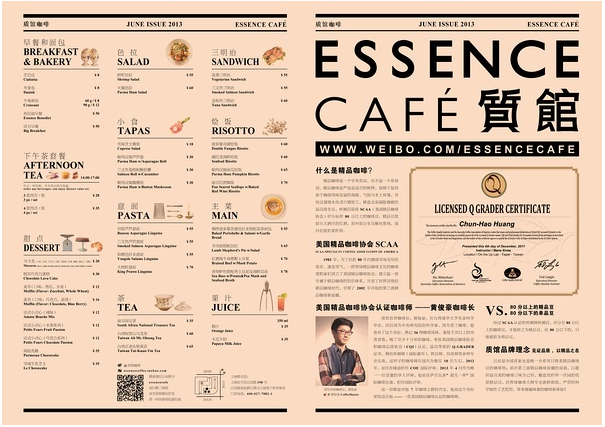
Quality Cafe: 12 chain stores have been opened to graft O2O platform to reduce costs
The first generation drank instant coffee, the second generation drank espresso coffee, and now let's move on to the third generation drinking hand-brewed specialty coffee. As the ad says, coffee has evolved all the way to the present, and niche boutique coffee has begun to enter people's vision. Founded in 2011, Quality Cafe is positioned at the cutting edge of trends. A cup of fine coffee comes from 60% of the highest quality coffee green beans, 30% of the best roasts
2015-11-09 Quality Restaurant Coffee Opened 12 Chain Store Grafting O2O Platform Lowering into
The introduction of Ruili Jingpo Nongxian coffee was recorded in 1914.
In April 1996, compiled by the compilation Committee of Ruili City Chronicles of Yunnan Province, the fifth coffee section on page 383 of Ruili City Chronicles published by Sichuan Dictionary Publishing House recorded that as early as 1914, the Jingpo nationality had been introduced from Myanmar to Nongxian Township for cultivation. The local series of books of the people's Republic of China, Records of Yunnan Province, Volume 39, Records of Land Reclamation, Chapter 3, Section 2, Coffee is recorded: the cultivation of coffee in China began in 1884.
2015-02-07 About Ruili Jingpeng coffee introduction 1914 records
History of introduction and expansion of Coffee in early China (1)
1. The introduction of Ruili Jingpo Nongxian Coffee was recorded in 1914. In April 1996, it was compiled by the compilation Committee of Ruili City Chronicles of Yunnan Province. The fifth coffee section on page 383 of Ruili City Chronicles published by Sichuan Dictionary Publishing House recorded that as early as 1914, the Jingpo people have been introduced from Myanmar to Nongxian Township for cultivation. Yunnan Provincial Chronicles, Volume 39, Chapter 3 of the Local Series of the people's Republic of China
2015-04-28 Early China coffee introduction expansion about Ruili Jingpeng
The History of Coffee introduction and expansion in China in the early stage (1)
1. The introduction of Ruili Jingpo Nongxian Coffee was recorded in 1914. In April 1996, it was compiled by the compilation Committee of Ruili City Chronicles of Yunnan Province. The fifth coffee section on page 383 of Ruili City Chronicles published by Sichuan Dictionary Publishing House recorded that as early as 1914, the Jingpo people have been introduced from Myanmar to Nongxian Township for cultivation. Yunnan Provincial Chronicles, Volume 39, Chapter 3 of the Local Series of the people's Republic of China
2014-12-01 Coffee history common sense early China introduction expansion about Ruili Jingpolong
History of introduction and expansion of Coffee in China in the early stage of Coffee Development (1)
1. The introduction of Ruili Jingpo Nongxian Coffee was recorded in 1914. In April 1996, it was compiled by the compilation Committee of Ruili City Chronicles of Yunnan Province. The fifth coffee section on page 383 of Ruili City Chronicles published by Sichuan Dictionary Publishing House recorded that as early as 1914, the Jingpo people have been introduced from Myanmar to Nongxian Township for cultivation. Yunnan Provincial Chronicles, Volume 39, Chapter 3 of the Local Series of the people's Republic of China
2015-03-09 China Coffee Development course early introduction expansion about Ruili Jingpeng
Some problems about Coffee production in Yunnan
At present, Yunnan coffee production is mainly distributed in Pu'er (180000 mu), Baoshan (100000 mu), Dehong (120000 mu) and Lincang (20 mu). Most of them are catimor varieties. At present, more than 80% of them are used as raw materials for instant coffee processing, some are supplied to Nestl é, and some are exported to Europe and the United States by local traders. From the grading criteria of specialty coffee
2014-09-28 Coffee knowledge Yunnan coffee coffee production
Quality restaurant coffee: only make more than 80 points of coffee single boutique coffee the third wave of coffee in the world
A cup of boutique coffee comes from 60% of the highest quality coffee raw beans, 30% of the best roasting methods and 10% of the coffee making methods, according to this standard we intend to take the coffee to the extreme. Article | our reporter Ren Huiyuan drinks instant coffee in the first generation and espresso in the second generation. Now let's enter the third generation to drink hand-made boutique coffee. As the slogan says, coffee evolves all the way
2016-01-15 Quality hall coffee only do 80 points above single boutique world third one cup
Some problems about Coffee production in Yunnan
At present, Yunnan coffee production is mainly distributed in Pu'er (180000 mu), Baoshan (100000 mu), Dehong (120000 mu) and Lincang (20 mu). Most of them are catimor varieties. At present, more than 80% of them are used as raw materials for instant coffee processing, some are supplied to Nestl é, and some are exported to Europe and the United States by local traders. From the grading criteria of specialty coffee
2015-10-12 About Yunnan coffee production some problems
Some problems of Coffee production in Yunnan in Chinese Coffee Market
At present, Yunnan coffee production is mainly distributed in Pu'er (180000 mu), Baoshan (100000 mu), Dehong (120000 mu) and Lincang (20 mu). Most of them are catimor varieties. At present, more than 80% of them are used as raw materials for instant coffee processing, some are supplied to Nestl é, and some are exported to Europe and the United States by local traders. From the grading criteria of specialty coffee
2014-11-19 Coffee knowledge Chinese coffee coffee market Yunnan coffee
General knowledge of Asian Fine Coffee on Coffee production in Yunnan
At present, Yunnan coffee production is mainly distributed in Pu'er (180000 mu), Baoshan (100000 mu), Dehong (120000 mu) and Lincang (20 mu). Most of them are catimor varieties. At present, more than 80% of them are used as raw materials for instant coffee processing, some are supplied to Nestl é, and some are exported to Europe and the United States by local traders. From the grading criteria of specialty coffee
2014-12-26 Asia boutique coffee common sense about Yunnan production Yunnan