“science” search results (2397)
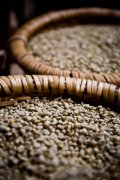
Why does boutique coffee science clean the coffee machine regularly?
One of the questions often asked in the coffee industry is how often should I clean the coffee machine? The answers are varied, some say once a day, others say once a week, and still others say according to the amount of coffee. But does anyone really know the answer to this question? None of these answers is supported by public research. In order to answer this question, the author conducted an experiment to study the meaning.
2015-01-05 Boutique coffee why regular cleaning coffee machine business often asked
Can popular science moms and new moms have coffee?
China Clinical Nutrition Network (lcyycc) can mothers-to-be and new mothers drink coffee? / photos by Freida (Xing) Pan / typesetting by Gentleman Ye / reprinted by Xiu Jing authorized by the Wechat platform (ID:joinawuplan) of Project Awo: by Freida (Xing) Pan, Master of Clinical practice and Clinical Nutrition from Rush University in Chicago (Rush University)
2015-10-13 Popular science expectant mother new mother mother can coffee China clinical nutrition l
Green tea and caffeine fight skin cancer
According to recent reports from foreign news agencies, green tea and caffeine in green tea that we Easterners often drink may have the potential to fight skin cancer. Further research is expected. According to the latest issue of the ProceedingsoftheNationalAcademyofSciences Science Journal, medical researchers at Rutgers University in the United States have identified a kind of green tea called EGCG.
2014-07-26 Caffeine Coffee Encyclopedia Coffee Health
Patented coffee roasting technology increases the content of polyphenols in roasted coffee beans
According to foreign reports: applied Food Science Company (Applied Food Science Inc.) A patent has been obtained that can greatly increase the content of polyphenols in roasted coffee beans. The technology includes two processing steps: the first step is to extract and dissolve the polyphenols from raw coffee beans by water extraction technology, and the second step is to combine the extracted polyphenols.
2014-10-24 Coffee knowledge coffee roasting coffee patents
Coffee show talent helps people smell incense.
The Coffee World Special Exhibition opened in Kaohsiung today, conveying the development of coffee from the past to the present, as well as performances by Lafayette artists and coffee diviners to attract people to smell the fragrance. This special exhibition, which is on display at the National Museum of Science and Technology, focuses on the role of coffee in human history, conveys the past and present development of coffee, and combines the close relationship between coffee and life.
2014-04-27 Coffee Zhanda people cheer people smell incense coffee world special exhibition today Kaohsiung
Fine Coffee Science explains in detail the three native species of coffee
Coffee, we generally refer to the finished product: the coffee we drink, also refers to coffee beans. Coffee belongs to the evergreen shrub of the genus Coffee of Rubiaceae. Coffee has some medicinal effects, such as waking up the brain, strengthening the stomach, stopping bleeding, dissipating heat, strengthening the body, etc., hee hee, if anyone is blinded by love, have a cup of coffee to wake up! There are about 40 species of coffee plants, but they can produce commercially valuable
2014-11-13 Coffee knowledge boutique caffeine coffee native species
To drink coffee, you must understand the common sense of coffee, fine coffee science.
5. Primary processing of coffee 1, drying method 2, washing method 3, semi-washing method 6, preservation of coffee beans 1, purchase of freshly roasted coffee beans 2, drink roasted coffee as soon as possible 3, reduce contact between air and coffee beans 4, avoid sunlight 5, store in ventilated and low temperature places 7, taste and appreciation of coffee 1, aroma dry aroma, wet aroma boiled
2015-06-20 Coffee need understanding common sense boutique coffee primary processing processing drying washing
Boutique Coffee Science detailed explanation of Arabica vs Robusta
In many places where coffee is sold, it is not difficult to find words like "100% Arabica". Even canned coffee appears in a style called "XX Arabica Coffee", which makes one wonder: what is "Arabica Coffee"? In fact, Arabica is the name of the coffee tree variety (species). Arabica (Coffea Arabica) and Robusta (Cof)
2014-11-03 Coffee knowledge boutique caffeine Arabica Robusta
Basic questions about coffee in boutique coffee science
Does ● drink black coffee as the so-called expert? Some people think that drinking black coffee without sugar or milk sugar is the right way to drink, but French people like to drink coffee milk with enough milk. Italians, on the other hand, prefer steam-pressurized coffee filled with sugar. Therefore, there is no fixed way to drink, as long as it is in line with their own preferences, it is good coffee. If you want to taste it,
2015-04-28 Boutique coffee about basic questions
Fine Coffee Science explains in detail several "what is" in coffee?
What is caffeine? Caffeine is a substance found in the leaves, roots and fruits of 100 plants in nature. it is also a mixture of methylxanthine. Caffeine usually comes from coffee, dimethoate and tea. Caffeine is also used in energy drinks and drugs to treat colds and flu. Coffee and tea also contain other dimethylxanthine theophylline. Tea
2014-11-12 Coffee knowledge boutique coffee science coffee common sense
Reasonable drinking coffee can reduce the incidence of diabetes.
A few days ago, it was reported from Huazhong University of Science and Technology that a research team led by Professor Huang Kun of the School of Pharmacy of Tongji Medical College of Huazhong University of Science and Technology believed that drinking about 4 cups of coffee a day for a long time could inhibit harmful protein changes in the body and reduce the risk of diabetes by 50%. As a weekly selected paper of the American Chemical Society, the results of this study have been published on the home page of its official website and have attracted scholars at home and abroad.
2015-11-07 Reasonable drinking coffee can reduce diabetes incidence a few days ago Huazhong family
The introduction of Ruili Jingpo Nongxian coffee was recorded in 1914.
In April 1996, compiled by the compilation Committee of Ruili City Chronicles of Yunnan Province, the fifth coffee section on page 383 of Ruili City Chronicles published by Sichuan Dictionary Publishing House recorded that as early as 1914, the Jingpo nationality had been introduced from Myanmar to Nongxian Township for cultivation. The local series of books of the people's Republic of China, Records of Yunnan Province, Volume 39, Records of Land Reclamation, Chapter 3, Section 2, Coffee is recorded: the cultivation of coffee in China began in 1884.
2015-02-07 About Ruili Jingpeng coffee introduction 1914 records
History of introduction and expansion of Coffee in early China (1)
1. The introduction of Ruili Jingpo Nongxian Coffee was recorded in 1914. In April 1996, it was compiled by the compilation Committee of Ruili City Chronicles of Yunnan Province. The fifth coffee section on page 383 of Ruili City Chronicles published by Sichuan Dictionary Publishing House recorded that as early as 1914, the Jingpo people have been introduced from Myanmar to Nongxian Township for cultivation. Yunnan Provincial Chronicles, Volume 39, Chapter 3 of the Local Series of the people's Republic of China
2015-04-28 Early China coffee introduction expansion about Ruili Jingpeng
Coffee benefits drinking coffee reduces the risk of diabetes by 50%
A few days ago, it was reported from Huazhong University of Science and Technology that a research team led by Professor Huang Kun of the School of Pharmacy of Tongji Medical College of Huazhong University of Science and Technology believed that drinking about 4 cups of coffee a day for a long time could inhibit harmful protein changes in the body and reduce the risk of diabetes by 50%. As a weekly selected paper of the American Chemical Society, the results of this study have been published on the home page of its official website and have attracted scholars at home and abroad.
2015-01-29 Coffee benefits glycosuria disease risk reduction 50% a few days ago Huazhong
The History of Coffee introduction and expansion in China in the early stage (1)
1. The introduction of Ruili Jingpo Nongxian Coffee was recorded in 1914. In April 1996, it was compiled by the compilation Committee of Ruili City Chronicles of Yunnan Province. The fifth coffee section on page 383 of Ruili City Chronicles published by Sichuan Dictionary Publishing House recorded that as early as 1914, the Jingpo people have been introduced from Myanmar to Nongxian Township for cultivation. Yunnan Provincial Chronicles, Volume 39, Chapter 3 of the Local Series of the people's Republic of China
2014-12-01 Coffee history common sense early China introduction expansion about Ruili Jingpolong
History of introduction and expansion of Coffee in China in the early stage of Coffee Development (1)
1. The introduction of Ruili Jingpo Nongxian Coffee was recorded in 1914. In April 1996, it was compiled by the compilation Committee of Ruili City Chronicles of Yunnan Province. The fifth coffee section on page 383 of Ruili City Chronicles published by Sichuan Dictionary Publishing House recorded that as early as 1914, the Jingpo people have been introduced from Myanmar to Nongxian Township for cultivation. Yunnan Provincial Chronicles, Volume 39, Chapter 3 of the Local Series of the people's Republic of China
2015-03-09 China Coffee Development course early introduction expansion about Ruili Jingpeng
Drinking about 4 cups of coffee a day reduces the risk of diabetes.
A few days ago, it was reported from Huazhong University of Science and Technology that a research team led by Professor Huang Kun of the School of Pharmacy of Tongji Medical College of Huazhong University of Science and Technology believed that drinking about 4 cups of coffee a day for a long time could inhibit harmful protein changes in the body and reduce the risk of diabetes by 50%. As a weekly selected paper of the American Chemical Society, the results of this study have been published on the home page of its official website and have attracted scholars at home and abroad.
2015-03-23 Every day drink 4 cups about coffee glycosuria disease probability reduction
Fine Coffee Science treats baristas correctly
Coffee is arguably one of the most valuable goods in the world. The world's three largest drinks, China is currently in a period of rapid development of coffee consumption, coffee sales increase by 20-30% every year, but do you know what the baristas feel? Customers sometimes misunderstand baristas. As baristas, we feel that the root of the problem lies in the understanding of coffee between customers and baristas.
2015-01-12 Boutique coffee correct treatment it can be said in the world value high
Fine Coffee Science interprets the sour, bitter and mellow aroma of coffee
The color, aroma and taste of coffee are caused by some complex chemical changes that take place during the baking process. Therefore, raw beans must go through appropriate chemical procedures to achieve the most balanced state of its essential ingredients in order to be regarded as the best baked beans. The aroma of coffee varies with the heat, so the baking time should be shortened as much as possible, and the heat can be controlled at the level of coffee beans.
2014-10-14 Coffee knowledge boutique caffeine coffee taste
Drinking more than 4 cups of coffee a day reduces the risk of diabetes.
A few days ago, it was reported from Huazhong University of Science and Technology that a research team led by Professor Huang Kun of the School of Pharmacy of Tongji Medical College of Huazhong University of Science and Technology thought that drinking about 4 cups of coffee a day for a long time could inhibit harmful protein changes in the body and reduce the risk of diabetes by 50%. The role of the study, as a weekly selected paper of the American Chemical Society, has been posted on the home page of its official website and has led to
2015-05-11 Daily drinking 4 cups more than coffee reduction glycosuria disease probability