“ripening” search results (3240)

What are hard beans and soft beans coffee? The basic knowledge of coffee beans
What are hard beans and soft beans coffee? Hard bean coffee is coffee that grows at a relatively high altitude, while coffee grown at a lower altitude is generally considered soft bean coffee. Higher altitude and lower temperature make the fruit ripen more slowly, and form harder and less porous coffee beans. Hard bean coffee usually has higher acidity and more flavor, although sometimes there are some exceptions. Hard bean and soft bean coffee
2015-09-23 What hard beans soft beans coffee coffee beans basics common sense what
Introduction to the planting Environment of Coffee Flavor varieties in Santa Rita Manor, Colombia
Colombia's mild climate, humid air, and diverse climate make it a harvest season all year round, with different kinds of coffee ripening at different times. What they grow is Arabica coffee beans of unique quality, and the coffee made from this coffee bean has a rich taste and endless aftertaste, which can be called fine coffee. Nowadays, many people combine Colombian coffee with high quality and delicious coffee.
2016-09-19 Colombia Santa Rita Manor Coffee Flavor Variety producing area planting Environment
The birth of coffee beans (1) Coffee trees from planting to fruiting
Coffee trees take 3-5 years from planting to fruiting. 6-10 years of coffee trees are the most likely to bear fruit, about 15-20 years, is the harvest period. Coffee trees are usually bred in nurseries and grow into saplings, and then moved to coffee farms a year later, in full compliance with the way the Arabs planted and cultivated coffee trees. Coffee trees will continue to take root downward and upward in the first four or five years of their growth.
2015-10-12 Coffee beans birth planting fruit coffee 3-5 year
The birth of Fine Coffee Culture and Common sense Coffee beans
The lifetime of a coffee tree takes 3-5 years from planting to fruiting. 6-10 years of coffee trees are the most likely to bear fruit, about 15-20 years, is the harvest period. Coffee trees are usually bred in nurseries and grow into saplings, and then moved to coffee farms a year later, in full compliance with the way the Arabs planted and cultivated coffee trees. Coffee trees will continue to decline in the first four or five years of growth.
2014-12-26 Boutique coffee culture common sense coffee beans birth life planting knot
The processing method of coffee beans after picking.
Since the coffee fruit does not ripen at the same time, the same branch may blossom at the same time, with green fruit or ripe fruit, so to obtain high quality coffee must be picked by hand. Once the coffee fruit is picked, the coffee bean must be separated from the coffee fruit as soon as possible. There are usually two ways to peel off the coffee fruit: washing (usually used in places where there is plenty of water) and drying.
2014-09-13 Coffee knowledge coffee bean picking coffee bean processing coffee encyclopedia
High quality Colombian Coffee flavors introduce Hope Manor in Colombian Coffee producing area
Coffee is as simple as coffee, and the quiet moment that coffee brings to us. Colombia's mild climate, humid air, and diverse climate make it a harvest season all year round, with different kinds of coffee ripening at different times. What they grow is Arabica coffee beans of unique quality. the coffee made from this coffee bean has a rich taste and endless aftertaste, which can be called coffee essence.
2016-07-28 High quality Columbia coffee flavor taste introduction producing area hope Zhuang
What conditions do you need to grow coffee? can you grow your own coffee?
Soil: fertile tropical Hawaiian volcanic soil that provides the dense nutrients of the Kona Coffee Tree. Altitude: the appropriate altitude of 2100 to 3600 meters and the cool moonlight promote the fruit of Kona Coffee to ripen slowly and create an excellent taste with rich appearance and full moisture. Rizhao: warm tropical sunshine plays an important role in the reproduction of coffee trees.
2016-05-19 Grow coffee need what condition can oneself soil live Hawaii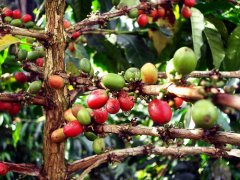
Alida Manor Solar Elida Natural Tropical Fruit Spice Panamanian Erida
Cup tester Ken Davids scored a high score of 93 for coffee at Elida Manor in 2012! Elida is also a regular on the bean list of players from all over the world in the World Barista Competition (WBC). It is also common to see contestants use a single Elida to concentrate SOE in the finals of Taiwan's TBC (Taiwan baristas contest) and domestic CBC (Chinese baristas competitions). Be blessed by nature
2016-07-07 Lida Manor Solar Elida Natural Tropical fruits spices
Boutique coffee learns the common sense of coffee what is hard bean and soft bean coffee?
What are hard beans and soft beans coffee? Hard bean coffee is coffee that grows at a relatively high altitude, while coffee grown at a lower altitude is generally considered soft bean coffee. Higher altitude and lower temperature make the fruit ripen more slowly, and form harder and less porous coffee beans. Hard bean coffee usually has higher acidity and more flavor, although sometimes there are some exceptions. Hard bean and soft bean coffee
2015-09-10 Boutique coffee common sense what hard beans soft beans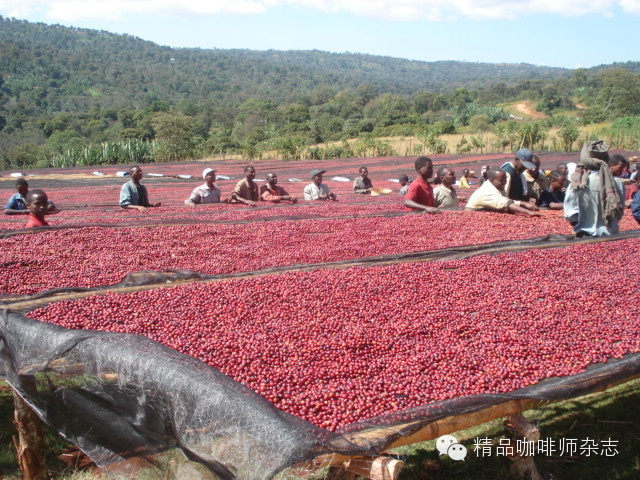
Villa Donica Manor Panamanian boutique coffee Pokui green green raw beans
Shading plantations can slow down the ripening time of coffee fruits, so there are more flavor substances in coffee cherries, so shading itself increases the cost and reduces production, and its coffee flavor is higher than that of semi-shaded plantations under the same planting conditions. now most plantations in Colombia are associated with coffee trees and bananas because Arabica trees are getting shorter and shorter.
2016-07-27 Villa Donica Manor Panama boutique coffee
Robusta coffee beans compared to Elaraby plus coffee beans
Robusta coffee beans (Coffea canephora robusta variety) and Elaraby plus coffee beans (Coffea arabica) are commonly used by ordinary coffee bean manufacturers, and the taste of the two coffee beans will be different with different proportions. And what are the characteristics of these two kinds of coffee beans? The area where Robusta grows is 0800 meters above sea level, with a temperature of 1836 ℃ and an annual precipitation of 2200.
2015-04-11 Robes Booth Coffee Bean contrast Allah Biga Robbs
Is Peasant batch Tolima one of the coffee farms in Colombia?
Its unique geographical environment has created the quality of coffee, Colombia, beautiful mountains and rivers, beautiful scenery, pleasant climate, spring all year round, fresh air, refreshing. Colombia's mild climate, humid air, and diverse climate make it a harvest season all year round, with different kinds of coffee ripening at different times. What they grow is Arabica coffee of unique quality
2016-06-16 Small farmers batches Lima Colombia one of them coffee manor unique land
What are the characteristics of Guatemalan coffee? introduction of coffee beans
Guatemalan coffee beans are mostly cultivated in high-altitude volcanic soils belonging to the most advanced Arabica (Arabica) variety. Due to the long ripening period, the beans are medium and dense (Guatemalan coffee beans are graded not on the basis of particle size, but on the basis of shortcomings), and the bean color is dark turquoise. Sweet, mellow, sweet and fresh and joyful alone
2016-05-08 Guatemala coffee which characteristics coffee beans types introduction
What are the characteristics of Guatemalan coffee? introduction of coffee beans
Guatemalan coffee beans are mostly cultivated in high-altitude volcanic soils belonging to the most advanced Arabica (Arabica) variety. Due to the long ripening period, the beans are medium and dense (Guatemalan coffee beans are graded not on the basis of particle size, but on the basis of shortcomings), and the bean color is dark turquoise. Sweet, mellow, sweet and fresh and joyful alone
2016-05-08 Guatemala coffee which characteristics coffee beans types introduction
How to distinguish the defective beans in coffee beans
Caused by poor dryness or abnormal hybridization; the bean breaks from the central line and the inside is turned out like a shell. Shell beans can cause uneven baking and are easy to catch fire during deep baking. The moth invades and lays eggs when the coffee fruit is ripe and red, and the larvae eat the coffee fruit and grow, leaving traces of moth on the surface of the beans. Moth-eaten beans can cause cloudy coffee liquid and sometimes produce.
2016-06-07 How to distinguish coffee beans medium blemish dry bad or hybrid abnormal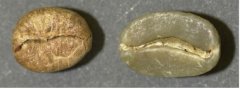
The difference between Robusta Coffee beans and Elaraby plus Coffee beans
Robusta coffee beans (Coffea canephora robusta variety) and Elaraby plus coffee beans (Coffea arabica) are commonly used by ordinary coffee bean manufacturers, and the taste of the two coffee beans will be different with different proportions. And what are the characteristics of these two kinds of coffee beans? The area where Robusta grows is 0800 meters above sea level, with a temperature of 1836 ℃ and an annual precipitation of 2200.
2015-10-24 Robes Booth Coffee beans Allah Biga difference
Brazilian Coffee processing Panamanian Manor Coffee beans
When the coffee berries are ripe, they are usually harvested by manual picking. In some places, only the fully ripe berries are picked, while others are all picked from a single branch. The former is called handpicked and the latter is called strip-picking. Because the ripening time of coffee berries is not consistent, the harvest is likely to be divided into several stages.
2016-06-07 Brazil coffee processing process Panama manor coffee beans berries Cheng
Amber Coffee with fine grains and mellow taste
Amber coffee beans mainly come from the Caribbean, whether it is the Crystal Mountains in Cuba or the natural pastures in Colombia. The growth of coffee trees provides a favorable natural environment. With fertile land, humid climate and abundant Rain Water, the Caribbean can be called a natural treasure land for coffee cultivation. The coffee forest has high humidity, small temperature difference and slow ripening of coffee beans, which is beneficial to caffeine and aromatic substances.
2015-02-12 Fine grain mouth mellow amber coffee raw beans main come
Taste and appearance characteristics of Honduran coffee
The granules of coffee beans in Honduras are large in shape, uniform in size and glossy in color. In order to facilitate harvesting, farmers will prune the coffee trees to no more than 150 centimeters, because if they grow too high, they have to set up ladders to pick, which is not only time-consuming, but also may damage the trees by bending branches. As the ripening period of each fruit of the coffee bean is different, it is necessary to keep the coffee bean in good condition.
2016-06-04 Honduras coffee taste shape characteristics coffee beans granules outside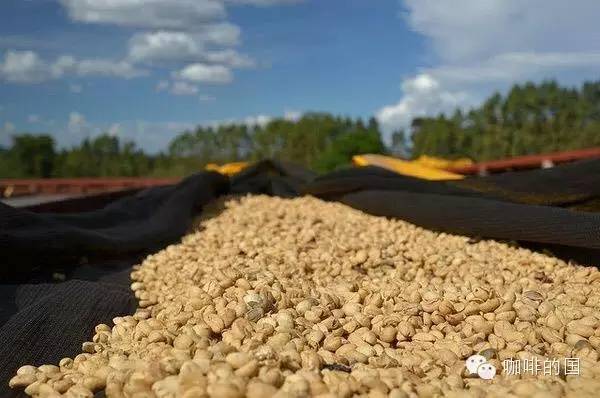
The treatment method of raw bean-- how to deal with raw bean in the sun
Solarization-the oldest bean-producing countries, Ethiopia and Yemen, almost all use the sun to get beans, take out the red fruit and half-green and half-red fast-ripening fruit that have sunk to the bottom of the trough, and spread them in a bean drying farm for natural drying. The time depends on the weather. It takes about two to four weeks to reduce the water content of the coffee beans in the fruit to 12% and harden, and then use a sheller to remove the stiff pulp and
2016-03-22 Raw beans treatment method sun how