“replant” search results (156)
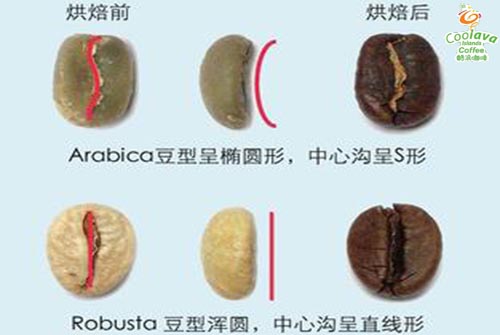
Boutique coffee beans: details of Arabica and the difference between Arabica and Robusta
Arabica Coffee Coffee Arabica many people have seen roasted coffee beans, but unless you have lived or traveled to coffee producing areas, you may not know coffee trees. The saplings are short-trimmed, but when they mature, they are 30 feet tall and covered with waxy leaves that grow symmetrically in dark green. The coffee fruit grows along the branches. After the white flowers are in full bloom and pollinated, the fruit takes a year to ripen.
2015-12-09 Boutique coffee beans rabbi details introduction and its Robes Booth difference
The History of Coffee Culture and the Centennial memory of Yunnan Coffee
A hundred years ago, when the French missionary Tian Deneng planted a coffee tree seedling on the land of Jukula, a small mountain village, China has been destined for coffee ever since. In Binchuan County, Dali City, Yunnan Province, there is a hidden mountain village, the whole village is covered by a piece of green trees, you will find that these green trees are almost all coffee trees. Through the surrounded coffee forest, you can walk into the village.
2014-11-06 Coffee culture coffee history Yunnan coffee history
The spread of coffee in China and the development of coffee shop culture
The development of coffee in China according to historical records, coffee was first planted in Taiwan in 1884, which opened the prelude to the development of coffee in China. The earliest coffee cultivation in mainland China began in Yunnan, when a French missionary brought the first coffee seedlings to Binchuan County in Yunnan Province at the beginning of the 20th century. For nearly a hundred years after that, coffee was only a star in the vast territory of China.
2015-11-04 Coffee China Communication Development Coffee Shop Culture Historical Materials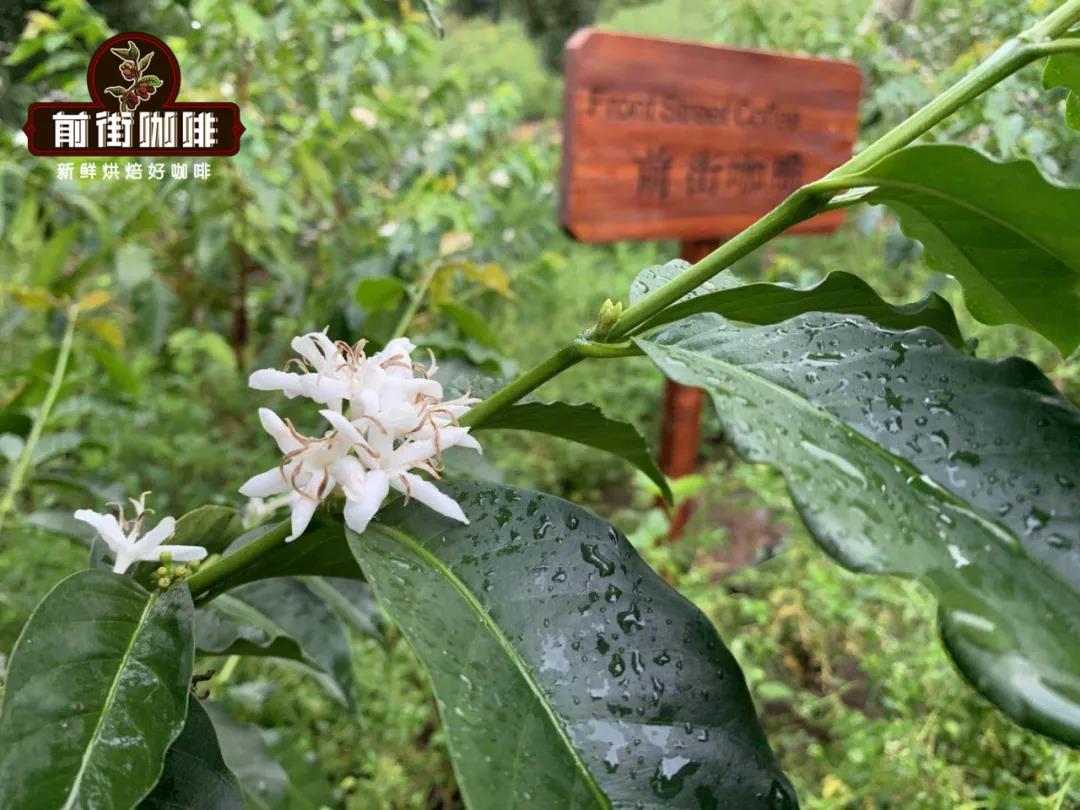
The difference of story flavor and taste between Yunnan coffee iron card and Katim small grain coffee bean varieties
Typica and Bourbon, two classic high-quality coffee varieties, are the main coffee varieties in Yunnan. In 1991, a series of Catimor varieties were introduced from Kenya (stronger anti-virus ability and higher yield). A variety of Arabian species (also known as small seed species). Because the morphology and habits of the two varieties are similar, the two varieties are mostly mixed. Yunnan area
2015-03-14 Yunnan Coffee beans Variety pickup Typica Bobang Bourbon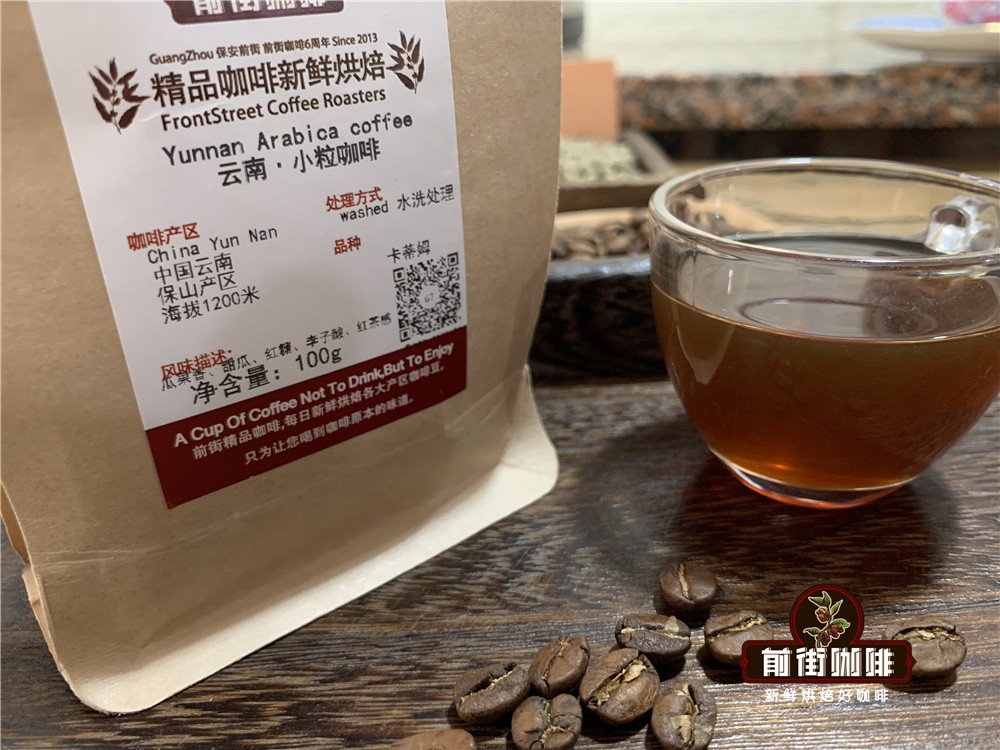
Introduction to the basic knowledge of Yunnan Fine Coffee Bean varieties description of hand-made taste of Yunnan small-grain coffee
[scientific name] small grain species are CoffeaarabicaL., medium grain species are Coffeacanephora, large grain species are Coffealiberica family genus: Rubiaceae Coffea [alias] small grain species, also known as Arabian species, medium grain species also known as Gaffra species, large grain species also known as large seed species
2023-02-05 Boutique Coffee Basics Common sense Yunnan Xiao Grain characteristics Scientific name Cof
Drought or "death of thirst" hidden worries of expansion behind the disorderly competition of ten thousand mu coffee in Baoshan, Yunnan Province
The continuing drought has hit the coffee industry in Baoshan, Yunnan Province, one of China's largest coffee producers. According to a survey data of Longyang District Hot work Station in Baoshan City, at present, only in Longyang District, the affected area of coffee has reached 66395 mu, and 16321 mu of coffee is facing no harvest. In addition to the impact of the drought, the low price of coffee also worries many farmers.
2014-05-13 Yunnan coffee Chinese coffee coffee beans
Coffee bean varieties: the historical cause and classification of cocoa bean varieties are explained in detail.
Morphological characteristics of the trunk: up to 12 meters high, trees, wide branches, branchlets brown pubescent. The trunk is solid and the cacao trunk has a luxuriant crown. Leaves: alternate, elliptic, leathery, 20-30 cm long, slightly stellate hairy on veins. Flowers: old cauline flowers, blooming directly on the trunk or main branch, about 1.8 cm in diameter; Calyx pink, smelly. 5 deep cracks; petals 5, lower sunken helmets
2015-12-28 Coffee beans varieties cocoa beans species history reasons classification details explanation
Basic knowledge of Fine Coffee Culture
I don't know how you are in other parts of Southeast Asia, but I am always at a loss on the streets of Singapore, on the corner of Vietnam and on a sign in Malaysia. Although transliteration of things like coffee was widely used by clever ancestors in the early years of its spread, there is not much audio-visual barrier, even though Singaporeans always refer to coffee as Kopi, which is pronounced from Hokkienese.
2015-06-10 Boutique coffee culture basics common sense Changpin Southeast Asia
Boutique Coffee Culture Common sense Coffee Culture in Southeast Asia
I don't know how you are in other parts of Southeast Asia, but I am always at a loss on the streets of Singapore, on the corner of Vietnam and on a sign in Malaysia. Although transliteration of things like coffee was widely used by clever ancestors in the early years of its spread, there is not much audio-visual barrier, even though Singaporeans always refer to coffee as Kopi, which is pronounced from Hokkienese.
2014-12-11 Boutique coffee culture common sense Changpin Southeast Asia do not know you are in Southeast Asia its
Coffee beans from all over the world
Coffee beans from all over the world
2014-06-05 Coffee beans by country
The planting characteristics of Coffee Bean in the World
Coffee beans from various countries, Asia, most of the Buddhist countries in Asia, the atmosphere of drinking coffee is generally not popular, so most of the coffee produced is exported to Europe and the United States. It is generally known that selected coffee is produced in countries such as Indonesia, Yemen and Papua New Guinea in Asia. In fact, as early as more than 100 years ago, the Chinese nation planted coffee. 1. At the end of the 18th century in Taiwan, coffee
2014-09-01 Coffee knowledge coffee beans and planting characteristics of coffee trees in various countries
Development of Chinese Coffee Market Chinese Coffee starts from Pu'er
What binds Jin Jihui, Alex and Hute to Yunnan is the thousand-year-old tea village Pu'er. This small border town, which has changed its name from Simao to Pu'er because of its famous Pu'er tea, now wants to add another label to its city card, the Coffee Capital of China. In 2007, Jin Jihui, a middle-aged literary and artistic classmate with Jia Jingwen and Xu Jinglei at the Beijing Film Academy, came to Yunnan
2014-11-06 Coffee knowledge Chinese coffee market coffee market development Pu'er
History of introduction and expansion of Coffee in China in the early stage of Coffee Development (5)
1. From the first peak period of the development of China's coffee industry (1952-1961) to the late 1940s, according to recorded figures, there are 2173.33 hectares of rubber plantations in Hainan Island, with a total of 867600 rubber trees, with an annual output of 199,000 tons of dry rubber, and more than 300,000 coffee plants. the annual output of coffee beans is 1 ton. According to a survey in the early 1950s, there was a large amount of coffee left in Fushan area of Chengmai County, with a total of 70,000.
2015-03-09 China coffee development course early stage introduction expansion
History of introduction and expansion of Coffee in early China (5)
1. From the first peak period of the development of China's coffee industry (1952-1961) to the late 1940s, according to recorded figures, there are 2173.33 hectares of rubber plantations in Hainan Island, with a total of 867600 rubber trees, with an annual output of 199,000 tons of dry rubber, and more than 300,000 coffee plants. the annual output of coffee beans is 1 ton. According to a survey in the early 1950s, there was a large amount of coffee left in Fushan area of Chengmai County, with a total of 70,000.
2015-04-28 Early China coffee introduction expansion
Coffee planting History of Coffee introduction and expansion in China in the early stage (5)
1. From the first peak period of the development of China's coffee industry (1952-1961) to the late 1940s, according to recorded figures, there are 2173.33 hectares of rubber plantations in Hainan Island, with a total of 867600 rubber trees, with an annual output of 199,000 tons of dry rubber, and more than 300,000 coffee plants. the annual output of coffee beans is 1 ton. According to a survey in the early 1950s, there was a large amount of coffee left in Fushan area of Chengmai County, with a total of 70,000.
2014-10-14 Coffee knowledge coffee growing history Chinese coffee
The History of Coffee introduction and expansion in China in the early stage (5)
1. From the first peak period of the development of China's coffee industry (1952-1961) to the late 1940s, according to recorded figures, there are 2173.33 hectares of rubber plantations in Hainan Island, with a total of 867600 rubber trees, with an annual output of 199,000 tons of dry rubber, and more than 300,000 coffee plants. the annual output of coffee beans is 1 ton. According to a survey in the early 1950s, there was a large amount of coffee left in Fushan area of Chengmai County, with a total of 70,000.
2014-12-01 Coffee History Common sense early China introduction expansion planting Industry