“reaction” search results (1646)
The common sense about coffee roasting, the roasting of coffee beans, the mellow taste of coffee
What is baking? What is the definition of baking? Generally speaking, the so-called coffee roasting (coffee roasting) refers to the process that through heating the raw beans, a series of physical and chemical reactions take place inside and outside the coffee beans, and in this process, the sour, bitter, sweet and other flavors of the coffee are formed, forming mellowness and hue, and converting the raw beans into dark brown beans. The baked one is heavy
2016-01-16 About coffee roasting those common sense understanding coffee beans mellow taste
Coffee cup test knowledge the aroma of coffee has exceeded 800 kinds.
The aroma of coffee itself is the main reason for the overall flavor properties, which is different from the perceived taste and sweetness, saltiness, bitterness and sour taste. Aroma is the most important product attribute of special coffee, and even instant coffee aroma substances can stimulate our taste buds. The difference is that instant coffee lacks the most important aromatic volatile components, which also leads to a decrease in the overall flavor.
2014-12-30 Coffee cup knowledge coffee fragrance more than 800 kinds itself
The roasting steps of coffee are basically divided into the following four steps
You must have heard a lot about roasting coffee, so what exactly is the effect of roasting on coffee? What is the method of roasting coffee? Next, let's have a look with the editor. It is basically divided into the following four steps: (1) dehydration: generally, the water content of raw beans is about 10%-12%, which is also more suitable for baking, but it will increase the water content because of the humid environment, which leads to damp and moldy.
2015-10-22 Coffee baking steps basic divided into one four everyone sure often heard
Coffee roasting process
Coffee roasting (coffee roasting) refers to the heating of raw beans to convert starch in raw beans into sugars and acids at high temperature, cellulose and other substances will be carbonized to varying degrees, water and carbon dioxide will be volatilized, proteins will be converted into enzymes and fats, and the remaining substances will be combined to form an oil film on the surface of coffee beans, and in the process coffee acids will be formed.
2014-06-04 Coffee knowledge coffee roasting coffee encyclopedia
The basics of coffee roasting
one。 The meaning of baking 1. The definition of roasting so-called coffee roasting (coffee roasting) refers to the heating of raw beans to promote a series of physical and chemical reactions inside and outside of coffee beans, and in this process to produce a variety of sour, bitter, sweet and other flavors of coffee, forming mellowness and hue, and converting raw beans into dark brown beans. two。 The importance of baking is affecting a cup of coffee.
2014-09-11 Coffee knowledge coffee roasting roasting basics
The roasting degree of coffee beans
Coffee beans have a history of roasting beans for hundreds of years. Without these scientific tools, how to judge the whole exothermic reaction of western heat? To put it simply, the baking process is judged by changes in appearance and temperature. The whole baking process can be divided into four stages: 1. Steaming stage: 00-10min; lower bean-140C; this is the most important process of endothermic reaction of coffee beans.
2016-06-05 Coffee beans roasting degree coffee beans baking beans history hundred years predecessors no
Pictured coffee roasting process wizard
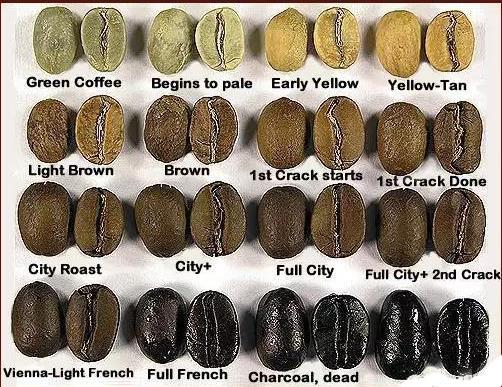
Naked eye observation as one of the methods to determine the roasting degree of coffee beans is very limited when used alone. If it is supplemented by the judgment of burst sound and the discrimination of fragrance, quite accurate results can be obtained. But the world of coffee is full of surprises and rarely conventional, and explosive Sumatra is often mistaken for urban baking. On the other hand, the color of some coffee beans after roasting will look better than that of actual roasting.
2014-09-28 Coffee roasting coffee knowledge
Analysis of roasting process of Coffee
Coffee roasting (coffee roasting) means that through heating raw beans, starch in raw beans is converted into sugars and acids at high temperature, substances such as cellulose will be carbonized to varying degrees, water and carbon dioxide will be volatilized, proteins will be converted into enzymes and fats, and the remaining substances will be combined to form an oil film on the surface of coffee beans, and in the process coffee acids will be formed.
2014-05-13 Coffee knowledge baking
The color of coffee beans changes during roasting.
Visual inspection as one of the methods of judging the roasting degree of coffee beans is very limited when used alone. If supplemented by the explosive sound of discrimination and aroma discrimination, you can obtain a fairly accurate result. But the world of coffee is full of surprises and few conventions, and two-shot Sumatra is often mistaken for urban roasting. And some coffee beans will look a lot more colorful after roasting than they actually are.
2015-11-03 coffee beans roasting illustration process color change naked eye observation as![Pictured here is the coffee roasting process wizard [essence]](https://www.coffeesearch.net/uploads/allimg/140704/1012216358-0-lp.jpg)
Pictured here is the coffee roasting process wizard [essence]
Naked eye observation as one of the methods to determine the roasting degree of coffee beans is very limited when used alone. If it is supplemented by the judgment of burst sound and the discrimination of fragrance, quite accurate results can be obtained. But the world of coffee is full of surprises and rarely conventional, and explosive Sumatra is often mistaken for urban baking. On the other hand, the color of some coffee beans after roasting will look better than that of actual roasting.
2014-07-04 Coffee roasting roasting process wizard
Basic Coffee knowledge Picture Coffee roasting process Wizard
Naked eye observation as one of the methods to determine the roasting degree of coffee beans is very limited when used alone. If it is supplemented by the judgment of burst sound and the discrimination of fragrance, quite accurate results can be obtained. But the world of coffee is full of surprises and rarely conventional, and explosive Sumatra is often mistaken for urban baking. On the other hand, the color of some coffee beans after roasting will look better than that of actual roasting.
2015-06-08 Coffee basics common sense illustration baking process guide naked eye observation as
The whole process of coffee roasting technology
Coffee roasting (coffee roasting) means that through heating raw beans, starch in raw beans is converted into sugars and acids at high temperature, substances such as cellulose will be carbonized to varying degrees, water and carbon dioxide will be volatilized, proteins will be converted into enzymes and fats, and the remaining substances will be combined to form an oil film on the surface of coffee beans, and in the process coffee acids will be formed.
2014-08-20 Coffee knowledge coffee roasting roasting technology roasting process
Illustrate the color changes of coffee beans during roasting.
Naked eye observation as one of the methods to determine the roasting degree of coffee beans is very limited when used alone. If it is supplemented by the judgment of burst sound and the discrimination of fragrance, quite accurate results can be obtained. But the world of coffee is full of surprises and rarely conventional, and explosive Sumatra is often mistaken for urban baking. On the other hand, the color of some coffee beans after roasting will look better than that of actual roasting.
2015-05-28 Illustration coffee beans roasting process beans color change naked eye observation as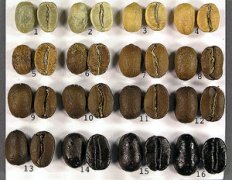
Roasting of boutique coffee beans pictured coffee roasting process wizard
Naked eye observation as one of the methods to determine the roasting degree of coffee beans is very limited when used alone. If it is supplemented by the judgment of burst sound and the discrimination of fragrance, quite accurate results can be obtained. But the world of coffee is full of surprises and rarely conventional, and explosive Sumatra is often mistaken for urban baking. On the other hand, the color of some coffee beans after roasting will look better than that of actual roasting.
2014-12-10 Boutique coffee beans roasting illustration coffee process guide naked eye observation as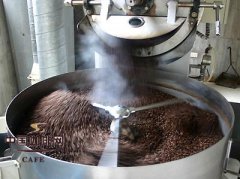
About the roasting of coffee
Roasting: this heat treatment causes significant chemical and physical changes in the structure and composition of raw coffee, causing the beans to darken and emit the characteristic aroma of roasted coffee.
2014-07-04 Coffee knowledge coffee roasting coffee encyclopedia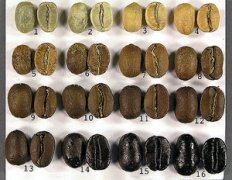
Picture shows coffee roasting process guide coffee bean roasting general knowledge
Naked eye observation as one of the methods to determine the roasting degree of coffee beans is very limited when used alone. If it is supplemented by the judgment of burst sound and the discrimination of fragrance, quite accurate results can be obtained. But the world of coffee is full of surprises and rarely conventional, and explosive Sumatra is often mistaken for urban baking. On the other hand, the color of some coffee beans after roasting will look better than that of actual roasting.
2015-09-21 Pictured coffee roasting process guide coffee beans common sense naked eye observation as
Common coffee terms
About coffee beans: * Coffee cherry: the fruit of a coffee tree, named because its rind is bright red and its shape is very similar to cherries. * round beans: when the coffee fruit is growing, one of the two seeds develops very well, and the other seed is eaten so that the coffee bean that should be oval becomes round. * Elephant beans: bigger than ordinary coffee beans and usually taste
2014-08-18 Coffee knowledge coffee terminology coffee bean words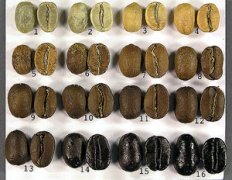
General knowledge of Fine Coffee A guide to the roasting process of coffee
Naked eye observation as one of the methods to determine the roasting degree of coffee beans is very limited when used alone. If it is supplemented by the judgment of burst sound and the discrimination of fragrance, quite accurate results can be obtained. But the world of coffee is full of surprises and rarely conventional, and explosive Sumatra is often mistaken for urban baking. On the other hand, the color of some coffee beans after roasting will look better than that of actual roasting.
2014-11-17 Coffee knowledge coffee knowledge coffee roasting
Coffee beans and coffee beans
* Coffee cherry: coffee tree fruit, because the skin color bright red, shape very similar to cherry and so named. * Round beans: coffee fruit in the process of growth, inside a pair of seeds in one of the development is particularly good, and the other seed will be eaten, so that the coffee beans should be oval into a round. * Elephant beans: larger than the average coffee bean, usually bland taste. * coffee
2015-04-13 Boutique Coffee Dictionary Common Terms About Coffee Bean Cherry Fruit
SCAA Emma Bladyka chlorogenic acid: the importance of chemical changes in chemistry and reality baking
What are they? Many plants contain chlorogenic acid in addition to caffeine. Acids have this very similar structure in the Luyuan Group, and the composition of an ester usually includes caffeic acid and quinic acid as components. All chlorogenic acids belong to a larger class of phenolic acids. In nature, phenolic acids are usually used as defensive compounds by plants, or as a signaling mechanism between plants and soil microorganisms. they
2016-01-15 SCAA Emma Bladyka Green Plains Chemistry reality Baking