“production volume” search results (2000)

Introduction to Brazilian Coffee Flavor and Taste Brazilian fine coffee beans in Brazilian coffee producing areas
The topography of Brazil is mainly divided into two parts, one is the Brazilian plateau above 500 meters above sea level, distributed in the south of Brazil, the other is the plain below 200 meters above sea level, mainly distributed in the north of the Amazon River basin and the west. The topography of the whole territory is divided into Amazon plain, Paraguay basin, Brazilian plateau and Guyana plateau, of which the Amazon plain accounts for about 1% of the national area. Yes
2016-07-28 Brazil coffee flavor taste introduction producing area boutique coffee beans topography
Panamanian Cupid Coffee Flavor and taste introduction to boutique coffee beans in the manor area
Panama is a small country located in the center of the American continent. The waters of the Atlantic and Pacific oceans flood its beaches. Panama is located at 9 degrees north latitude, the meeting point of the Central Mountains, where Mount Baru, one of the highest volcanoes in Central America, is located. Baru volcano has an altitude of more than 11400 feet, and the land around it is rich in nutritious and fertile soil, which is unique to Panama.
2016-09-22 Panama Cupid coffee flavor taste manor producing area characteristics boutique
Fine Coffee learn the technology of roasting coffee beans
1. Cleaning uses wind and vibration to remove ash / soil / pebbles / metal and other impurities from coffee beans. The cleaning process is generally carried out on special machinery, or manual screening can be used. Then let the coffee beans pass through sieves of different sizes and grade them according to size. If possible, a colorimeter can also be used to monitor immature coffee beans and pick out coffee beans that are too light or too dark. Use ultraviolet
2014-12-10 Boutique coffee roasting coffee beans craft cleaning wind vibration mixing
Boutique Coffee knowledge about Coffee roasting
Through the burning of the fire, the special aroma of coffee can be released, sprinkling the personality of each coffee bean: sour, sweet and bitter, from the insipid raw bean to the endless aftertaste in the cup. Roasting-is the most important station for each coffee bean to outline its character and breed its fragrance during its long journey. The coffee beans are about 12-16 minutes long and warm.
2014-11-17 Coffee knowledge boutique coffee science coffee roasting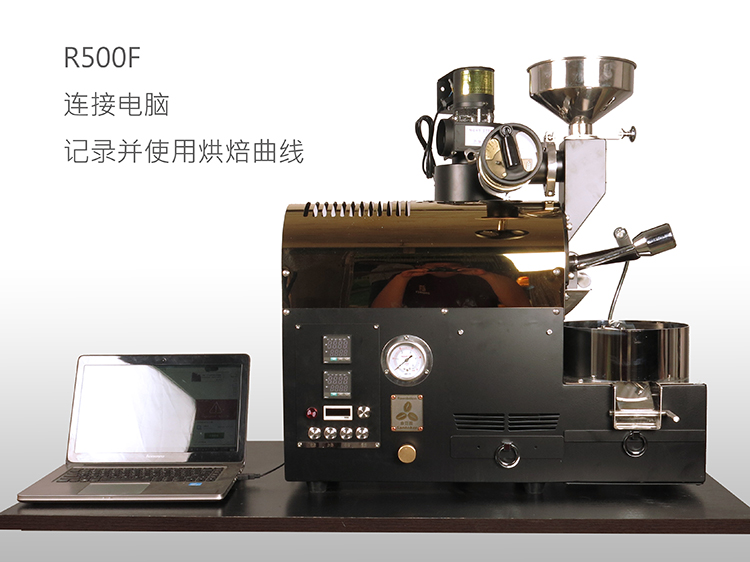
Coffee roaster San Douke brand introduction: San Douke R500F coffee roaster santoker
The inner pot is shapeless and will not destroy the movement track of coffee beans. Cast iron inner pot surface plasma spraying far infrared ceramic emission far infrared ray through coffee beans heating outer ceramic protection inner pot can effectively avoid bean surface scald so fast baking firepower is valuable otherwise the speed is fast beans are all bitter. You can see it, and there is better quality assurance in places you can't see.
2015-12-19 Coffee roaster Santoker Brand introduction R500Freguency Santoker
illy coffee company brand culture illy coffee latest introduction
Illy coffee is very focused on the roasting process, in which the beans are placed in a large rotating cylinder. In the course of 12-15 minutes, the beans lose about 20% of their weight, but expand to 1.6 times their original volume. A series of physical and chemical reactions take place within coffee beans to create more than 1500 substances that are the source of espresso flavor and aroma. the roasting process
2015-12-17 illy coffee company brand culture latest presentation
Angora coffee beans
Angola's Angola, which has been growing coffee for more than 100 years, ranked first in Africa until 1960 and reached 225000 tons in 1979, ranking second in Africa and fourth in the world. The output in 1992 was 5000 tons. Sisal production is second only to coffee, and the level of per unit yield is higher. In 1986, the output reached 20,000 tons, sisal ranked second in Africa both in terms of output and export volume. Luo'an, Xinhuanet
2014-06-30 Angola coffee bean Angola coffee bean price African boutique coffee bean
The technology of stir-frying coffee beans
1. Clean up 2. Before roasting, different varieties of coffee are blended, by filling different varieties and producing areas of coffee, all kinds of spray aroma and ingredients are combined to make the coffee have a specific spray flavor and ensure the consistency of coffee quality. In order to find coffee suitable for different imported stomachs, coffee can be intervened in a certain proportion according to its origin in order to get the best.
2014-06-20 Coffee knowledge encyclopedia of coffee beans fried coffee beans
African coffee Angora coffee beans
Angolan coffee Angola Angola has been growing coffee for more than 100 years, and its output has been the first in Africa until 1960, reaching 225000 tons in 1979, ranking second in Africa and fourth in the world. The output in 1992 was 5000 tons. Sisal production is second only to coffee, and the level of per unit yield is higher. In 1986, the output reached 20,000 tons, sisal ranked second in Africa both in terms of output and export volume.
2014-09-18 African coffee Angolan coffee beans
Talking about Coffee beans
1. Summary: coffee is a perennial evergreen shrub or small tree of Rubiaceae. It is native to tropical Africa and has been cultivated for more than 2000 years. The Arabs began to grow coffee in 525 BC, and it was popular for Arabs to stir-fry coffee beans. They began to grow coffee beans on a large scale after the 15th century, and were widely distributed in the tropics and subtropics of Europe, Asia, Africa and Latin America after the 18th century.
2014-07-02 Coffee beans coffee bean history coffee bean uses
Price of Angolan coffee beans
Angolan coffee Angola Angola has been growing coffee for more than 100 years, and its output has been the first in Africa until 1960, reaching 225000 tons in 1979, ranking second in Africa and fourth in the world. The output in 1992 was 5000 tons. Sisal production is second only to coffee, and the level of per unit yield is higher. In 1986, the output reached 20,000 tons, sisal ranked second in Africa both in terms of output and export volume.
2014-09-17 Angolan coffee Angolan coffee bean price
Capsule coffee machine is more convenient to make large cups of coffee.
The AAA coffee machine puts forward a concept of whether it is possible to use a capsule coffee machine to make a large cup of coffee, and this cup of coffee is much better in taste than the coffee made by the above-mentioned coffee machine, and better than instant coffee. Capsule coffee machine has been launched in China for a long time, but sales have been tepid. Some people say that the Chinese do not like it and the market needs to be nurtured, but why Starbuck
2015-08-21 Capsule coffee machine large cup coffee convenience AAA out one
How much is authentic Blue Mountain Coffee? which brand is better for a cup of coffee?
It is very important to choose the right ripe coffee beans when picking. Immaturity or ripeness will affect the quality of the coffee. The picked coffee beans are shelled on the same day, and then let them ferment for 1218 hours. After that, the coffee beans are washed and screened.
2016-10-12 Authentic Blue Mountain coffee less money one cup which one brand
Roasting technology of fine coffee the technology of stir-frying coffee beans
1. Cleaning uses wind and vibration to remove ash / soil / pebbles / metal and other impurities from coffee beans. The cleaning process is generally carried out on special machinery, or manual screening can be used. Then let the coffee beans pass through sieves of different sizes and grade them according to size. If possible, a colorimeter can also be used to monitor immature coffee beans and pick out coffee beans that are too light or too dark. Use ultraviolet
2014-11-17 Coffee knowledge boutique coffee coffee baking roasting technology
The characteristics of Panamanian Coffee Flavor Manor with balanced sour taste introduce Panamanian boutique coffee Yi
Panama is a small country located in the center of the American continent. The waters of the Atlantic and Pacific oceans flood its beaches. Panama is located at 9 degrees north latitude, the meeting point of the Central Mountains, where Mount Baru, one of the highest volcanoes in Central America, is located. Baru volcano has an altitude of more than 11400 feet, and the land around it is rich in nutritious and fertile soil, which is unique to Panama.
2016-08-03 Sour balanced Panama coffee flavor taste manor producing area characteristics introduction
Basic knowledge of roasting of boutique coffee the technology of fried coffee beans
1. Cleaning uses wind and vibration to remove ash / soil / pebbles / metal and other impurities from coffee beans. The cleaning process is generally carried out on special machinery, or manual screening can be used. Then let the coffee beans pass through sieves of different sizes and grade them according to size. If possible, a colorimeter can also be used to monitor immature coffee beans and pick out coffee beans that are too light or too dark. Use ultraviolet
2015-05-29 Boutique coffee baking basics common sense coffee beans craftsmanship cleaning wind vibration
Coffee Industry Analysis in Vietnam strives to improve Coffee quality
Coffee is to Vietnam what tea is to the Chinese. It is a penetration deep into the bone marrow. Almost all of the world's robusta coffee beans (Robusta bean), which are often used to make instant coffee and high-end coffee blends, are exported from Vietnam. Vietnam has a long history of producing coffee, but the development and expansion of its production scale has only begun in the last 20 years.
2015-08-24 Vietnam coffee industry analysis commitment improvement quality
African specialty coffee Angola boutique coffee beans
Angolan coffee Angola Angola has been growing coffee for more than 100 years, and its output has been the first in Africa until 1960, reaching 225000 tons in 1979, ranking second in Africa and fourth in the world. The output in 1992 was 5000 tons. Sisal production is second only to coffee, and the level of per unit yield is higher. In 1986, the output reached 20,000 tons, sisal ranked second in Africa both in terms of output and export volume.
2014-07-22 Price of African coffee beans Angola coffee beans
The technology of stir-fried coffee beans the basic knowledge of coffee beans
Use wind and vibration to remove ash / soil / pebbles / metal and other impurities from coffee beans. The cleaning process is generally carried out on special machinery, or manual screening can be used. Then let the coffee beans pass through sieves of different sizes and grade them according to size. If possible, a colorimeter can also be used to monitor immature coffee beans and pick out coffee beans that are too light or too dark. Select by ultraviolet light
2015-09-21 Coffee beans craftsmanship basics common sense wind vibration coffee beans hybrid soil small
A brief talk on understanding coffee beans
1. Summary: coffee is a perennial evergreen shrub or small tree of Rubiaceae. It is native to tropical Africa and has been cultivated for more than 2000 years. The Arabs began to grow coffee in 525 BC, and it was popular for Arabs to stir-fry coffee beans. They began to grow coffee beans on a large scale after the 15th century, and were widely distributed in the tropics and subtropics of Europe, Asia, Africa and Latin America after the 18th century.
2014-09-25 Understand coffee beans and talk about coffee beans