“production requirements” search results (4000)

Detailed rules for the examination of roasted Coffee production license
I. the scope of licensed products and the application unit to implement the management of food production license roasted coffee refers to the food made from coffee beans through cleaning, blending, roasting, cooling, grinding and other processes. Including: roasted coffee beans, coffee powder. The application unit is 1, that is, roasted coffee. The name of the certified product, that is, roasted coffee, shall be indicated on the production license. There is a production license
2014-10-08 Coffee knowledge roasting coffee coffee production
European Special Coffee Association (SCAE) barista certification standard China Coffee net Coffee Trading Network
There are a large number of barista training institutions around the world, but there is no independent testing and certification mechanism based on knowledge and production capabilities. Just like getting a driver's license, the European Special Coffee Association will get our certification no matter where you received the training or even learned it yourself. You only need to pass our written, oral and hands-on tests.
2016-04-20 Europe Special Coffee Association SCAE Certification Standard China Trading Network
Detailed rules for the examination of roasted Coffee production license
Detailed rules for examination of roasted Coffee production license Index number: 530800-006275-20081230-0009 issuing Organization: Pu'er City Coffee Association release date: 2008-03-25 name: roasted Coffee production license Review rules subject words: roasted Coffee production license Review rules 1, license scope and Application Unit roasted Coffee with Food production license Management
2015-05-29 Roasting coffee production license review rules roasting
Requirements for milk foam refrigerated milk foam Italian blend of coffee beans milk foam
Milk foam element one: refrigerated milk is best refrigerated, about 5 degrees Celsius, the heat brought by the coffee machine steam can complete the formation of foam before the milk temperature goes up, on the contrary, the normal temperature is normal temperature milk, especially in summer, this makes the room for temperature rise is very limited, often in the steam shortly after the thermometer indicates 65 degrees. Milk foam factor 2: the amount of milk is drawn in the coffee.
2016-07-12 Coffee pull flower for milk foam request refrigerated Italian blending coffee beans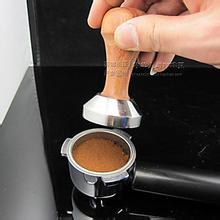
Introduction to the course of making Italian Coffee: an introduction to the elements that should be paid attention to in the production of pressing Powder by Espresso
Previous blog posts have introduced a variety of factors that affect the taste of Espresso. Here is only one of these factors, which is also a very important step in the process of making Espresso. What is assumed here is the ideal state, leaving aside other factors, powder amount, water temperature, degree of grinding, humidity, water pressure, etc., and only consider pressing powder.
2015-12-18 Italian style coffee making tutorial introduction Espresso making pressing powder should
Detailed rules for the examination of coffee roasting coffee production license
I. the scope of licensed products and the application unit to implement the management of food production license roasted coffee refers to the food made from coffee beans through cleaning, blending, roasting, cooling, grinding and other processes. Including: roasted coffee beans, coffee powder. The application unit is 1, that is, roasted coffee. The name of the certified product, that is, roasted coffee, shall be indicated on the production license. There is a production license
2014-12-29 Coffee roasting production license review rules product scope
Digitize the production process of espresso
Italian Coffee University (China) Let's digitize the production process of espresso. A cup of high-quality espresso requires 67 grams (about 50) of Arabica coffee beans, ground into a fine powder of about 1 micron in diameter, and flows through about 30 cubic centimeters (30cc) of water at a temperature of 90 degrees Celsius at 9 atmospheres. Within 30 seconds, extract about 30cc coffee liquid. this
2015-05-06 Digitization espresso production process Italian Coffee University
A good cup of coffee requires coffee common sense.
Coffee should not only be freshly ground, but also choose freshly roasted and well-preserved coffee beans as much as possible. when you smell the smell of coffee powder, it shows that it is deteriorating and the essence of the coffee is decreasing. If the diameter of the coffee powder is doubled, the volume of a single particle is reduced by 1 × 8, and the surface area of the corresponding total coffee powder is doubled. After the coffee bean is ground into coffee powder, its surface area
2015-03-18 One cup delicious single product coffee requirements common sense not only freshly ground but also
Let's digitize the production process of espresso.
Italian Coffee University (China) Let's digitize the production process of espresso. A cup of high-quality espresso requires 67 grams (about 50) of Arabica coffee beans, ground into a fine powder of about 1 micron in diameter, and flows through about 30 cubic centimeters (30cc) of water at a temperature of 90 degrees Celsius at 9 atmospheres. Within 30 seconds, extract about 30cc coffee liquid. this
2015-02-03 We digital espresso production process Italian coffee
Eastman Tritan polyester powered new coffee machine
Eastman Chemical (Eastman Chemical Company) announced that Hourglass Coffee, based in Portland, Oregon, will use Eastman's Tritan as raw material to produce HourglassCold Brew Coffee systems. Eastman Tritan resin can meet the requirements of tubing toughness, repeated washing durability, heat resistance, chemical resistance and easy processability. Trit
2014-07-28 Coffee machine coffee utensils
Comprehensive data of small seed Coffee in Simao, Yunnan
Coffee is an advantageous and characteristic industry in the hot area of our city, and it is also one of the main agricultural products that our city exports to earn foreign exchange. In order to standardize the production technology, product standards and marketing behavior of coffee industry in our city, and improve the standardization level of coffee industry, the comprehensive standard of Pu'er small seed coffee was compiled according to the requirements of GB/T1.1 and GB/T1.2. This section defines the terms and definitions in the initial processing of small seed coffee.
2014-09-28 Coffee knowledge Yunnan coffee small grain coffee
Quality Evaluation of 25 latest Pod (pressed powder) Coffee machines
The US Consumer report recently released the results of the latest 25 pressed powder coffee machines, some of which can provide coffee easily and quickly, but others that are less than satisfactory in function. In most cases, the single-cup coffee machine is convenient and fast. In the recent "American Consumer report" (CR) evaluation, according to the expert taste, there is not a Po.
2015-10-29 25 models latest Pod pressed powder coffee maker quality evaluation recent USA Consumer
Harvest and processing methods of coffee beans General knowledge of fine coffee
From the coffee-producing countries, we can find that since almost all coffee is produced in countries with more cheap labor, it can be guessed that the process of harvesting coffee beans requires a lot of manpower. Yes, the harvesting of coffee is very hard and requires a lot of manpower, especially in many high-quality coffee, which can only pick fully ripe red cherries from coffee trees.
2015-03-20 Coffee beans harvesting processing methods boutique coffee common sense production junior high school
Skills related to Italian blending of milk foams requirements for the quality of milk bubbles cappuccino mixed beans
The key step of milk foam treatment is not our ideal milk foam, but in a layered state, the lower layer is heated milk, and the upper layer is froth after beating, so we have to deal with the milk after discarding. Shake up and down to remove the coarse foam from the surface; shake so that the hot milk is fully mixed with the upper foam to form foam. this
2016-07-05 Italian style blending milking correlation skills foam quality requirements cappuc
Comprehensive data of small seed Coffee in Simao, Yunnan
Coffee is an advantageous and characteristic industry in the hot area of our city, and it is also one of the main agricultural products that our city exports to earn foreign exchange. In order to standardize the production technology, product standards and marketing behavior of coffee industry in our city, and improve the standardization level of coffee industry, the comprehensive standard of Pu'er small seed coffee was compiled according to the requirements of GB/T1.1 and GB/T1.2. This section defines the terms and definitions in the initial processing of small seed coffee.
2015-10-12 Yunnan Simao Xiao Grain Coffee Comprehensive data
Quality coffee bean certification organization 4C Association Coffee Certification
4C certification is a widely accepted management rule in the world, which involves the sustainable development of coffee cultivation, production, processing and other aspects of the supply chain, including social, environmental and economic principles. Coffee practitioners are required to protect biodiversity, protect all kinds of national endangered animals and plants, correctly use and handle pesticides and other chemicals, protect the natural environment and
2015-10-24 Boutique coffee beans certification organization Association coffee
Coffee bean certification body 4C Association Coffee Certification
4C certification is a widely accepted management rule in the world, which involves the sustainable development of coffee cultivation, production, processing and other aspects of the supply chain, including social, environmental and economic principles. Coffee practitioners are required to protect biodiversity, protect all kinds of national endangered animals and plants, correctly use and handle pesticides and other chemicals, protect the natural environment and
2015-01-27 Coffee beans Certification bodies Association Coffee Certification
Eastman Tritan polyester powered new coffee machine
Eastman Chemical (Eastman Chemical Company) announced that Hourglass Coffee, based in Portland, Oregon, will use Eastman's Tritan as raw material to produce HourglassCold Brew Coffee systems. Eastman Tritan resin can meet the requirements of tubing toughness, repeated washing durability, heat resistance, chemical resistance and easy processability. Trit
2014-07-28 Coffee machine coffee utensils
Four steps to complete the production of latte coffee
To make a perfect latte, you need to follow these four steps. Grinding: after the coffee beans are ground into coffee powder, more than 90% of the aroma will evaporate within two minutes. Many coffee shops even grind a lot of coffee powder the night before for business the next day, but the best baristas require that it take no more than a minute to grind to make coffee.
2015-02-28 Step finish latte coffee production one cup beautiful
4C Coffee Certification body what is 4C Association
4C certification is a widely accepted management rule in the world, which involves the sustainable development of coffee cultivation, production, processing and other aspects of the supply chain, including social, environmental and economic principles. Coffee practitioners are required to protect biodiversity, protect all kinds of national endangered animals and plants, correctly use and handle pesticides and other chemicals, protect the natural environment and
2015-09-01 Coffee certification bodies what associations