“platform scale” search results (177)

The pre-soaking time of hand-brewed coffee is recommended to inject water, coffee powder, hand-flushing equipment KALITA
The first water injection is the process of awakening the flavor of coffee, allowing hot water to flow out of the hand pot, making a circle clockwise to wet the noodles, and the coffee powder surface will expand in a moment. Standing for about 20 seconds, a few drops of coffee will flow out of the hand cup, and the pre-soaking time is related to the success or failure of hand coffee, which is like building a house with a good foundation, a solid foundation and half the success of the building.
2016-07-01 Hand brewing coffee soaking time suggestion water injection coffee powder utensils KALIT
Thoughts on the unsalable Coffee beans in Yunnan
For Pu'er farmers, this year's coffee beans keep them awake. In previous years, people are looking for beans, but this year they are looking for people. At the beginning of the year, there were many people who bought, but we didn't want to sell. Now there are few people who want to buy, so we can't find a buyer if we want to sell. Li Xiaozhi, a villager of Kongguang Village, Mangkuan Township, Longyang District, Baoshan City, said in an interview: 90% of the villagers in our village grow coffee beans and grow noodles.
2014-05-30 Coffee beans are unsalable.
The Secret of success of Chinese Barista Champion in the most complete interview
Q1: please share the crux of your award? Q2: has there been any change in your career path after winning the championship? Q3: in your opinion, what changes have taken place in the Chinese coffee market over the years, and what is the impact of leftist favouritism in masterpiece coffee on you? Q4: if you compete again, what do you think is the difference from the past? Do you have any suggestions for new baristas? A1: first of all, angle
2015-09-09 Most complete interview China coffee champion success secret
Where should China's coffee industry go at the crossroads?
Yunnan net (Reporter Fang Min) China's coffee industry has been under the crackdown of foreign multinational corporations. If foreign companies own a general term and use it as a special commodity name, then large companies like Nestl é, you only need to sit and collect coffee shop partner infringement fees, and China's coffee industry will never rise to prominence. When an industry develops to a certain stage, the public
2014-07-25 Coffee industry in China coffee market
Green Mountain Coffee sold in cups
Can coffee have a different model from Starbucks? Green Mountain Coffee Roasters, a coffee company founded in Vermont in 1981, has seen its share price soar in recent years, far surpassing Starbucks. Its coffee is of high quality but low price, and it doesn't make money by selling coffee, but it can sell 1 billion K cups a year, which is the real source of profit. Through both of you
2014-06-28 Green Mountain Coffee Starbucks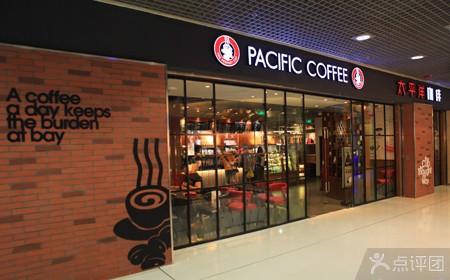
Counterattack of "third": how does Pacific Coffee surpass Costa to become the second in the industry?
Core tip: who is the largest coffee chain in the Chinese market? There is no doubt that Starbucks should take the first place! Then who will take the second place? The latest record is that a guy called Pacific Coffee overtook Costa to become the second in the industry after Starbucks. Who is the largest coffee chain in the Chinese market? There is no doubt that Starbucks (feature Reading) is in the first place.
2015-12-07 Third counterattack Pacific Ocean Coffee how to surpass Costa Industry second
Pu'er is the main coffee producing area in China. Nestl é coffee via Starbucks, Wang Zhongxue, Nestl é and Chinese enterprises.
Generally speaking, the fruit of the first wave is not very good. The best is the second and third waves, and the best is the fruit of the fourth wave. Wang Zhongxue is afraid that others will not understand, and constantly emphasizes the fullness of coffee beans. Because it determines the thickness of the money he put into his pocket from Nestle. Wang Zhongxue, an authentic Pu'er farmer in Yunnan, now specializes in growing coffee. Nestl é does not operate on a global scale.
2016-04-18 Pu'er China coffee beans producing areas Nestl é coffee Buck Wang Zhongxue state-owned enterprises![[JMedia] the coffee in Zhongguancun Entrepreneurship Street is cold and there is no way out.](https://www.coffeesearch.net/uploads/151207/2-15120G0422XC.jpg)
[JMedia] the coffee in Zhongguancun Entrepreneurship Street is cold and there is no way out.
Only those who are rooted in the street know that the cold wind is blowing under the lively appearance of Zhongguancun Venture Street. The impact of capital winter on Entrepreneurship Street is obvious, but it is still Yan'an for entrepreneurs all over the country. For entrepreneurs, there is no way out. In this 220-meter street, life and death are staged alternately, dreams and reality knead the face of an era. 1. Deserted and deserted
2015-12-07 JMedia Zhongguancun Entrepreneurship main Street Coffee Cool Entrepreneurship Road No
A complete knowledge of siphon pot
The working principle of the siphon pot How does it work: the main principle of Syphon is to use the ideal gas equation: PV=nRT, under a fixed volume, heat the boiling water to make the steam pressure of the boiling water, press the boiling water into the upper layer to brew the coffee through the glass tube, and then cool the lower layer in a similar vacuum state to absorb the brewed coffee from the upper layer, and filter the dregs with a filter in the middle. You can take it while looking at it.
2014-08-25 Coffee knowledge siphon pot how to use siphon pot
American Fine Coffee Association (SCAA) A brief introduction to American Fine Coffee Association
The characteristics of boutique coffee 1. Boutique coffee beans must be high-quality beans with flawless beans. It should have an outstanding flavor, not without a bad taste, but with a particularly good taste. two。 Boutique coffee beans must be excellent varieties, such as the original bourbon species, mocha species, Tippica species, which produce coffee beans with unique aromas and
2015-11-03 USA boutique coffee association SCAA Wen teacher teacher profile
Thoughts on the Development of Coffee in Yunnan
Yunnan coffee industry has developed rapidly due to the promotion of Yunnan provincial government's ten-year plan and the stimulation of rising international market prices in the past two years: by the end of June 2011, the province's coffee planting area has reached 617000 mu. In 2010-11, despite the impact of last year's drought, the province still achieved 40, 000 tons of coffee output, of which 28400 tons were exported from raw beans.
2014-06-10 Yunnan Coffee Development perception
History of introduction and expansion of Coffee in China in the early stage of Coffee Development (5)
1. From the first peak period of the development of China's coffee industry (1952-1961) to the late 1940s, according to recorded figures, there are 2173.33 hectares of rubber plantations in Hainan Island, with a total of 867600 rubber trees, with an annual output of 199,000 tons of dry rubber, and more than 300,000 coffee plants. the annual output of coffee beans is 1 ton. According to a survey in the early 1950s, there was a large amount of coffee left in Fushan area of Chengmai County, with a total of 70,000.
2015-03-09 China coffee development course early stage introduction expansion
History of introduction and expansion of Coffee in early China (5)
1. From the first peak period of the development of China's coffee industry (1952-1961) to the late 1940s, according to recorded figures, there are 2173.33 hectares of rubber plantations in Hainan Island, with a total of 867600 rubber trees, with an annual output of 199,000 tons of dry rubber, and more than 300,000 coffee plants. the annual output of coffee beans is 1 ton. According to a survey in the early 1950s, there was a large amount of coffee left in Fushan area of Chengmai County, with a total of 70,000.
2015-04-28 Early China coffee introduction expansion
Coffee planting History of Coffee introduction and expansion in China in the early stage (5)
1. From the first peak period of the development of China's coffee industry (1952-1961) to the late 1940s, according to recorded figures, there are 2173.33 hectares of rubber plantations in Hainan Island, with a total of 867600 rubber trees, with an annual output of 199,000 tons of dry rubber, and more than 300,000 coffee plants. the annual output of coffee beans is 1 ton. According to a survey in the early 1950s, there was a large amount of coffee left in Fushan area of Chengmai County, with a total of 70,000.
2014-10-14 Coffee knowledge coffee growing history Chinese coffee
The History of Coffee introduction and expansion in China in the early stage (5)
1. From the first peak period of the development of China's coffee industry (1952-1961) to the late 1940s, according to recorded figures, there are 2173.33 hectares of rubber plantations in Hainan Island, with a total of 867600 rubber trees, with an annual output of 199,000 tons of dry rubber, and more than 300,000 coffee plants. the annual output of coffee beans is 1 ton. According to a survey in the early 1950s, there was a large amount of coffee left in Fushan area of Chengmai County, with a total of 70,000.
2014-12-01 Coffee History Common sense early China introduction expansion planting Industry
Harvest, processing and storage of coffee beans
The harvest of coffee beans in winter every year, that is, the dry season, is the harvest period of coffee beans. After three to four years of growth, coffee trees are maturing and begin to bear fruit. The fruits are arranged in strings or clumps next to the branches. The coffee beans are wrapped in a red coat and can be picked as soon as they turn red. Most Arabica coffee beans mature in June and August, and Robasta coffee beans
2014-06-10 Coffee beans processed stored
The battle between coffee merchants in Shanghai is becoming more and more fierce. Kashijia competes with Starbucks.
In Shanghai today, the smell of coffee is floating in the air. This international metropolis, with a resident population of 25 million, not only has more than 4000 cafes, large and small, but more importantly, chain fast food restaurants and convenience stores have also fully joined the ranks of freshly ground coffee this winter, striving to get a share of the growing coffee consumption market. Behind the competitive layout is the rapid expansion of China's coffee market.
2015-03-03 Shanghai coffee business war more and more fierce family Buck up and down