“planting matters” search results (2000)

Coffee in Asia what coffee beans are recommended to grow in Asia
Taiwan, China (China Taiwan) aroma 3.5 minutes brightness 3.5 minutes mellow 4 points flavor 4 points aftertaste 4 points suitable for baking degree: Full city/Espresso baking to deep baking, second explosion dense before the beans. As a matter of fact, the cultivation of coffee in Taiwan has a long history. Both the British and the Japanese have planted coffee trees in Taiwan, but they did not continue to do so because of many political and economic factors.
2016-06-12 Asian region Coffee recommendation what Coffee beans Asia planting China Taiwan
Basic knowledge of Fine Coffee the production process of coffee beans
A coffee tree can harvest 3-5 kg of fruit, and raw coffee beans account for 1. 5% of the fruit quality. Going from fruit to raw coffee beans is really a time-consuming and laborious task. Arabian, Robusta and Librian Arabian coffee account for about 2% of the world's coffee production. The plant is not suitable for high temperature, low temperature, more rain and less rain. Coffee beans are oval flat and have a high height.
2015-02-10 Boutique coffee basics common sense coffee beans production process one tree can
Nutritious and balanced Coffee Flavor description of Manor Ireta in Panama
Boot commented on this phenomenon: this is a combination of several factors: a unique forest climate, a lot of rainfall, cloud-shrouded forests. Because of this unique climate, we get a lot of planting materials, which create a very complex organic matter in the soil. Constant moisture helps these materials degrade, while hyperactive microbial bacteria create a
2016-10-08 Nutritious rich balanced Bana May Leita manor coffee flavor description
Kenya Coffee Bean Flavor Kenya Coffee Bean Origin Fine Coffee
Kenya borders Ethiopia to the north, where the Arabica coffee tree originated, but coffee cultivation did not begin until the early 20th century. Missionaries introduced Arabica trees from Yemen in the 19th century, but they did not plant them in large quantities until 1893, when they introduced the ancient seeds of Bourbon coffee from Brazil. Coffee in Kenya is of Brazilian descent.
2016-05-08 Kenya Coffee Bean Flavor Origin Fine Coffee
The process of basic knowledge of coffee beans from fruit to coffee bean
Coffee training basics-from fruit to raw coffee beans: a coffee tree can harvest 3-5 kilograms of fruit, and raw coffee beans account for 5% of the fruit quality. Going from fruit to raw coffee beans is really a time-consuming and laborious task. Arabica and Robusta Arabica coffee account for about 2% of the world's coffee production. The plant is not suitable for high temperature, low temperature, more rain and less rain.
2014-12-30 Coffee beans basics fruits processes coffee training
Knowledge of origin of coffee beans production process of coffee beans
A coffee tree can harvest 3-5 kg of fruit, and raw coffee beans account for 1. 5% of the fruit quality. Going from fruit to raw coffee beans is really a time-consuming and laborious task. The production process of coffee beans Arabian coffee, robusta coffee and Libaria Arabian coffee account for about 2% of the world's coffee production. The plant is not suitable for high temperature, low temperature, more rain and less rain. Coffee beans are
2015-01-19 Coffee beans origin knowledge production process one coffee tree can harvest 3-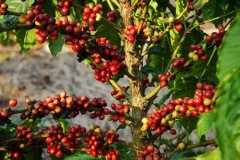
The process from fruit to raw coffee beans from harvest to delivery
A coffee tree can harvest 3-5 kg of fruit, and raw coffee beans account for 1. 5% of the fruit quality. Going from fruit to raw coffee beans is really a time-consuming and laborious task. Arabian, Robusta and Liberian Arabian coffee account for about 2% of the world's coffee production. The plant is not suitable for high temperature, low temperature, more rain and less rain. Coffee beans are oval and flat, with high quality
2015-08-24 Fruit coffee beans get delivery process one coffee tree can harvest 3-
The growth of a coffee bean from fruit to raw coffee bean
A coffee tree can harvest 3-5 kg of fruit, and raw coffee beans account for 1. 5% of the fruit quality. Going from fruit to raw coffee beans is really a time-consuming and laborious task. Arabian, Robusta and Liberian Arabian coffee account for about 2% of the world's coffee production. The plant is not suitable for high temperature, low temperature, more rain and less rain. Coffee beans are oval and flat, with high quality
2015-03-20 Fruit coffee beans one growth coffee tree can harvest 3-5 kg
Kenya Coffee-introduce how to debug the coffee grinder
Kenya is bordered to the north by Ethiopia, the origin of Arabica coffee trees, but it was not until the beginning of the 20th century that coffee cultivation began. In the 19th century, missionaries introduced Arabica trees from the leaves, but did not plant them in large quantities. It was not until 1893 that coffee was cultivated on a large scale because of the introduction of Brazil's ancient bourbon seeds. That is to say, Kenyan coffee is of Brazilian origin, because of water.
2016-06-12 Kenya coffee introduction bean grinder how debugging
Introduction to the flavor of Kenyan coffee
Kenya is bordered to the north by Ethiopia, the origin of Arabica coffee trees, but it was not until the beginning of the 20th century that coffee cultivation began. In the 19th century, missionaries introduced Arabica trees from the leaves, but did not plant them in large quantities. It was not until 1893 that coffee was cultivated on a large scale because of the introduction of Brazil's ancient bourbon seeds. That is to say, Kenyan coffee is of Brazilian origin, because of water.
2016-06-13 Kenya coffee flavor introduction
Introduction to the characteristics of the grindability of coffee from Tianyi Manor in Nicaragua
In order to ensure the quality of coffee, the manual picking method is used to pick the fully ripe fruits one by one, which usually takes three times to complete. Although the manual picking method has high labor cost and low picking efficiency, it can greatly protect the plant from being hurt in the picking process, and the mature fruit will have better sweetness at the same time.
2016-10-12 Feel refreshing Nicaragua providence manor coffee grinding features taste
The source of coffee, the method of making and blending coffee, and matters needing attention.
Coffee is the transliteration of English Coffee. It is a drink made from roasted coffee beans, ground into powder and then brewed.
2014-07-01 Coffee knowledge source of coffee coffee encyclopedia
Introduction to Los Congo Manor, the smallest Coffee growing area in Nicaragua
It is one of the smallest municipalities directly under the Central Government in Nicaragua, covering an area of 106 square kilometers. 90% of the population, 5000 of the residents live in rural areas. Dipilto is famous for its pine forests, warm climate, religion, people's loyalty and its high-quality coffee. Coffee cultivation is one of the traditions maintained by the local people of Dipilto. The fertile soil is full of organic matter, while
2016-07-15 Nicaragua small coffee growing area manor producing area introduction Los Congo
The process from fruit to raw coffee beans the basis of coffee beans
A coffee tree can harvest 3-5 kg of fruit, and raw coffee beans account for 1. 5% of the fruit quality. Going from fruit to raw coffee beans is really a time-consuming and laborious task. Arabian, Robusta and Liberian Arabian coffee account for about 2% of the world's coffee production. The plant is not suitable for high temperature, low temperature, more rain and less rain. Coffee beans are oval and flat, with high quality
2015-06-06 Fruit coffee beans process base one coffee tree can harvest 3-5 kg
Description of Guatemalan Coffee Flavor with slightly charcoal in aromatic Alcohol introduction to the production area of Grinding degree and taste
Guatemala is the most backward country in Central America. There is no farmland reform, but there are differences. Peasant families will always be farmers and employees will never change no matter how smart you are or how hard you try. It's a matter of course in this country. After leaving Oakland Manor, continue to drive about 5 hours to Vivette Nanguo area. To get to this manor, you have to climb by shuttle truck.
2016-10-07 Aromatic alcohol medium charcoal roast Guatemala coffee flavor description grinding mouth
There are several ways to turn coffee beans into coffee beans in the treatment of Lion King coffee beans in Sidamo.
Choose fresh coffee beans. When buying, pay attention to whether the color of the beans and the size of the particles are the same. Good coffee beans are shiny and have a strong aroma without being mixed with peculiar smell. No matter what kind of coffee beans, freshness is an important factor affecting the quality. When shopping, grab one or two coffee beans and chew them in your mouth with crisp sound (indicating that the coffee is not damp) and teeth and cheeks.
2016-04-21 Dharma Solar processing Lion King Coffee beans several kinds how to make Coffee
Basic knowledge of high-quality coffee beans the production process of coffee beans
A coffee tree can harvest 3-5 kg of fruit, and raw coffee beans account for 1. 5% of the fruit quality. Going from fruit to raw coffee beans is really a time-consuming and laborious task. Arabian, Robusta and Librian Arabian coffee account for about 2% of the world's coffee production. The plant is not suitable for high temperature, low temperature, more rain and less rain. Coffee beans are oval flat and have a high height.
2015-04-25 Boutique coffee beans basics common sense production process one coffee tree harvest
Introduction of coffee beans and coffee trees in Kenya
Kenya is bordered to the north by Ethiopia, the origin of Arabica coffee trees, but it was not until the beginning of the 20th century that coffee cultivation began. In the 19th century, missionaries introduced Arabica trees from the leaves, but did not plant them in large quantities. It was not until 1893 that coffee was cultivated on a large scale because of the introduction of Brazil's ancient bourbon seeds. That is to say, Kenyan coffee is of Brazilian origin, because of water.
2016-06-05 Kenya coffee beans coffee introduction
Tanzanian coffee characteristics Tanzanian coffee origin
There are two types of coffee farms in Kenya. One is a large plantation covering more than five acres, but the average elevation is lower. For Kenya coffee, the coffee beans of the large farm are only moderate in quality. The best Kenyan beans are grown on small farms, mostly in the foothills or firehills above five or six thousand feet. Each small farmer can produce only about 20 to 70 bags per season.
2016-05-29 Tanzania coffee characteristics origin
Using Fushan Coffee to tell the Story of Hainan Coffee in China
If 20 years ago, Fushan Coffee might have been very strange to many people, but today, Fushan Coffee has become synonymous with Hainan coffee brand. In 1976, when Xu Xiuyi, a farmer in Fushan Town, Chengmai County, led his family to open mountains and split mountains to plant coffee trees, he only thought of picking coffee fruits himself and making a cup of mellow and fragrant coffee for the villagers. In 1996, his son Xu Shibingfang
2015-08-07 Fukuyama Coffee telling Hainan Story China