“plantation.” search results (7367)
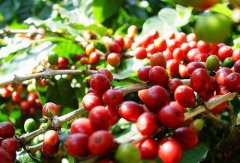
Fine Coffee from Farfell Coffee Plantation in Zimbabwe
Boutique coffee has a strict grading system. Generally, raw beans are preserved in parchment coffee beans in the form of endocarp after processing, and the endocarp is removed before export. Go through a strict grading process to ensure the uniformity of quality. And it is very important to preserve the protection in the process of transportation, such as the control of temperature and humidity, the control of ventilation, avoiding odor adsorption and so on.
2016-06-17 Zimbabwe Faroe Phil Manor Farfell
There are not many large-scale coffee plantations in Papua New Guinea.
There are not many large-scale coffee plantations in Papua New Guinea, and about 75% of the coffee comes from small local farmers.
2016-06-29 No too much large scale coffee plantation Papua New Guinea producing country introduction
Grade A coffee producing area of Ecuador, Santa Cruz, Galapagos Islands.
As coffee is consumed by people all over the world, the world coffee industry is also moving towards mass production, while St. Cristobal, a small and unreliable coffee industry, is in trouble and is likely to be forced to give up without profit. It wasn't until the early 1990s that the Gonzalez family bought Hasunda Coffee Park. Humboldt current (HumboldtC
2016-06-30 Ecuador coffee producing areas Lapa Goss archipelago Crewe Zizi island along with
Brazilian Coffee Datra Manor Plantation
The great economic crisis that broke out in 1929 sharply reduced the world consumption of coffee, which dealt a heavy blow to the Brazilian coffee plantation economy. Since then, the proportion of Brazilian coffee production in export earnings has plummeted. In the past 30 years, with the rise and development of Brazilian modern industry, especially steel, shipbuilding, automobile and aircraft manufacturing, the status of coffee in the national economy has declined year by year.
2016-06-14 Brazil Coffee Tara Manor Plantation 1929 outbreak Economic crisis
Coffee production in Cuba
In 1833, Cuba had 2067 coffee plantations. Among them, seven coffee plantation sites, such as La Gran Piedra, Elkofre, El Salvador and Nisto Perez, which were the earliest established coffee plantations, are listed as world cultural heritage sites. These seven coffee plantations were established in the 19th century in the foothills of Maestra in the provinces of Santiago and Guantanamo in southeastern Cuba (postcard in Figure 17).
2015-02-16 Global Coffee Origin Cuba Records 1833 Year 2067
Coffee basic knowledge Coffee Fruit Plantation
This 3-year-old Japanese girl, who speaks Mandarin in Yunnan, is always popular with farmers from all over the country. During the last picking season of coffee fruit, her parents Tian Daiju and Tian Daisi were the busiest. In this way, Tian Daihe has free space to haunt every corner of the coffee fruit manor. There are coffee fruits drying in the courtyard, these small white ones
2015-04-24 Coffee basics common sense fruit plantation this fuck a mouthful Yunnan ordinary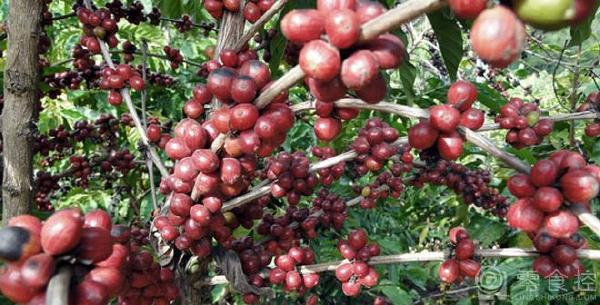
The latest news of the world coffee industry: the decline of coffee cultivation in Costa Rica
According to the Costa Rican "financier" newspaper reported on December 14. The planting area of coffee in Colombia has decreased by 6.4% in the past 30 years. It was 89881 hectares in 1984 and only 84133 hectares remained in 2015. Coffee gardens have to give up their land to real estate, especially in metropolitan areas. At the same time, the changes in coffee prices in the world have gradually reduced the profits of coffee cultivation, which are all placed on the main side of the coffee garden.
2015-12-23 World Coffee Industry latest Information Costa Rica farming decline Goss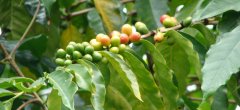
One of the main coffee producers on the island of New Guinea is the Siegel Plantation.
One of the main coffee producers in New Guinea is the Sigri plantation, whose products are the same as the overall style of archipelago coffee, full of particles and well balanced. On the whole, Indonesian coffee has a strong flavor, mellow taste, slightly syrup flavor and excellent acidity. Its two main export markets are Germany and Japan, which reflects the excellent quality of the coffee.
2016-05-18 Guinea main coffee producer first Gerry plantation
Introduction to the description of the Flavor of High-quality Coffee beans in the Coffee Variety producing area of Manor Ireta, Panama
Panama is rich in forest resources and has many tree species, including valuable wood such as mahogany, cedar, teak, mahogany, and cedar. The forest area of eastern Dalian Province is the most widely distributed, but it has not been fully developed due to lack of market and for reasons such as national defense and protection of the natural ecological environment. [5] according to FAO estimates in 2010, the forest area of Panama is 4.29 million hectares, accounting for the land area.
2016-09-23 Bana May Leeta Manor Coffee Variety producing area characteristics Fine goods Coffee beans
Ecuador, the highest Arabica coffee plantation in the world, introduces the coffee producing countries.
Ecuador is the highest Arabian coffee plantation in the world. Since the coffee tree was first introduced into Ecuador in 1875, the quality of its coffee has remained unchanged for 100 years, especially the coffee harvested in early June every year, which is known as the best coffee in the world. Ecuadorian coffee beans are divided into Galapagos and Segante, both of which have large particles and heavy weight.
2016-06-22 In the world altitude high Arab coffee plantation Ecuador producing country Jiuke
Coffee plantations in the Galapagos Islands Santa Cruz Manor
In 869, Mr. Manuel Coppos, the first owner of the Galapagos Islands, hoped to find a crop suitable for growing on his farm. He invited a team of French agronomists to visit the area, and finally they planted Arabica coffee trees on the Galapagos Islands for the first time. However, after several trials and tribulations, coffee was grown in the Galapagos Islands in 1915.
2016-06-17 Lapa Gus Islands Coffee Plantation Crewe Manor 869
Introduction to the characteristics of coffee flavor and taste of Manor Erida in Panama with fresh and elegant taste.
Panama is located in the isthmus of Panama in Central America, bordered by Colombia to the east, the Pacific Ocean to the south, the map of Panama to Costa Rica to the west and the Caribbean Sea to the north. The territory is S-shaped to connect North and South America, and the Panama Canal connects the Atlantic Ocean and the Pacific Ocean from north to south. It is said that Panama is rich in mineral resources, but it is not exploited much.
2016-09-09 Taste freshness elegance Panama Ellie Manor Coffee Flavor producing area
Which country is the largest coffee plantation and which is the most famous coffee plantation?
Kilimanjaro in Tanzania. A variety of coffee without acid that has a strong flavor and is noted for its versatility. Elegant coffee drinkers who want to feel exotic and boil your palate. The best choice is to taste the coffee of Kilimanjaro. The aroma and taste are enough to make the first coffee drinker feel the endless multi-tone taste. (11) Kona Coffee: Hawaii
2016-05-25 big coffee manor which country famous
Boutique Coffee Indonesia Coffee Plantation Indonesia Coffee Region
Coffee that refreshes you, ready to drink. Coffee is grown throughout Indonesia, and Java occupies an extremely important place in coffee history. Coffee trees were introduced to Indonesia by the Dutch in the mid-17th century (some official sources say earlier). 1712 The first coffee from Java arrives in Amsterdam. However, in 1877,
2016-05-13 boutique coffee Indonesia manor producing area make you refreshing can with
Coffee from Venezuela
Coffee trees were imported from Martinique as early as 1730, but coffee production was almost abandoned during the heyday of the oil industry. Coffee plantations have recently begun to revive, with the old Tipica and Bourbon trees and new plantations laying the groundwork for coffee exports.
2015-05-14 boutique coffee beans country of origin presentation venezuela coffee
The characteristics of Venezuelan coffee
Venezuela introduced coffee trees from Martinique as early as 1730, but coffee production was almost abandoned at the height of the oil industry. Recently, coffee plantations have begun to recover, with original Tipica and bourbon coffee trees and new plantations laying the foundation for coffee exports.
2015-03-26 Venezuelan coffee specialty
The coffee producing area of Venezuela.
Venezuela introduced coffee trees from Martinique as early as 1730, but coffee production was almost abandoned at the height of the oil industry. Recently, coffee plantations have begun to recover, with original Tipica and bourbon coffee trees and new plantations laying the foundation for coffee exports.
2015-02-16 Global Coffee Origin Venezuela
Coffee producing area-Venezuela
Oil was once considered to be the main export of Venezuela. Although coffee trees were introduced from Martinique in 1730 and Venezuela, coffee production was almost abandoned at the height of the oil industry. Recently, coffee plantations have begun to recover, with original Tipica and bourbon coffee trees and new plantations laying the foundation for coffee exports.
2014-08-21 Coffee knowledge coffee origin Venezuela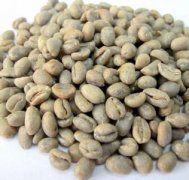
Global Coffee producing area Venezuela Coffee Market
Venezuela introduced coffee trees from Martinique as early as 1730, but coffee production was almost abandoned at the height of the oil industry. Recently, coffee plantations have begun to recover, with original Tipica and bourbon coffee trees and new plantations laying the foundation for coffee exports.
2015-08-24 Global coffee origin Venezuela market
Coffee origin Venezuela's very characteristic manor coffee
The distinctive manor coffee comes from this oil-rich country. Oil was once considered Venezuela's main export. Although coffee trees were introduced from Martinique as early as 1730 and Venezuela, coffee production was almost abandoned during the heyday of the oil industry. Coffee plantations have recently begun to revive, with the original plantations of Tipica and
2015-07-30 Coffee Origin Venezuela Very Characteristic Manor