“original leaf” search results (600)
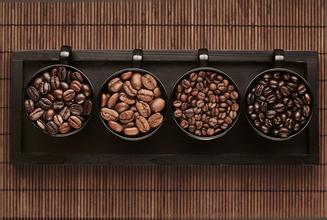
Morphology of quality species in Colombian coffee producing area
In terms of yield or texture, Colombian coffee is first produced by Medellin, which is characterized by full granules, rich nutrition, moderate acidity, good balance, rich aroma and soft taste. In addition to Medellin, the provincial capitals of two neighboring provinces in the south, Armenia and Manizales, are also famous coffee producers.
2016-06-01 Colombia coffee origin quality species morphology yield or texture brother
Learn more about coffee growing.
Buddha said, a flower a world, a leaf a bodhi. Instead of a coffee bean, I still look at this pure black liquid. After a year of growth, it has gone through harvesting, production, roasting, grinding, extraction, and finally condensed into that mellow taste. It's like everything that's been polished by time and hands, like wine, like jade, in a tiny void.
2014-10-17 Coffee knowledge Fine coffee learning Coffee growing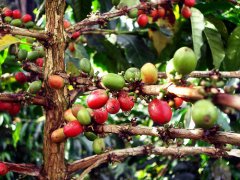
Plant classification of coffee beans
Green trees and Rubiaceae plants have been dominated by plants with special effects since ancient times, such as quinine tree, which is regarded as a specific drug for malaria, and Dugen, which is used to treat amigellosis. Coffee is positioned as the most unique alkaloid drinking plant group. Usually after sowing for two to three years, coffee trees can grow to a height of about five to ten meters, but to prevent coffee beans from losing their aroma and taste, and
2016-05-25 Coffee beans plants taxonomy trees grasses since ancient times special efficacy
Varieties and characteristics of Arabica Coffee
Arabica Coffee varieties and their characteristics Typica this is the closest Arabica species to the native species, almost all Arabica coffee varieties are derived from this. Used to be widely cultivated in Central and South America, the bean shape is long and has excellent sour taste and aroma, but it is not resistant to leaf rust and requires quite a lot of shading trees, resulting in low yield (sweet with bourbon every two years).
2014-09-12 Arabica Coffee varieties Coffee Encyclopedia Coffee knowledge
What kind of coffee beans do they belong to in plants
Coffee tree belongs to the evergreen tree of Rubiaceae. Since ancient times, most of the plants of Rubiaceae are plants with special effects, such as quinine tree, which is regarded as a specific drug for malaria, and Dugan, which is used to treat amoeba dysentery. Coffee is defined as the most unique alkaloid drinking flora.
2014-08-22 Coffee knowledge coffee beans plants
How to classify coffee beans
Plant classification Coffee tree belongs to the evergreen tree of Rubiaceae. Rubiaceae plants have been dominated by plants with special effects since ancient times, such as quinine tree, which is regarded as a specific drug for malaria, and Dugan, which is used to treat Amiba dysentery. Coffee is defined as the most unique alkaloid drinking flora. Usually after sowing for two to three years, coffee trees can grow to a height of about five to ten meters, but to prevent the loss of coffee beans.
2014-07-08 Coffee knowledge coffee bean classification coffee encyclopedia
Coffee knowledge Coffee Tree Classification
Arabica Coffee and Variety improvement. What do the so-called families, genera and species of Arabica species mean in biological classification? In terms of biological classification, it is divided into boundary, phylum, class, order, family, genus and species from top to bottom, and the lower part of the species is subdivided into subspecies, varieties and varieties. Arabica coffee is generally thought to originate from the Ethiopian plateau and is widely divided.
2014-09-15 Coffee knowledge coffee tree coffee tree classification
Species morphology of Colombian coffee-flavored coffee
The main varieties of Colombian coffee are small grains of coffee. Plants are small trees or large shrubs, 5-8 m tall, usually much branched at base; old branches gray-white, nodes dilated, young branches glabrous, compressed. Leaves thinly leathery, ovate-lanceolate or lanceolate, 6-14 cm long and 3.5-5 cm wide, tip long acuminate, acuminate part 10-15 mm long, base cuneate or slightly obtuse, rarely rounded, entire or
2016-06-05 Columbia Coffee Flavor species Morphology varieties Major
Classification and selection of coffee trees
Arabica Coffee and Variety improvement. What do the so-called families, genera and species of Arabica species mean in biological classification? In terms of biological classification, it is divided into boundary, phylum, class, order, family, genus and species from top to bottom, and the lower part of the species is subdivided into subspecies, varieties and varieties. Arabica coffee is generally thought to originate from the Ethiopian plateau and is widely divided.
2014-08-21 Coffee classification selection rabbi card species coffee varieties improved planted so-called
Arabica beans-- A family "genealogy" like rising day and moon
Arabica, (scientific name Coffea arabica, Coffee Arabica), also known as Arabica coffee, is an indigenous species of coffee grown on the Abyssinia Plateau of Ethiopia (present-day Ethiopian Plateau). According to textual research, it is the first artificially cultivated coffee variety in the world, one of the most important coffee tree species, and occupies the global coffee.
2014-08-29 Arabica bean
High-quality coffee common sense coffee tree classification selection
Arabica Coffee and Variety improvement. What do the so-called families, genera and species of Arabica species mean in biological classification? In terms of biological classification, it is divided into boundary, phylum, class, order, family, genus and species from top to bottom, and the lower part of the species is subdivided into subspecies, varieties and varieties. Arabica coffee is generally thought to originate from the Ethiopian plateau and is widely divided.
2015-01-08 Boutique coffee common sense classification selection rabbi card variety improvement
The classification of coffee beans. Classification of raw beans.
Plant classification Coffee tree belongs to the evergreen tree of Rubiaceae. Rubiaceae plants have been dominated by plants with special effects since ancient times, such as quinine tree, which is regarded as a specific drug for malaria, and Dugan, which is used to treat Amiba dysentery. Coffee is defined as the most unique alkaloid drinking flora. The fruit of coffee is made up of outer skin, pulp, endocarp, silver skin, and the species wrapped in the innermost layers mentioned above.
2016-03-21 Coffee planting raw beans fruits coffee beans classification plants coffee tree genus
Introduction of coffee beans from Colombian coffee producing countries that mainly grow small grains of coffee
Species Morphology Colombian Coffee Plant Morphology Colombian Coffee Plant Morphology (10) the varieties of Colombian coffee are mainly small grain coffee. Plants are small trees or large shrubs, 5-8 m tall, usually much branched at base; old branches gray-white, nodes dilated, young branches glabrous, compressed. Leaves thinly leathery, ovate-lanceolate or lanceolate, 6-14 cm long, 3.5-5 cm wide, tip long
2016-06-18 Main planting small grains Coffee Colombia country of production Coffee beans introduction species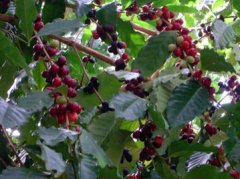
Basic knowledge of Coffee Coffee Tree Classification and growth picking period
Coffee tree belongs to the evergreen tree of Rubiaceae. Since ancient times, most of the plants of Rubiaceae are plants with special effects, such as quinine tree, which is regarded as a specific drug for malaria, and Dugan, which is used to treat amoeba dysentery. Coffee is defined as the most unique alkaloid drinking flora. The fruit of coffee consists of outer skin, pulp, endocarp, silver skin, and seeds (coffee beans) wrapped in the innermost layers mentioned above.
2015-03-11 Coffee basic knowledge classification growth picking coffee tree genus grass family evergreen Joe
Introduction to the flavor description of the coffee producing area of Santa Rita Manor, Colombia, with a soft and smooth taste.
Each caffeine variety has a different origin and has its own strong character, such as the masculine Mantenin, which resembles the character of an iron and steel man, and the mellow, fragrant Blue Mountain Coffee, which is called the gentle woman's yearning addiction. Columbia Super Coffee, which has always been light-scented, is the most suitable for those who like light sex. Such people do not want to drink coffee as a serious thing, from
2016-09-26 Taste soft slippery Columbia Santa Rita manor coffee producing area flavor
Coffee botany is mainly divided into the following five varieties
There are more than 60 types of coffee classified, but there are roughly two varieties of coffee grown commercially on a large scale, one is Arabica, accounting for about 70 percent of the world's coffee planting area, and the other is Robasta, accounting for about 30 percent of the world's coffee planting area. According to our national standards, the classification of coffee is mainly divided into the following five varieties. 1. Small seed coffee, that is, Arabian species. Original production
2015-07-28 Coffee botany mainly divided into the following a variety
Coffee bean production methods and production introduction
A brief history of coffee production In 1742, coffee was introduced into El Salvador from the Caribbean (one said 1740). In the mid-19th century, El Salvador's original export pillar Indigo (Indigo, a dye) gradually declined due to the development of synthetic dyes in Europe, and coffee gradually became the main export product under the leadership of the government. In 1856, the first 693 bags of coffee beans were shipped to Europe. always
2016-06-08 coffee beans production methods production introduction
Introduction to Coca Cauca Lazmus Manor, Columbia Coffee with mild Climate
The main varieties of Colombian coffee are small grains of coffee. Plants are small trees or large shrubs, 5-8 m tall, usually much branched at base; old branches gray-white, nodes dilated, young branches glabrous, compressed. Leaves thinly leathery, ovate-lanceolate or lanceolate, 6-14 cm long and 3.5-5 cm wide, tip long acuminate, acuminate part 10-15 mm long, base cuneate or slightly obtuse, rarely rounded, entire or
2016-07-05 Climate mild Columbia Coffee Cauca Raz Moss Chuang
Introduction to the flavor of Salvadoran coffee
A brief History of Coffee production in 1742, coffee was introduced to El Salvador from the Caribbean (1740). In the mid-19th century, El Salvador's original export pillar Indigo (one of the dyes) received a gradual decline in the development of synthetic dyes in Europe, and coffee gradually became the main export product under the guidance of the government. In 1856, the first 693 bags of coffee beans were shipped to Europe. all long
2016-06-13 El Salvador coffee flavor introduction
Classification of plant taste of coffee tree
Coffee tree belongs to the evergreen trees of Rubiaceae family. Since ancient times, most plants of Rubiaceae family have special medicinal effects. Quinine tree, which is regarded as a special medicine for malaria, and Dugen, which treats amigo dysentery, are examples. Coffee is positioned as the most unique alkaloid drinking flora. The fruit of coffee is composed of outer skin, pulp, endocarp, silver skin, and seed which is wrapped in the innermost layer by the above layers.
2016-06-02 coffee plant taste classification tree herbaceous evergreen