“not in AD” search results (700)

Coffee Culture the Development of Coffee in the World
Legend has it that in AD 600, there was a shepherd named Khatthiya in Ethiopia. One day he found his sheep very lively, constantly bouncing and not tired. He felt very strange. One day, he accidentally saw the sheep nibbling on some shiny red fruit. Khatthiya guessed that the cherry-like fruit must be acting strange. He also started
2014-11-05 Coffee culture coffee history coffee development history
Can coffee beans be eaten directly raw? how to eat coffee beans
Legend has it that around the tenth century AD, on the Ethiopian plateau of Africa, there was a shepherd named Karl. One day he suddenly looked excited and excited when he saw the goat. He thought it was strange, and then after careful observation, he found that the sheep were excited after eating some kind of red fruit. Carl tasted some curiously and found himself refreshed and excited after eating.
2016-05-25 Coffee beans yes directly eaten raw eaten methods legends AD 10th century before
Boutique Coffee. Do you know how the name coffee comes from?
It starts with the Ethiopian legend of the 5th century AD, when the sheep of the shepherd boy Kadi was so excited after eating a strange red fruit that Kadi and his companions could not help but give it a try, feeling refreshed and weary. Spread ten, ten hundred, this red fruit has since become a part of the local food culture, this red fruit is coffee. After that, coffee was introduced to Allah.
2014-10-14 Coffee knowledge boutique Coffee Coffee name
The earliest Arab way to eat coffee was to chew the whole fruit.
Do you know? The earliest Arabs ate coffee by chewing the whole fruit to absorb its juice. They then mixed the ground coffee beans with animal fat as a physical supplement for long trips, and it was not until about 1000 AD that the green coffee beans were boiled in boiling water to make an aromatic drink. It took another three centuries for the Arabs to open it.
2015-01-07 In the early days Arabs eating coffee way will whole fruit chewing knowing
The earliest Arab way to eat coffee was to chew the whole fruit.
Do you know? The earliest Arabs ate coffee by chewing the whole fruit to absorb its juice. They then mixed the ground coffee beans with animal fat as a physical supplement for long trips, and it was not until about 1000 AD that the green coffee beans were boiled in boiling water to make an aromatic drink. It took another three centuries for the Arabs to open it.
2015-07-30 In the early days Arabs eating coffee way will whole fruit chewing knowing
The earliest Arab way to eat coffee was to chew the whole fruit.
Do you know? The earliest Arabs ate coffee by chewing the whole fruit to absorb its juice. They then mixed the ground coffee beans with animal fat as a physical supplement for long trips, and it was not until about 1000 AD that the green coffee beans were boiled in boiling water to make an aromatic drink. It took another three centuries for the Arabs to open it.
2014-07-16 Coffee knowledge ways of eating coffee chewing coffee fruit
The earliest way to eat coffee was to chew the whole fruit.
Do you know? The earliest Arabs ate coffee by chewing the whole fruit to absorb its juice. They then mixed the ground coffee beans with animal fat as a physical supplement for long trips, and it was not until about 1000 AD that the green coffee beans were boiled in boiling water to make an aromatic drink. It took another three centuries for the Arabs to open it.
2014-09-16 Coffee knowledge coffee consumption earliest coffee consumption whole fruit
Coffee culture Arabs eat coffee by chewing the whole fruit.
Do you know? The earliest Arabs ate coffee by chewing the whole fruit to absorb its juice. They then mixed the ground coffee beans with animal fat as a physical supplement for long trips, and it was not until about 1000 AD that the green coffee beans were boiled in boiling water to make an aromatic drink. It took another three centuries for the Arabs to open it.
2015-10-17 Coffee culture Arabs eating coffee way will whole fruit chewing
Siphon kettle
Siphon coffee originated in 1950 AD, some people call it an air stopper, a distilled coffee pot or a vacuum pot. It is interesting to watch and have the extraction process of performing arts, which is no stranger to many people.
2014-07-25 Coffee knowledge siphon pot coffee encyclopedia
A comprehensive analysis of mocha coffee the difference between single mocha coffee and Italian mocha coffee
In 575 AD, the first coffee bean took root on the other side of the Red Sea in Yemen, far from its hometown of Ethiopia. It was transformed into mocha coffee, and it started the coffee business all over the world. What is a mocha? There are many kinds of answers. Some people say that mocha refers to the place of origin. Some people say that mocha refers to sweet chocolate coffee. In fact, both views are biased. Authentic
2015-12-07 About Mocha Coffee Comprehensive Analytical individual Italian Coffee area not in AD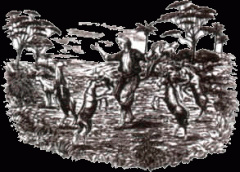
The Origin of Coffee-the Legend of Shepherd
It is said that in the 10th century AD, on the land of the Ethiopian plateau in Africa, there was a shepherd named Karl. One day, he saw his flock of goats suddenly looking excited and abnormal. He thought it was very strange, so he observed them carefully and finally found that the reason why the goats were excited was because they ate the red fruit on the tree. Carl, full of curiosity, couldn't help it.
2015-08-31 Coffee Origin Shepherd Human Legend 10th Century successively Fei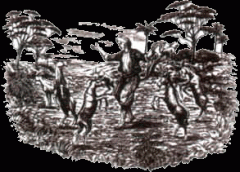
Legend of the Shepherd in the History of Coffee
It is said that in the 10th century AD, on the land of the Ethiopian plateau in Africa, there was a shepherd named Karl. One day, he saw his flock of goats suddenly looking excited and abnormal. He thought it was very strange, so he observed them carefully and finally found that the reason why the goats were excited was because they ate the red fruit on the tree. Carl, full of curiosity, couldn't help it.
2014-09-25 Coffee culture coffee history the origin of coffee the legend of shepherds
Introduction to the characteristic flavor and taste of Colombian boutique coffee manor with rich taste and endless aftertaste
About 1000 BC, there was a hunter-gatherer society near Bogota today. Around 1000 AD, the American Indians created a political system. It is a pyramid-shaped structure with the top of the tower as the leader. In today's Colombia, two civilizations have adopted this complex system. One is Tayronas in the Caribbean region, and the other is Bogota
2016-09-02 Taste rich aftertaste endless Columbia boutique coffee manor producing area
World & A brief introduction to the spread History of Coffee in China
Origin: coffee was first discovered in the kaffa region of southern Ethiopia in the 6th century AD. So far, there is no specific historical data about the origin of coffee, what has been handed down are several different legends, but it is more recognized that Cuddy, the shepherd, discovered the coffee. Legend has it that Kadi, a shepherd in Kafa province in southern Ethiopia, drives his sheep every day.
2014-09-11 Coffee culture coffee spread in China coffee spread in the world.
What is health coffee?
At present, coffee has become an indispensable drink in our lives, but in the long journey of looking for coffee, we seem to feel the endless romance of people's enthusiasm and adventure. In the quiet depths of the forest, how did the coffee of keeping in good health be discovered? This comes from the doctrine of Islam. In the 12th century AD, there was a famous tribal name in China.
2014-08-07 Coffee knowledge Health Coffee Coffee Encyclopedia
Classification of coffee classification steps of raw coffee after processing
Coffee beans that have been dried or fermented can be stored. At this time, the coffee beans lost most of their moisture, and there was a parchment-like coat on the outside. People in the coffee industry called this ad valorem coffee. This parchment coat needs to be removed before the coffee beans are exported; removal can be done with a pressing, rolling or shelling machine. Sometimes, coffee beans are polished before they are exported.
2014-09-13 Coffee knowledge coffee bean classification coffee encyclopedia
What are the origins and legends of coffee
1. The Story of the Shepherd legends around the 10th century AD, on the Ethiopian plateau of Africa, there was a shepherd named Karl. One day he saw the goats suddenly looking very excited and excited. He thought it was strange, and then after careful observation, he found that the sheep were excited after eating some kind of red fruit. Carl tasted some curiously and found that he also felt after eating it.
2016-06-13 Coffee everything what origin legend shepherd human story AD
Roasting and taste of coffee
Since the Arabs discovered the coffee beans, the first way to eat them is to put the whole fruit of the coffee into the mouth and chew it to get its juice. Later, they ground the coffee beans from the fruit and mixed them with animal fat as a physical supplement for caravans to trade far away. After that, around 1000 AD, it was changed to the method of boiling raw beans into soup. Until 13.
2014-07-04 Coffee roasting coffee roasting and taste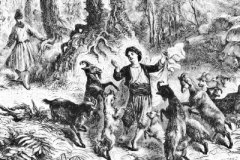
World & A brief introduction to the Development History of Coffee in China
Origin: coffee was first discovered in the kaffa region of southern Ethiopia in the 6th century AD. So far, there is no specific historical data about the origin of coffee, what has been handed down are several different legends, but it is more recognized that Cuddy, the shepherd, discovered the coffee. Legend has it that Kadi, a shepherd in Kafa province in southern Ethiopia, drives his sheep every day.
2014-09-02 Chinese Coffee Chinese Coffee History
History of coffee cultivation
In fact, the Arabs began to grow coffee in 525 BC, and chewing fried coffee beans became popular in the Arab region. In 890 AD, Arab merchants sold coffee beans to Yemen, and Yemenis made coffee beans into drinks for the first time. In the 15th century, coffee was introduced into Europe, Asia and soon into America. By the 18th century, tropical and subtropical regions around the world were widespread.
2014-08-08 Coffee planting history in fact BC 525 Arabs began