“mayor” search results (290)

Yunnan Coffee sets up its own door
The rapidly expanding coffee industry in Yunnan suffered a cold spell in the market last year.
2014-07-14 Coffee News Yunnan Coffee Coffee production Coffee Encyclopedia
Starbucks Coffee Company and Pu'er Municipal Government join hands with Coffee Industry
Starbucks Coffee Company and Pu'er Municipal Government join hands in Coffee Industry on November 12, 2010, Starbucks Coffee Company signed memorandums of understanding with the Yunnan Academy of Agricultural Sciences and the people's Government of Pu'er City, respectively. It marks the milestone of Pu'er City and Starbucks Coffee Company, and also marks the beginning of Pu'er coffee industry towards large-scale, intensive, standardized, export-oriented, brand.
2014-05-29 Starbucks coffee coffee industry Pu'er
Summary of Coffee Transmission path Sunshine Cooperative Fair Trade washing Office in Peruka Hamaka producing area, Peru
① coffee seeds were first brought into the Mysore Mountains of India by the Islamic Ranger Babudan in 1600, and by 1840, the British began to grow coffee on a large scale in India. ② in 1616 Dutch merchants introduced the first coffee tree from Mocha, Yemen. ③ in 1658 the Dutch began to grow coffee in Ceylon (now Sri Lanka). ④ in 1699 some coffee trees came from
2016-04-15 Coffee spread path Summary Peru Caha Maka producing area Yang
The smallest town in the United States has been auctioned into a coffee center.
China news agency, New York, Sept. 3-Buford, the smallest town in the United States with a history of 147 years, was auctioned by the only resident of the town for $900000 last year. On the 3rd, the new owner, 38-year-old Vietnamese businessman Nguyen Dinh Pham, announced plans to transform the town into a coffee sales center at the opening ceremony of the town. Located in eastern Wyoming.
2014-04-27 All-American small town auction gorgeous transformation coffee center China News Service New York 9
Pu'er coffee accounts for half of the country's Nestl é purchases of 1/3 a year.
At present, the planting area and output of Pu'er coffee has accounted for half of the country, among which Nestle has become the largest buyer of Pu'er coffee (commercial coffee rice), accounting for about 1/3 of the total Pu'er coffee every year.
2014-06-10 Coffee news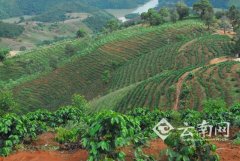
Coffee cultivation in Lincang City has become the second largest coffee producing area in Yunnan.
It was learned from the conference on the development and promotion of coffee industry in Lincang City, Yunnan Province that by the end of 2013, the coffee planting area in Lincang City had reached 554200 mu, making it the second largest coffee producing area in Yunnan.
2014-06-05 Coffee News Lincang Coffee Coffee cultivation Yunnan Coffee
The planting area and output of Pu'er coffee account for half of the country.
At present, the planting area and output of Pu'er coffee has accounted for half of the country, among which Nestle has become the largest buyer of Pu'er coffee (commercial coffee rice), accounting for about 1/3 of the total Pu'er coffee every year.
2014-07-09 Pu'er Coffee planting Coffee Manor
Yunnan Coffee wants to compete for pricing Power
From 390000 mu five years ago to 1.3 million mu in 2012, the rapidly expanding Yunnan coffee industry suffered a cold spell in the market last year.
2014-07-14 Coffee news Yunnan coffee coffee price Yunnan coffee price
The Historical Origin of Rwandan Coffee
Historical editors originate that Rwandans have been growing coffee since colonial times, but until 1999, its products were still classified as below Class C and were not popular in the global market. The reason for the poor quality is that farmers do not have a fixed procedure for washing coffee beans and do not process coffee fruits according to specifications in time. Buyers buy coffee beans at $0.33 per kilogram, which farmers earn at low prices.
2016-06-01 Rwanda Coffee History Origin Editor Human self colonization
International coffee giant Starbucks and Yunnan coffee enterprises
Yunnan local coffee company Aixing Group and international coffee giant Starbucks formally signed a cooperation agreement in Yunnan to set up a joint venture company in Yunnan. Why Yunnan Aiyi Group is admired by international coffee giants? The mystery was unveiled at a media meeting held a few days ago.
2014-07-14 Coffee news Starbucks coffee Yunnan coffee enterprises
The Fushan International Barista Championship ends and the Korean boy wins the championship.
People's Daily online, Hainan, June 10 / PRNewswire-Asianet /-- this afternoon, the two-day second China Fushan Coffee Cup International barista Championship ended in Fushan Coffee Culture Town, Chengmai County. Kin Jim Kyu, a young man from South Korea, won the championship with excellent performance. He Hongchao of China and Jian Jia of Taiwan of China
2014-04-27 Fukuyama International Coffee Championship closing Korea Boy Champion contestant
Uganda Coffee Flavor description characteristics of varieties in producing areas introduction and treatment of grindability and price of fine coffee
The cultivation of coffee in Uganda is all small-scale family operation. The livelihood of 25% of the population is closely related to coffee production. About 500000 farms grow coffee, but mainly Robster. Robster accounts for 90% of coffee production, and the remaining 1 is Arabica coffee. Arabica and Live Buster are harvested from October to February of the following year. Ugandan coffee
2016-10-07 Uganda coffee flavor description taste variety producing area characteristics boutique grinding
Pu'er tea villagers: growing coffee is far more profitable than growing tea.
After the price of Pu'er tea is on a roller coaster, Pu'er tea village is transforming to a coffee producing area. Pu'er City, Yunnan Province, which gets its name from tea, has become the most widely planted and most productive coffee producing area in China in recent years.
2014-06-04 Coffee news growing coffee Pu'er coffee
For Rwandan coffee beans, it is better to buy raw beans or roasted beans.
Rwandans have been growing coffee since colonial times, but until 1999, its products were still classified as below Class C and were not popular in the global market. The reason for the poor quality is that farmers do not have a fixed procedure for washing coffee beans and do not process coffee fruits according to specifications in time. Buyers buy coffee beans at $0.33 per kilogram, and farmers keep warm by the meagre profits earned at low prices.
2016-05-23 Rwanda coffee beans flavor household use buy raw beans or already baked
Introduction of washed Rwanda coffee beans classification of fine coffee
Rwandans have been growing coffee since colonial times, but until 1999, its products were still classified as below Class C and were not popular in the global market. The reason for the poor quality is that farmers do not have a fixed procedure for washing coffee beans and do not process coffee fruits according to specifications in time. Buyers buy coffee beans at $0.33 per kilogram, and farmers keep warm by the meagre profits earned at low prices.
2016-06-28 Washing Rwanda coffee beans introduction boutique coffee classification people from
Rwanda Malaba Coffee introduces the treatment of boutique coffee
Rwandans have been growing coffee since colonial times, but until 1999, its products were still classified as below Class C and were not popular in the global market. The reason for the poor quality is that farmers do not have a fixed procedure for washing coffee beans and do not process coffee fruits according to specifications in time. Buyers buy coffee beans at $0.33 per kilogram, and farmers keep warm by the meagre profits earned at low prices.
2016-06-29 Rwanda Malaba Rabbah coffee introduction boutique treatment way method Lu
Introduction of Ugandan coffee bean flavor manor with unique papaya flavor
The coffee growing industry in Uganda is one of the pillar industries of its exports. Uganda is the birthplace of Robsta in Africa, just as Ethiopia is the origin of Arabica coffee, while Robster coffee was first discovered in Uganda. So far, Uganda has a history of growing coffee for more than 100 years. The output ranks second in Africa, after Ethiopia. At the same time, Uganda is also a minority in Africa.
2016-06-29 With unique papaya Uganda coffee beans flavor manor producing area introduction Wu
Introduction of Ugandan coffee beans with mild climate and suitable for growing coffee
Uganda leads Africa in coffee production, accounting for more than 70% of its total exports. In the 1960s, Ugandan coffee production remained at 3.5 million bags a year. By the mid-1980s, coffee production had dropped to 2.5 million bags a year, mainly for political reasons. But now coffee production is on the rise again, currently about 3 million bags a year. Mainly exported to the European Union, including Germany and Italy
2016-06-28 Climate mild suitable planting coffee Uganda coffee beans introduction
The origin of coffee beans in Rwanda Coffee bean powder is too weak.
The Rwandans of origin have been growing coffee since colonial times, but until 1999, its products were still classified as below Class C and were not popular in the global market. The reason for the poor quality is that farmers do not have a fixed procedure for washing coffee beans and do not process coffee fruits according to specifications in time. Buyers buy coffee beans at $0.33 per kilogram, and farmers rely on the meagre profits earned at low prices.
2016-06-13 Rwanda coffee beans origin coffee bean powder brewing too light
Introduction to the flavor and taste of Rwanda boutique coffee Malaba coffee
After the washed coffee beans are air-dried on the net rack, after washing the coffee beans many times to completely remove the remaining skin and sugary outer layer, the coffee beans are put into the sheltered rack to air-dry. Cooperative staff regularly flip coffee beans, while technicians continue to look for and pick out poor quality coffee beans. The two-week drying process takes place in the sun (preparing mulch in case of rain), but not
2016-08-29 Send out come out smell aroma Rwanda boutique coffee Malaba Rabbah wind