“large-scale” search results (1550)

Countries use coffee by-products to develop drinks
Recently, Belgium has made a material from the pulp of a new variety of white coffee, which has the same ingredients as ordinary coffee, but milky white, easy to digest and absorb, and has a variety of health functions. The creators have not only broadened the utilization of waste pulp, but also used this raw material to make coffee soda, which is quite suitable for athletes and people with indigestion. Not long ago, Japan's New Century Food
2015-06-27 Countries utilization coffee product development drinks
Countries use coffee by-products to develop drinks
Recently, Belgium has made a material from the pulp of a new variety of white coffee, which has the same ingredients as ordinary coffee, but milky white, easy to digest and absorb, and has a variety of health functions. The creators have not only broadened the utilization of waste pulp, but also used this raw material to make coffee soda, which is quite suitable for athletes and people with indigestion. Not long ago, Japan's New Century Food
2015-08-19 Countries utilization coffee product development drinks
Boutique Coffee-Sumatra Manning (Sumatra Mandheling)
Mantenin coffee beans have a strong aroma and low acidity, with a hint of herbs and earth. The Dutch introduced Arabica seedlings to Ceylon (present-day Sri Lanka) and Indonesia for the first time in the 17th century. In 1877, a large-scale coffee rust hit the Indonesian islands, destroying almost all coffee trees. People had to abandon Arabica, which had been in operation for many years, and introduce it from Africa.
2014-09-13 Boutique coffee Sumatra manning boutique coffee beans
Boutique coffee beans coffee varieties Sumatra manning
Mantenin coffee beans have a strong aroma and low acidity, with a hint of herbs and earth. The Dutch introduced Arabica seedlings to Ceylon (present-day Sri Lanka) and Indonesia for the first time in the 17th century. In 1877, a large-scale coffee rust hit the Indonesian islands, destroying almost all coffee trees. People had to abandon Arabica, which had been in operation for many years, and introduce it from Africa.
2015-01-04 Boutique Coffee beans Coffee varieties Sumatra Mant fragrance
Flavor description of Ethiopian Coffee introduction to planting Environment
Large-scale coffee-growing villages account for about 35% of the country's total coffee production. These coffee farms, which use a multi-tier coffee planting system, are carefully cared for. Coffee farmers do not use chemical fertilizers, but use fallen leaves and animal and plant debris to increase soil nutrition. In addition to coffee, farmers also frequently grow non-coffee crops. It even accounts for the total amount of coffee in the country.
2016-09-19 Ethiopia coffee flavor description planting environment introduction large area
Sumatra Lindong Coffee Flavor and taste introduction to the characteristics of Fine Coffee in the Manor area
Mantenin's leaping acid mixes with the richest aroma, giving you a relaxed body flavor to a lively factor in a mild fragrance, and its outstanding taste captivates many suitors. In the 17th century, the Dutch introduced Arabica seedlings to Ceylon (present-day Sri Lanka) and Indonesia. In 1877, a large-scale disaster hit the Indonesian islands, and coffee rust destroyed.
2016-08-29 Sumatra Lindong coffee flavor taste manor producing area characteristics boutique introduction
Introduction to boutique coffee beans-- the characteristics of Mantenin Coffee
The Dutch introduced Arabica seedlings to Ceylon (present-day Sri Lanka) and Indonesia for the first time in the 17th century. In 1877, a large-scale coffee rust hit the Indonesian islands, destroying almost all coffee trees. People had to give up Arabica, which had been in operation for many years, and introduced Robsta coffee trees with strong disease resistance from Africa. Indonesia today is a coffee producer.
2016-03-24 Boutique coffee beans introduction Mant coffee characteristics taste 17th century Dutch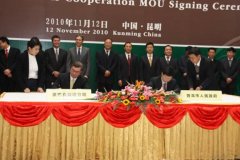
Starbucks Coffee Company and Pu'er Municipal Government join hands with Coffee Industry
Starbucks Coffee Company and Pu'er Municipal Government join hands in Coffee Industry on November 12, 2010, Starbucks Coffee Company signed memorandums of understanding with the Yunnan Academy of Agricultural Sciences and the people's Government of Pu'er City, respectively. It marks the milestone of Pu'er City and Starbucks Coffee Company, and also marks the beginning of Pu'er coffee industry towards large-scale, intensive, standardized, export-oriented, brand.
2014-05-29 Starbucks coffee coffee industry Pu'er
Introduction to Tanzania Coffee, which is mainly based on coffee as one of the coffee-producing countries.
The coffee beans produced here are all exported from Kilimanjaro, but in addition to Mount Kilimanjaro, there are several major coffee producing areas throughout Tanzania, there are more small farms in other areas, and most small farms also have a planting area of several hundred mu. Some have their own washing equipment and bean drying farms, but the grading treatment still has to go through large-scale treatment.
2016-06-18 To introduce coffee as the economy one of the producing countries Tanzania.
Introduction to the flavor and taste characteristics of Ethiopian coffee manor with fragrant and mellow smell
Ethiopian coffee beans grow in close to the natural environment. After years of planting under the same growth conditions, Ethiopian coffee beans have gradually adapted to the environment here. More than 60% of coffee beans are grown in forests or semi-forests. Large-scale coffee-growing villages account for about 35% of the country's total coffee production.
2016-09-13 Smell mellow thick Ethiopia coffee manor producing area flavor taste
An introduction to Mantenin Coffee, a fine coffee bean growing in the plateau and mountain area at an altitude of 750-1500 meters.
The gentleman in coffee, Sumatra Manning, is a fine coffee bean growing in the plateau and mountain area at an altitude of 750-1500 meters. In the 17th century, the Dutch first introduced Arabica saplings to Ceylon (present-day Sri Lanka) and Indonesia. In 1877, a large-scale disaster hit the Indonesian islands. Coffee rust destroyed almost all the coffee trees and people had to put them.
2016-06-22 Grow in altitude 750 1500 m plateau mountain fine coffee beans man
Good water, good coffee. Water with too much mineral content is not suitable for making coffee.
Water with too much mineral content is not suitable for making coffee, but distilled water completely free of minerals, although the purest, sanitary and safe, always feels empty and boring when drinking. If distilled water is used to make coffee, it will taste something less. I once drank a cup of musty water when I dined in a large-scale western restaurant. I don't know if the cup was not washed clean or how.
2015-08-20 good water coffee minerals excessive high unsuitable preparation
Full fruit and good average quality coffee flavor taste in Xidamo Chiso producing area of Ethiopia
March 1988, rebel activities of the Eritrean people's Liberation Front (EPLF) and Tigre people's Liberation Front (TPLF) launched an attack on government forces, a large-scale civil war broke out. In 1989, the Eritrean people's Liberation Front occupied most of Eritrea's province. On May 28, 1991, EGF troops, mainly from the people's Liberation Front of Tigre, entered Addis Ababa, Menges.
2016-09-01 Fruit plump average quality good Ethiopia Dharma Shaquiso producing area
Introduction to the characteristics of Flavor description Grinding degree of Coffee Variety in Ethiopian Coffee Manor
Large-scale coffee-growing villages account for about 35% of the country's total coffee production. These coffee farms, which use a multi-tier coffee planting system, are carefully cared for. Coffee farmers do not use chemical fertilizers, but use fallen leaves and animal and plant debris to increase soil nutrition. In addition to coffee, farmers also frequently grow non-coffee crops. It even accounts for the total amount of coffee in the country.
2016-10-12 Ethiopia coffee manor taste variety producing area flavor description grinding
Arabica Coffee Variety Flavor taste Manor area introduces the characteristics of Arabica coffee beans
Arabica (Coffea arabica) is the most traditional Arabica coffee variety. Originally from East Africa, coffee was monopolized by the Arab world for a long time before the 15th century, so it was called Arabian coffee by Europeans. It turned out that all the commercial coffee in the world were small grains, but it was only at the end of the 19th century that growers began to look for other resistance to a large-scale disease.
2016-07-25 Arabian coffee variety flavor taste manor producing area introduction rabbi
Introduction of Coffee Bean growing Environment in Ethiopia
Ethiopian coffee beans grow in close to the natural environment, after years of planting under the same growth conditions, Ethiopian coffee beans have gradually adapted to the environment here. More than 60% of coffee beans are grown in forests or semi-forests. Large-scale coffee-growing villages account for about 35% of the country's total coffee production. Many of these are used.
2016-07-05 Ethiopia coffee beans growth environment introduction coffee manor producing area
Mantenin coffee beans with the strongest aroma
Mantenin's leaping acid mixes with the richest aroma, making your relaxed body manning coffee lively in a mild fragrance, and its outstanding taste captivates many suitors. In the 17th century, the Dutch introduced Arabica seedlings to Ceylon (present-day Sri Lanka) and Indonesia. In 1877, a large-scale disaster struck Indonesia
2016-06-30 Mix most full-bodied fragrance Mant Coffee beans Jump slight Acid blend
Good water, good coffee. What kind of water do you want to make a cup of coffee?
Water with too much mineral content is not suitable for making coffee, but distilled water with no minerals at all, although it is the purest, sanitary and safe, always feels empty and boring to drink. If distilled water is used to make coffee, there is something missing in taste. When I was eating in a large-scale western restaurant, I drank a glass of musty water. I don't know if the cup didn't wash clean, or how.
2015-04-03 Good water coffee a cup what minerals measured high unsuitable made
Manning Coffee-the origin of the amorous feelings name
Mantenin's leaping acid mixes with the richest aroma, giving you an easy taste of the lively factor in a mild fragrance, and its outstanding taste captivates many suitors. In the 17th century, the Dutch introduced Arabica seedlings to Ceylon (present-day Sri Lanka) and Indonesia. In 1877, a large-scale disaster hit the Indonesian islands, and coffee rust destroyed several
2016-05-31 Mante coffee amorous feelings name origin mantra jumping slightly sour mixing the most
Sumatra Lindong Lake Coffee Bean Manning Coffee introduction
Mantenin's leaping acid mixes with the richest aroma, making your relaxed body manning coffee lively in a mild fragrance, and its outstanding taste captivates many suitors. In the 17th century, the Dutch introduced Arabica seedlings to Ceylon (present-day Sri Lanka) and Indonesia. In 1877, a large-scale disaster struck Indonesia
2016-06-05 Sumatra Lindong Lake East Lake Coffee beans Mante Coffee introduction Jump