“growth” search results (10393)
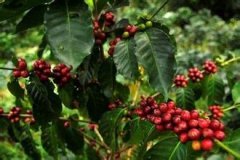
What kind of fine coffee is the coffee tree planted in shade?
First of all, there are some reasons why shade planting has become an advantage. When coffee is planted in the shade of other vegetation, biodiversity provides favorable conditions for its growth. Native plants that provide shade for coffee range from forest plants such as cedar to fruit trees such as banana, orange, lemon, avocado and litchi.
2016-06-12 Shading planting coffee how boutique first of all shading the reason why
Colombian coffee has excellent conditions for the growth of boutique coffee.
The Colombian Coffee producers Association (Federacion Nacional de Cafeteos de Clolmbia), known as [FNC] for short in the industry, introduced the two main varieties of Colombian coffee, Kaddura and Colombia. Kaddura, which was introduced from Brazil in the 1960s, now accounts for 45-50% of the country's output and has replaced the earliest Tibica. A new variety with the same name as Colombia [Colombia]
2015-09-24 Columbia coffee has fine long excellent condition Colombia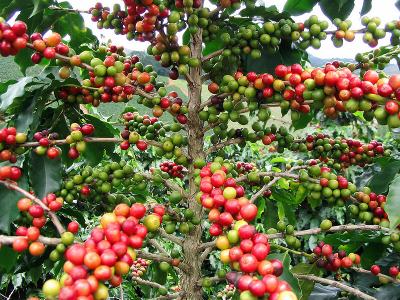
Fine coffee beans: 4 forms of Ethiopian coffee growing and producing
Growth and production patterns: There are four growth and production patterns in Ethiopia, from which 95% of coffee is produced. 1. Forest In Ethiopia's coffee-producing areas in the south and south-west, most of them are wild or planted under natural forests, which provide natural shade for coffee trees, but the resistance is slightly weak. This production system accounts for about
2015-12-07 boutique coffee beans esoteric bea coffee growing production 4 species morphology
What are organic coffee beans?
In many parts of the world, growers use pesticides to control the growth of coffee pests, and moist and foggy coffee at high altitudes are more vulnerable to fungi, so growers often use pesticides to treat them. Many people believe that coffee can be called organic coffee as long as synthetic pesticides, herbicides and chemical fertilizers are not used during coffee growth. in fact, it is only in third parties (except coffee makers and producers).
2014-07-03 Organic coffee beans fine coffee beans
What is organic coffee beans Organic Coffee organic coffee
In many parts of the world, growers use pesticides to control the growth of coffee pests, and moist and foggy coffee at high altitudes are more vulnerable to fungi, so growers often use pesticides to treat them. Many people believe that coffee can be called organic coffee as long as synthetic pesticides, herbicides and chemical fertilizers are not used during coffee growth. in fact, it is only in third parties (except coffee makers and producers).
2015-10-13 What organic coffee beans Organic Coffee coffee alive?
How to brew Yunnan small Coffee Flavor description how to deal with the characteristics of varieties and growth environment
Although Yunnan coffee Zhu Kula is poor and backward, it has an inextricable bond with coffee. In addition to growing coffee all over the country, the villagers all have a tradition of drinking coffee: self-growing, self-grinding and self-brewing, and now men, women and children in the village have the habit of drinking coffee. The villagers here have a special affection for coffee trees, even if the coffee beans do not bring them any economic benefits.
2016-10-20 Yunnan small grains coffee how brewing way flavor description treatment
Introduction of Coffee planting techniques and growth habits introduction of planting methods of Coffee trees
Field management of loosening soil and weeding: when the seedling height is 3cm to 6cm, the weak or overdense seedlings are pulled out; when the seedling height is 10cm and 13cm, the plant distance is about 30cm. Soil loosening and weeding were carried out at the same time between seedlings and fixed seedlings to keep the soil loose. Coffee beans are more drought-tolerant, and the soil can grow normally when the soil moisture is maintained. During the drought, the coffee beans should be properly watered, but there should be less squatting seedlings during the seedling fixing period.
2016-07-27 Coffee planting technology growth habits introduction methods field management soil loosening hoe
How many varieties of coffee are grown in Taiwan?
However, due to different climate, soil and other conditions, the growth of coffee in Zhaoqing encountered many problems. Mr. Lin, the manager of the coffee farm, told reporters that the coffee tree is not resistant to strong light and needs proper shade. If the light is too strong, it will inhibit its growth. Unlike the environment in which coffee trees are planted in Taiwan, it is an all-sunshine environment, and strong light may cause coffee flowers.
2016-07-13 Taiwan coffee manor producing area introduction planting number variety however due to
The growth process from Coffee Tree to Coffee Bean
Coffee tree, a perennial evergreen shrub or small tree of Rubiaceae, is a horticultural perennial cash crop with the characteristics of fast growth, high yield, high value and wide market. Wild coffee trees can grow to a height of 5 to 10 meters, but coffee trees planted on the manor are often cut to less than 2 meters in order to increase their fruit and facilitate harvesting. The opposite leaves of coffee trees are long oval.
2016-05-06 Coffee coffee beans growth process production process
Introduction to the planting technology of coffee the planting conditions and distribution of coffee
Coffee planting conditions and distribution 1. What is coffee? Coffee (Coffee) is derived from the Latin word Coffea (biological word name) and belongs to a member of the Rubiaceae family. These plants are all woody plants, most of which are distributed in the tropics, with more than 500 classifications and about 6000 varieties. Most of the Coffea plants are tropical 5-6 meters high.
2016-07-11 Coffee planting technology introduction condition distribution coffee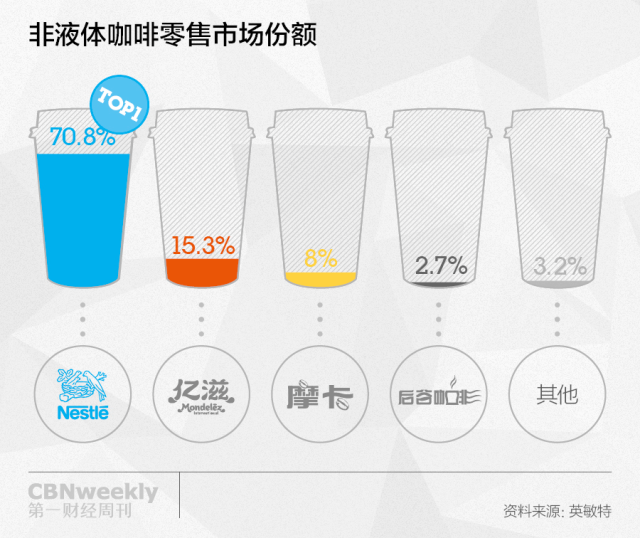
Instant Coffee Market Growth Slows, Nestle Lacks High Growth Potential
What about the world's largest food retailer, which is slowing down the instant coffee market, lacks brands with high growth potential and struggles to integrate with local companies? Nestle, the world's largest food company, has tasted the bitter taste of coffee in the Chinese market. Five years later, Nestle replaced the full package of instant coffee. The classic coffee color was replaced with a bright red, and the salesman did so
2016-07-14 instant coffee market growth slowdown nestle lack high potential
The branches of coffee
The branches of coffee can be divided into the following categories according to their growing position and growth direction: a branch: there are two kinds of buds in the axils of the main leaves of coffee. The opposite branch is drawn laterally from the upper bud of the trunk (developing at the same time as the terminal bud of the trunk), which is called a branch. Second branch: a branch drawn from the axil of a branch at an angle of 45-60 degrees is called a second branch, which is shorter than a branch. A branch regularly drawn from the axils of a bifurcated leaf.
2014-08-07 Coffee branches coffee according to their birth position and growth direction divided into
Development trend of Native Coffee varieties in China
Recently, some friends have been discussing the issue of coffee varieties with me. In fact, I pay more attention to the introduction of improved varieties than anyone else, because I am the official who manages coffee in the coffee growing area, and I have been tracking and studying the improved varieties of coffee. However, the introduction of improved varieties also faces some difficulties and opinions:
2014-06-25 Coffee News Coffee in China Coffee Development trend
Conditions for planting coffee trees what is the growing environment of coffee trees?
Coffee belt: coffee can not be grown in any environment, because it is originally a plant growing in a tropical rain forest, and in phylogeny, it forms the habit of calm wind, cool, shaded or semi-shaded and humid environment. We call the strips on both sides of the equator between latitudes 25 degrees south and north suitable for the growth of coffee trees as coffee belts. Temperature: the requirements for temperature vary with the species of cultivation
2016-03-02 Planting coffee conditions growth environment what is in any
Boutique Coffee explains what Organic Coffee beans are
In many parts of the world, growers use pesticides to control the growth of coffee pests, and moist and foggy coffee at high altitudes are more vulnerable to fungi, so growers often use pesticides to treat them. Many people believe that coffee can be called organic coffee as long as synthetic pesticides, herbicides and chemical fertilizers are not used during coffee growth. in fact, it is only in third parties (except coffee makers and producers).
2014-09-29 Coffee knowledge boutique coffee science coffee organic beans
Fine coffee learn what organic coffee beans are.
In many parts of the world, growers use pesticides to control the growth of coffee pests, and moist and foggy coffee at high altitudes are more vulnerable to fungi, so growers often use pesticides to treat them. Many people believe that coffee can be called organic coffee as long as synthetic pesticides, herbicides and chemical fertilizers are not used during coffee growth. in fact, it is only in third parties (except coffee makers and producers).
2014-11-20 Coffee knowledge boutique coffee science organic coffee beans
The whole process of planting and growth of coffee beans
First, what is coffee seed? How did you get the coffee seeds? Coffee seeds, commonly known as dried beans with shells, are coffee seeds that have not yet removed their mesocarp and silver skin. Coffee seeds are divided into Arabica Arabica species and Robusta Robasta species. The picture shows commercial coffee raw beans available for consumption, and they are also two major coffee varieties grown commercially on a large scale. What is coffee silver
2016-06-07 Coffee beans planting growing the whole process what coffee kernels seeds how get
Daily management of coffee cultivation 1 serving of espresso caffeine
The main results are as follows: 1. The root system of intercropping coffee elongates with the growth of plant, and the root growth range is beyond the range of planting hole half a year after planting. Therefore, it is best to dig deeply from half a year to one year before the rainy season comes, and the depth should be 0.4-0.5 meters according to soil conditions and root distribution. 2. To fertilize coffee, it is necessary to master the type and amount of fertilizer, not only an appropriate amount, but also an appropriate amount.
2016-06-08 Coffee planting Daily Management 1 serving Italian concentrated amp #160
Introduction to the structure diagram and growth process of coffee bean structure roaster
The harvested coffee berries need further treatment, usually in two ways. Then there is the Qing Dynasty.
2016-10-18 Coffee beans raw beans structure roaster structure diagram growth process introduction harvest
What are the characteristics of organic coffee beans
In many parts of the world, growers use pesticides to control the growth of coffee pests, and moist and foggy coffee at high altitudes are more vulnerable to fungi, so growers often use pesticides to treat them. Many people believe that coffee can be called organic coffee as long as synthetic pesticides, herbicides and chemical fertilizers are not used during coffee growth. in fact, it is only in third parties (except coffee makers and producers).
2015-09-15 What organic coffee beans coffee characteristics in the world many places growers